How are Rocks Formed? (Cambridge (CIE) IGCSE Environmental Management): Revision Note
Exam code: 0680

Formation of igneous rocks: granite & basalt
What are igneous rocks?
Igneous rocks form when molten rock (magma or lava) cools and solidifies
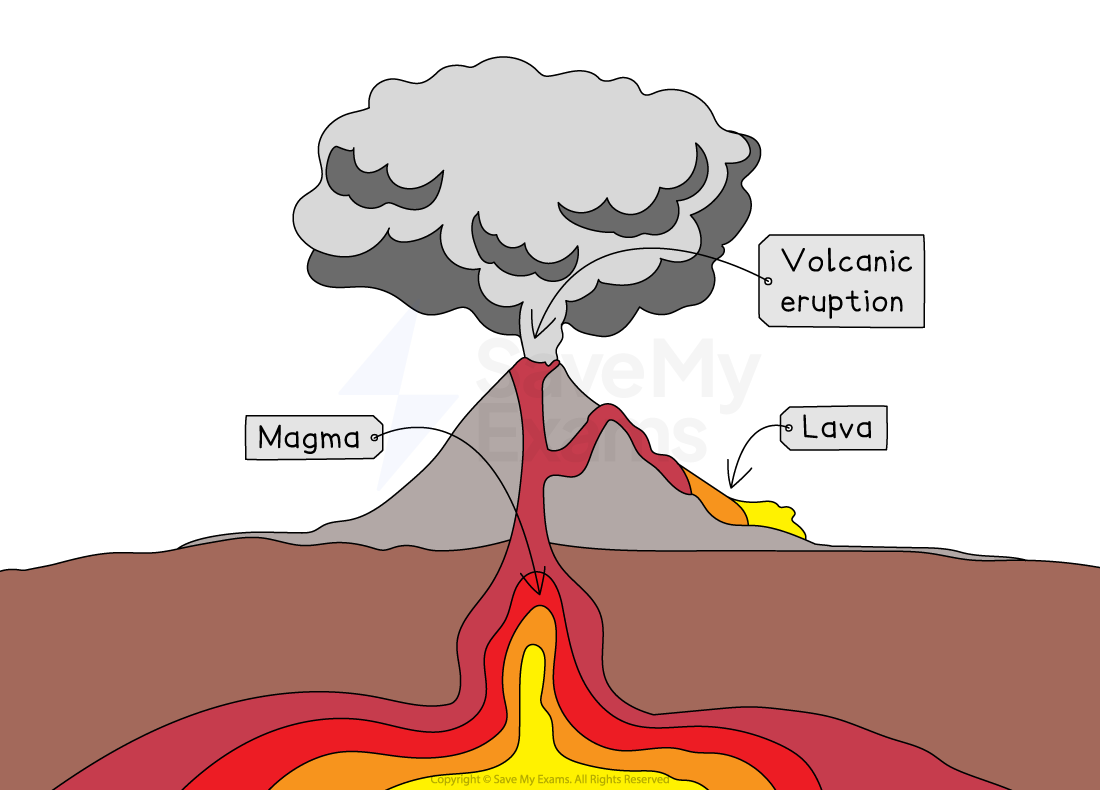
Magma: molten rock beneath the Earth’s surface
Lava: molten rock that reaches the surface through volcanic eruptions
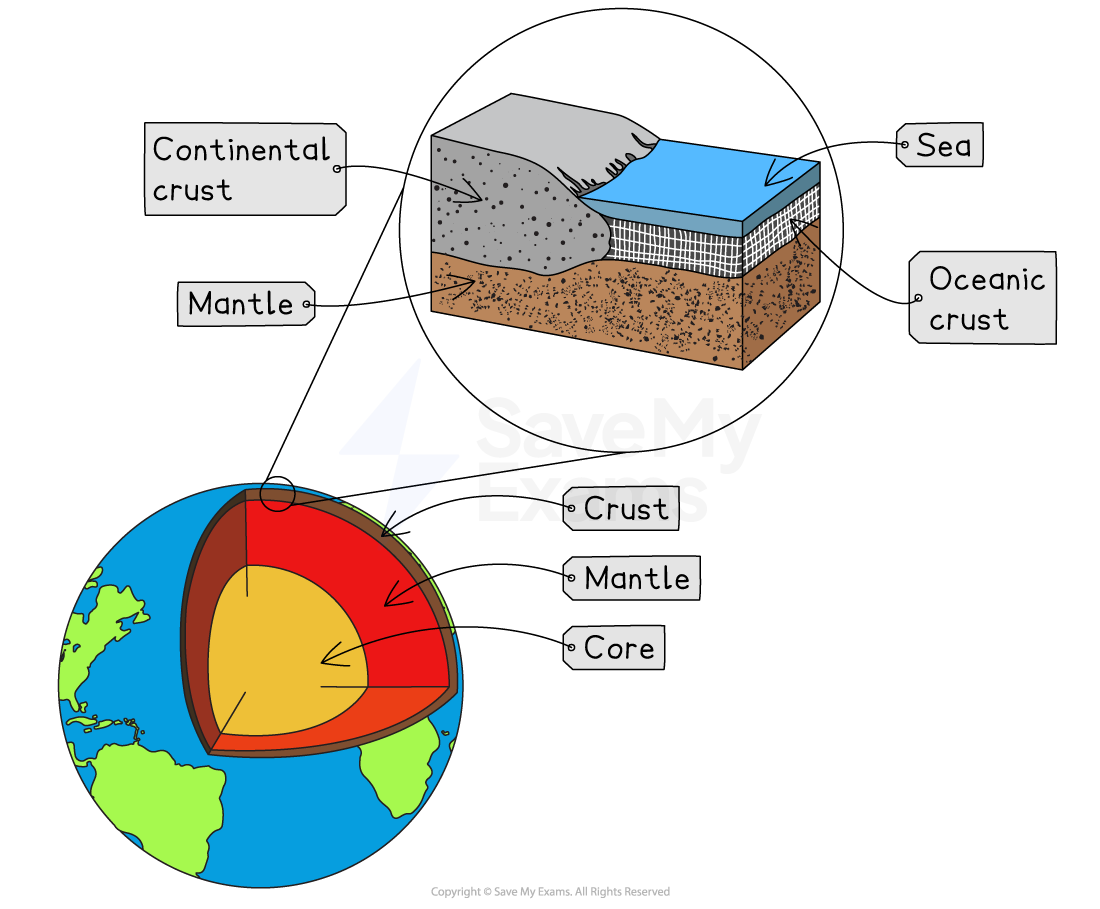
Magma is found in the mantle
Types of igneous rocks
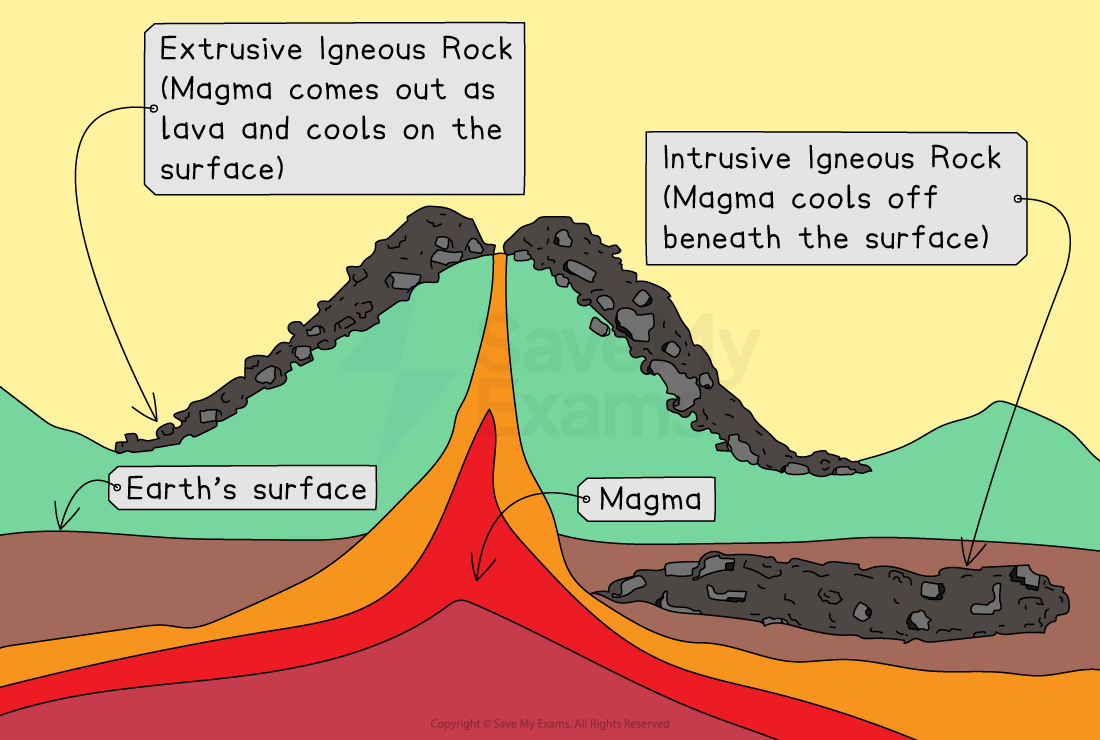
Intrusive (plutonic) igneous rocks
Form below the surface when magma cools slowly
Crystals have time to grow, so they are large and visible
Example: Granite
Extrusive (volcanic) igneous rocks
Form on the surface when lava cools quickly
Crystals are small because there isn’t enough time for them to grow
Example: Basalt
Igneous rocks are hard and more resistant to erosion
Formation of granite (intrusive)
Magma rises and gets trapped below the Earth’s crust
It cools slowly over thousands of years
Large crystals of minerals (e.g. quartz) form
Granite is:
Coarse-grained (large crystals)
Hard and durable
Commonly found in continental crust
Formation of basalt (extrusive)
Lava erupts from a volcano or fissure onto the Earth’s surface
It cools rapidly in contact with air or water
Small crystals or no visible crystals form
Basalt is:
Fine-grained (small crystals)
Dark in colour
Found mainly in oceanic crust
Formation of sedimentary rocks: limestone, sandstone & shale
What are sedimentary rocks?
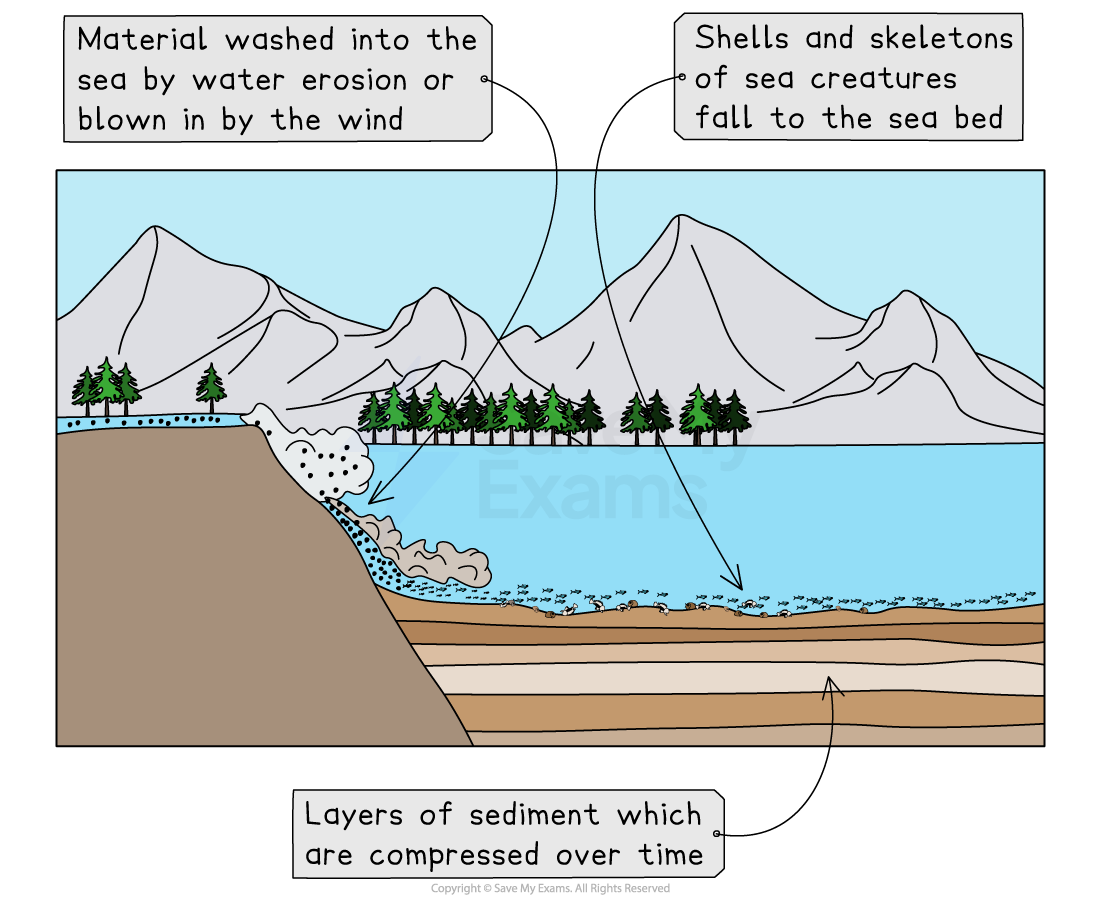
Sedimentary rocks form from sediments (small rock particles, minerals, or organic remains) that are:
Eroded, transported, deposited, and then
Compressed and cemented over time
They usually form in layers (strata) at the Earth’s surface or in water bodies
Main processes forming sedimentary rocks
Weathering—breakdown of existing rocks into smaller particles
Erosion and transportation—movement of these particles by wind, water, or ice
Deposition—settling of materials in lakes, seas, or riverbeds
Compaction—pressure from layers above squeezes sediments together
Cementation—particles bind together, forming solid rock
Formation of limestone
Formed mainly from calcium carbonate
Originates from:
Shells and skeletons of marine organisms
Over time:
Sediments build up on the seabed
Layers are compressed and cemented to form limestone
Limestone is:
White, grey, or yellow in colour
Can contain fossils
Formation of sandstone
Formed from sand-sized mineral grains (mainly quartz)
Deposited by rivers, wind, or waves in deserts, beaches, or riverbeds
Layers of sand are buried, then compacted and cemented together
Formation of shale
Formed from clay and silt particles that settle in calm water (like lakes or deep seas)
Layers of mud build up and are compacted under pressure
Shale is:
Often dark grey due to organic material
Formation of metamorphic rocks: marble & slate
What are metamorphic rocks?
Metamorphic rocks form when existing rocks (igneous or sedimentary) are changed by heat and/or pressure inside the Earth
The process is called metamorphism
Metamorphism: the alteration of rocks due to heat, pressure, or chemical processes, without melting
Formation of marble
Limestone is the parent rock
When exposed to high temperature and pressure, the calcium carbonate crystals in limestone recrystallise
This forms marble, a hard, crystalline, and non-layered rock
Marble is:
Usually white (can have coloured streaks from impurities)
Used in building and sculpture
Formation of slate
Shale is the parent rock
Under moderate heat and pressure, the minerals align, creating thin layers
This forms slate, a fine-grained, layered metamorphic rock
Slate is
Hard, dense, and splits easily into thin sheets
Commonly used for roofing tiles and flooring
Examiner Tips and Tricks
Students often think that all rocks with crystals are igneous, but that’s not true. Metamorphic rocks like marble can also have crystals—the difference is that these crystals form under heat and pressure, not from cooling magma or lava.

Unlock more, it's free!
Join the 100,000+ Students that ❤️ Save My Exams
the (exam) results speak for themselves:

Was this revision note helpful?