The Rock Cycle (Cambridge (CIE) IGCSE Environmental Management): Revision Note
Exam code: 0680

Weathering & erosion
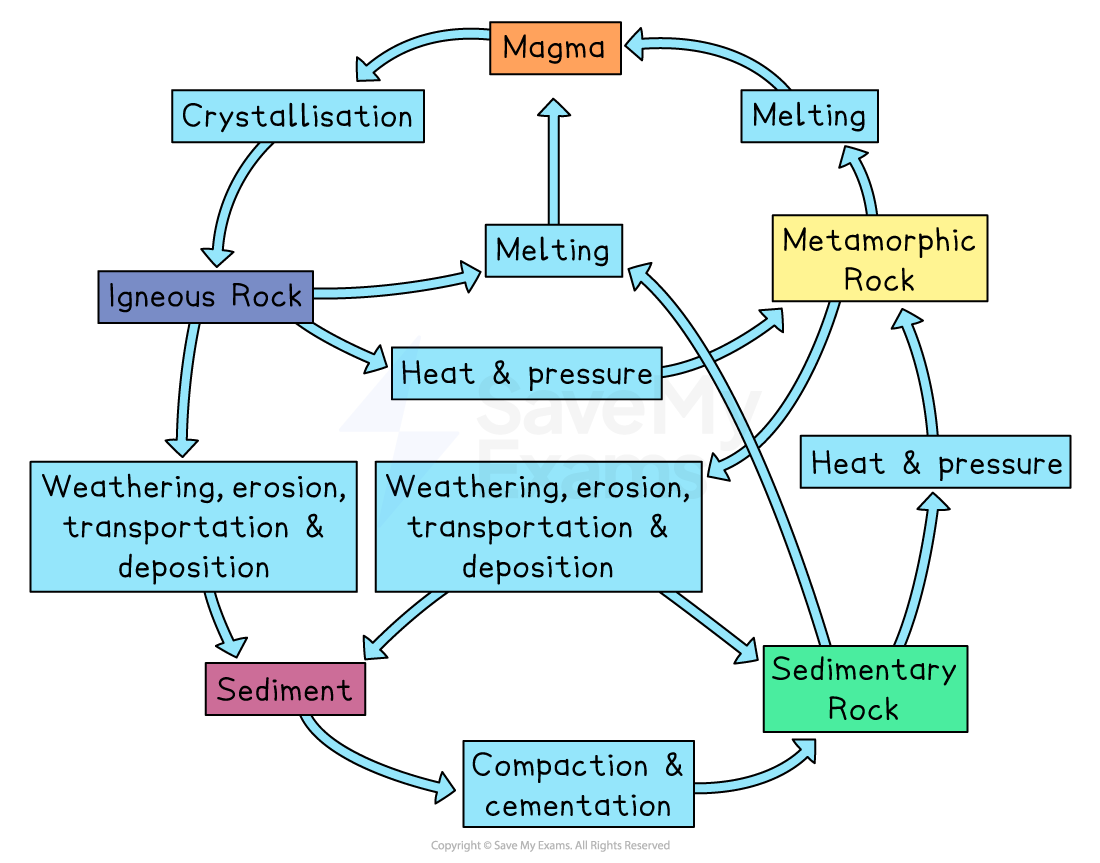
The rock cycle is a continuous process that shows how rocks change from one type to another over time
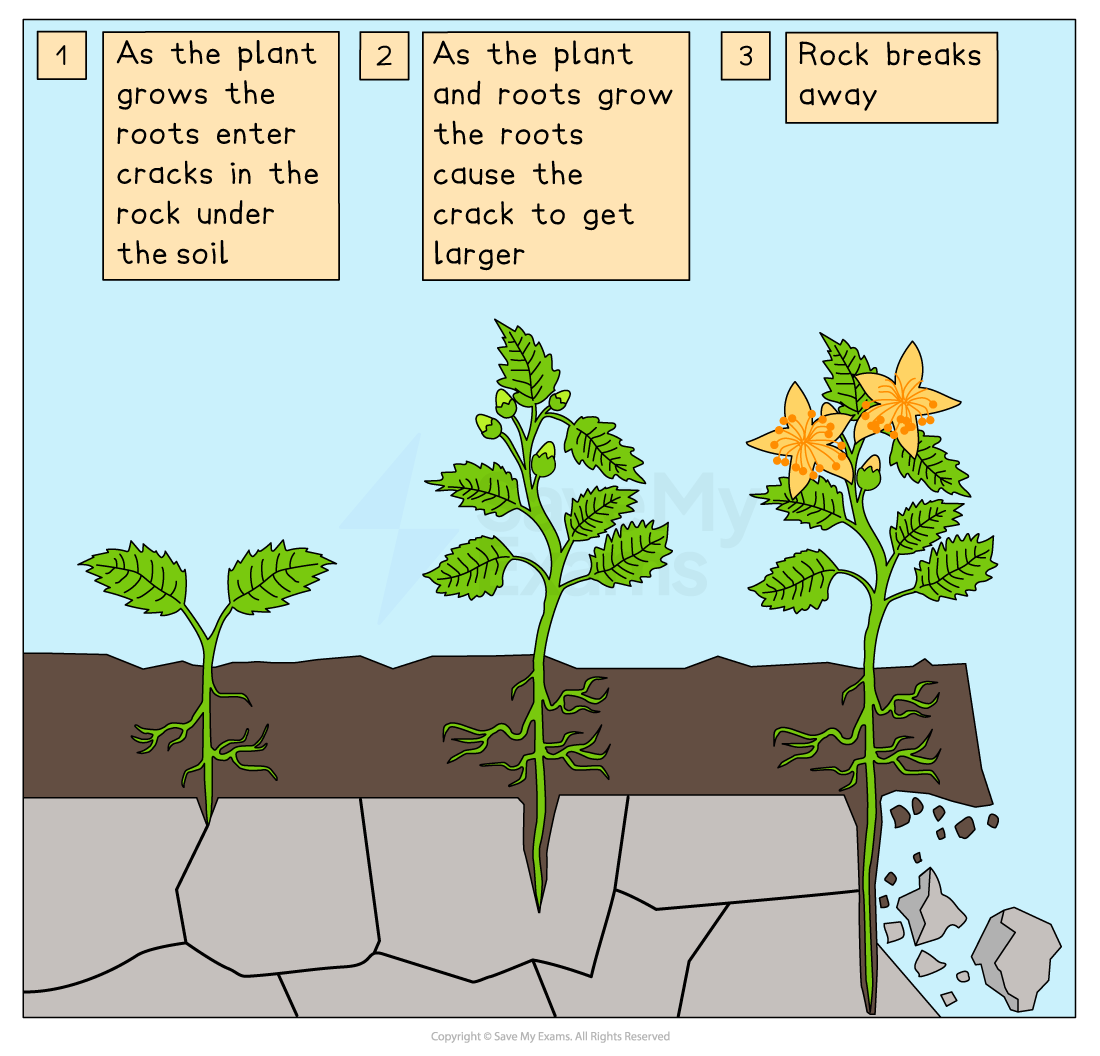
Weathering is the breakdown of rocks in-situ, at or near the Earth’s surface, into smaller pieces
Caused by physical, chemical, and biological processes
Physical weathering: caused by temperature changes, freeze-thaw action, and wind or water movement, breaking rock apart
Chemical weathering: caused by chemical reactions, such as acid rain dissolving minerals in rocks
Biological weathering: caused by plant roots or animals breaking down rock
Erosion is the removal of weathered rock particles from their original location
Carried out by wind, rivers, glaciers, or waves
Over time, erosion wears away landforms and creates new ones, like valleys and cliffs

Transportation
Transportation is the movement of eroded material from one place to another
Carried out by wind, rivers, glaciers, or waves
The material moved is called sediment—small pieces of rock and mineral
Larger, heavier particles are carried only short distances, while smaller, lighter ones travel further
When the moving water, wind, or ice loses energy, the material it is carrying is dropped
Deposition
Deposition is the process of sediment being dropped or laid down after transport
It happens when the moving force loses energy and can no longer carry the material
Deposition is the first stage in the formation of sedimentary layers
Once sediment has been deposited, sedimentation begins as the layers build up over time
Deposition also creates features such as river deltas, sand dunes, and beaches
Sedimentation
Sedimentation is the process by which transported materials settle out of moving water, ice, or wind
Starts after deposition, when sediments settle and begin to collect on top of each other
Sediments build up in layers at the bottom of rivers, lakes, and oceans
Larger, heavier sediments settle first, while lighter ones stay suspended longer
The weight of new layers adds pressure to the layers below, preparing them for compaction
Over long periods, these layers form sedimentary deposits that can later become rock
Examiner Tips and Tricks
Many students confuse deposition and sedimentation. Think of deposition as the moment the sediment drops out of moving water or wind, and sedimentation as what happens after—when those sediments build up in layers.
Compaction
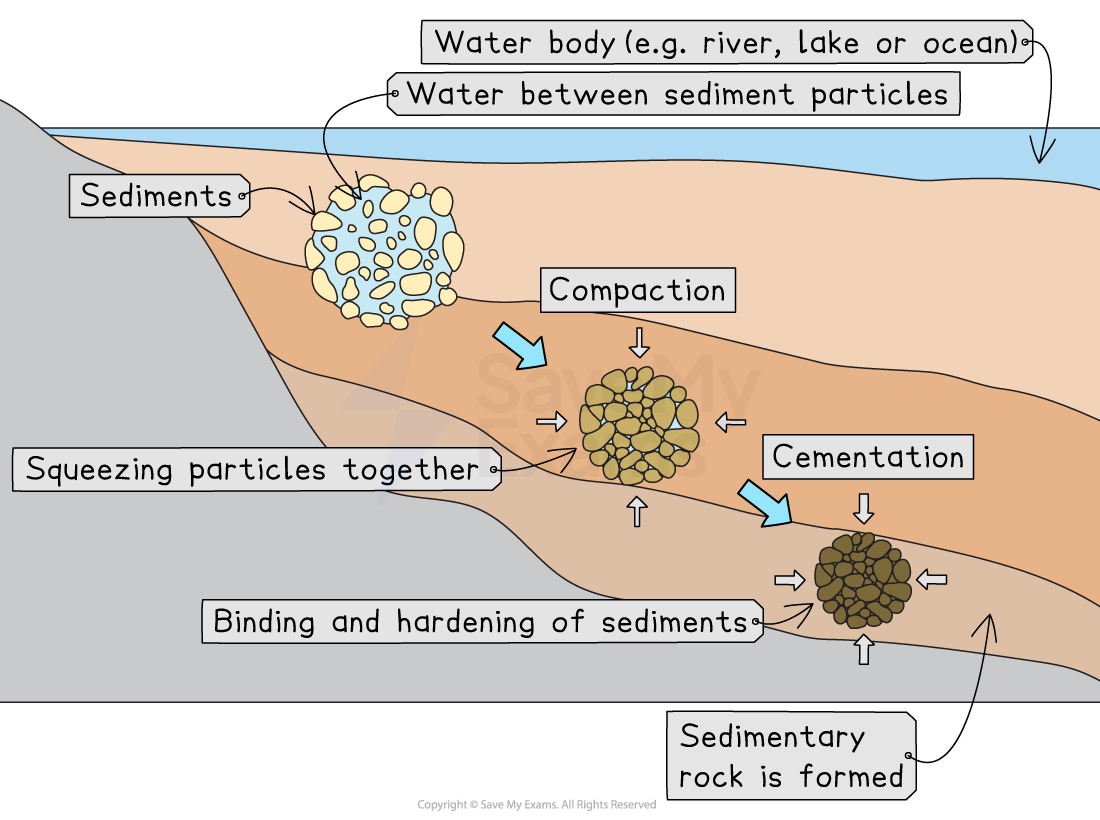
Compaction is when pressure from the layers of sediment above squeezes the lower layers together
Water and air are pushed out from between the grains
The sediment becomes denser and starts to form solid rock
Cementation
Cementation happens when minerals crystallise and glue compacted particles together
Minerals such as silica or calcium carbonate fill the spaces between grains of rock
This binds the sediments to form sedimentary rock
Crystallisation
Crystallisation is the process by which molten rock cools and forms crystals
When magma or lava cools, minerals form solid crystals that make up igneous rocks
Slow cooling underground produces large crystals, as seen in granite
Rapid cooling on the surface produces small crystals, as seen in basalt

Unlock more, it's free!
Join the 100,000+ Students that ❤️ Save My Exams
the (exam) results speak for themselves:

Was this revision note helpful?