Impacts of Climate Change (Cambridge (CIE) IGCSE Environmental Management): Revision Note
Exam code: 0680

Impacts of climate change on temperature
Earth's average surface temperature has risen by approximately 1.34 to 1.41 °C since the pre-industrial period
The last decade has been the warmest on record
Climate change is causing:
A rise in global average temperatures
More frequent and intense heatwaves
Fewer cold extremes
This warming is not uniform, affecting land more than oceans and the Arctic region more than other places
Impacts of climate change on ice sheets & oceans
The surface temperature of oceans will increase, causing sea level rise as it becomes warmer and expands in volume (thermal expansion)
By 2100, global sea levels are predicted to rise between 0.3 and 2 meters
As sea levels rise, seawater ingress into underground water supplies reduces fresh water availability, affecting agriculture and drinking water supplies
As glaciers, ice sheets, and permafrost melt, they flow into the sea, raising the level
Average sea levels have risen 23 cm since 1880
Sea levels are forecast to increase by a further 30 cm by 2050
Oceans become more acidic due to increased concentrations of CO₂ in the atmosphere
Ocean acidification reduces calcium availability
Corals and shellfish will struggle to form and maintain their shells and skeletons
This can lead to population decreases
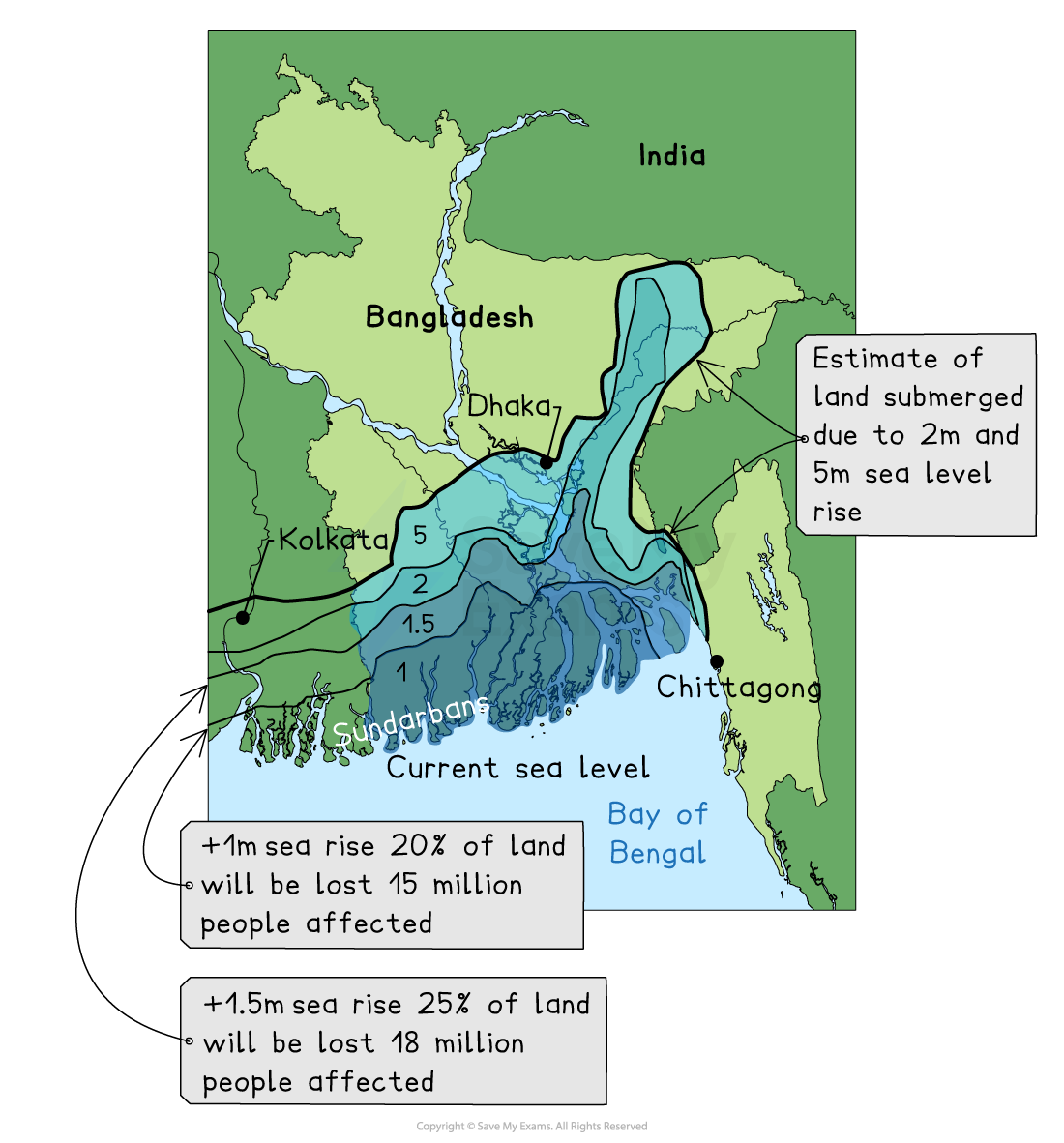
As sea levels rise, they lead to the loss of low-lying coastal land and increased erosion
Low-lying coastal areas and islands are at higher risk of flooding
The Maldives may be uninhabitable by 2050
Beach erosion will increase, leading to greater coastal erosion
Impacts of climate change on ecosystems
Animals and habitats are adapted to the climate in which they live
Any changes in the climate will harm ecosystems and animals, reducing biodiversity levels
As temperatures rise, many species may struggle to live and be forced to relocate
If suitable habitats are unavailable or species cannot migrate or adapt fast enough, they may become extinct
Warming can indirectly reduce biodiversity by affecting water availability, intensifying natural disasters, and spreading disease, causing species extinction
Impact of climate change on biodiversity
Climate change can lead to habitat loss and changes in the food web
All of these can reduce biodiversity
For example, coral bleaching due to increased sea temperatures reduces the variety of species in coral reefs
This can reduce the ability of coral reefs to cope with other changes, like ocean acidification or increased tropical storms
Habitat fragmentation, such as wildfires, separates species, reducing the resilience of ecosystems by isolating and limiting species' ability to adapt to new conditions
Climate change alters biodiversity distribution, affecting food webs and chains
If species richness changes, some species deplete and others thrive
However, it may also allow invasive species to take over, affecting the availability of food for existing species
Effect on habitats
The location of ecosystems and biomes may shift to the north (Northern Hemisphere) and south (Southern Hemisphere) as they rely on specific climate conditions:
Polar and tundra biomes are at risk of becoming extinct, as they cannot shift any further north/south
Mangrove swamps and coral reefs are already threatened by rising sea levels
Current ecosystems may change in structure and composition
For example, the Arctic tundra is transforming into shrubland as warmer temperatures allow shrubs to grow
Rising temperatures are melting the permafrost, or frozen soil, is allowing bacteria and fungi to break down soil that has been frozen for thousands of years
As polar ice and glaciers retreat, there may soon be no summer ice in the Arctic if rates of warming there continue
Seasonal cycles are changing, e.g.
Plant species are producing flowers earlier in the year
Animals are producing young earlier in the year
Bird migratory patterns may lose their synchronisation with their habitats, leading to a change in migration patterns
Some ecosystems may disappear if conditions become unsuitable for the species that inhabit them
For example, alpine regions may lose their unique flora and fauna as temperatures rise and snow cover decreases
This can lead to declines in population numbers and even extinction in some cases
Impacts of climate change on migration
Forced migration of animals
Migration and behaviour patterns of animals affected by changing temperatures
Fish species are moving north and south of their usual habitats to seek cooler water
Reduced hibernation due to warmer winters
Bird migration times have altered
Bird nesting is happening earlier
Species in mountainous regions might be forced to move to higher altitudes, creating isolated populations
As species move to new areas or experience changes in their habitats, they may face new competition, predation, or disease
Forced migration of humans
Almost 32 million people were displaced by weather-related hazards in 2022
Over 200 million people may be forced to move by 2050
There is a loss of land for settlements and agriculture due to extreme weather events such as flooding, drought, desertification, storms and wildfires
There will be an increase in forced migration as people lose their homes and livelihoods due to rising sea levels
People from the south of Bangladesh are relocating to urban areas due to coastal erosion and flooding caused by sea level rise
Places which are popular with tourists are often reliant on their climate as part of the attraction
The tourist industry in these areas may be negatively affected by an increase in:
Tropical storm frequency and severity
Water shortages
Melting of snow and ice leading to the closure of ski resorts
Impacts of climate change on weather patterns
The link between extreme weather events and global warming is complex and it is difficult to link any single event directly
However, since the 1980s, there has been an increase in extreme weather events
Particularly floods, storms, and extreme temperatures
Rising sea levels, together with increased storms, lead to increased flooding risk
The frequency and length of droughts are increasing
As areas become drier, they become more vulnerable
In parts of East Africa between 2020 and 2022, there were five failed rainy seasons
This displaced over 1.2 million people in Somalia
Dry conditions lead to an increased risk of wildfires
Stagnant air during heatwaves leads to increased levels of air pollution
Respiratory diseases increase and those suffering from respiratory illnesses such as asthma may be more affected
Many countries rely on their climate for tourism and climate change is affecting this attraction
In the Caribbean, changes to the climate, which are already occurring, include:
Average temperature has increased by over 1°C since the 1950s
An increase in water temperatures
Drought
Changes in coral reefs
More severe and frequent storms
The 2017 hurricane season was particularly severe, with Hurricane Irma and Maria causing destruction over many islands
Over 90% of Dominica's buildings were destroyed
In 2020, there were 30 named storms, many of which caused devastation to people living in the Caribbean
These all impacted on the tourist industry
Many tourist resorts did not reopen; others took many months, even years to rebuild
Impacts of climate change on agriculture & food production
Change in crop yields
Wheat and maize yields have been negatively impacted in most regions since 1960
Crop yields are estimated to continue reducing by over 20% as temperatures increase
The effects are that rice and soybean yields have been smaller in all major production regions
The largest impact has been on the price and production of food for daily consumption
Production has decreased
Prices have increased
A changing pattern of rainfall will also threaten crop production
Too little rain and crops will fail
Too much rain and crops will rot in the fields
Suitable areas for agriculture will change
Farmers may have to change their crops
Areas that could grow certain crops will have to change
Wheat grown in the USA will have to be grown in Canada
This would negatively affect the USA's economy while boosting Canada's
Reduced availability of water will mean that irrigation is limited or impossible
Less reliable food supply and higher prices
Food shortages will lead to malnutrition and famine
Food shortages
Food shortages and price spikes following extreme weather events, such as hurricanes or droughts
Water rationing in Cape Town, South Africa, during a prolonged drought leading to severe water shortages (2017-2018)
Decline in wheat yields in Australia due to heat stress and reduced rainfall
Outbreak of coffee leaf rust in Central America, resulting in significant losses for coffee farmers
The loss of glacier ice from mountain ranges affect water supplies of many people and the surrounding wildlife
Increased pest outbreaks and invasive species
Tropical diseases will spread to cooler regions as temperatures rise, as disease carriers, like mosquitoes and ticks, will survive and breed in warmer environments
Italy has experienced cases of malaria since 2017, when it was previously a malaria-free area
Warming will affect the location, number and range of disease-carrying pests (including insects, animals, plants or microbes)
This will increase disease transmission rates
Changes in species distribution and numbers may disrupt ecosystems and increase disease outbreaks due to population density

Unlock more, it's free!
Join the 100,000+ Students that ❤️ Save My Exams
the (exam) results speak for themselves:

Was this revision note helpful?