Farming of Marine Species (Cambridge (CIE) IGCSE Environmental Management): Revision Note
Exam code: 0680

What is marine aquaculture?
Marine aquaculture is the farming of marine species in captivity
Organisms are raised in controlled conditions rather than being caught in the wild
Marine aquaculture is used to:
increase food supply
reduce pressure on wild fish stocks
support coastal economies
Fish
Many marine farms raise fish in cages or tanks in the sea
Fish are fed and monitored to help them grow quickly and safely
Farming fish reduces the need to catch wild populations
This helps protect natural fish stocks from overfishing

Crustaceans
Crustaceans such as prawns, shrimp or crabs can be farmed in ponds or coastal enclosures
Farmers manage water quality, feeding and breeding
Farming crustaceans provides a reliable supply for the seafood market
This helps meet demand without relying only on wild harvesting

Seaweeds
Seaweeds can be grown on ropes or frames placed in the sea
They absorb nutrients from the water and grow without needing feed
Seaweed farming is low-impact and supports food, fertiliser and cosmetic industries
Seaweeds also remove excess nutrients from coastal waters
Examiner Tips and Tricks
Students often forget that marine aquaculture includes plants as well as animals. You are expected to know about fish, crustaceans and seaweed.
Impacts of marine aquaculture
Marine aquaculture increases food production but also creates environmental and ecological impacts
Some impacts are beneficial, while others can affect wild ecosystems if farming is not well managed
Reduced exploitation of natural fisheries
Farmed fish provide an alternative source of seafood
This reduces pressure on wild fish stocks
Lower fishing pressure helps wild populations to recover
Sustainable aquaculture can protect oceans from overfishing
Increased food supply for humans
Marine aquaculture produces large quantities of fish, crustaceans and seaweed
This helps meet the growing global demand for protein
Farming provides a steady and predictable supply
This helps to make seafood more affordable and widely available
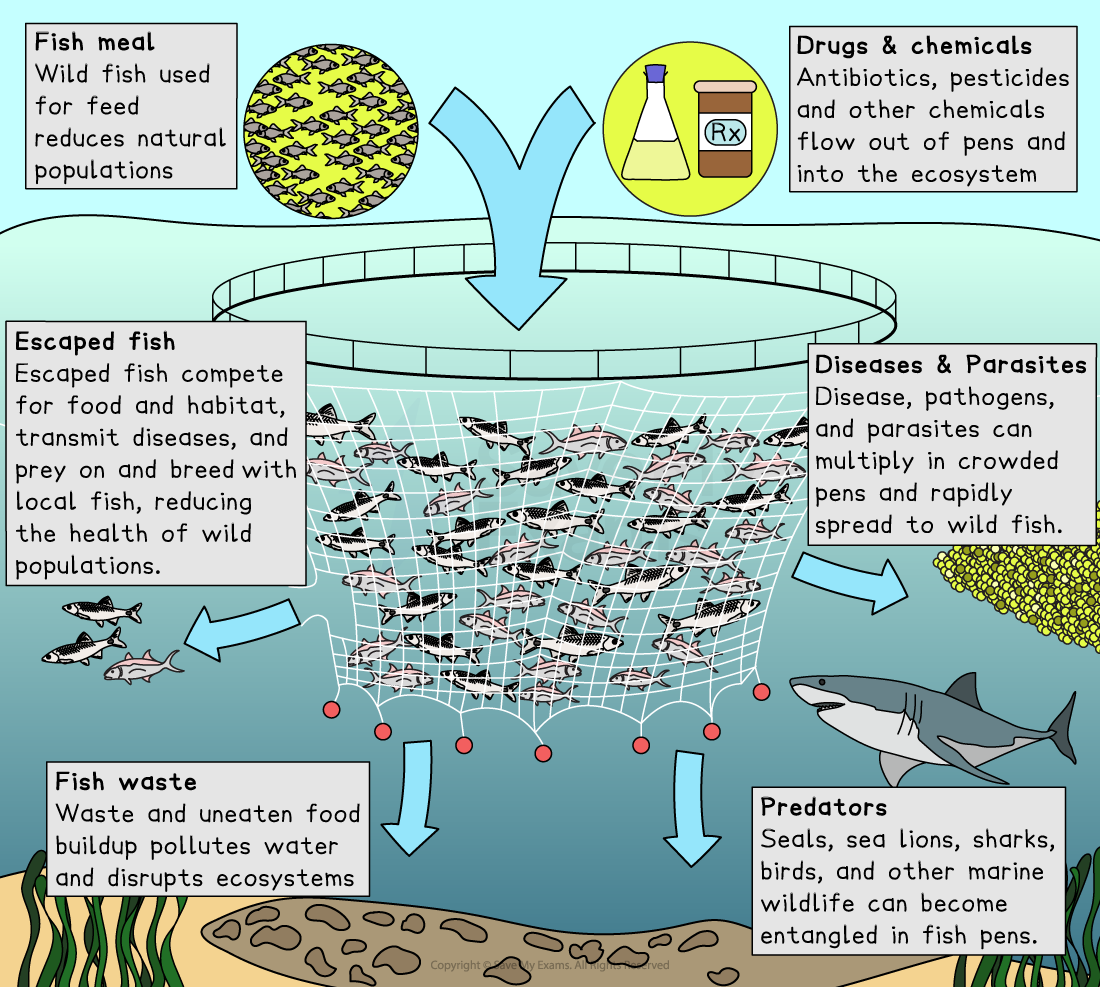
Risk of escape
Farmed species may escape from cages or tanks
Escaped fish can compete with wild fish for food and habitat
Some escaped species may interbreed with wild populations
This can reduce genetic diversity and weaken wild fish resilience (e.g. make them more vulnerable to diseases)
Non-native species may become invasive
They can disrupt local ecosystems
Risk of disease
Fish are often kept at high densities
This makes it easier for diseases and parasites to spread
Diseases from farms can reach wild fish if water flows between enclosures and the open seas
This can harm wild populations or reduce reproduction
Farmers may use antibiotics or chemicals to control disease
Overuse can lead to pollution of surrounding waters or antibiotic resistance in the farmed fish
Local food webs
Aquaculture can alter predator–prey relationships in coastal areas
For example, escaped fish may become new predators or new prey
Wildlife may be attracted to fish cages, looking for food
This can increase human-animal conflict with predators such as birds or seals
Nutrient enrichment from waste
Uneaten feed and fish waste fall into the water beneath farms
This increases levels of nitrates and phosphates
This can lead to eutrophication, causing rapid algae growth
Algal blooms reduce oxygen, harming wild fish and marine life
Sediment build-up beneath cages can smother seabed habitats
This reduces the biodiversity of seabed communities
Energy usage
Aquaculture systems require electricity for pumps, aeration, feeding systems and transport
Energy use increases carbon emissions if electricity is from fossil fuels
Offshore farms may require boats and machinery
This adds to the overall environmental impact of fish farms
Source of food for farmed species
Many farmed species (e.g. carnivorous fish) require feed made from wild-caught fish
This can increase fishing pressure on smaller forage fish
Producing this feed is energy-intensive and resource-heavy
This can counteract some of the environmental benefits of aquaculture
Researchers are developing plant-based or alternative feeds
These could lower the need for wild fish in aquaculture diets
Examiner Tips and Tricks
When describing negative impacts, avoid vague phrases like 'it harms the environment'. Instead, give a clear mechanism, such as 'nutrient enrichment leads to eutrophication'. Examiners look for this cause-and-effect link.
Don’t forget that aquaculture can have positive impacts too. Many students only list negatives, but mentioning benefits like reduced pressure on natural fisheries helps secure higher marks.

Unlock more, it's free!
Join the 100,000+ Students that ❤️ Save My Exams
the (exam) results speak for themselves:

Was this revision note helpful?