Impacts of Plastic Pollution (Cambridge (CIE) IGCSE Environmental Management): Revision Note
Exam code: 0680

Impacts of plastic pollution
Plastic pollution includes the accumulation of plastic waste in oceans, seas and coastal environments
Marine organisms can be harmed through:
Physical contact
Ingestion
Exposure to toxic chemicals
Visual pollution
Floating plastics, bottles, bags and debris create visual pollution
This makes coastal areas unattractive and can make tourists less likely to visit heavily polluted areas
Plastic waste and litter gathers on beaches
This reduces recreational use and may require expensive clean-up efforts
Entanglement
Marine animals such as turtles, seals and seabirds become entangled in plastic items
Common sources include fishing lines, nets and the plastic rings that hold four-packs and six-packs of drink
Entanglement restricts movement
Eventually, animals may be unable to swim, feed or surface for air
Severe cases cause injury, infection or death
Young animals are especially vulnerable
Risk of being mistaken for food by marine animals
Many organisms mistake plastic for prey
Floating plastics resemble jellyfish, plankton or fish eggs
Animals ingest these plastic fragments
Sharp pieces can damage the digestive system
Plastic fills the stomach without providing energy
This leads to starvation, weakness or reduced growth
Bioaccumulation and biomagnification
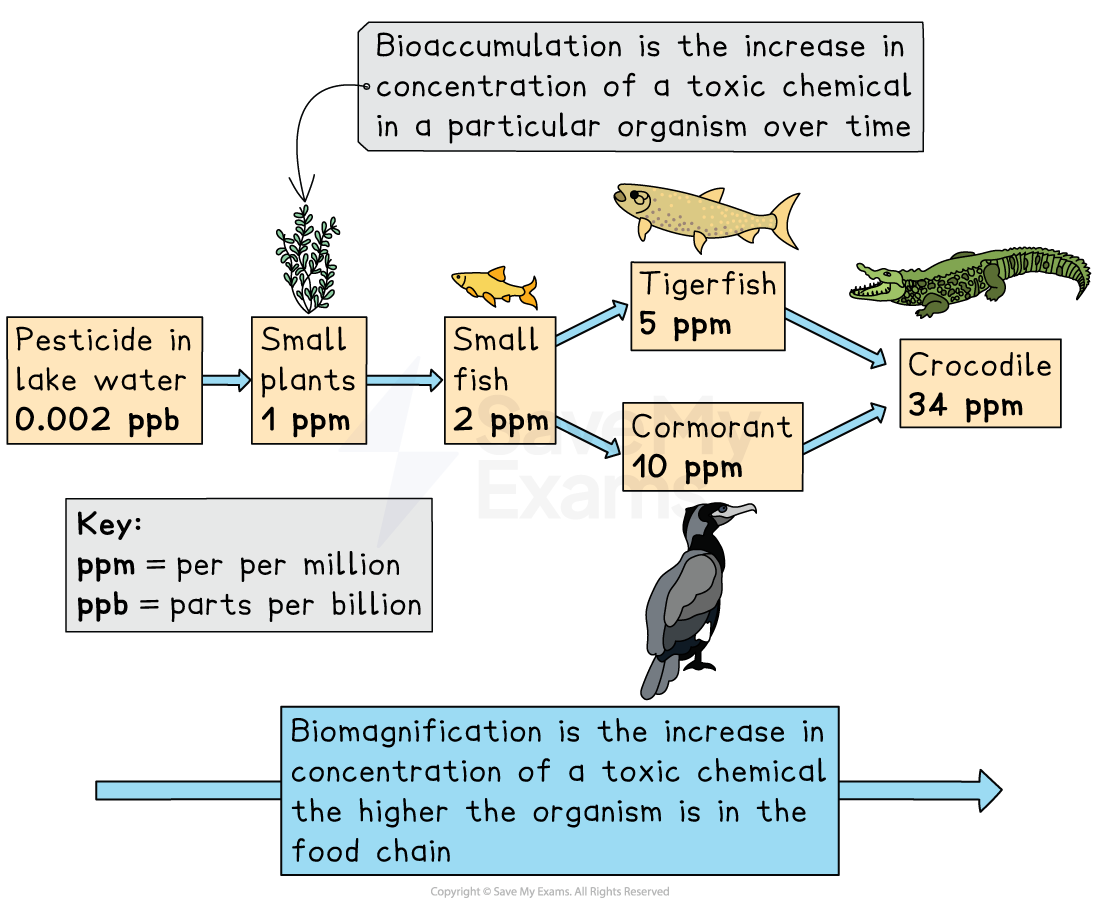
Bioaccumulation
Bioaccumulation—plastic particles and the associated toxins build up in a single organism over time
This happens when animals ingest microplastics regularly
Chemicals absorbed onto microplastics enter organisms
These chemicals can affect growth, reproduction and overall health
Biomagnification
Biomagnification—concentration of toxins from plastics increases as they move up the food chain
Predators eat many contaminated prey
Top predators, such as larger fish and marine mammals, accumulate the highest toxin levels
This leads to reproductive issues, weakened immune systems and long-term population decline

Unlock more, it's free!
Join the 100,000+ Students that ❤️ Save My Exams
the (exam) results speak for themselves:

Was this revision note helpful?