Potable Water (Cambridge (CIE) IGCSE Environmental Management): Revision Note
Exam code: 0680

What is potable water?
Potable water is water that is safe to drink
Contains no harmful microorganisms or toxic chemicals
Potable water must be clean, clear and treated before people can use it for drinking or cooking
Safe drinking water is essential for health, preventing diseases such as cholera and diarrhoea
Examiner Tips and Tricks
Students sometimes think 'potable water is clean water', but this is too vague. Examiners seek the exact idea that potable water is safe to drink, meaning it contains no harmful pathogens or pollutants.
Stages in water treatment
Water from rivers, lakes or reservoirs may contain dirt, organisms and pollutants
It must be treated to make it potable
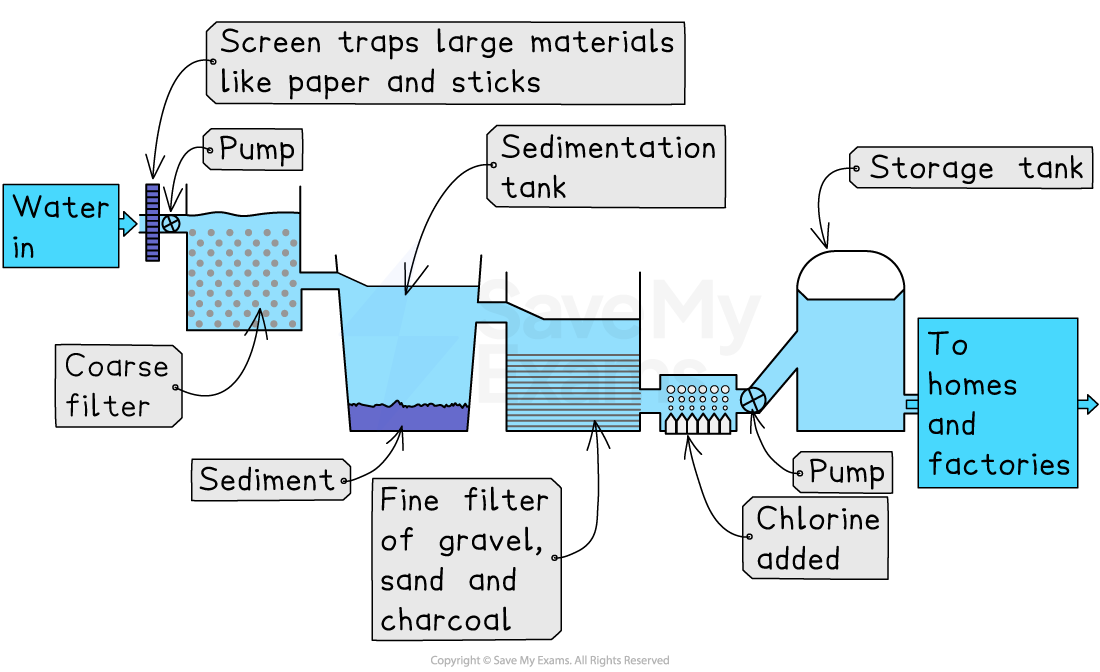
Water treatment uses several stages to remove solid particles, microorganisms and harmful chemicals
Screening
Screening—passing water through large metal bars or meshes
Removes big objects such as leaves, sticks, plastics and rubbish
Prevents damage to pumps and machinery in later stages
Sedimentation
Water is left to stand in settling tanks (also known as sedimentation tanks)
Heavy particles such as sand and soil sink to the bottom
Forms a layer of sludge, which is removed
Reduces the amount of solid material that enters the filters
Filtration
Water passes through layers of gravel, sand and sometimes activated carbon
Traps smaller particles such as clay, organic matter and microorganisms
Produces much clearer water before disinfection
Activated carbon can remove chemicals and odours
Chlorination
A small amount of chlorine is added to kill harmful bacteria and viruses
Ensures the water is safe to drink
Chlorine continues to protect the water as it travels through pipes to homes and buildings
Availability of potable water
Potable water is not available equally around the world
Some regions have plentiful fresh water, while others struggle with shortages
Differences depend on climate, population, infrastructure, and access to sewage treatment
Understanding these inequalities helps explain why some areas face water stress while others do not
Water-rich and water-poor regions
Water-rich regions have high rainfall, many rivers or large lakes
Examples include tropical regions with heavy seasonal rainfall
Abundant surface and groundwater make the water supply more reliable
Water-poor regions have low rainfall, dry climates or frequent droughts
Large parts of semi-arid and arid regions experience long dry seasons
Water scarcity makes it harder to provide sufficient safe drinking water
Even water-rich regions can face shortages due to pollution events or poor water management
Urban and rural regions
Urban regions often have better access to treated potable water
Cities usually have piped water systems, treatment plants and sewage networks
More investment in infrastructure allows a reliable water supply
Rural regions may rely on wells, rivers or unprotected sources
These sources are more easily contaminated and may not be treated
Lack of pipes and treatment facilities makes access inconsistent
People living in rural areas may have to travel long distances to collect water
Global inequalities in water availability and sewage treatment
Wealthier countries have advanced water treatment plants, storage systems and safe sewage disposal
This ensures reliable access to clean, safe drinking water
Low-income countries may lack infrastructure for pumping, treating or storing water
People may depend on unsafe streams, ponds or unprotected wells
Poor sewage treatment leads to polluted water sources
Increases diseases such as cholera and diarrhoea
Wealth affects water access: communities with more resources can build wells, buy bottled water or install filtration systems
Poorer communities often cannot
Examiner Tips and Tricks
In longer answers, it is important to demonstrate the connection between water availability and health outcomes. Linking poor water access to diseases demonstrates deeper understanding and gains higher-level marks.

Unlock more, it's free!
Join the 100,000+ Students that ❤️ Save My Exams
the (exam) results speak for themselves:

Was this revision note helpful?