Distribution Methods (SQA National 5 Business Management): Revision Note

Exam code: X810 75

Lisa Eades

Written by: Lisa Eades

Reviewed by: Steve Vorster

Updated on

Distribution by road and rail

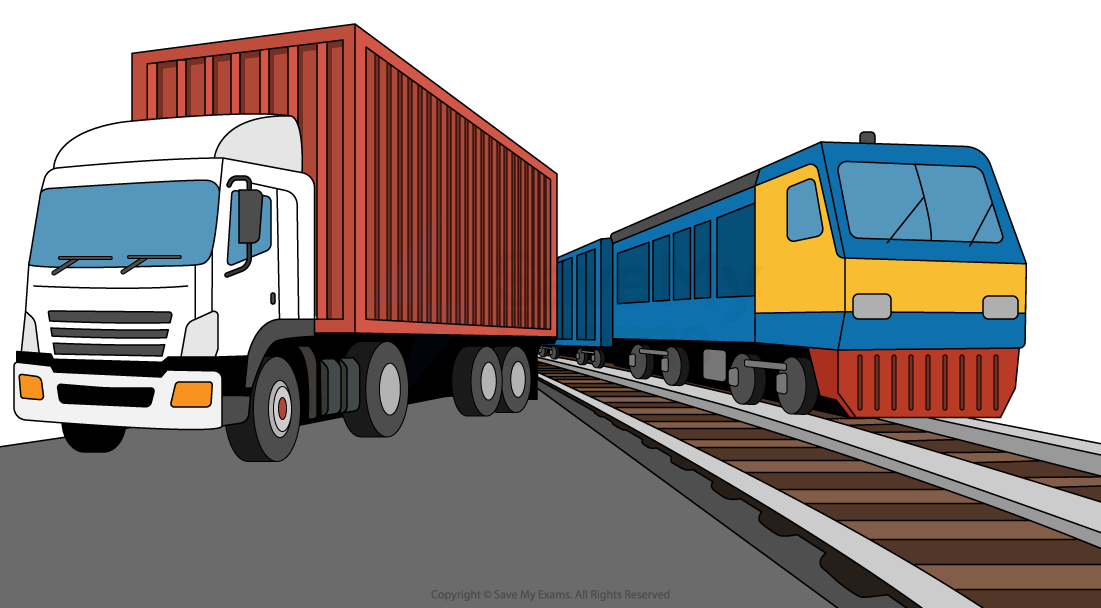
A white lorry with a red container is parked beside railway tracks, where a blue and yellow train is travelling, illustrating transport modes.
  • Businesses must choose the most efficient and cost-effective way to move goods from producers to customers

  • The choice depends on factors such as cost, distance, speed and the type or size of goods being moved

Distribution by road

  • Distribution by road is the most flexible and commonly used method for short- to medium-distance deliveries

  • Goods can be taken door to door, from factory to warehouse or directly to retailers and customers

  • It is suitable for perishable, lightweight or smaller loads that need quick delivery

  • It often involves vans, lorries or specialist refrigerated vehicles

Distribution by rail

  • Distribution by rail is suitable for large, heavy or bulk goods, such as raw materials, machinery and building supplies

  • It is used mainly for long-distance transport within the UK

  • Goods are carried in freight wagons from one terminal to another and then transferred to road vehicles for final delivery

  • It is more environmentally friendly for bulk transport, as trains produce lower emissions per tonne moved

Evaluating the use of road and rail distribution

Method

Advantages

Disadvantages

Road

  • Door-to-door service so there's no need for extra handling at depots

  • Flexible routes and timetables so deliveries can be made at any time

  • Ideal for short journeys and urgent deliveries

  • Slower for long distances due to traffic congestion and speed limits

  • Limited capacity so not suitable for very large loads

  • Less environmentally friendly, contributing to congestion and emissions

Rail

  • Can carry very large or heavy loads efficiently

  • Faster and more reliable for long-distance bulk transport

  • Lower environmental impact per tonne of goods moved

  • Limited to areas near railway stations or freight terminals

  • Requires extra handling – goods are often transferred to lorries for final delivery

  • Fixed rail schedules reduce flexibility compared with road transport

Distribution by air and sea

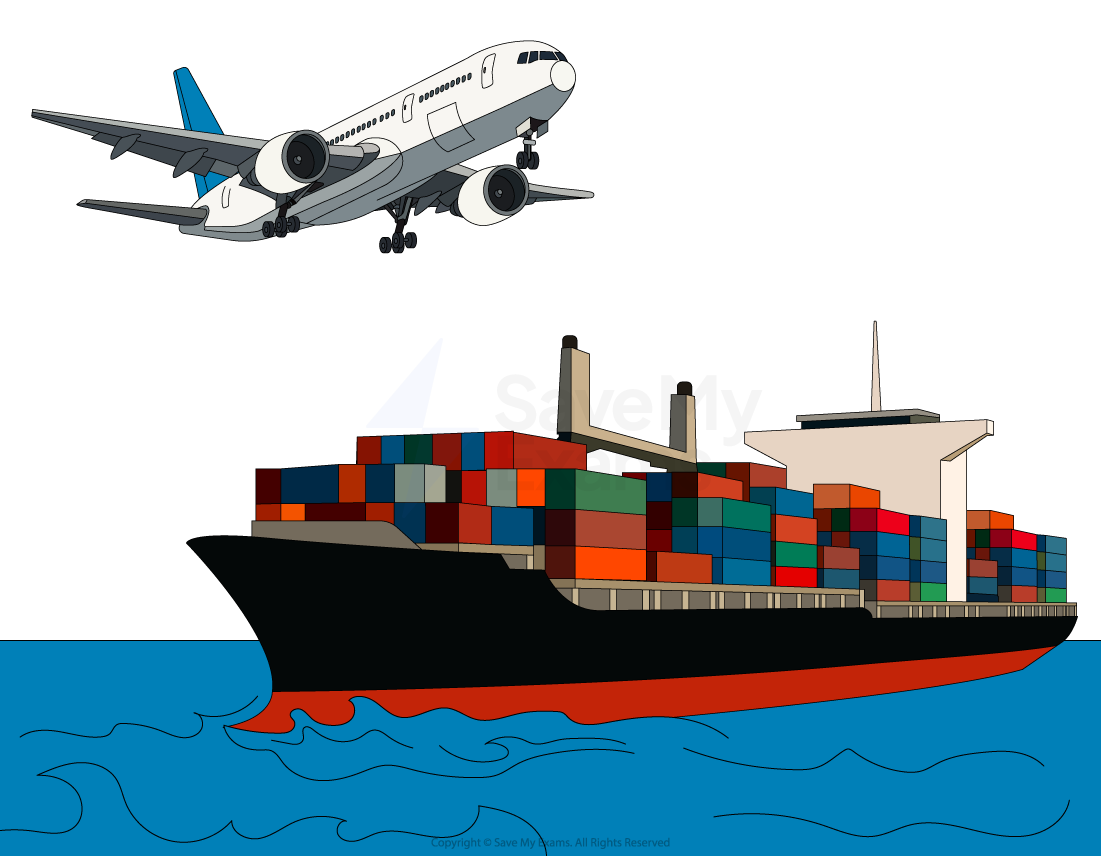
Illustration of a cargo ship with stacked containers on the sea and an aeroplane flying overhead in a clear sky.
  • Businesses that trade nationally and internationally often use air or sea transport to move goods between countries or across long distances

  • The choice depends on speed, cost, product type and destination.

Distribution by air

  • This is the fastest method of long-distance transport, used for goods that need to reach markets quickly

  • It is ideal for high-value, lightweight or perishable products, such as electronics, medicines or fresh food

  • Cargo is transported from airport to airport, then usually transferred to road vehicles for final delivery

  • Used by global courier services such as DHL and FedEx and businesses exporting goods to distant markets

Distribution by sea

  • This is the most common method for international bulk transport, especially for heavy or non-urgent goods

  • It is used for products such as oil, vehicles, timber and manufactured goods in containers

  • Large ships carry thousands of tonnes at once, reducing unit costs

  • Goods often move from port to port and then by road or rail for final delivery

Evaluating the use of air and sea distribution

Method

Advantages

Disadvantages

Air

  • Very fast, so it is ideal for urgent or perishable goods

  • Suitable for long-distance global transport

  • Secure and reliable, with tight scheduling and monitoring

  • Very expensive compared to other methods

  • Limited capacity, so it is unsuitable for large or heavy goods

  • Airports are not always near businesses, requiring road transport at each end

Sea

  • Low cost per unit for large or heavy shipments

  • Can transport very large quantities at once

  • More environmentally efficient than air transport per tonne of goods moved

  • Much slower than air, so it is not suitable for urgent deliveries

  • Weather conditions and port delays can disrupt schedules

  • It requires additional road or rail transport to reach inland destinations

Examiner Tips and Tricks

Remember Right route, right result” – match the method to the product type, cost and speed needed for delivery

Unlock more, it's free!

Join the 100,000+ Students that ❤️ Save My Exams

the (exam) results speak for themselves:

Lisa Eades

Author: Lisa Eades

Expertise: Business Content Creator

Lisa has taught A Level, GCSE, BTEC and IBDP Business for over 20 years and is a senior Examiner for Edexcel. Lisa has been a successful Head of Department in Kent and has offered private Business tuition to students across the UK. Lisa loves to create imaginative and accessible resources which engage learners and build their passion for the subject.

Steve Vorster

Reviewer: Steve Vorster

Expertise: Economics & Business Subject Lead

Steve has taught A Level, GCSE, IGCSE Business and Economics - as well as IBDP Economics and Business Management. He is an IBDP Examiner and IGCSE textbook author. His students regularly achieve 90-100% in their final exams. Steve has been the Assistant Head of Sixth Form for a school in Devon, and Head of Economics at the world's largest International school in Singapore. He loves to create resources which speed up student learning and are easily accessible by all.