Industrial Action (SQA National 5 Business Management): Revision Note
Exam code: X810 75

Forms of industrial action
Industrial action happens when employees protest against their employer to show disagreement over pay, working conditions, or other employment issues
The action is usually organised by trade unions when discussions between management and employees break down
The main forms of industrial action
Form of action | Description |
|---|---|
Strike |
|
Work to rule |
|
Overtime ban |
|
Go-slow |
|
Sit-in |
|
The employer/employee relationship
Good relationships between employers and employees help prevent industrial action
Businesses can build these relationships by
Communicating openly and keeping employees informed about business decisions
Consulting staff or unions before major changes, such as restructuring or redundancies
Recognising and rewarding effort, both financially and through praise or promotion
Offering training and development, which shows long-term investment in employees
Encouraging teamwork and respect between managers and workers
Using fair disciplinary procedures and treating everyone equally
Strong working relationships increase trust, motivation and cooperation, reducing the risk of disputes
Causes and consequences of industrial action
Employees or trade unions may take industrial action for several reasons, such as:
Pay disputes, when workers believe wages are unfair or have not risen with inflation
Poor working conditions, such as unsafe or stressful environments
Job security concerns during redundancies or business closures
Disagreements over hours or contracts, such as changes to shift patterns
Lack of communication or respect from management
Failure to recognise a trade union or respond to staff concerns
Industrial action is usually a last resort, taken after attempts to negotiate or resolve issues have failed
Impact of industrial action
Impact on employees | Impact on the business |
|---|---|
|
|
Case Study
In 2023, rail workers across the UK went on strike to demand better pay and conditions.
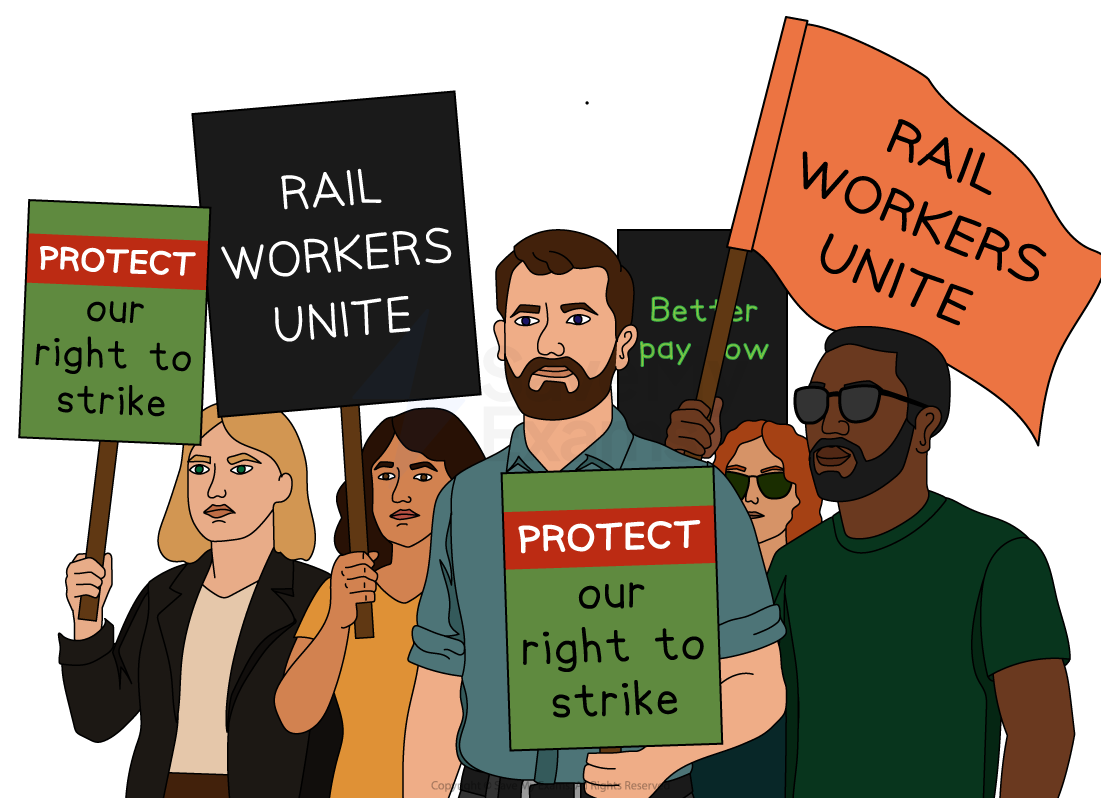
The strikes disrupted travel for millions, highlighting both the power of organised action and the financial cost to businesses
Examiner Tips and Tricks
A common misconception is that industrial action only harms the employer. In reality, it affects both sides - businesses lose productivity, and employees lose income or goodwill. Strong answers recognise these shared consequences and explain why resolving disputes quickly matters

Unlock more, it's free!
Join the 100,000+ Students that ❤️ Save My Exams
the (exam) results speak for themselves:

Was this revision note helpful?