Polymers (AQA A Level Chemistry): Exam Questions

Exam code: 7405

3 hours32 questions
1a
2 marks

Name the two types of polymerisation.

1b
2 marks

Name two families of chemicals that can be used to form condensation polymers.

1c
2 marks

Name the two types of link formed by condensation polymerisation.

1d
2 marks

Name the two condensation products of the reaction between a dicarboxylic acid and a diamine.

2a
1 mark

Give the IUPAC name of the organic compound shown in Figure 1.

Figure 1

FsQI90qE_1-12
2b
1 mark

Give the IUPAC name of the organic compound shown in Figure 2.

Figure 2

2-11
2c
2 marks

Draw the repeat unit formed by the organic compounds during condensation polymerisation.

The organic compounds are repeated in Figure 3 here to help you answer.

Figure 3   

yMMI6YP9_3-11


2d
1 mark

A student attempted to answer part (c). Their incorrect repeating unit is shown in Figure 4.

Figure 4

4-11

Explain why the student’s repeating unit is incorrect.

3a
2 marks

A section of a polyester is shown in Figure 1.

Figure 1

5-8

Draw and name the hydroxycarboxylic acid monomer used to form this polyester.

3b
1 mark

Hydroxycarboxylic acids can be used to make polyesters because they possess an alcohol and a carboxylic acid functional group.

Name the group of chemicals that can undergo condensation polymerisation to form polyamides because they contain both an amine group and a carboxylic acid group.

3c
3 marks

Draw a section of the polymer formed by the condensation of 1,6-diaminohexane and butanedioyl dichloride, shown in Figure 2.

Figure 2

6-8
3d
2 marks

Give one advantage and one disadvantage of using butanedioyl dichloride in part (c) instead of using butanedioic acid.

4a
2 marks

State two uses of the polymer polyethylene terephthalate.

4b
2 marks

Nylon 6,6 is made from the condensation polymerisation of a diamine and a dicarboxylic acid.

Name the diamine and the dicarboxylic acid used to form nylon 6,6.

4c
1 mark

Explain why the dicarboxylic acid used to make nylon 6,6 is often converted to the diacyl dichloride before reacting with the diamine?

4d
1 mark

The repeating unit of Kevlar® is shown in Figure 1.

Figure 1

7-5

Identify the intermolecular force that contributes towards the strength and other physical properties of Kevlar®.

5a
1 mark

Polyesters and polyamides are biodegradable. 

Name the chemical process used to break down polyesters and polyamides.

5b
2 marks

State two factors that can influence the rate of hydrolysis of polyesters and polyamides.

5c
3 marks

State the three methods of disposing of polymers.

5d
1 mark

Which method of polymer disposal can be used to generate electricity and reduces the build up of polymer waste but releases carbon dioxide, toxic gases and particulates into the environment?

6a
2 marks

This question is about common addition polymers.

Figure 1 shows a section of polybutadiene.

Figure 1

Chemical structure of conjugated diene with two double bonds, showing carbon and hydrogen atoms in a zigzag pattern.

Draw the monomer for this polymer.

Give the IUPAC systematic name for the monomer.

6b
2 marks

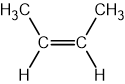
The structure of (Z)-but-2-ene is shown in Figure 2.

Figure 2

Chemical structure of Z-but-2-ene, depicting a double bond between two central carbon atoms, each bonded to a methyl group and a hydrogen atom.

Draw the polymer of (Z)-but-2ene. Include 3 repeat units.

6c
3 marks

State, with a reason, whether (E)-but-2ene, when polymerised, would result in the same or a different polymer.

6d
2 marks

Compare the strength of the intermolecular forces between molecules of polybutadiene and polybut-2-ene.

Explain the nature of the intermolecular forces.

6e
2 marks

Describe a problem associated with the disposal of addition polymers and suggest a possible solution.

1a
4 marks

Poly(phenylethene) is widely used as a polymer for many purposes such as packaging. The structure of poly(phenylethene) is shown in Figure 1 below. 

Figure 1

1-13

i) State the type of polymerisation and the draw the monomer used to make poly(phenylethane). 

ii) Suggest why the monomer is liquid at room temperature but poly(phenylethene) is in the solid state at room temperature. 

1b
4 marks

Terylene was one of the first man made polymers produced to be used as fibres for Clothing. The structures of the two monomers used to make Terylene are shown in Figure 2.

Figure 2

2-12

i) Give the IUPAC names for Compound A and Compound B.

ii) Draw the structure of the repeating unit produced from these two monomers.

iii) Give the name of this type of polymerisation.

iv) Give the name of the linkage once the polymer has been formed.

1c
6 marks

Explain why poly(phenylethene) drawn in Figure 1 of part (a) is far less reactive than Terylene described in part (b).

1d
1 mark

Identify a solution that would break down Terylene but not break down poly(phenylethene).

2a
3 marks

The structure of Kevlar is shown in Figure 1. State the type of polymerisation and draw the two monomers used to make Kevlar. 

Figure 1

3-12
2b
4 marks

Draw a second strand of Kevlar underneath Figure 2 to show how the strands are attached to one another.

Use your diagram to explain why Kevlar can be used for making items that require high strength.

Figure 2

4-12
2c
4 marks

High density poly(ethene), HDPE, is an example of a polyalkene and is used to make items such as plastic pipes and washing up bowls.

State the difference in biodegradability between Kevlar and high density poly(ethene), HDPE. Use your knowledge of structure and bonding to explain this difference.

2d
2 marks

Draw the salt formed when Kevlar reacts with hot, concentrated sodium hydroxide and give the name of this type of reaction.

3a
1 mark

One of the following molecules in Figure 1 below can polymerise by reaction with itself. Identify the molecule and justify your answer.

Figure 1 

                                                A         HOOCCH2CH2COOH 

                                                B         CH3CH2CONH2                                   

                                                C         NH2CH2CH2COCl 

                                                D         NH2CH2CH2CH2NH2

3b
1 mark

Valylalanine in Figure 2 below, is an example of a dipeptide composed of two amino acids, valine and alanine.

When this compound is placed in acidic conditions, two species are formed.

Draw one of these two species. 

Figure 2

5-9
3c
4 marks

The structure of glycine, an amino acid, is shown below in Figure 3. 

Figure 3         

6-9

i) Give the IUPAC name of glycine.

ii) Draw the displayed structure of the compound formed from the reaction of glycine with an excess of sodium hydroxide, NaOH.

iii) Draw the displayed structure of the compound formed from the reaction of glycine with an excess of ethanol, CH3CH2OH, in the presence of concentrated sulfuric acid, H2SO4.

iv) Draw the displayed structure of the compound formed from the reaction of glycine with ethanoyl chloride, CH3COCl

3d
6 marks

Unlike the polymers formed by condensation reactions, polyalkenes which are formed by addition polymerisation are not biodegradable. If not disposed of correctly, polyalkenes can end up in a landfill, or as pollution in rivers and oceans.

Evaluate the advantages and disadvantages of incinerating and recycling polyalkenes.

4a
3 marks

Compound A, (CH3)2C=C(CH3)2, is a hydrocarbon that can undergo polymerisation and can also react with bromine water, decolourising it.

i) Name the type of polymerisation that is involved and draw the repeating unit of the polymer formed.

ii) Draw an isomer of Compound A that will not react with bromine water.

4b
2 marks

A dipeptide made from the amino acids cysteine and tryptophan is shown in Figure 1.

Cysteine contains a sulphur molecule. 

Figure 1 

7-6

i) Draw the structure of the amino acid tryptophan.

ii) Draw the structure of the zwitterion of cysteine.

4c
2 marks

Amino acids such as serine in Figure 2 will form polyamide links. Polyamides will contain the same type of links and these polymers can be used to form fibres suitable for weaving. Polymers formed from alkenes by additional polymerisation are usually took weak for this purpose.

 Figure 2

8-5

In terms of intermolecular forces between the polymer chains, explain why polyalkenes are not suitable to be used as fibres for weaving.

4d
3 marks

Serine is an example of an amino acid. Amino acids contain a chiral carbon and exhibit optical isomerism.

i) Give the meaning of the term racemate.

ii) Explain how you would distinguish between serine and one of the enantiomers of serine drawn in Figure 2, but why this could be a problem with a racemic mixture.

5a
3 marks

Nylon is an example of a synthetic polyamide and contains the same links as polypeptides. Nylon is the general name for a family of polyamides. A section of a nylon polymer is shown in Figure 1.

Figure 1

aqa-chemistry-trial-june

i) Draw the structures of two monomers that could be used to make this nylon.

ii) State the type of polymerisation involved in the formation of this nylon.

5b
5 marks

Nylon can be used to make clothing. Suggest why nylon should be protected from spillages of strong acids and alkalis.

5c
2 marks

Nomex, drawn in Figure 2, has a higher melting point than nylon and is used to make the flame resistant body suits worn by racing drivers.

Suggest a reason why the melting point of Nomex is higher than that of nylon.

Figure 2 

10-3
5d
3 marks

Draw the two monomers that are used to manufacture Nomex drawn in Figure 2 and give the formula of any by-products produced

1a
3 marks

A section of polymer is shown in Figure 1

Figure 1

1-14

i) Draw the repeating unit for this polymer.

ii) Name the monomer used to form this polymer.

iii) State the common name of this polymer.

1b
2 marks

Bis(2-ethylhexyl) adipate, shown in Figure 2, was one of the first plasticisers used to soften polychloroethene from the rigid plastic used for drain pipes and guttering to its more flexible version used in clingfilm.

Figure 2

2-13

 Explain how this plasticiser softens polychloroethene.

1c
1 mark

Name the chemicals used to make bis(2-ethylhexyl) adipate, shown in Figure 2.

Figure 2

2-13
1d
2 marks

Explain why the chemicals, identified in part (c), that are used to make bis(2-ethylhexyl) adipate cannot form a condensation polymer.

2a
1 mark

Draw the repeat unit for the general condensation polymerisation of a dicarboxylic acid and a diol as shown in Figure 1.

 Figure 1

3-13
2b
1 mark

In terms of n, state the number of molecules of water formed in the condensation polymerisation reaction of a general dicarboxylic acid and a general diol as shown in Figure 1.

Figure 1

3-13
2c
3 marks

Using displayed formulae, write the balanced equation for the condensation polymerisation of the two monomers, propanedioyl dichloride and butane-1,4-diol.

2d
1 mark

Suggest an alternative pair of monomers that will produce the polymer from part (c).

3a
2 marks

One family of condensation polymers are the aramids, so called because of the arene rings that are linked together with amide bonds. Kevlar ® and Nomex ® are two common examples of aramids.

Kevlar ® has a variety of uses, including bulletproof vests and puncture resistant tyres, due to its strength and being lightweight. Nomex ® is most commonly used as a lining of the overalls worn by racing drivers and their pit crews as well as in the personal protective equipment of firefighters due to its flame resistant properties.

Nomex ® is made from 1,3-diaminobenzene and 1,3-benzenedicarboxylic acid.

Draw the skeletal structures of these monomers.

3b
3 marks

Draw the structure of the Nomex ® polymer.

3c
2 marks

Kevlar ® is made from 1,4-diaminobenzene and 1,4-benzenedicarboxylic acid.

Draw two repeat units of the polymer to show the strongest intermolecular force in Kevlar ®. 

3d
2 marks

State whether Kevlar ® or Nomex ® will have the higher melting point.

Justify your answer.

4a
2 marks

Polyethylene terephthalate, PET, is an increasingly common polymer as it is lightweight and strong. The repeat unit of PET is shown in Figure 1.

Figure 1

Chemical structure of poly(ethylene terephthalate), showing repeating units with ester linkages, a benzene ring, and ethylene glycol segments.

PET is made from the two monomers terephthalic acid and ethylene glycol.

Give the systematic IUPAC names of these two monomers.

4b
2 marks

According to the Department for Environment, Food & Rural Affairs, 43.8% of the 2.361 megatonnes of the UK’s plastic waste was recycled in 2018.

Explain how the use of polyester based plastics such as PET can help with the UK waste plastic problem, even if it is not recycled.

4c
3 marks

Condensation polymers biodegrade more quickly on compost heaps than in landfill sites.

Suggest three reasons for this.

4d
3 marks

The main methods of polymer disposal are landfill, incineration and recycling.

Give three reasons why, despite its disadvantages, landfill is still the most effective method of waste disposal.

5a
1 mark

Lactic acid, C3H6O3, is a carboxylic acid with a secondary alcohol functional group.

Draw the displayed formula of lactic acid.

5b
2 marks

Lactic acid can form the condensation polymer polylactic acid, PLA.

Draw a section of the PLA polymer showing two repeat units.

5c
2 marks

The structure in Figure 1 shows the repeat unit of a polymer.

 Figure 1

5-10

Give the IUPAC names of the monomers used to form this polymer.

5d
1 mark

The structures in Figure 2 are two possible repeat units of the condensation polymer formed by the reaction of 1,3-diaminopropane and butane-1,4-dioic acid.

Figure 2

eIujol3q_6-10

Draw an alternative repeat unit for the same condensation polymerisation of 1,3-diaminopropane and butane-1,4-dioic acid.