Syllabus Edition

First teaching 2025

First exams 2027

Motivation: Health & Wellbeing (DP IB Psychology: HL): Exam Questions

30 mins4 questions
1
3 marks

Source 1

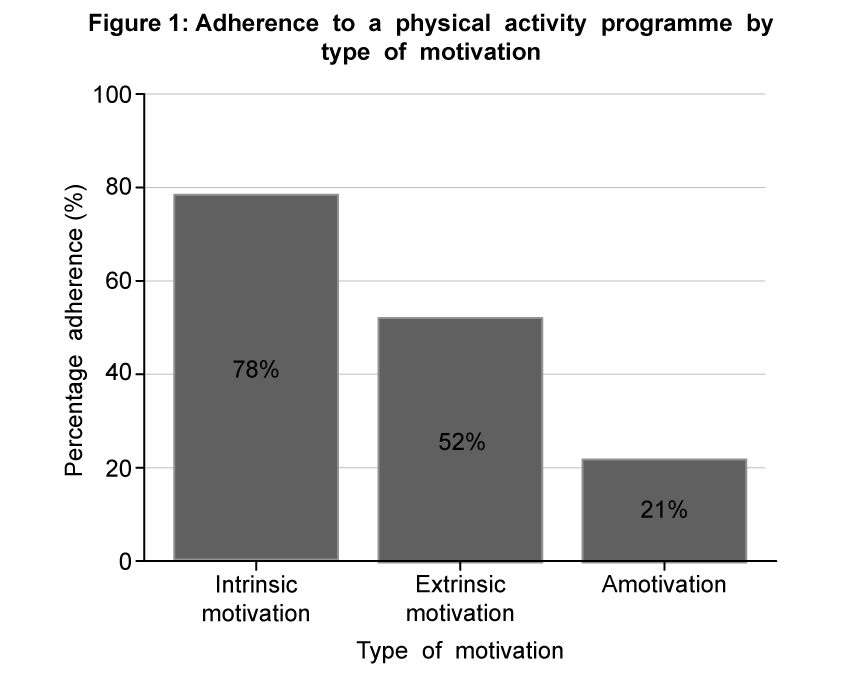
Figure 1 shows the effect of different types of motivation on adherence to a physical activity programme over a 12-week period. Adherence is measured as the percentage of participants who completed the programme.

Participants were divided into three groups:

  • Intrinsic motivation (e.g. enjoyment, personal goals)

  • Extrinsic motivation (e.g. rewards, praise)

  • Amotivation (low or no motivation)

Bar chart showing adherence to a physical activity programme: Intrinsic motivation 78%, Extrinsic motivation 52%, Amotivation 21%.

Explain one issue that limits the interpretation of the data in source 1.

2
6 marks

Source 2

A sample of 60 adults diagnosed with Type 2 diabetes took part in a 10-week lifestyle intervention programme focusing on diet and exercise. Participants completed a self-report motivation scale at the start of the programme and were categorised as either highly motivated or low motivation.

Table 1: Wellbeing scores by motivation level

Motivation level

Mean score

Standard deviation

High motivation

31.2

4.1

Low motivation

24.6

5.3

At the end of the programme, all participants completed a wellbeing questionnaire (maximum score = 40, higher scores indicate better wellbeing).

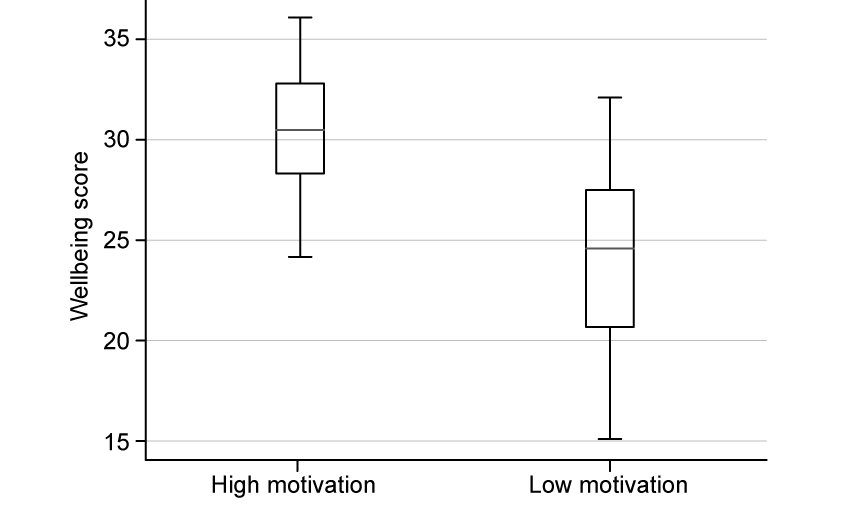
Figure 2: A box and whisker plot consistent with the data in Table 1 shows that the median wellbeing score is higher for the highly motivated group, with a narrower interquartile range compared to the low motivation group, indicating more consistent wellbeing outcomes among highly motivated participants.

Figure 2: Wellbeing scores by motivation level

Box plot comparing wellbeing scores for high and low motivation groups, with scores ranging from 15 to 35 on the y-axis.

Analyse the findings from source 2 and state a conclusion linked to the claim that motivation plays a key role in improving health and wellbeing.
3
6 marks

Source 3

A public health researcher evaluated a school-based stress reduction campaign designed to improve adolescents’ health and wellbeing by increasing motivation to use stress-management techniques (e.g. breathing exercises, sleep routines, mindfulness).

The researcher used non-participant observation during campaign workshops across four schools. Observations focused on levels of engagement, participation, and persistence with activities. Field notes were analysed using thematic analysis.

The following themes were identified:

  • Students were more engaged when activities were presented as personally useful rather than compulsory

  • Messages that supported student autonomy, such as encouraging personal choice, increased persistence

  • Visible peer engagement increased motivation to participate

  • Some students disengaged when the campaign was framed around exam pressure rather than wellbeing

Discuss how the researcher could improve the credibility of the findings in source 3.

4
15 marks

To what extent can we conclude that motivation plays a key role in the prevention or treatment of health problems? In your answer, use your own knowledge and at least three of sources 2–5 (opens in a new tab).