Case Study
Simply Bake plc
Palm oil is a cheap oil ingredient used in the manufacture of many everyday items. Production of palm oil often involves farmers clearing rainforests. The destruction of this habitat has led to the loss of many animal species, including half of the world’s orangutans.
Powerful campaign groups with many members, such as Greenpeace and the World Wildlife Foundation, have highlighted the issue. As a result, consumers are increasingly aware of the environmental impact of using palm oil.
Simply Bake plc is a supplier of cakes to supermarkets, who then retail them as their ‘own brand’ products. For many years, palm oil has been an important ingredient in Simply Bake plc’s products, allowing it to meet the demand for cheap food.
In 2018, a small campaign group, Action against Palm Oil (APO), criticised Simply Bake plc. APO had carried out a survey using a sample of 100 of its 400 members to represent the views of UK consumers. The survey found that 67% of respondents wanted the government to ban the use of palm oil.
High-profile media campaigns have increasingly drawn attention to the issue of palm oil production. By 2019, supermarkets had noticed increasing numbers of enquiries from their customers about palm oil and environmental damage.
Finding alternative ingredients is difficult and expensive, but in 2020 Simply Bake plc announced that it will have changed all its recipes to remove palm oil by 2025.
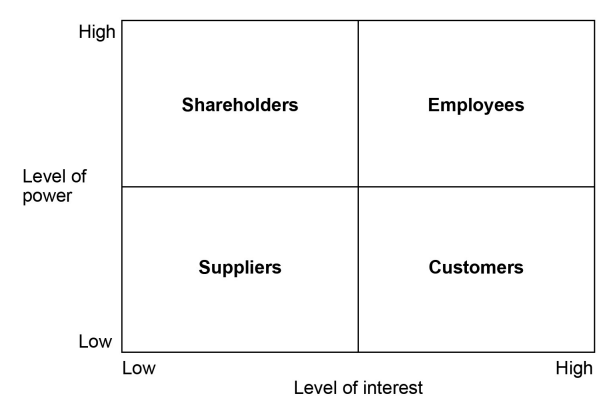
Explain how stakeholder mapping would help Simply Bake plc decide how it responds to criticism from APO.
Was this exam question helpful?