Understanding Markets and Customers (AQA A Level Business): Exam Questions

Exam code: 7132

1 hour15 questions
1
1 mark

Assuming no other changes, sales revenue for a product will stay the same if:

  • incomes rise by 10% and the income elasticity of demand for the product is 0

  • incomes rise by 10% and the income elasticity of demand for the product is +0.1

  • the price rises by 10% and the price elasticity of demand for the product is 0

  • the price rises by 10% and the price elasticity of demand for the product is –10

2
9 marks

A company sells a single product: Product A.

Table 2 Income and price elasticity of demand for Product A

Income elasticity of demand

+0.5

Price elasticity of demand

–2.0

During the next year:

  • consumer incomes fall

  • the price of Product A increases.

Based solely on the information provided above, analyse how the sales revenue for Product A will change over the next year.

3
4 marks

Case Study

Simply Bake plc

Palm oil is a cheap oil ingredient used in the manufacture of many everyday items. Production of palm oil often involves farmers clearing rainforests. The destruction of this habitat has led to the loss of many animal species, including half of the world’s orangutans.

Powerful campaign groups with many members, such as Greenpeace and the World Wildlife Foundation, have highlighted the issue. As a result, consumers are increasingly aware of the environmental impact of using palm oil.

Simply Bake plc is a supplier of cakes to supermarkets, who then retail them as their ‘own brand’ products. For many years, palm oil has been an important ingredient in Simply Bake plc’s products, allowing it to meet the demand for cheap food.

In 2018, a small campaign group, Action against Palm Oil (APO), criticised Simply Bake plc. APO had carried out a survey using a sample of 100 of its 400 members to represent the views of UK consumers. The survey found that 67% of respondents wanted the government to ban the use of palm oil.

High-profile media campaigns have increasingly drawn attention to the issue of palm oil production. By 2019, supermarkets had noticed increasing numbers of enquiries from their customers about palm oil and environmental damage.

Finding alternative ingredients is difficult and expensive, but in 2020 Simply Bake plc announced that it will have changed all its recipes to remove palm oil by 2025.
Explain why APO’s survey findings may not represent the views of UK consumers.

4
2 marks

Case Study

The UK tea market

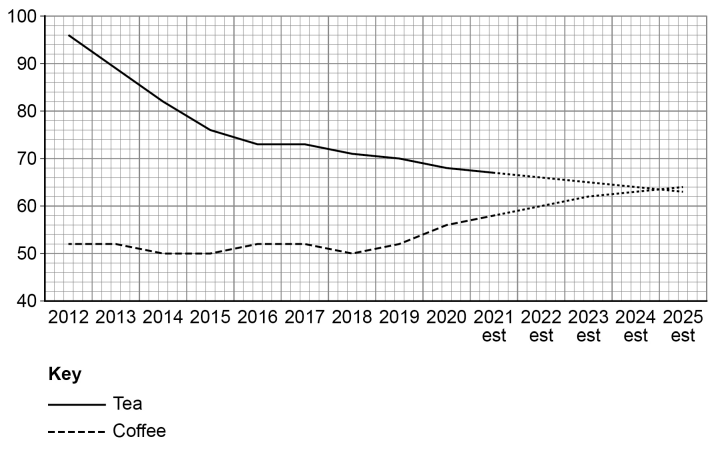
Tea drinking in the UK is declining as younger customers choose alternatives such as coffee. Extrapolation of the annual sales suggests that coffee will outsell tea in the UK by 2025.

Within the overall tea market traditional black tea still dominates sales. However, a ‘health tea’ niche made up of fruit, herbal and green teas is growing. This niche has benefitted from its association with wellbeing.

Appendix A Annual sales volume of black tea and coffee (million kg), UK (actual sales 2012–2020; estimated sales 2021–2025)

Line graph comparing tea and coffee consumption from 2012 to 2025; tea decreases while coffee rises, intersecting in 2024. Tea is solid, coffee is dashed.

Appendix B UK tea brands 2019

Rank

Brand

Annual Sales (£m)

% change

Type of tea in range

1

Twinings

108

+3.8

Black and health tea

2

PG Tips

99

−7.2

Mainly black, with small new health tea range

3

Taylors (including Yorkshire Tea)

98

+5.0

Black and health tea

4

Tetley

90

+0.4

Mainly black but some health tea

5

Pukka

23

+15.4

Organic and ethical black and health teas

Other tea brands

144

Appendix C Price elasticity of demand data

Type of tea

Price elasticity of demand

Black tea

−1.2

Health teas

−0.5

Appendix D Selected data from recent market research survey

How often do you drink black tea? (% of respondents)

Overall

Age 18–24

Age over 65

Several times a day

42

25

56

Once a day

15

16

16

2–3 times per week

10

14

5

Occasionally

12

17

7

Never

21

28

16

Do you drink health tea? (% of respondents)

Yes

Female

32

Male

19

How important is it that the tea you buy is ethically sourced, eg fair trade? (% of respondents)

Important

62

Not very important

26

Not at all important

12

What is meant by the term extrapolation?

5
9 marks

Case Study

The UK tea market

Tea drinking in the UK is declining as younger customers choose alternatives such as coffee. Extrapolation of the annual sales suggests that coffee will outsell tea in the UK by 2025.

Within the overall tea market traditional black tea still dominates sales. However, a ‘health tea’ niche made up of fruit, herbal and green teas is growing. This niche has benefitted from its association with wellbeing.

Appendix A Annual sales volume of black tea and coffee (million kg), UK (actual sales 2012–2020; estimated sales 2021–2025)

Line graph comparing tea and coffee consumption from 2012 to 2025; tea decreases while coffee rises, intersecting in 2024. Tea is solid, coffee is dashed.

Appendix B UK tea brands 2019

Rank

Brand

Annual Sales (£m)

% change

Type of tea in range

1

Twinings

108

+3.8

Black and health tea

2

PG Tips

99

−7.2

Mainly black, with small new health tea range

3

Taylors (including Yorkshire Tea)

98

+5.0

Black and health tea

4

Tetley

90

+0.4

Mainly black but some health tea

5

Pukka

23

+15.4

Organic and ethical black and health teas

Other tea brands

144

Appendix C Price elasticity of demand data

Type of tea

Price elasticity of demand

Black tea

−1.2

Health teas

−0.5

Appendix D Selected data from recent market research survey

How often do you drink black tea? (% of respondents)

Overall

Age 18–24

Age over 65

Several times a day

42

25

56

Once a day

15

16

16

2–3 times per week

10

14

5

Occasionally

12

17

7

Never

21

28

16

Do you drink health tea? (% of respondents)

Yes

Female

32

Male

19

How important is it that the tea you buy is ethically sourced, eg fair trade? (% of respondents)

Important

62

Not very important

26

Not at all important

12

A business sells two types of tea: black tea and health tea.

Analyse how the data in Appendix C will affect how this business might change the price it charges for each type of tea to increase its sales revenue.

6
1 mark

A business introduces two strategies (X and Y) to improve profits:

Strategy X: Focusing on selling goods with a positive income elasticity of demand.
Strategy Y: Reducing unit costs through economies of scope.

Statement 1: ‘Strategy X will not be effective if GDP declines.’

Statement 2: ‘Strategy Y will only be possible if the business produces a wider range of products.’

Read statements 1 and 2 and select the correct option from the following options.

  • Statement 1 is true. Statement 2 is true.

  • Statement 1 is true. Statement 2 is false.

  • Statement 1 is false. Statement 2 is true.

  • Statement 1 is false. Statement 2 is false.

7
1 mark

Statement 1: ‘A prediction based on a strong, negative correlation will have a higher confidence level than one based on a weak, positive correlation.’

Statement 2: ‘A business will base extrapolation on its qualitative market research.’

Read statements 1 and 2 and select the correct option from the following option:

  • Statement 1 is true. Statement 2 is true.

  • Statement 1 is true. Statement 2 is false.

  • Statement 1 is false. Statement 2 is true.

  • Statement 1 is false. Statement 2 is false.

8
9 marks

A business decides to increase the price of a product in order to improve its profit.

Analyse how the success of this decision is affected by the product’s price elasticity of demand.

9
2 marks

Case Study

Banking on change

The UK banking industry is dominated by the ‘Big 5’ banks. These banks have had costly networks of physical branches. Recently they have closed many branches, particularly in rural areas.

New technology and changes to government rules have opened the market to competition from relatively new entrants called ‘challengers’. Challenger banks target a niche and aim to provide better customer service.

Metro Bank, like other challengers, has grown fast, but unfortunately it had to declare losses after a major accounting error in early 2019.

Appendix A Examples of types of challenger bank

Bank(s)

Type of service

Monzo, Starling

Fully online bank (this type includes 90% of challengers)

Tesco, M&S

Bank linked to retailer brand

Metro Bank

City branches open 12 hours a day

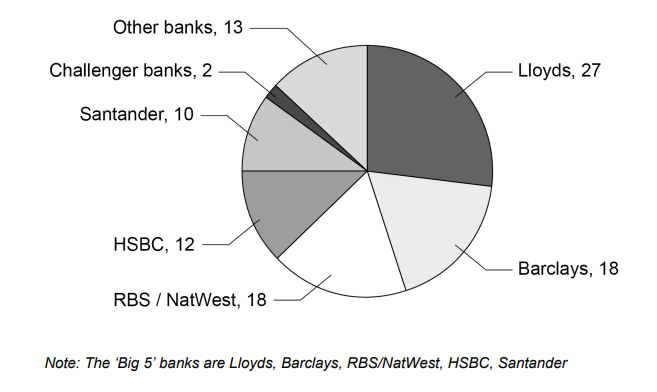
Appendix B Market share of banks in UK, 2019 (%)

Pie chart showing UK bank market share: Lloyds 27%, Barclays 18%, RBS/NatWest 18%, HSBC 12%, Santander 10%, Other banks 13%, Challenger banks 2%.

Appendix C Selected share price and market capitalisation box information

22 February 2019

6 March 2020

Metro Bank share price (pence)

1430.0

128.0

Metro Bank market capitalisation (£)

N/A

218.8m

Barclays Bank market capitalisation (£)

N/A

16 850m

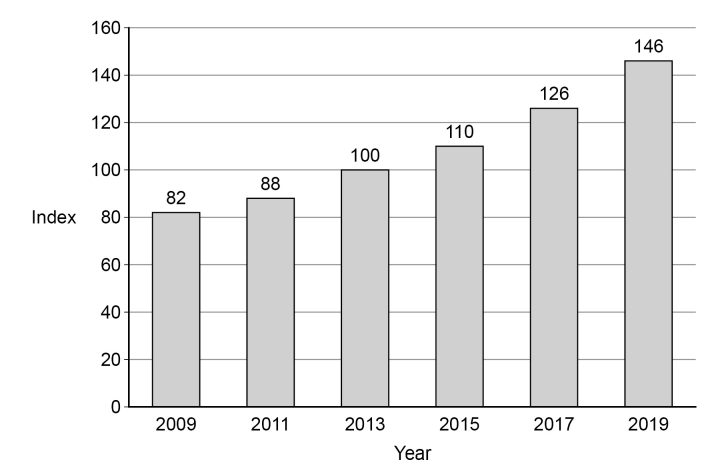
Appendix D People using online banking (2009–2019)
(Index: base year 2013)

Bar chart showing index increase from 82 in 2009 to 146 in 2019, with increments at 2011, 2013, 2015, and 2017.

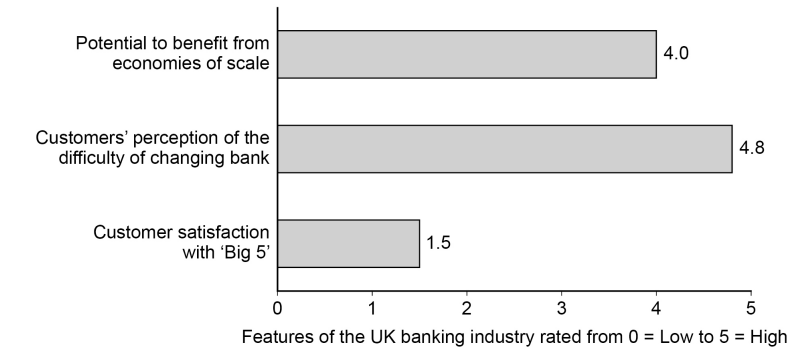
Appendix E Analysis of UK banking industry (2019)

Bar chart of UK banking features: economies of scale rated 4.0, difficulty changing bank 4.8, customer satisfaction with 'Big 5' 1.5, scale 0-5.

Using the data in Appendix D, calculate the percentage change in the number of people using online banking from 2009 to 2019.

10
1 mark

Statement 1: ‘Usually there is a negative correlation between changes in consumers’ incomes and changes in the quantity demanded of a product.’

Statement 2: ‘Usually there is a positive correlation between changes in the price of a competitor’s product and changes in the quantity demanded of a product.’

Read statements 1 and 2 and select the correct option from the following options.

  • Statement 1 is true. Statement 2 is true.

  • Statement 1 is true. Statement 2 is false.

  • Statement 1 is false. Statement 2 is true.

  • Statement 1 is false. Statement 2 is false.

11
1 mark

A business sells four products.

The table below shows the price elasticity of demand and income elasticity of demand for the four products.

Product

Price elasticity of demand

Income elasticity of demand

A

-1.5

-1

B

-1.5

+1

C

-0.5

-1

D

-0.5

+1

A year ago, all four products had identical sales volumes. Since then, each product has had the same percentage cut in price and there has also been a fall in consumer incomes.

Which one of these products has the highest sales volume now?

  • Product A

  • Product B

  • Product C

  • Product D

12
9 marks

Case Study

Zani

Zani PLC is a jewellery retailer. Its products include rings, necklaces and bracelets that are made with precious metals and gemstones. Zani PLC has a strong brand reputation for unique designs. The company targets high-income earners. The price elasticity of demand for Zani PLC’s products is estimated to be –0.4.

Zani PLC was established in 2005 by Ted Zani. Ted had previously worked for a big multinational jewellery business but left because he wanted to be his own boss. He set up the business with venture capital. In its early years, with Ted in charge, the company had a power culture (according to Handy’s model). Shareholders felt a change of culture was necessary as the business got bigger and so Ted was replaced as Chief Executive in 2013.

Zani PLC set up 16 of its own stores in its first eight years. The company has continued to grow since then by selling 150 franchises around the world.

The price elasticity of demand for Zani PLC’s products has a value of –0.4.

Analyse reasons why the price elasticity of demand for Zani PLC’s products might have this value.

13
1 mark

A good has a negative income elasticity of demand and a negative price elasticity of demand.

Statement 1: ‘Other things being equal, a fall in consumer incomes must lead to a fall in sales volume for this good.’ Statement 2: ‘Other things being equal, a fall in price must lead to a rise in sales value for this good.’

Read statements 1 and 2 and select the correct option from the following

  • Statement 1 is true. Statement 2 is true.

  • Statement 1 is true. Statement 2 is false.

  • Statement 1 is false. Statement 2 is true.

  • Statement 1 is false. Statement 2 is false.

14
9 marks

A café sells two types of hot drinks. These drinks have the following income elasticities of demand:

Income elasticity of demand

Coffee

+2.0

Tea

-0.5

The volume of coffee sales is several times greater than the volume of tea sales. Based on the information above, analyse how the café’s overall sales volume of hot drinks would be affected by a rise in consumers’ incomes. Assume there are no other changes.

15
3 marks

Case Study

The rise of the discount food retailers

For many years four companies have dominated food retailing sales in the UK: Asda, Morrisons, Sainsbury’s and Tesco. However, these ‘big four’ retailers have faced growing competition from discount retailers such as Aldi and Lidl.

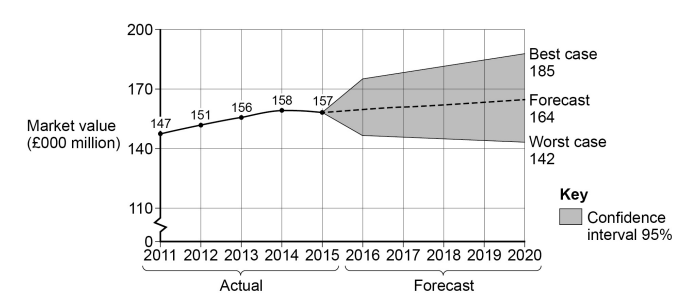
Figure 1: Total UK food retail sales

Line graph of market value (£000 million) from 2011 to 2020, with data shown for 2011-2015 and forecast for 2016-2020. Shaded area indicates 95% confidence interval.

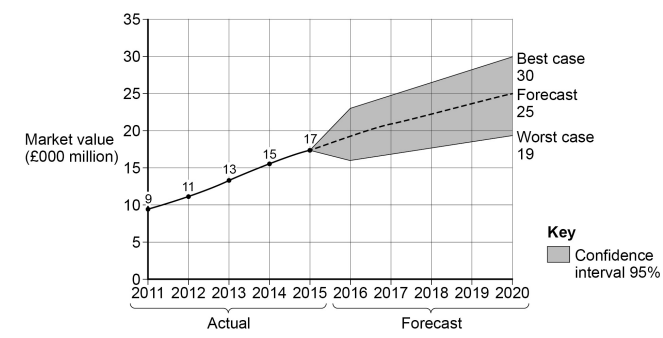
Figure 2: UK food retail sales of discount food retailers

Line graph of market value (£000 million) from 2011 to 2020, showing actual values from 2011 to 2015 and forecast with 95% confidence interval for 2016-2020.

Figure 3: A comparison of the ‘big four’ model with the discounter model

The typical discounter model
eg Aldi, Lidl

‘big four’ model
eg Tesco, Sainsbury’s

Product range in stores

Relatively small
eg 800 items

Large
eg 50 000 items

Brands

Large proportion of own label products traditionally targeting low to medium income earners

Large proportion of well-known brands traditionally targeting high to medium income earners

Sales of food compared to non-food items (eg clothing and health and beauty products)

80%:20%

60%:40%

Administration costs and overheads as percentage of turnover

15%

20%

Typical profit margin

3%

2%

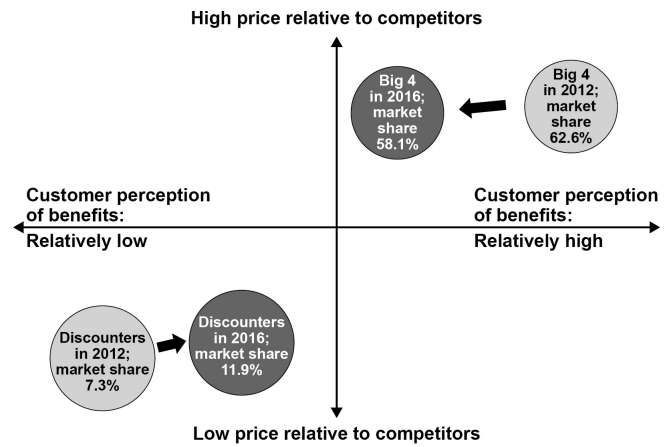
Figure 4: Market map of the UK food retail sector

Graph with axes: price and customer benefit perception. Big 4: higher price, benefit; 2012 market share 62.6%, 2016 58.1%. Discounters: lower price, benefit; 2012 7.3%, 2016 11.9%.

Figure 5: Extract from consumer survey:

“What benefit is most important in determining where you shop?”

Benefit

% of replies

I can rely on what I need being in stock

16

It has a good range of non-food products

17

It has well trained, helpful staff readily available

18

The stores are well designed and maintained

14

Figure 6: Company and Human Resource Data

Aldi Stores Ltd (discount retailer) 2014

Tesco (one of the ‘big four’) 2014

Turnover

£6 893 million

£ 54 443 million

Profit for the year

£250 million

£162 million

Average salary per employee

£21 272

£14 452

Total employee costs

£507 million

£6 968 million

Number of employees

23 858

482 152

With reference to Figure 1, explain the meaning of 95% confidence interval in the forecast for UK food retail market in 2020.