The Marketing Mix (AQA A Level Business): Exam Questions

Exam code: 7132

3 hours16 questions
1
16 marks

Case Study

Biggs Ltd

Biggs Ltd operates in the snack food market, selling crisps, nuts and other savoury products. Potatoes are a key ingredient in its snacks. The price of potatoes has risen by 35% over the last two years.

The company is one of six firms who dominate a market that has been growing strongly for ten years. The market growth is largely due to the development of new snacks designed for children. However, Biggs Ltd’s market share has been falling since 2019.

Biggs Ltd plans to launch a completely new range of products in 2024. It will promote this by sponsoring a major televised sporting competition which has children and families as its audience.

Appendix A Extract from Biggs Ltd’s recent financial statements

2023
£000s

2022
£000s

Revenue

47 569

46 994

Gross profit

22 289

22 820

Operating profit

4 650

4 701

Payables

5 056

5 221

Appendix B Labour productivity for Biggs Ltd and the snack food industry average (shown as an index number, base year = 2017)

Year

Biggs Ltd

Industry average

2020

104.2

104.3

2023

100.3

105.9

Appendix C Marketing expenditure as a percentage of revenue, 2020–2024*
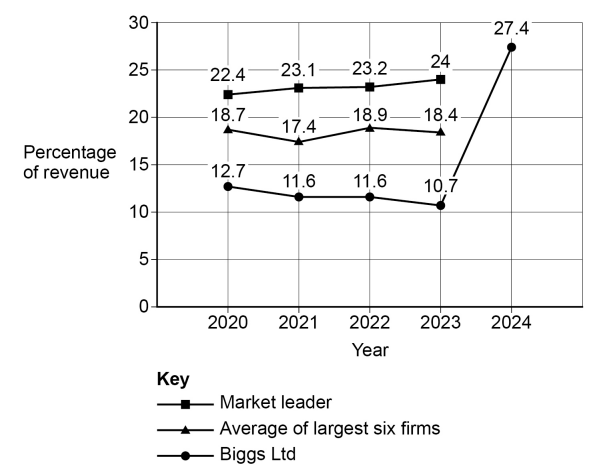
Line graph showing percentage of revenue from 2020 to 2024 for Market leader, Average of largest six firms, and Biggs Ltd. Biggs spikes to 27.4% in 2024.

* 2024 based on Biggs Ltd’s forecast.

Appendix D Results of market research conducted with families on Biggs Ltd’s new product range and the promotional campaign

Survey question

Average survey score by age group

6 to 16 years

17 to 35 years

36 years and over

I will definitely try the new products when they are available.

9.9

7.2

1.8

The promotional campaign improves my view of Biggs Ltd’s brand.

8.3

6.3

8.0

I frequently consume snack foods at sports events.

8.9

6.9

2.7

Scale: 10 = strongly agree, 5 = neither agree nor disagree, 0 = strongly disagree

Source: Data from 27 interviews with families, conducted by Biggs Ltd in 2021.

Appendix E Percentage of snack products bought and consumed by different box age groups
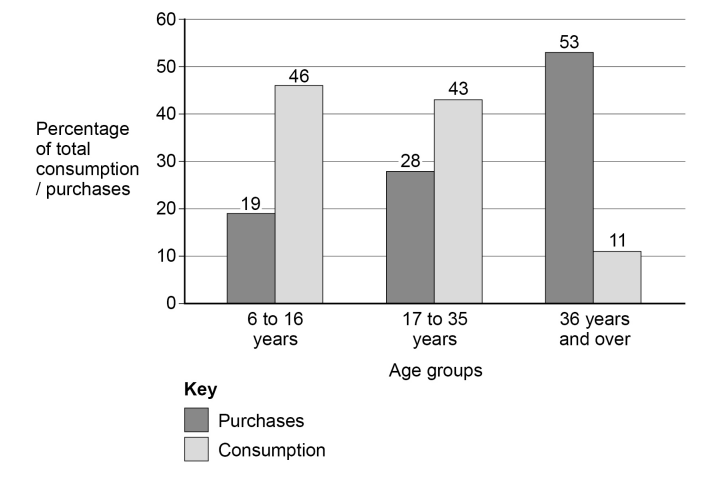
Bar chart showing percentages of purchases and consumption by age group: 6-16, 17-35, and 36 and over. Purchases increase with age.

Results from a recent survey of 3000 respondents conducted by an independent market research firm.

In 2024, Biggs Ltd became the sponsor of a major televised sporting competition that attracts a wide range of ages and is popular with families.

With reference to the information provided, evaluate whether Biggs Ltd’s decision to promote its new product range in this way is a good idea.

2
16 marks

Read the case study in the Insert (opens in a new tab).

If the new production facility is built, Bodhi will aim to increase sales.

To what extent is Bodhi likely to be able to increase sales using his current approach to promotion?

Use Appendix C and other information to justify your answer.

3
25 marks

To what extent might the use of the Boston Matrix enable a multi-product business to achieve overall sales growth?

4
16 marks

Case Study

The UK tea market

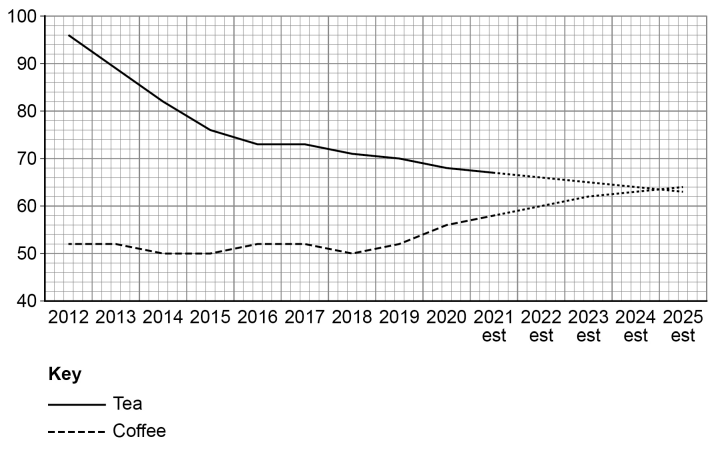
Tea drinking in the UK is declining as younger customers choose alternatives such as coffee. Extrapolation of the annual sales suggests that coffee will outsell tea in the UK by 2025.

Within the overall tea market traditional black tea still dominates sales. However, a ‘health tea’ niche made up of fruit, herbal and green teas is growing. This niche has benefitted from its association with wellbeing.

Appendix A Annual sales volume of black tea and coffee (million kg), UK (actual sales 2012–2020; estimated sales 2021–2025)

Line graph comparing tea and coffee consumption from 2012 to 2025; tea decreases while coffee rises, intersecting in 2024. Tea is solid, coffee is dashed.

Appendix B UK tea brands 2019

Rank

Brand

Annual Sales (£m)

% change

Type of tea in range

1

Twinings

108

+3.8

Black and health tea

2

PG Tips

99

−7.2

Mainly black, with small new health tea range

3

Taylors (including Yorkshire Tea)

98

+5.0

Black and health tea

4

Tetley

90

+0.4

Mainly black but some health tea

5

Pukka

23

+15.4

Organic and ethical black and health teas

Other tea brands

144

Appendix C Price elasticity of demand data

Type of tea

Price elasticity of demand

Black tea

−1.2

Health teas

−0.5

Appendix D Selected data from recent market research survey

How often do you drink black tea? (% of respondents)

Overall

Age 18–24

Age over 65

Several times a day

42

25

56

Once a day

15

16

16

2–3 times per week

10

14

5

Occasionally

12

17

7

Never

21

28

16

Do you drink health tea? (% of respondents)

Yes

Female

32

Male

19

How important is it that the tea you buy is ethically sourced, eg fair trade? (% of respondents)

Important

62

Not very important

26

Not at all important

12

To what extent does the information provided suggest that now is a good time to launch a new brand of tea?

5
12 marks

Read the case study in the Insert (opens in a new tab).

Analyse the factors affecting SSN Ltd’s promotional decisions.

6
1 mark

In 2019, the niche market of electric cars increased its share of the global car sales market from 0.8% to 2.4%. However, global car sales fell by 2.5%. Model X was the most popular electric car. On a Boston Matrix for the global car market in 2019, Model X was a:

  • cash cow.

  • dog.

  • problem child/question mark.

  • star.

7
16 marks

Case Study

Bell Ltd

Bell Ltd is a UK-based food manufacturer with 27 branded products in three main markets:

  • sweets

  • snacks

  • drinks.

The company has been very successful over many years, increasing its market share in each market. It has responded to market changes by investing in the development of new products such as low-sugar and vegetarian ranges. It monitors the sales and costs associated with each of its brands.

100% of shares in Bell Ltd are owned by four members of the Bell family who also have management roles in the business. The owners feel long-term strategic decision making at the company is more effective than if it was a public limited company.

Bell Ltd actively manages the trade credit offered to retailers who buy its products, such as chasing any overdue payments and minimising the period of credit it offers to them. By building long-term relationships with suppliers, it has secured favourable credit terms from them.

Speckles is produced by Bell Ltd and used to be a leading brand of sweets in the UK. In terms of the Boston Matrix, Speckles is now a ‘dog’. It was recently announced that Speckles would be discontinued. A social media campaign against this decision claimed that Speckles was an iconic brand from people’s childhoods and should be saved.

Table 1 Financial data for the Speckles brand

Year

2019

2020

Sales revenue (£’000)

40

20

Cost of sales (£’000)

25

16

Gross profit (£’000)

15

4

Should businesses always stop the production of products classified as ‘dogs’ in the Boston Matrix?

Justify your view.

8
12 marks

Read the case study in the Insert (opens in a new tab).

Analyse how AM plc needs to change its marketing mix to make its new strategy of focused differentiation successful.

9
1 mark

Despite a significant increase in its sales revenue, a product’s market share falls from 60% to 50%.

This product is a

  • cash cow.

  • dog.

  • problem child/question mark.

  • star.

10
1 mark

Penetration pricing is setting a price that is

  • associated with products with high income elasticity of demand.

  • intended to maximise the profit margin on each product.

  • often used when demand is price elastic.

  • often used in markets with high seller power.

11
25 marks

Online sales have grown significantly in recent years.

To what extent has this led to distribution (place) decisions becoming a more important element of an effective marketing mix?

12
12 marks

Read the case study in the Insert.

Analyse two benefits to Hopps Clothing Ltd of creating a strong brand.

13
16 marks

Read the case study in the Insert.

In his first year, Jack only used e-commerce instead of distributing through a retailer. To what extent was this a good choice? You should support your answer using Appendix A and the case study.

14
1 mark

Statement 1: ‘Penetration pricing is more likely to be used if demand is price inelastic.’

Statement 2: ‘Price skimming is more likely to be used if demand is price elastic.’

Read statements 1 and 2 and select the correct option from the following options:

  • Statement 1 is true. Statement 2 is true

  • Statement 1 is true. Statement 2 is false

  • Statement 1 is false. Statement 2 is true

  • Statement 1 is false. Statement 2 is false

15
9 marks

Case Study

Kento Cola

Carbonated soft drinks (CSDs), such as cola, are non-alcoholic, fizzy beverages containing flavourings, sweeteners and other ingredients. CSDs have been criticised by some commentators for contributing to an obesity crisis. The World Health Organisation is encouraging more governments to place a tax on CSDs.

Kento Cola is a drinks manufacturer based in the UK. It is presently reviewing its portfolio within Europe, which traditionally has been its biggest market. Recently the company has also been investing more money into markets outside of Europe. For example, it is set to invest £2.4 billion in Africa by 2020. Last month Kento announced a planned merger with one of South Africa’s largest bottled water and still drinks producers.

Whilst other economies are in decline or experiencing slow growth, Africa is continuing to achieve high growth rates. Consumer spending, already rising, is expected to boom between now and 2024 reaching £1.7 trillion per year in 2030. However, trying to grow in any international market brings its challenges and the many countries within Africa differ significantly – for example, socially, politically, culturally and economically as well as in terms of their competitive environment.

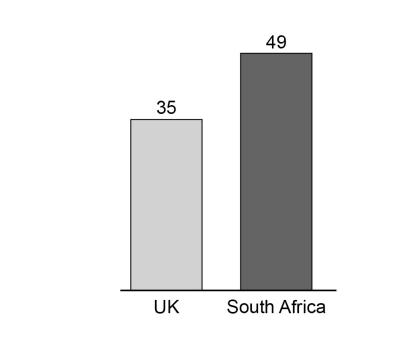
Figure 7: A comparison of Power Distance index, one of Hofstede’s cultural dimensions, between the UK and South Africa.

The rating is an index number out of 100.

Bar chart comparing the UK and South Africa. UK bar is light grey with a value of 35; South Africa bar is dark grey with a value of 49.

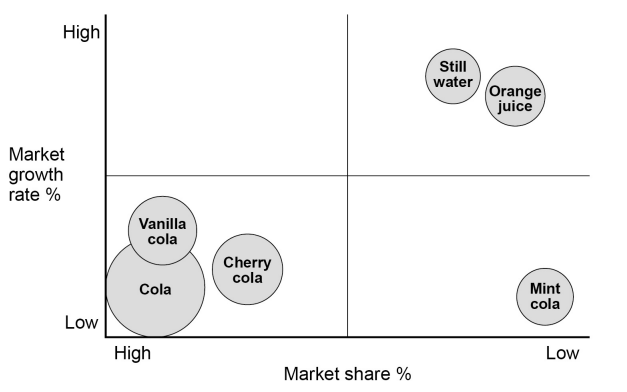
Figure 8: Kento’s products in Europe

BCG matrix showing products: Vanilla cola, Cola, Cherry cola (low growth, high share); Still water, Orange juice (high growth, low share); Mint cola (low growth, low share).

The area of the circle represents the product’s revenue.

Figure 9: A comparison of Africa and Europe in 2016

Africa

Europe

Population

1 218 million

738 million

Annual population growth

2.53%

0.06%

% population that is urban

40%

74%

Average age

19.5 years old

41.9 years old

Average annual income per person

£1 400

£29 200

With reference to Figure 8, analyse the actions Kento should take regarding its product portfolio in Europe to improve its long term financial performance.

16
24 marks

Read the case study in the Insert.

The nature of KMH plc’s target market is probably the biggest influence on its marketing mix. To what extent is the nature of the target market the most important influence on the marketing mix of all businesses?