Evaluation Questions (Cambridge (CIE) A Level Business): Revision Note
Exam code: 9609

What is evaluation?
Evaluation involves:
showing judgement
weighing up the relative importance of factors
comparing points of view or recommending a course of action
Top-level evaluation needs to be balanced, which requires both sides of an argument to be considered in context
Marks for evaluation in exam papers
Paper 1 | Paper 2 | Paper 3 | Paper 4 |
|---|---|---|---|
15% | 20% | 30% | 35% |
Overall, 25% of the total marks available are awarded for evaluation across all four exam papers
Evaluation questions
Assess questions
These questions require you to make an informed judgement after weighing up both sides
Assess questions are usually awarded 12 marks
Justify questions
These questions require you to support a case with evidence and developed arguments
Justify questions are usually awarded 12 marks
Evaluate questions
These questions require you to judge or calculate the quality, importance, amount, or value of something
Evaluate questions are usually awarded 12 marks
Example
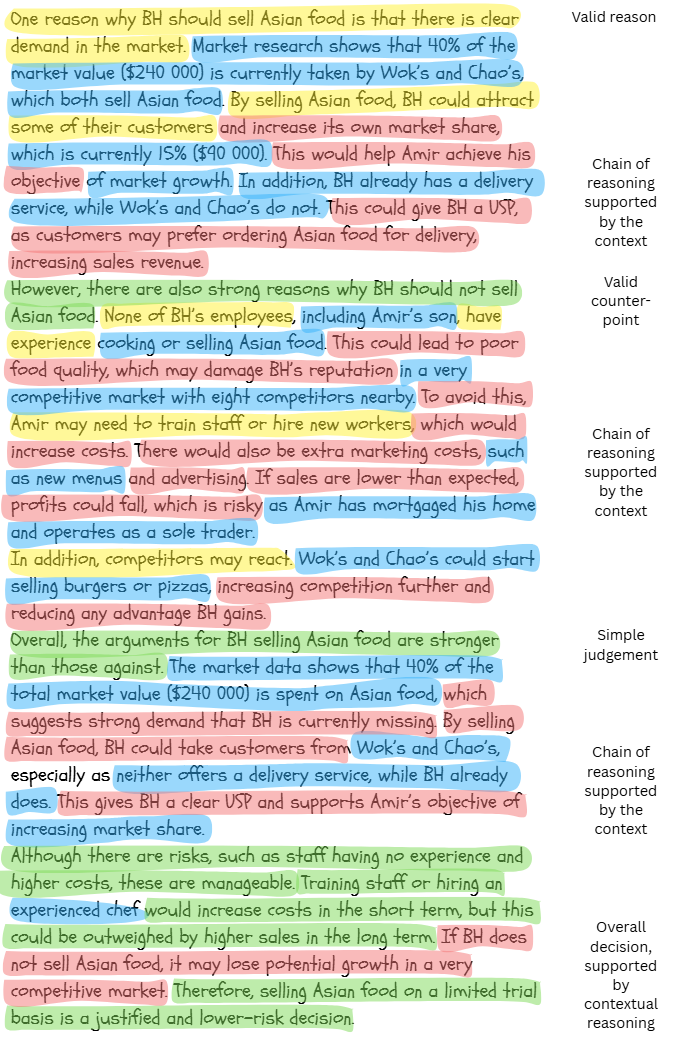
In this example, twelve marks are awarded for clear knowledge and understanding, valid use of the case study, developed chains of reasoning and a strong, clear recommendation
BH is a fast food restaurant and takeaway business, which sells a range of burgers, kebabs, pizzas and side orders. BH also has a delivery service to the local area. BH is owned by Amir, who mortgaged his home to finance the start-up of the business. Amir operates BH as a sole trader. His son also works within the business as a chef. Amir has been advised to change the legal structure of BH and to become a private limited company to protect the business and himself. BH is located on a busy high street, surrounded by many other similar businesses. Amir knows that the continued success of the business requires him to identify a gap in the market and develop a unique selling point (USP). 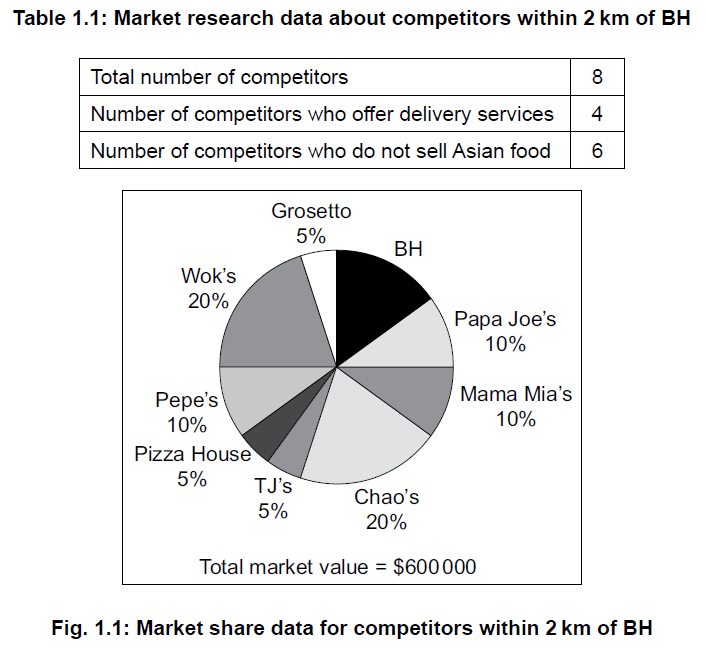 BH's two main rivals are Wok’s and Chao’s. Both businesses specialise in Asian food, but neither has a delivery service. Amir would like to increase BH’s market share. He is considering starting to sell Asian food. None of his employees have any experience cooking or selling Asian food, but Amir believes that the possible increase in income would be worth any extra costs. Evaluate whether BH should sell Asian food. [12] |
|---|
  |
Advise questions
These questions require you to write down a suggested course of action in a given situation
Advise questions are usually awarded 20 marks and only appear in Paper 4
Example
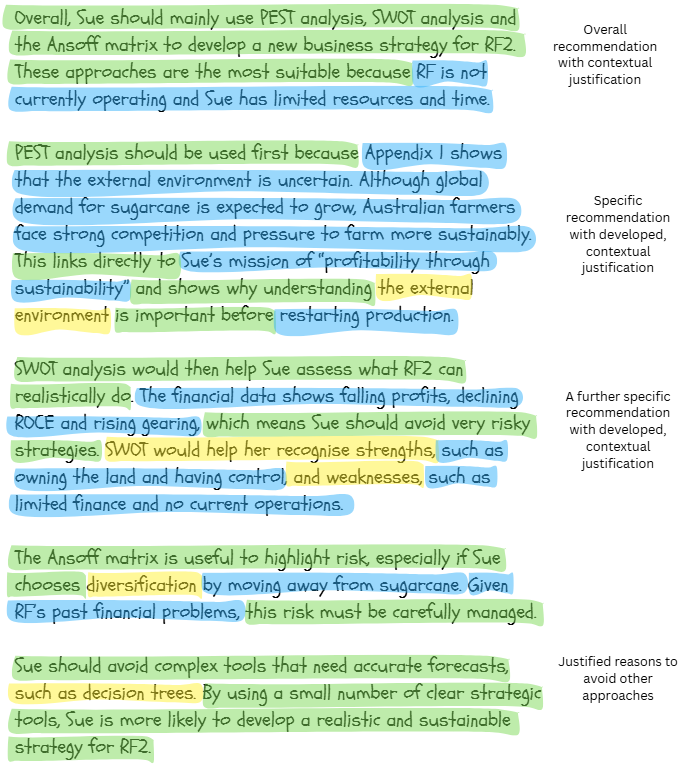
This extract shows a conclusion from a twenty-mark answer, with clear, justified recommendations, supported by frequent references to the context
It also includes a recommendation of which strategic tools should be avoided, again with justification
RF was set up in Australia in 2001 when John Ryan bought a farm, equipment and inventory for $1.5m. He financed the purchase with a bank loan which was fully repaid by 2008. Initially, RF produced sugarcane, pineapples and mangoes. 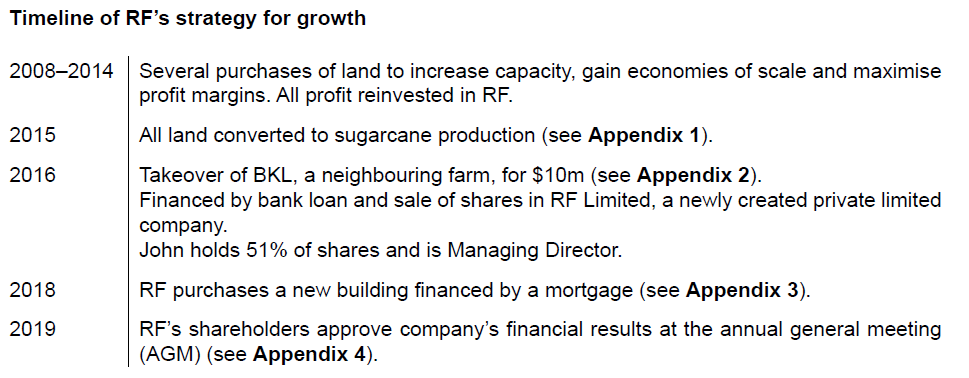 In 2020 a fire destroyed all RF’s buildings and its inventory of recently harvested sugarcane. RF was unable to continue operations. John Ryan has chosen to retire and has left his controlling share of the company to his daughter, Sue. Sue is determined to create a successful new farming business called RF2. She has adopted the following mission and aims as the basis of a business strategy. Mission: 'Profitability through sustainability' Aims
Sue would now like advice on which approaches she should use to develop a new business strategy. 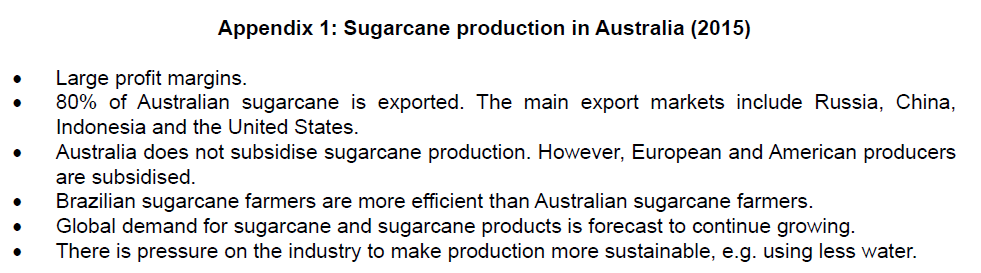   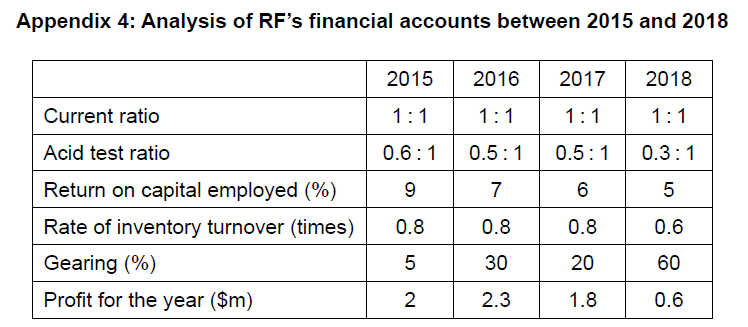 Advise Sue on which approaches she should use to develop a new business strategy for RF2. [20] |
|---|
  |

Unlock more, it's free!
Join the 100,000+ Students that ❤️ Save My Exams
the (exam) results speak for themselves:

Was this revision note helpful?