Making Plans (AQA GCSE French): Revision Note
Exam code: 8652

Written by: Amy Bates
Updated on
Making plans
To make plans with someone in French, you need to be able to:
understand and respond to invitations and suggestions
invite others to do something
use conversational words such as ‘OK’, ‘thank you’ and ‘maybe’
give and understand days and times
use modal verbs to say what you can, want, need or must do
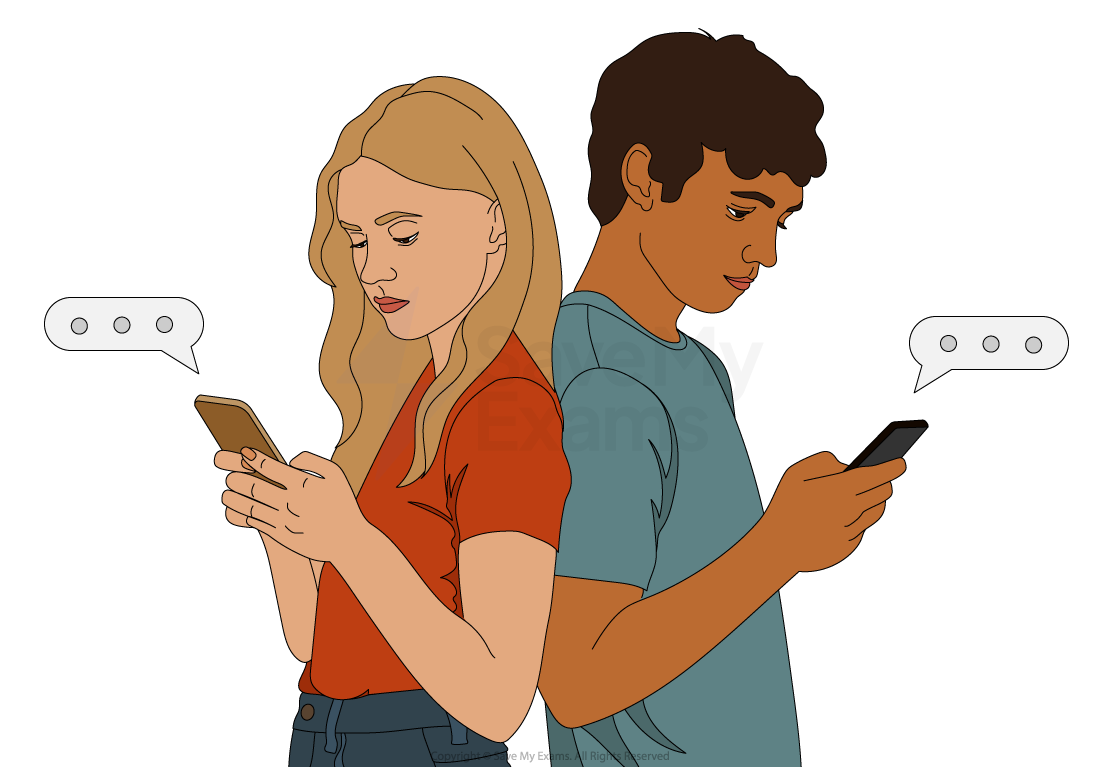
Making plans: vocabulary
Some useful words and phrases for the topic of making plans are:
Tu veux … ?
Do you want to … ?
Tu peux … ?
Can you … ?
À quelle heure ?
At what time?
Je (ne) veux (pas) …
I (don‘t) want to …
Je (ne) peux (pas) …
I can(‘t) …
Je dois …
I have to / must …
Je voudrais …
I would like (to) …
(Je suis) désolé(e)
(I am) sorry
Category | French | Part of speech | English |
Key verbs | aller | v | to go |
sortir | v | to go out | |
venir | v | to come | |
Conversational words and phrases | d’accord | intj | OK |
non | adv | no | |
oui | adv | yes | |
merci | intj | thank you | |
peut-être | adv | maybe, perhaps | |
Days of the week | lundi | n (m) | Monday |
mardi | n (m) | Tuesday | |
mercredi | n (m) | Wednesday | |
jeudi | n (m) | Thursday | |
vendredi | n (m) | Friday | |
samedi | n (m) | Saturday | |
dimanche | n (m) | Sunday | |
Times | après-midi | n (m) | afternoon |
matin | n (m) | morning | |
soir | n (m) | evening | |
week-end | n (m) | weekend |
Remember that days of the week (and months) don’t have capital letters in French
Giving times
To respond to the question À quelle heure ? (At what time?), use à to say ‘at’ + a time in French
The 24-hour clock is more common in French than English, so to say 3PM you would use the number 15
To say ‘o’clock’ or ‘AM / PM’, use heure(s) - we can often leave this out in English, but we must include it in French
Add the words for ‘quarter past’, ‘quarter to’ and ‘half past’ after heure(s)
à | une heure | |
at one o’clock | ||
à | quinze heures | et quart |
at quarter past three (in the afternoon) | ||
à | seize heures | moins le quart |
at quarter to four (in the afternoon) | ||
à | dix-sept heures | et demie |
at half past five (in the afternoon) | ||
A conversation to make plans might look something like this:
Salut Emma ! Qu’est-ce que tu fais ce week-end ?
Bonjour, Lena ! Je ne sais pas encore. Et toi ?
Je voudrais voir un spectacle de musique au théâtre samedi soir. Tu veux venir ?
Oui, bonne idée ! À quelle heure ?
À vingt heures.
D’accord ! À samedi !
Here’s another conversation, but this time the invitation isn’t accepted:
Salut, Marcus ! Tu veux aller au cinéma dimanche après-midi ? Je veux voir un film à quatorze heures.
Désolé, Sam, mais je ne peux pas.
Dommage ! Qu’est-ce que tu fais ?
Je dois faire mes devoirs parce que j’ai un examen la semaine prochaine.
D’accord ! Bonne chance !
Merci beaucoup !
Examiner Tips and Tricks
In the second conversation, you can see two phrases which are very useful for a variety of topics - Dommage ! (What a shame!) and Bonne chance ! (Good luck!).
Phrases like this are a great way to add more fluency to your speaking.

Unlock more, it's free!
Join the 100,000+ Students that ❤️ Save My Exams
the (exam) results speak for themselves:

Was this revision note helpful?