Travel and Transport: Exam Skills (AQA GCSE Spanish): Revision Note
Exam code: 8692

Travel and transport: listening
Here you will see a Foundation Tier activity that models a detail matching (section A) task, requiring you to listen to specific travel vocabulary and simple opinions, as well as a Higher Tier activity, which tests accurate application of Spanish grammar, including the ability to transcribe complex structures like the Impersonal 'se' and adverbs.
Worked Example
Foundation Tier
Listen to four short statements from travellers discussing how they prefer to travel and why. Write the correct letter (A - E) next to each number.
A. Likes the train because it is fast.
B. Travels by bus because tickets are cheap.
C. Hates the car due to traffic.
D. Prefers walking because it is healthy.
E. Always buys a return ticket.
[4 marks]
Answers:
C (Hates the car due to tráfico)
D (Prefers walking because it is healthy (sano))
B (Travels by bus because tickets are cheap (barato))
A (Likes the train because it is fast (rápido) )
Speaker 1: No me gusta ir en coche porque el tráfico es horrible y siempre tardamos mucho tiempo. (I don't like going by car because the traffic is horrible and we always take a long time.)
Speaker 2: Mi modo de transporte favorito es a pie, y prefiero caminar al colegio porque es más sano. (My favorite mode of transport is on foot. I prefer walking to school because it is healthier.)
Speaker 3: Siempre viajo en autobús porque compro los billetes y son muy baratos. (I always travel by bus because I buy the tickets and they are very cheap.)
Speaker 4: Si tengo que ir a otra ciudad, prefiero el tren porque es rápido y llego a tiempo. (If I have to go to another city, I prefer the train. It is fast and I arrive on time.)
Examiner Tips and Tricks
All listening items are heard twice. Use the first listening to identify key words and the second to confirm the link between the speaker's detail and the correct option.
Worked Example
Higher Tier
Dictation requires transcription of at least 30 words and could incorporate the compulsory grammar features of the topic: impersonal 'se' and adverbs.
Transcribe five Spanish sentences related to travel:
[10 marks]
Answer:
Se puede viajar rápidamente en avión (One can travel quickly by plane)
Impersonal 'se', adverb (rápidamente)
Ayer compré un billete de ida (Yesterday I bought a one-way ticket)
Preterite tense, core vocabulary (billete de ida )
Las instalaciones están lejos de aquí (The facilities are far away from here)
Adverb of place (lejos ), plural noun (instalaciones )
Se necesita un coche para la vuelta (A car is needed for the return trip)
Impersonal 'se', core vocabulary (coche , vuelta )
Ellos deberían llegar inmediatamente (They should arrive immediately)
Modal verb (deber), adverb (inmediatamente)
Examiner Tips and Tricks
Dictation sentences are heard three times—fully, in sections, and fully again. Use the sectional listening to focus on accurate verb and spelling endings
Occasional missing accents and minor spelling errors do not mean you can't access a top band mark, but numerous minor errors will impact the overall marks
Travel and transport: speaking
The Photo Card Discussion is the longest and most heavily weighted component of the Speaking exam, worth 25 marks. Here you'll see two photos with sample questions and answers for both Foundation and Higher Tier.
Worked Example
Foundation Tier
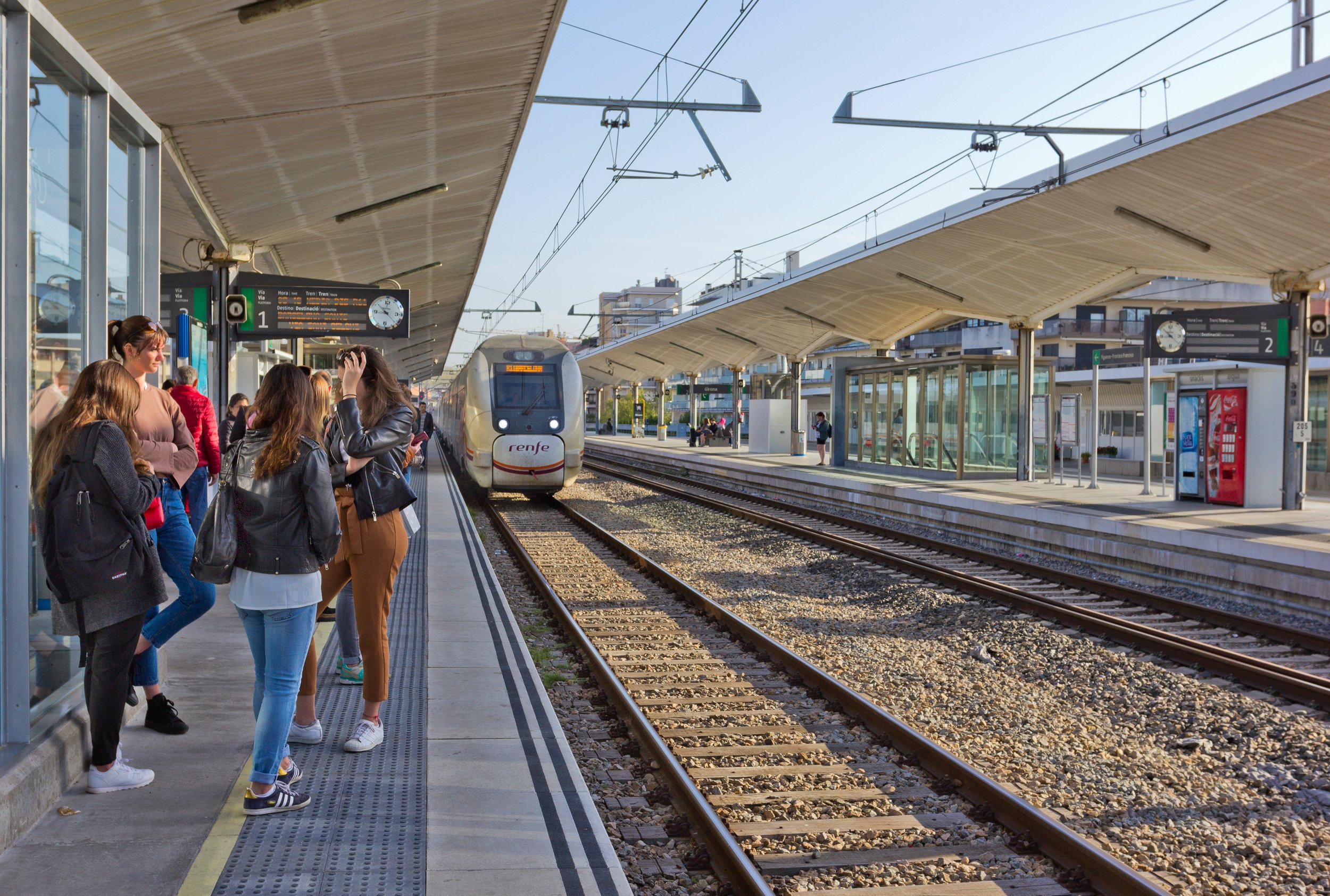
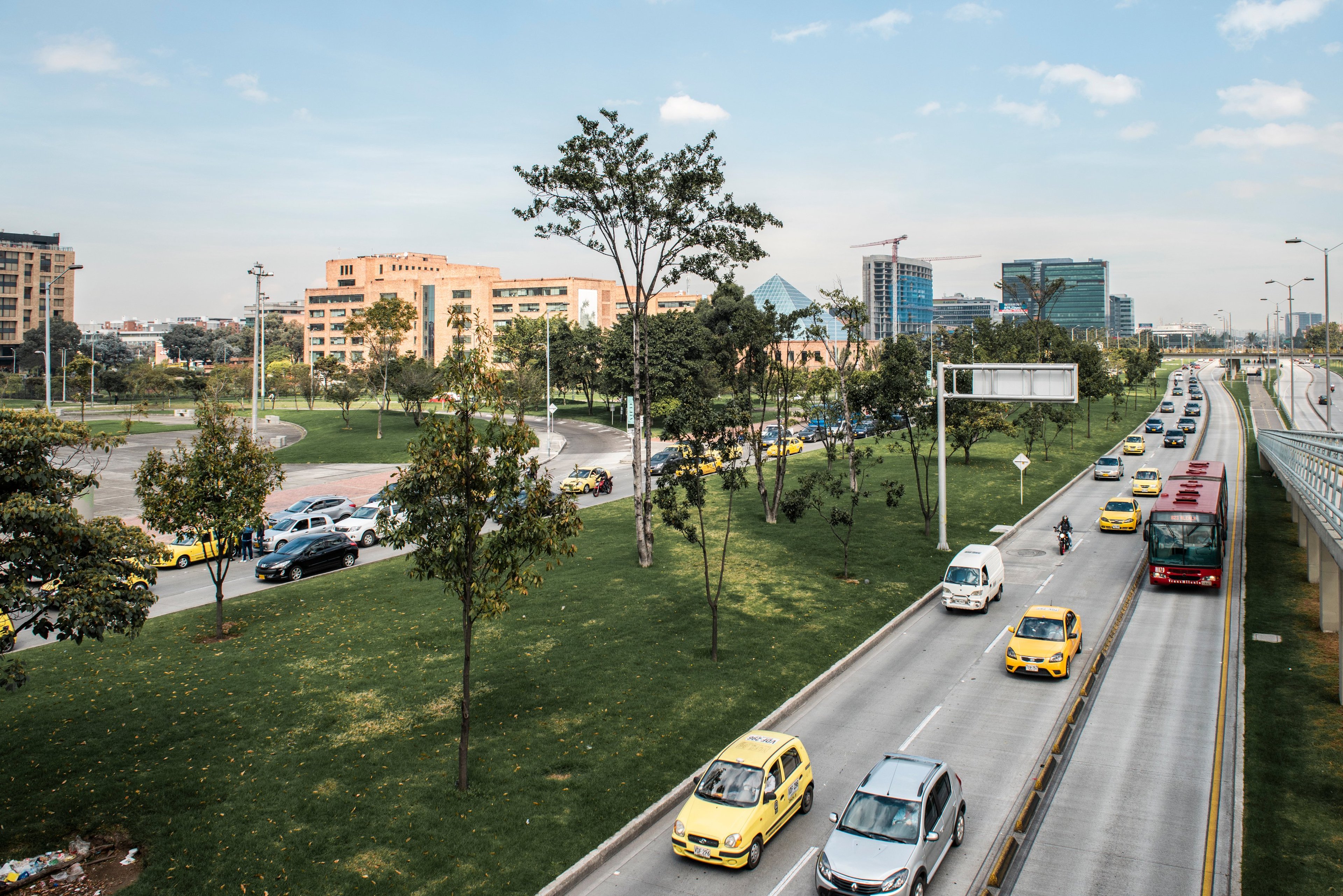
Describe the content of the two photos in Spanish, saying at least one thing about each photo.
Then, prepare answers to the following questions:
¿Qué tipo de transporte público prefieres y por qué?
¿Qué hiciste en tus vacaciones el año pasado?
[25 marks]
Answer:
En la foto uno, veo una estación de tren con mucha gente. Hay un tren que es rápido. Pienso que viajar en tren es cómodo. (In the first photo, I see a train station with many people. There is a train that is fast. I think that traveling by train is comfortable.)
En la segunda foto, veo mushos coches y hay mucho tráfico en la calle. Hay edificios altos. No me gusta el tráfico porque tarda mucho tiempo. (In the second photo, I see many cars and there is a lot of traffic in the street. There are tall buildings. I don't like traffic because it takes a lot of time.)
Uses core vocabulary (tren, coche, tráfico, calle) and verbs in the present tense (veo, es, gusta). The message is conveyed clearly
Prefiero el avión porque es rápido. También se puede ver el cielo y las nubes cuando viajas. (I prefer the plane because it is fast. You can also see the sky and the clouds when you travel.)
Uses Impersonal 'se' (se puede) and provides a reason (porque) to develop the answer
El año pasado fui a Sudamérica con mi familia. Fuimos en barco y visitamos muchos lugares. (Last year I went to South America with my family. We went by boat and visited many places.)
Uses the past tense (preterite) (fui, fuimos, visitamos) to access the appropriate time frame required by the question
Examiner Tips and Tricks
During the description, ensure you say at least one thing about each photo to meet the minimum requirement.
When answering the spontaneous conversation questions, always aim to include a verb in your response for the highest mark band for clarity.
Worked Example
Higher Tier
Describe the content of the two photos in Spanish, saying at least one thing about each photo.
Then, prepare answers to the following questions:
¿Qué harías si tienes que viajar al extranjero la semana que viene?
¿Cuáles son las desventajas de usar el coche en una ciudad grande?
[25 marks]
Answer:
En la primera foto, se puede observar una estación de tren muy concurrida. Hay varias personas que están esperando en el andén, y parece que hace buen tiempo. Creo que se ve el aspecto positivo del transporte público, ya que es eficiente y se viaja rápidamente.
Por otro lado, en la segunda foto, se puede ver una calle muy concurrida en una ciudad. Hay un montón de coches que están parados, lo que sugiere que hay mucho tráfico. Además, se pueden ver edificios altos y modernos detrás de los vehículos. Creo que este aspecto representa un gran problema de las ciudades grandes, ya que el tráfico y el ruido causan mucha contaminación del aire. Parece que la gente está muy ocupada y nerviosa.
English: In the first photo, one can observe a very busy train station. Several people are waiting on the platform, and it seems that the weather is good. I think the positive aspect of public transport is visible, since it is efficient and one travels quickly.
On the other hand, in the second photo, one can see a very busy street in a big city. There are a lot of cars that are stopped, which suggests there is a lot of traffic. Furthermore, one can see tall and modern buildings behind the vehicles. I think this aspect represents a big problem of large cities, since traffic and noise cause a lot of air pollution. It seems that people are very busy and nervous.
Uses the Impersonal se with an infinitive (se puede observar), present continuous (están esperando), and adverbs (rápidamente). Shows developed opinions with connectors (ya que)
Viajaría a Asia o a un país en Sudamérica. Primero, compraría un billete de avión rápidamente y reservaría un hotel con facilidad. Además, haría mis maletas con mucho cuidado para evitar problemas de peso. (I would travel to Asia or a country in South America. First, I would quickly buy a plane ticket and easily reserve a hotel. Besides, I would pack my bags carefully to avoid weight issues.)
Uses the Conditional Tense (viajaría, compraría, haría), demonstrating high complexity. Uses multiple adverbs (rápidamente, fácilmente) and connectors (además). This constitutes an extended response
En mi opinión, la mayor desventaja es el tráfico porque se pierde mucho tiempo. Como consecuencia, el aire está contaminado. Además, es más difícil encontrar aparcamiento y, a menudo, es caro. Creo que se deberían promover otras opciones. (In my opinion, the biggest disadvantage is the traffic because a lot of time is lost. As a consequence, the air is polluted. Also, it is more difficult to find parking and, often, it is expensive. I think other options should be promoted.)
Uses the Impersonal 'se' (passive implication: se pierde / se deberían promover) and the Impersonal hay que for recommendations, plus a range of connectors (como consecuencia, además)
Examiner Tips and Tricks
Always follow up a statement with porque (because), por eso (therefore), or aunque (although)
Ensure you use structures beyond the present, such as the conditional (haría) and the impersonal 'se' (se puede, se debe)
Travel and transport: reading
For the topic of Travel and Transport you will see a translation task, Section B of the Reading exam, as well as a time frame identification task (P, N, F) for Higher Tier.
Worked Example
Foundation Tier
Translate the following sentences into Spanish. The minimum length requirement for the translated text is 35 words at this tier.
Why do you go to the airport by bus?
Yesterday I bought a single ticket at the train station.
I love traveling because historical cities can be visited.
In the future, I want to go to South America with my family.
The traffic in the city is horrible and we took a long time.
[10 marks]
Answer:
¿Por qué vas al aeropuerto en autobús?
Ayer compré un billete sencillo en la estación de tren.
Me encanta viajar porque se pueden visitar ciudades históricas.
En el futuro, quiero ir a Sudamérica con mi familia.
El tráfico en la ciudad es horrible y tardamos mucho tiempo.
Examiner Tips and Tricks
Check the Exam Skills section to see tips on how to do the translation task.
Worked Example
Higher Tier
Read the short text about holiday travel plans. Match each activity below to the time frame it refers to.
Mention
P for something that happened in the past
N for something happening in the present
F for something that will happen in the future
El año pasado, decidimos ir a la costa en coche, aunque tardamos demasiado tiempo. Ahora, estoy usando el tren y voy a trabajar más rápidamente. Siempre intento viajar menos para proteger el medio ambiente. Mi familia y yo iremos a un hotel en marzo para hacer una excursión por las montañas.
Using the train for work.
Protecting the environment is necessary.
Travelling to the coast by car.
Going on a trip in the mountains.
[4 marks]
Answer:
N (Ahora, estoy usando... rápidamente. (Present tense, adverb rápidamente)
N (Siempre intento viajar menos...
P (El año pasado, decidimos ir... (Past time phrase and preterite tense)
F (iremos a un hotel en marzo (Future tense iremos)
English: Last year, we decided to go to the coast by car, although we took too much time. Now, I am using the train and I am going to work more quickly. I think one should travel less to protect the environment. My family and I will go to a hotel in March to take a trip through the mountains.
Travel and transport: writing
For the topic of Travel and Transport you will see a short structured writing (50 words) for Foundation Tier, and an open-ended writing (150 words) for Higher Tier.
Worked Example
Foundation Tier
Write an email to a friend about a holiday you're planning on doing.
Write approximately 50 words in Spanish.
You must write something about each bullet point. Mention:
transport
journey
activity
using the car
shopping
[10 marks]
Answer:
Uso el autobús diariamente para ir al instituto, que está cerca. El viaje tarda solo quince minutos. Mientras viajo, normalmente estoy escuchando música en mi MP3 o leo un libro. Pienso que usar el coche es muy caro y es mejor caminar. Voy a comprar un billete para viajar por toda la ciudad la semana que viene.
English: I use the bus daily to go to school/high school, which is nearby. The journey takes only fifteen minutes. While I travel, I normally listen to music on my MP3 player or read a book. I think that using the car is very expensive and it is better to walk. I am going to buy a ticket to travel all over the city next week.
Examiner Tips and Tricks
Conveying the necessary information clearly and accurately is more important than the exact word count.
Even in this short response, attempt to demonstrate command of at least three time frames (e.g., present uso, present continuous estoy escuchando, and near future voy a comprar).
Worked Example
Higher Tier
This task requires creative use of language, sustained development of ideas, and accurate application of complex language.
Write a blog post about travel. Write approximately 150 words in Spanish. You must write something about both bullet points.
Mention:
your ideal holiday destination and how you would travel there
the advantages and disadvantages of using public transport in your region, and what should be done to improve it
[25 marks]
Answer:
Mi destino ideal sería la costa de Sudamérica. Es un lugar que me fascina por su cultura vibrante y sus paisajes naturales. Viajaría en avión, aunque sé que contamina el medioambiente rápidamente. Sin embargo, no hay otra opción para un viaje tan largo. Pienso que es importante reducir la contaminación porque afecta a la gente y los animales; por eso, intento compensar mis emisiones.
En mi región, el transporte público es muy útil para los estudiantes porque es barato y se puede viajar fácilmente por la ciudad. Además, en horas punta, a menudo es más rápido que el coche porque puede usar carriles especiales. Sin embargo, la mayor desventaja es el ruido constante y que se pierde mucho tiempo esperando el autobús, ya que no son muy frecuentes. Se debería mejorar la frecuencia de los servicios y construir más estaciones cerca de la universidad para hacerlo más eficiente. El gobierno podría invertir más dinero en opciones sostenibles.
English: My ideal destination would be the coast of South America. It is a place that fascinates me because of its vibrant culture and natural landscapes. I would travel by plane, although I know it pollutes the environment rapidly. However, there isn't another option for such a long journey. I think it is important to reduce pollution because it affects people and animals; for that reason, I try to offset my emissions.
In my region, public transport is very useful for students because it is cheap and you can travel easily around the city. Furthermore, during peak hours, it is often faster than the car because it can use special lanes. However, the biggest disadvantage is the constant noise and that a lot of time is wasted waiting for the bus, as they are not very frequent. The frequency of services should be improved and more stations should be built near the university to make it more efficient. The government could invest more money in sustainable options.
Examiner Tips and Tricks
To achieve top marks, aim for regular successful development of ideas. This means explaining why something is an advantage (porque) or detailing how it should be improved (Se debería).
Demonstrate command of complex language. For this task, explicitly include:
The conditional tense (sería, viajaría) for hypothetical situations
The impersonal 'se' (se puede, se debería)
Complex connectors (aunque, sin embargo, además)

Unlock more, it's free!
Join the 100,000+ Students that ❤️ Save My Exams
the (exam) results speak for themselves:

Was this revision note helpful?
