Sample Space Diagrams (SQA National 5 Applications of Mathematics): Revision Note
Exam code: X844 75

Sample space diagrams
What are sample space diagrams?
A sample space diagram displays all the possible outcomes of an experiment
It can be a list or table
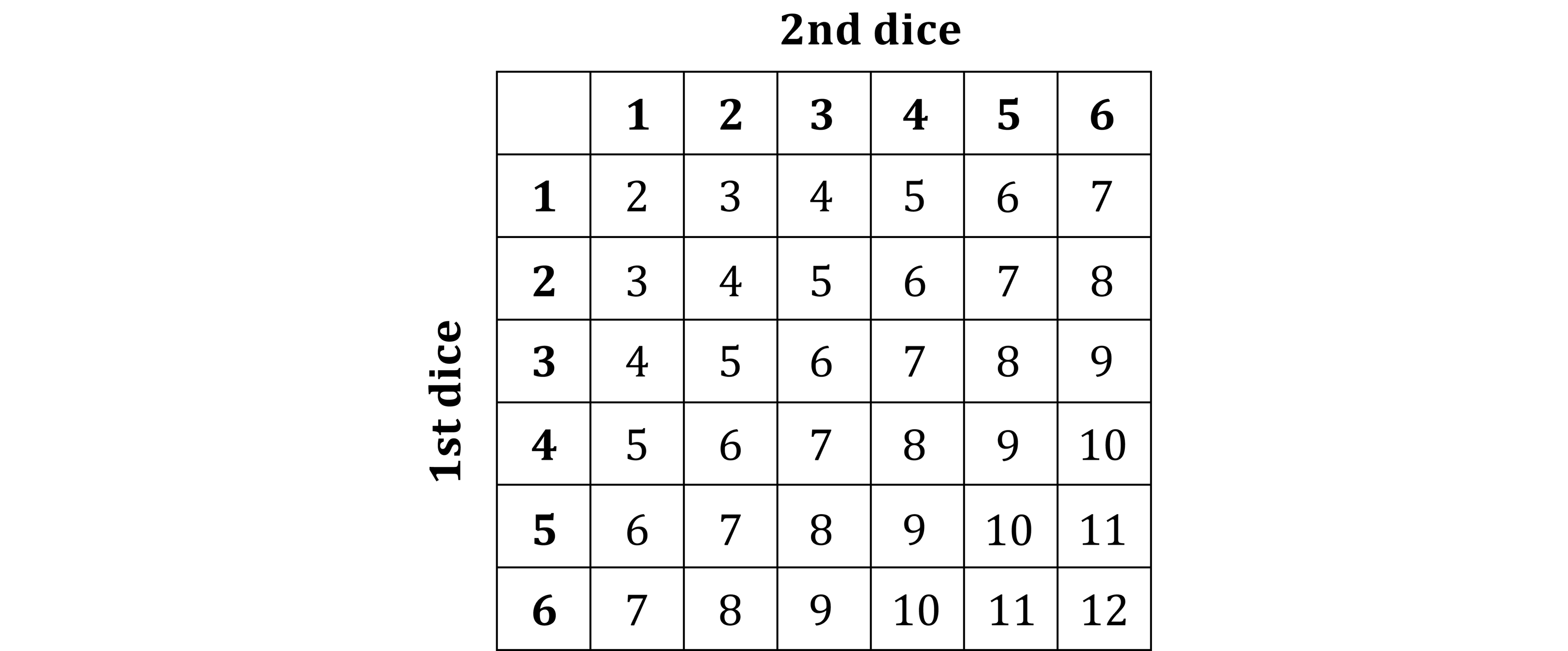
For example, consider rolling two fair dice each numbered 1 to 6 and adding together the numbers
A two-way table is suitable for the sample space diagram
How do I calculate probabilities using a sample space diagram?
STEP 1
Draw or complete a sample space diagrame.g. by adding together the numbers on the dice in the example above
STEP 2
Count the total number of possible outcomesYou can multiply two numbers together if the diagram is a table
e.g. there are 6 × 6 = 36 possible outcomes when rolling two dice
STEP 3
Identify and count the outcomes which satisfy the eventYou can circle or underline them in your diagram
STEP 4
Form a fraction for the probability using
Examiner Tips and Tricks
Tables can be used whenever two experiments occur. For example, picking a day out the week at random and rolling a dice. You can still draw a 7 × 6 table. You can identify the outcomes in this table that satisfy the given event by ticking the boxes in the table.
Worked Example
Lila runs a game stall at a funfair.
The game involves spinning two spinners and letting them come to rest.
The spinners are fair and are shown below.
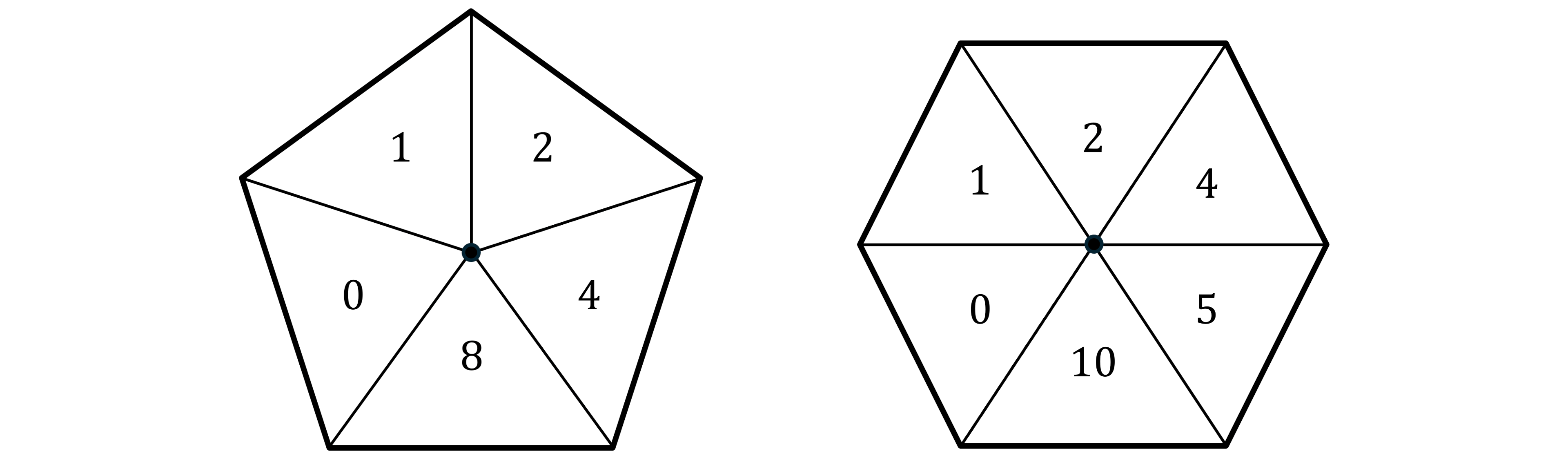
The numbers on which the spinners come to rest are multiplied together.
To win a prize the answer to this multiplication must be greater than 10.
Calculate the probability of winning a prize.
Answer:
Multiply all the different possibilities together
Draw a two-way-table
× | 0 | 1 | 2 | 4 | 8 |
|---|---|---|---|---|---|
0 | 0 | 0 | 0 | 0 | 0 |
1 | 0 | 1 | 2 | 4 | 8 |
2 | 0 | 2 | 4 | 8 | 16 |
4 | 0 | 4 | 8 | 16 | 32 |
5 | 0 | 5 | 10 | 20 | 40 |
10 | 0 | 10 | 20 | 40 | 80 |
Count the total number of outcomes
format('truetype')%3Bfont-weight%3Anormal%3Bfont-style%3Anormal%3B%7D%3C%2Fstyle%3E%3C%2Fdefs%3E%3Ctext%20font-family%3D%22Times%20New%20Roman%22%20font-size%3D%2218%22%20text-anchor%3D%22middle%22%20x%3D%224.5%22%20y%3D%2216%22%3E5%3C%2Ftext%3E%3Ctext%20font-family%3D%22math13d2dc549f508103e95d72be633%22%20font-size%3D%2216%22%20text-anchor%3D%22middle%22%20x%3D%2217.5%22%20y%3D%2216%22%3E%26%23xD7%3B%3C%2Ftext%3E%3Ctext%20font-family%3D%22Times%20New%20Roman%22%20font-size%3D%2218%22%20text-anchor%3D%22middle%22%20x%3D%2230.5%22%20y%3D%2216%22%3E6%3C%2Ftext%3E%3Ctext%20font-family%3D%22math13d2dc549f508103e95d72be633%22%20font-size%3D%2216%22%20text-anchor%3D%22middle%22%20x%3D%2243.5%22%20y%3D%2216%22%3E%3D%3C%2Ftext%3E%3Ctext%20font-family%3D%22Times%20New%20Roman%22%20font-size%3D%2218%22%20text-anchor%3D%22middle%22%20x%3D%2261.5%22%20y%3D%2216%22%3E30%3C%2Ftext%3E%3C%2Fsvg%3E)
Identify the numbers that are greater than 10
× | 0 | 1 | 2 | 4 | 8 |
|---|---|---|---|---|---|
0 | 0 | 0 | 0 | 0 | 0 |
1 | 0 | 1 | 2 | 4 | 8 |
2 | 0 | 2 | 4 | 8 | 16 |
4 | 0 | 4 | 8 | 16 | 32 |
5 | 0 | 5 | 10 | 20 | 40 |
10 | 0 | 10 | 20 | 40 | 80 |
8 are greater than 10
Write the probability as a fraction

You can simplify


Unlock more, it's free!
Join the 100,000+ Students that ❤️ Save My Exams
the (exam) results speak for themselves:

Was this revision note helpful?