In a decision tree there are four possible outcomes of an action.
The probabilities of the 1st, 2nd and 3rd outcomes are 0.4, 0.32 and 0.24 respectively.
The probability of the 4th outcome is:
0.04
0.16
0.16
0.4
Was this exam question helpful?
Exam code: 7132
In a decision tree there are four possible outcomes of an action.
The probabilities of the 1st, 2nd and 3rd outcomes are 0.4, 0.32 and 0.24 respectively.
The probability of the 4th outcome is:
0.04
0.16
0.16
0.4
Choose your answer
Was this exam question helpful?
In a decision tree the net gain of a decision is the:
average pay-off of the outcomes.
expected value of the best decision minus the expected value of the next best decision.
expected value minus the initial cost.
total pay-off of the outcomes minus the initial cost.
Choose your answer
Was this exam question helpful?
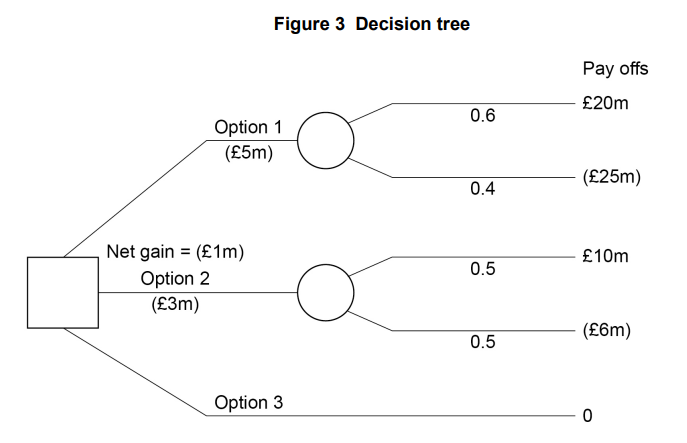
Figure 3 shows a decision tree with three options:
Option 1 is a new promotional campaign.
Option 2 is a modified product.
Option 3 is to do nothing.

(i) Referring to Figure 3, calculate the expected value and the net gain of Option 1.
Expected value =.......................
Net gain =.........................
[3]
(ii) Using these calculations and the other data in Figure 3, state which one of the three options the business should choose.
[1]
How did you do?
Was this exam question helpful?
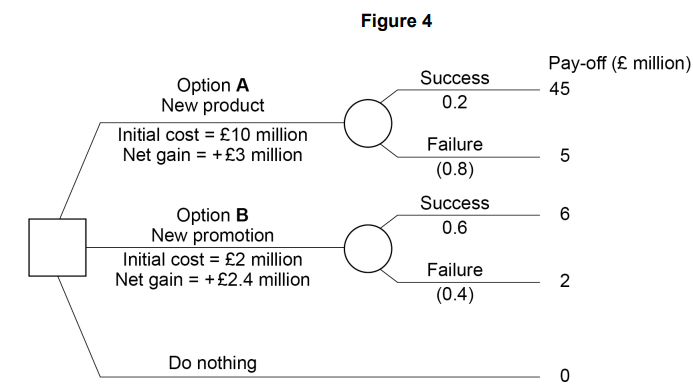
The Marketing Manager of a business is considering whether to choose Option A or Option B.
Option A: Introduce a new product.
Option B: Use a new promotion for an existing product.
Figure 4 shows the results of a decision tree for these options and the ‘do nothing’ option.

Based on this decision tree, the Marketing Manager chooses Option A.
Using Figure 4, analyse why choosing Option A might not be the best decision.
How did you do?
Was this exam question helpful?
Read the case study in the Insert.
Considering both quantitative and qualitative factors, should Jack give up his job to become a full-time entrepreneur? Justify your answer.
How did you do?
Was this exam question helpful?