Management Decision-Making (AQA A Level Business): Exam Questions

Exam code: 7132

Syllabus Edition

First teaching 2023

Last exams 2027

1 hour11 questions
1
1 mark

In a decision tree there are four possible outcomes of an action.

The probabilities of the 1st, 2nd and 3rd outcomes are 0.4, 0.32 and 0.24 respectively.

The probability of the 4th outcome is:

  • 0.04

  • 0.16

  • 0.16

  • 0.4

2
1 mark

In a decision tree, the expected value of a decision is calculated by:

  • Adding together the probabilities of all possible outcomes

  • Multiplying the probability of each outcome by its financial value and summing the results

  • Subtracting the initial investment cost from the highest possible financial outcome

  • Subtracting the initial investment cost from the sum of all possible financial outcomes

3
1 mark

In a decision tree the net gain of a decision is the:

  • average pay-off of the outcomes.

  • expected value of the best decision minus the expected value of the next best decision.

  • expected value minus the initial cost.

  • total pay-off of the outcomes minus the initial cost.

1a
3 marks

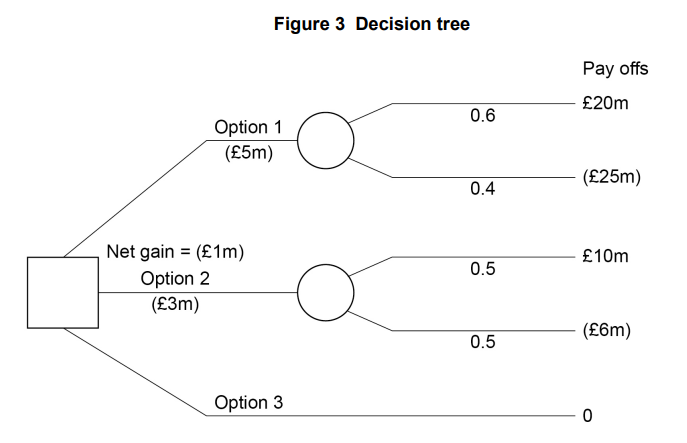
Figure 3 shows a decision tree with three options:

Option 1 is a new promotional campaign.

Option 2 is a modified product.

Option 3 is to do nothing.

Decision tree diagram with three options. Option 1: £20m with 0.6 probability, -£25m with 0.4. Option 2: £10m or -£6m, both 0.5. Option 3 gives 0. Net gain: -£1m.

Referring to Figure 3, calculate the expected value and the net gain of Option 1.

1b
1 mark

Figure 3 shows a decision tree with three options:

Option 1 is a new promotional campaign.

Option 2 is a modified product.

Option 3 is to do nothing.

Decision tree diagram with three options. Option 1: £20m with 0.6 probability, -£25m with 0.4. Option 2: £10m or -£6m, both 0.5. Option 3 gives 0. Net gain: -£1m.

Using these calculations and the other data in Figure 3, state which one of the three options the business should choose.

2
4 marks

Brayford Cycles has been without a permanent managing director for eight months. Decisions on pricing and supplier contracts have repeatedly been deferred.

Explain one way this delay in decision-making is likely to affect Brayford Cycles.

3
4 marks

Kestrel Foods is considering building a second factory in Poland to supply its European customers. The decision would commit a large share of the business's resources and would be very difficult to reverse.

Explain why this would be a strategic decision for Kestrel Foods.

4
5 marks

Marlow Drinks is considering launching a canned cocktail range at a cost of £1.8m. Its market research suggests a 60% chance of achieving the sales target.

Explain the difference between the risk and the uncertainty that Marlow Drinks faces in making this decision.

5
6 marks

Denholm Engineering has £2m available to invest. It can either replace its ageing machinery or launch a new product line, but it cannot do both.

Analyse the importance of opportunity cost to Denholm Engineering's decision.

6
6 marks

Callow Retail holds loyalty card records covering 400,000 households. It is considering using this data to decide which products to include in a new price-match campaign.

Analyse the benefits and drawbacks to Callow Retail of taking a scientific approach to this decision.

1
9 marks

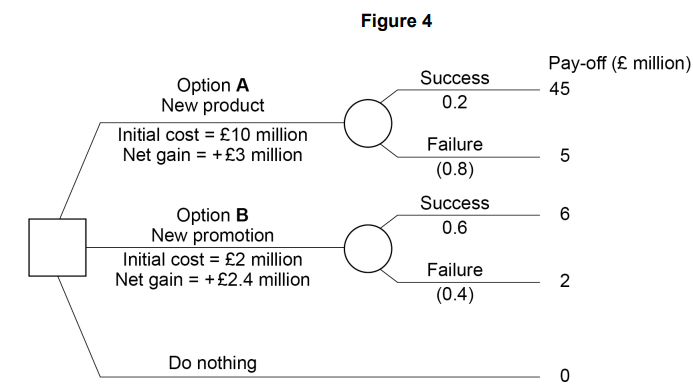
The Marketing Manager of a business is considering whether to choose Option A or Option B.

Option A: Introduce a new product.
Option B: Use a new promotion for an existing product.

Figure 4 shows the results of a decision tree for these options and the 'do nothing' option.

Decision tree showing options: A) New product, cost £10m, net gain £3m, success 0.2, payoff £45m; B) Promotion, cost £2m, net gain £2.4m, success 0.6, payoff £6m.

Based on this decision tree, the Marketing Manager chooses Option A.

Using Figure 4, analyse why choosing Option A might not be the best decision.

2
20 marks

Read the case study in the Insert.

Considering both quantitative and qualitative factors, should Jack give up his job to become a full-time entrepreneur? Justify your answer.