Understanding Unemployment (Cambridge (CIE) A Level Economics): Revision Note
Exam code: 9708

The meaning of unemployment
Unemployment occurs when individuals who are willing and able to work at the current wage rate are unable to find employment
The unemployed are part of the labour force (also called the working population)
They are actively seeking work but do not currently have a job
Unemployment is distinct from economic inactivity - those who are neither employed nor actively seeking work, such as full-time students, stay-at-home parents, or those who have given up looking for work, are not counted as unemployed
The unemployment rate is expressed as a percentage of the labour force:
%3C%2Fmo%3E%3Cmo%3E%26%23xA0%3B%3C%2Fmo%3E%3Cmo%3E%3D%3C%2Fmo%3E%3Cmo%3E%26%23xA0%3B%3C%2Fmo%3E%3Cmfrac%3E%3Cmrow%3E%3Cmi%3Enumber%3C%2Fmi%3E%3Cmo%3E%26%23xA0%3B%3C%2Fmo%3E%3Cmi%3Eunemployed%3C%2Fmi%3E%3Cmo%3E%26%23xA0%3B%3C%2Fmo%3E%3C%2Fmrow%3E%3Cmrow%3E%3Cmi%3Elabour%3C%2Fmi%3E%3Cmo%3E%26%23xA0%3B%3C%2Fmo%3E%3Cmi%3Eforce%3C%2Fmi%3E%3C%2Fmrow%3E%3C%2Fmfrac%3E%3Cmo%3E%26%23xA0%3B%3C%2Fmo%3E%3Cmi%20mathvariant%3D%22normal%22%3Ex%3C%2Fmi%3E%3Cmo%3E%26%23xA0%3B%3C%2Fmo%3E%3Cmn%3E100%3C%2Fmn%3E%3C%2Fmath%3E--%3E%3Cdefs%3E%3Cstyle%20type%3D%22text%2Fcss%22%3E%40font-face%7Bfont-family%3A'math17f39f8317fbdb1988ef4c628eb'%3Bsrc%3Aurl(data%3Afont%2Ftruetype%3Bcharset%3Dutf-8%3Bbase64%2CAAEAAAAMAIAAAwBAT1MvMi7iBBMAAADMAAAATmNtYXDEvmKUAAABHAAAADRjdnQgDVUNBwAAAVAAAAA6Z2x5ZoPi2VsAAAGMAAAAsmhlYWQQC2qxAAACQAAAADZoaGVhCGsXSAAAAngAAAAkaG10eE2rRkcAAAKcAAAACGxvY2EAHTwYAAACpAAAAAxtYXhwBT0FPgAAArAAAAAgbmFtZaBxlY4AAALQAAABn3Bvc3QB9wD6AAAEcAAAACBwcmVwa1uragAABJAAAAAUAAADSwGQAAUAAAQABAAAAAAABAAEAAAAAAAAAQEAAAAAAAAAAAAAAAAAAAAAAAAAAAAAAAAAAAAAACAgICAAAAAg1UADev96AAAD6ACWAAAAAAACAAEAAQAAABQAAwABAAAAFAAEACAAAAAEAAQAAQAAAD3%2F%2FwAAAD3%2F%2F%2F%2FEAAEAAAAAAAABVAMsAIABAABWACoCWAIeAQ4BLAIsAFoBgAKAAKAA1ACAAAAAAAAAACsAVQCAAKsA1QEAASsABwAAAAIAVQAAAwADqwADAAcAADMRIRElIREhVQKr%2FasCAP4AA6v8VVUDAAACAIAA6wLVAhUAAwAHAGUYAbAIELAG1LAGELAF1LAIELAB1LABELAA1LAGELAHPLAFELAEPLABELACPLAAELADPACwCBCwBtSwBhCwB9SwBxCwAdSwARCwAtSwBhCwBTywBxCwBDywARCwADywAhCwAzwxMBMhNSEdASE1gAJV%2FasCVQHAVdVVVQAAAAEAAAABAADVeM5BXw889QADBAD%2F%2F%2F%2F%2F1joTc%2F%2F%2F%2F%2F%2FWOhNzAAD%2FIASAA6sAAAAKAAIAAQAAAAAAAQAAA%2Bj%2FagAAF3AAAP%2B2BIAAAQAAAAAAAAAAAAAAAAAAAAIDUgBVA1YAgAAAAAAAAAAoAAAAsgABAAAAAgBeAAUAAAAAAAIAgAQAAAAAAAQAAN4AAAAAAAAAFQECAAAAAAAAAAEAEgAAAAAAAAAAAAIADgASAAAAAAAAAAMAMAAgAAAAAAAAAAQAEgBQAAAAAAAAAAUAFgBiAAAAAAAAAAYACQB4AAAAAAAAAAgAHACBAAEAAAAAAAEAEgAAAAEAAAAAAAIADgASAAEAAAAAAAMAMAAgAAEAAAAAAAQAEgBQAAEAAAAAAAUAFgBiAAEAAAAAAAYACQB4AAEAAAAAAAgAHACBAAMAAQQJAAEAEgAAAAMAAQQJAAIADgASAAMAAQQJAAMAMAAgAAMAAQQJAAQAEgBQAAMAAQQJAAUAFgBiAAMAAQQJAAYACQB4AAMAAQQJAAgAHACBAE0AYQB0AGgAIABGAG8AbgB0AFIAZQBnAHUAbABhAHIATQBhAHQAaABzACAARgBvAHIAIABNAG8AcgBlACAATQBhAHQAaAAgAEYAbwBuAHQATQBhAHQAaAAgAEYAbwBuAHQAVgBlAHIAcwBpAG8AbgAgADEALgAwTWF0aF9Gb250AE0AYQB0AGgAcwAgAEYAbwByACAATQBvAHIAZQAAAwAAAAAAAAH0APoAAAAAAAAAAAAAAAAAAAAAAAAAALkHEQAAjYUYALIAAAAVFBOxAAE%2F)format('truetype')%3Bfont-weight%3Anormal%3Bfont-style%3Anormal%3B%7D%40font-face%7Bfont-family%3A'round_brackets18549f92a457f2409'%3Bsrc%3Aurl(data%3Afont%2Ftruetype%3Bcharset%3Dutf-8%3Bbase64%2CAAEAAAAMAIAAAwBAT1MvMjwHLFQAAADMAAAATmNtYXDf7xCrAAABHAAAADxjdnQgBAkDLgAAAVgAAAASZ2x5ZmAOz2cAAAFsAAABJGhlYWQOKih8AAACkAAAADZoaGVhCvgVwgAAAsgAAAAkaG10eCA6AAIAAALsAAAADGxvY2EAAARLAAAC%2BAAAABBtYXhwBIgEWQAAAwgAAAAgbmFtZXHR30MAAAMoAAACOXBvc3QDogHPAAAFZAAAACBwcmVwupWEAAAABYQAAAAHAAAGcgGQAAUAAAgACAAAAAAACAAIAAAAAAAAAQIAAAAAAAAAAAAAAAAAAAAAAAAAAAAAAAAAAAAAACAgICAAAAAo8AMGe%2F57AAAHPgGyAAAAAAACAAEAAQAAABQAAwABAAAAFAAEACgAAAAGAAQAAQACACgAKf%2F%2FAAAAKAAp%2F%2F%2F%2F2f%2FZAAEAAAAAAAAAAAFUAFYBAAAsAKgDgAAyAAcAAAACAAAAKgDVA1UAAwAHAAA1MxEjEyMRM9XVq4CAKgMr%2FQAC1QABAAD%2B0AIgBtAACQBNGAGwChCwA9SwAxCwAtSwChCwBdSwBRCwANSwAxCwBzywAhCwCDwAsAoQsAPUsAMQsAfUsAoQsAXUsAoQsADUsAMQsAI8sAcQsAg8MTAREAEzABEQASMAAZCQ%2FnABkJD%2BcALQ%2FZD%2BcAGQAnACcAGQ%2FnAAAQAA%2FtACIAbQAAkATRgBsAoQsAPUsAMQsALUsAoQsAXUsAUQsADUsAMQsAc8sAIQsAg8ALAKELAD1LADELAH1LAKELAF1LAKELAA1LADELACPLAHELAIPDEwARABIwAREAEzAAIg%2FnCQAZD%2BcJABkALQ%2FZD%2BcAGQAnACcAGQ%2FnAAAQAAAAEAAPW2NYFfDzz1AAMIAP%2F%2F%2F%2F%2FVre7u%2F%2F%2F%2F%2F9Wt7u4AAP7QA7cG0AAAAAoAAgABAAAAAAABAAAHPv5OAAAXcAAA%2F%2F4DtwABAAAAAAAAAAAAAAAAAAAAAwDVAAACIAAAAiAAAAAAAAAAAAAkAAAAowAAASQAAQAAAAMACgACAAAAAAACAIAEAAAAAAAEAABNAAAAAAAAABUBAgAAAAAAAAABAD4AAAAAAAAAAAACAA4APgAAAAAAAAADAFwATAAAAAAAAAAEAD4AqAAAAAAAAAAFABYA5gAAAAAAAAAGAB8A%2FAAAAAAAAAAIABwBGwABAAAAAAABAD4AAAABAAAAAAACAA4APgABAAAAAAADAFwATAABAAAAAAAEAD4AqAABAAAAAAAFABYA5gABAAAAAAAGAB8A%2FAABAAAAAAAIABwBGwADAAEECQABAD4AAAADAAEECQACAA4APgADAAEECQADAFwATAADAAEECQAEAD4AqAADAAEECQAFABYA5gADAAEECQAGAB8A%2FAADAAEECQAIABwBGwBSAG8AdQBuAGQAIABiAHIAYQBjAGsAZQB0AHMAIAB3AGkAdABoACAAYQBzAGMAZQBuAHQAIAAxADgANQA0AFIAZQBnAHUAbABhAHIATQBhAHQAaABzACAARgBvAHIAIABNAG8AcgBlACAAUgBvAHUAbgBkACAAYgByAGEAYwBrAGUAdABzACAAdwBpAHQAaAAgAGEAcwBjAGUAbgB0ACAAMQA4ADUANABSAG8AdQBuAGQAIABiAHIAYQBjAGsAZQB0AHMAIAB3AGkAdABoACAAYQBzAGMAZQBuAHQAIAAxADgANQA0AFYAZQByAHMAaQBvAG4AIAAyAC4AMFJvdW5kX2JyYWNrZXRzX3dpdGhfYXNjZW50XzE4NTQATQBhAHQAaABzACAARgBvAHIAIABNAG8AcgBlAAAAAAMAAAAAAAADnwHPAAAAAAAAAAAAAAAAAAAAAAAAAAC5B%2F8AAY2FAA%3D%3D)format('truetype')%3Bfont-weight%3Anormal%3Bfont-style%3Anormal%3B%7D%3C%2Fstyle%3E%3C%2Fdefs%3E%3Ctext%20font-family%3D%22Times%20New%20Roman%22%20font-size%3D%2218%22%20text-anchor%3D%22middle%22%20x%3D%2256.5%22%20y%3D%2230%22%3EUnemployment%3C%2Ftext%3E%3Ctext%20font-family%3D%22Times%20New%20Roman%22%20font-size%3D%2218%22%20text-anchor%3D%22middle%22%20x%3D%22129.5%22%20y%3D%2230%22%3Erate%3C%2Ftext%3E%3Ctext%20font-family%3D%22round_brackets18549f92a457f2409%22%20font-size%3D%2218%22%20text-anchor%3D%22middle%22%20x%3D%22150.5%22%20y%3D%2230%22%3E(%3C%2Ftext%3E%3Ctext%20font-family%3D%22Times%20New%20Roman%22%20font-size%3D%2218%22%20text-anchor%3D%22middle%22%20x%3D%22161.5%22%20y%3D%2230%22%3E%25%3C%2Ftext%3E%3Ctext%20font-family%3D%22round_brackets18549f92a457f2409%22%20font-size%3D%2218%22%20text-anchor%3D%22middle%22%20x%3D%22172.5%22%20y%3D%2230%22%3E)%3C%2Ftext%3E%3Ctext%20font-family%3D%22math17f39f8317fbdb1988ef4c628eb%22%20font-size%3D%2216%22%20text-anchor%3D%22middle%22%20x%3D%22188.5%22%20y%3D%2230%22%3E%3D%3C%2Ftext%3E%3Cline%20stroke%3D%22%23000000%22%20stroke-linecap%3D%22square%22%20stroke-width%3D%221%22%20x1%3D%22203.5%22%20x2%3D%22358.5%22%20y1%3D%2223.5%22%20y2%3D%2223.5%22%2F%3E%3Ctext%20font-family%3D%22Times%20New%20Roman%22%20font-size%3D%2218%22%20text-anchor%3D%22middle%22%20x%3D%22232.5%22%20y%3D%2216%22%3Enumber%3C%2Ftext%3E%3Ctext%20font-family%3D%22Times%20New%20Roman%22%20font-size%3D%2218%22%20text-anchor%3D%22middle%22%20x%3D%22308.5%22%20y%3D%2216%22%3Eunemployed%3C%2Ftext%3E%3Ctext%20font-family%3D%22Times%20New%20Roman%22%20font-size%3D%2218%22%20text-anchor%3D%22middle%22%20x%3D%22261.5%22%20y%3D%2241%22%3Elabour%3C%2Ftext%3E%3Ctext%20font-family%3D%22Times%20New%20Roman%22%20font-size%3D%2218%22%20text-anchor%3D%22middle%22%20x%3D%22306.5%22%20y%3D%2241%22%3Eforce%3C%2Ftext%3E%3Ctext%20font-family%3D%22Times%20New%20Roman%22%20font-size%3D%2218%22%20text-anchor%3D%22middle%22%20x%3D%22369.5%22%20y%3D%2230%22%3Ex%3C%2Ftext%3E%3Ctext%20font-family%3D%22Times%20New%20Roman%22%20font-size%3D%2218%22%20text-anchor%3D%22middle%22%20x%3D%22391.5%22%20y%3D%2230%22%3E100%3C%2Ftext%3E%3C%2Fsvg%3E)
Worked Example
The table shows labour market data for a country.
Number of people (millions) | |
|---|---|
Employed | 28.4 |
Unemployed | 1.6 |
Economically inactive | 8.0 |
Calculate the unemployment rate. Show your working. [2]
Labour force = employed + unemployed = 28.4 + 1.6 = 30 million [1]
Unemployment rate = (1.6 / 30) × 100 = 5.3% [1]
Worked solution
Step 1 - identify the labour force
Labour force = employed + unemployed
= 28.4 + 1.6 = 30 million
The economically inactive (8.0 million) are not included - they are neither working nor actively seeking work, so they are not part of the labour force.
Step 2 - calculate the unemployment rate
Unemployment rate = (number unemployed / labour force) × 100
= (1.6 / 30) × 100 = 5.3%
The trap is dividing by the total population including the economically inactive (8 million) rather than the labour force (30 million). The unemployment rate is always expressed as a percentage of the labour force, not the total population - including the economically inactive would understate the true rate of unemployment among those who are available for work.
Measures of unemployment
1. The claimant count
The claimant count measures unemployment by counting the number of people claiming unemployment-related benefits - in the UK this is Universal Credit
It is cheap and straightforward to compile as the data is automatically generated by the benefit system
Difficulties with the claimant count
Understates true unemployment - not all unemployed people claim benefits; some do not qualify due to savings, a partner's income, or immigration status
Overstates true unemployment - some claimants may be working in the informal economy while claiming
Changes in eligibility rules affect the count independently of actual unemployment levels - making comparisons over time unreliable
Does not count those working part-time who want full-time work (underemployment)
2. The Labour Force Survey (LFS)
The LFS measures unemployment using a household survey based on the International Labour Organisation (ILO) definition - a person is unemployed if they are without work, available to start work within two weeks, and have actively sought work in the past four weeks
It is internationally standardised, allowing comparisons between countries
Difficulties with the LFS
Based on a sample - subject to sampling error and may not accurately reflect the full population
Relies on self-reporting - respondents may misrepresent their situation
Does not capture underemployment - those in part-time or low-skilled work who want more or better-paid employment
The ILO definition excludes discouraged workers - those who have stopped looking for work because they believe no jobs are available, even though they want to work
Causes and types of unemployment
1. Frictional unemployment
Frictional unemployment occurs when workers are between jobs
They have left one job and are searching for another
It is short-term and voluntary in nature - the worker is employable but the process of job search takes time
It exists in all economies because information about job vacancies and available workers is not perfect
Example: a marketing manager who has resigned and is searching for a new role
2. Structural unemployment
Structural unemployment occurs when there is a mismatch between the skills workers have and the skills employers demand
Caused by long-run changes in the structure of the economy
It arises when declining industries shed workers whose skills are not transferable to growing industries
It tends to be long-term and geographically concentrated in areas dependent on a single industry
Example: former steel workers in South Wales or coal miners in northern England whose skills have little value in a service-based economy
Case Study
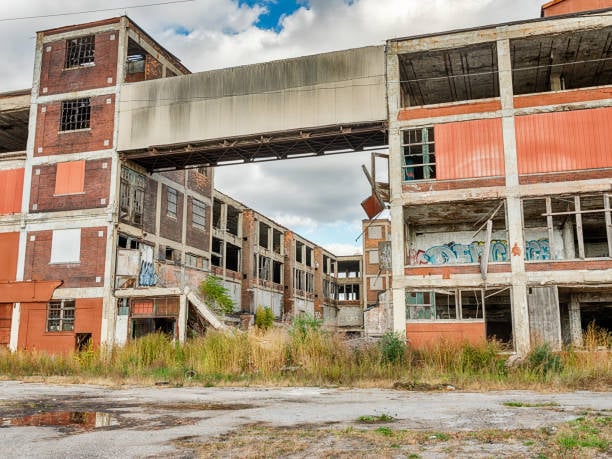
Structural unemployment - the decline of manufacturing in Detroit, USA
The context
Detroit was the centre of the American automotive industry throughout the 20th century, employing hundreds of thousands of workers in car manufacturing.
From the 1970s onwards, competition from Japanese and German manufacturers, automation and offshoring caused a dramatic contraction - employment in the automotive sector fell from approximately 300,000 in the 1950s to under 20,000 by 2010.
Actions taken
The US government provided an $80 billion bailout to General Motors and Chrysler in 2009 to prevent total industry collapse
Federal and state retraining programmes were introduced to help displaced workers acquire skills in healthcare and technology
Detroit filed for bankruptcy in 2013 - the largest municipal bankruptcy in US history
Outcomes
Structural unemployment rose sharply - Detroit's unemployment rate reached over 20% in 2009, far above the national average
Former assembly line workers' skills had limited transferability to growing service and technology sectors, creating a severe skills mismatch
The city's population fell from 1.8 million in 1950 to under 700,000 by 2013 as workers relocated in search of employment elsewhere - illustrating how structural unemployment concentrated in a single industry can cause long-run economic and social damage well beyond the labour market itself
3. Cyclical unemployment
Cyclical unemployment (also called demand-deficient unemployment) occurs when there is insufficient aggregate demand in the economy to employ all those willing and able to work
It rises during recessions as firms cut output and lay off workers, and falls during periods of economic growth
It is the most economically damaging type - large numbers of workers can become unemployed simultaneously
In AD/AS terms it occurs when the economy is operating below full employment output on the Keynesian LRAS
4. Seasonal unemployment
Seasonal unemployment occurs when demand for labour falls at certain times of year due to the seasonal nature of some industries
It is predictable and temporary - workers in affected industries expect periods of unemployment
Example: agricultural workers after harvest, ski resort staff outside the winter season, or tourism workers in off-peak periods
5. Technological unemployment
Technological unemployment occurs when workers are displaced by new technology that replaces human labour in the production process
It is a form of structural unemployment - the skills of displaced workers may not be transferable to the new jobs created by technological change
For example: automation of manufacturing assembly lines, self-service checkouts replacing retail workers, or AI tools reducing demand for routine data processing roles
A summary of unemployment types
Type | Cause | Duration | Policy response |
|---|---|---|---|
Frictional |
|
|
|
Structural |
|
|
|
Cyclical |
|
|
|
Seasonal |
|
|
|
Technological |
|
|
|
Worked Example
What would be the most likely reason for a decrease in frictional unemployment?
A. More capital-intensive manufacturing
B. More demand for public sector workers
C. More government spending on education
D. More information on labour market vacancies
Answer: D - more information on labour market vacancies
Worked solution
Frictional unemployment arises because of imperfect information - workers between jobs take time to find new employment because they do not have complete knowledge of all available vacancies, and employers do not have complete knowledge of all available workers.
A. More capital-intensive manufacturing - this would reduce the demand for labour overall, potentially increasing structural and cyclical unemployment - not frictional
B. More demand for public sector workers - this increases labour demand in one sector but does not reduce the time taken to match workers with jobs - frictional unemployment persists regardless of overall demand levels
C. More government spending on education - this improves the quality of labour and may reduce structural unemployment over the long run, but does not address the information problem that causes frictional unemployment
Examiner Tips and Tricks
Always identify the type of unemployment before recommending a policy response - different types require different solutions.
Expansionary fiscal policy is appropriate for cyclical unemployment (deficient AD) but is ineffective for structural or frictional unemployment, which require supply-side responses such as retraining or improved job matching. Prescribing the wrong policy is one of the most common errors in unemployment essay questions.
For evaluation, the strongest point is hysteresis - cyclical unemployment can become structural if workers are unemployed for long enough that their skills deteriorate and they become detached from the labour market.
This means the long-run costs of a recession can significantly exceed the short-run output loss, strengthening the case for early policy intervention.
Consequences of unemployment

Consequences for individuals
Loss of income - unemployment reduces household income, lowering living standards and potentially pushing individuals into poverty
Skills deterioration - prolonged unemployment leads to the depreciation of human capital as skills become outdated or underused
Mental and physical health - unemployment is associated with increased rates of anxiety, depression and poor physical health
Hysteresis - long-term unemployment makes individuals less employable over time, as employers interpret prolonged unemployment as a negative signal
Consequences for the economy
Lost output - unemployed workers are a wasted productive resource; the economy produces below its potential, creating a negative output gap
Reduced tax revenues - fewer people in work means lower income tax and National Insurance receipts for the government
Higher government spending - unemployment benefit payments rise, increasing pressure on public finances
Multiplier effects - unemployed workers have lower incomes and spend less, reducing aggregate demand and potentially causing further unemployment - a self-reinforcing downward spiral
Consequences for society
Increased inequality - unemployment disproportionately affects lower-skilled workers, widening income and wealth inequality
Social costs - higher unemployment is associated with increased crime rates, family breakdown and social unrest in affected communities
Regional disparities - structural and technological unemployment tends to concentrate in specific regions, creating persistent geographical inequality

Unlock more, it's free!
Join the 100,000+ Students that ❤️ Save My Exams
the (exam) results speak for themselves:

Was this revision note helpful?
