Personal Experience (DP IB Theory of Knowledge): Revision Note

Personal experience
Experiential learning takes place when a knower gains personal knowledge through direct experience, e.g.:
a student tries out different revision strategies, compares their recall a week later, and learns which method works best for them
after a text message causes offence, a student learns that tone is easy to misinterpret in writing
Personal experience produces knowledge that is closely tied to you as an individual, because it depends on:
what you noticed
how you interpreted it
what you remember afterwards
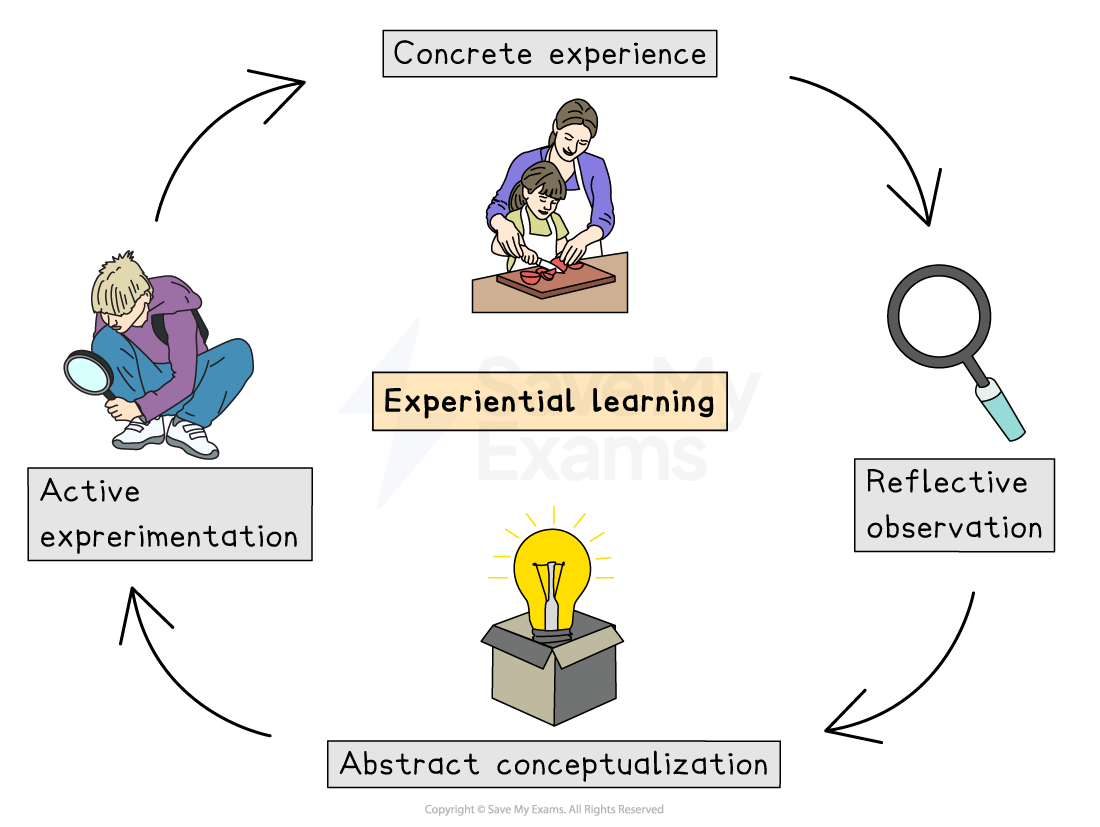
Source: learningbyinquiry.com (opens in a new tab)
Strengths of personal experience as a knowledge source
Knowledge gained via personal experience often feels vivid and memorable because it is tied to what you noticed and how you responded during an experience
Personal experiences may be more likely to stick in the memory because they include sensory details, such as bright lights, cold temperatures or pleasant smells that were present during an event
You typically remember not only the event but also your reaction, decisions, and consequences, which can increase confidence in your knowledge
Reflection can then strengthen knowledge gained from an experience because it allows you to connect the vivid details to form a pattern that you can apply again
Limitations of personal experience as a knowledge source
Personal experience can have narrow scope, so it may not be possible to apply knowledge gained in this way to other situations; the narrow scope may be due to:
unique conditions: the experience may have occurred under specific conditions, e.g. place, weather, people present, so the knowledge gained may not be applicable when the conditions change
limited attention: your attention is selective in a given moment, so you may have missed key details that would matter in another situation
individual role: your role in the situation, e.g. participant vs observer, may limit access to relevant information
Because knowledge gained through personal experience relies on memory, it can be affected by the accuracy of memories
Memory can change as you retell events, learn new information, or reinterpret what the experience meant
Individual knowers may interpret events differently, meaning that knowledge gained from personal experience will be subject to factors such as:
beliefs: prior knowledge and expectations shape interpretation of an experience
values: what someone cares about most will affect what they notice during an experience
culture: social norms influence how words, tone and behaviour are understood
emotion: feelings at the time can affect interpretation and memory

Unlock more, it's free!
Join the 100,000+ Students that ❤️ Save My Exams
the (exam) results speak for themselves:

Was this revision note helpful?