Methods & Evidence in History (DP IB Theory of Knowledge): Revision Note

Methods & evidence in history
Historical knowledge production uses methods for selecting, evaluating and interpreting sources to justify claims about past events
Evidence in history is rarely complete or neutral, so historians use checks like source analysis and corroboration to reduce error and bias
Some claims are supported by such extensive and consistent evidence that they are treated as established, though they remain open to revision
Sometimes new evidence is uncovered, and previous historical knowledge has to be revised
Primary vs secondary sources
A primary source is produced at the time of the events being studied or by someone directly involved, while a secondary source is a later interpretation that analyses primary material
Primary sources can provide direct traces of beliefs and actions, but still need interpretation
Secondary sources can synthesise multiple sources and offer a view of the wider context, but their conclusions depend on the selection and reading of primary evidence
Neither type is automatically more trustworthy
A primary source can be biased or incomplete, and a secondary source can be careful and well-evidenced, so reliability must be argued rather than assumed
Source analysis: reliability, usefulness and bias
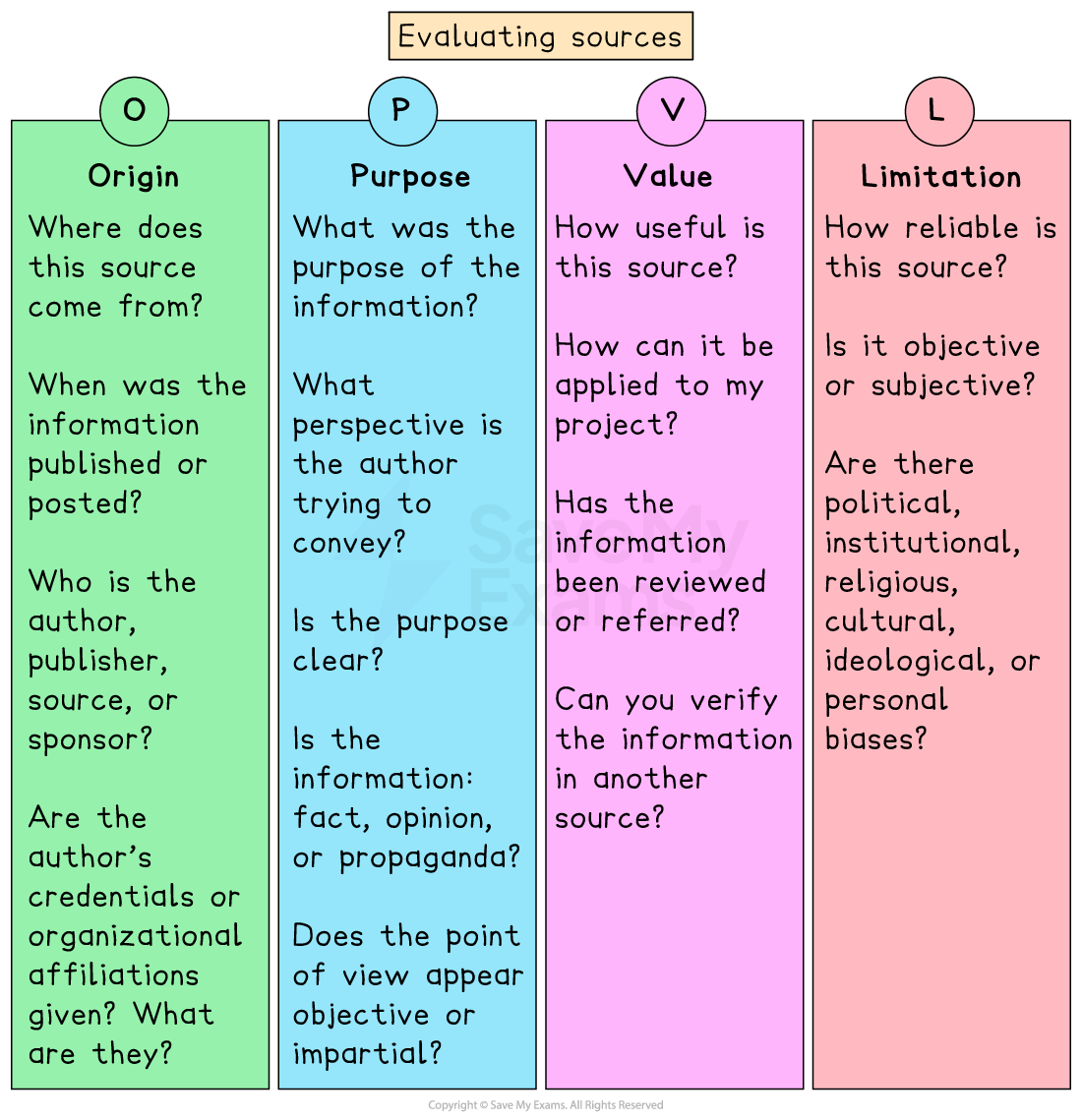
Source analysis is the method of evaluating what a source can and cannot justify by checking features such as:
who produced it
why it was produced
for whom it was produced
its date of production
Historians must then consider how these features affect reliability, usefulness, and bias
Reliability: how dependable a source is as evidence for a specific claim
Reliability is higher when a source is close to the events, has access to first-hand information and has fewer incentives to distort what it reports
Usefulness: how well a source helps answer the guiding question
Usefulness is higher when a source contains specific details that can support or challenge a claim
Bias: a systematic tendency to present information in a particular way due to interests, values or constraints
Bias is stronger when the source is produced to persuade, justify or protect interests, so it systematically selects, frames or omits information in one direction
Bias does not automatically make a source false, but it affects what can be justified from it
Comparing accounts & corroboration
Comparing accounts is placing two or more accounts side-by-side to identify similarities and differences in what they claim
Corroboration happens when an independent source supports the same specific claim as another source
Corroboration is stronger when the sources are independent rather than linked, e.g. two eyewitness letters can corroborate a detail more strongly than two newspapers repeating the same official statement
Corroborating accounts matter because independent agreement makes a claim easier to justify, reducing the risk that it rests on one person’s mistake, limited viewpoint or self-interest
Differences between accounts are also useful; they may reveal what a single source might be missing, exaggerating or framing in a particular way
E.g. if an official report and a personal letter describe the same event differently, the contrast can show the report’s public aims and the letter’s lived impact
Gaps, silences and missing evidence
Gaps and silences occur when evidence is lost, was never created or has been excluded from the record, limiting what can be justified
Missing evidence can distort knowledge by overrepresenting groups who had the power or opportunity to leave records
E.g. if only official documents survive, everyday experiences may be treated as less significant because they are less visible
Historians should avoid turning the absence of evidence into evidence of absence without justification
a lack of records may mean an event was not recorded, not that it did not happen
Responsible historical claims are clear about the existence of uncertainty and stay proportional to the evidence available

Unlock more, it's free!
Join the 100,000+ Students that ❤️ Save My Exams
the (exam) results speak for themselves:

Was this revision note helpful?