Online Communities & Subculture (DP IB Theory of Knowledge): Revision Note

Online communities & subculture
Online communities are groups of people who interact mainly through internet platforms, e.g.:
forums
social media
group chats
Subcultures are groups with shared values, interests and practices that feel distinct from “mainstream” culture; online spaces can help them form, grow and spread
Rapid knowledge creation
Online communities can create and spread knowledge quickly by pooling many people’s observations, experiences and skills
Speed can be helpful for practical problem-solving because ideas can be discussed and improved in real time
E.g. a hobby forum may collaboratively troubleshoot a common issue and can refine the fix as more users test it
Speed can reduce reliability if claims are shared before being checked
Errors can also spread quickly if they are shared widely before being corrected
Echo chambers and group identity
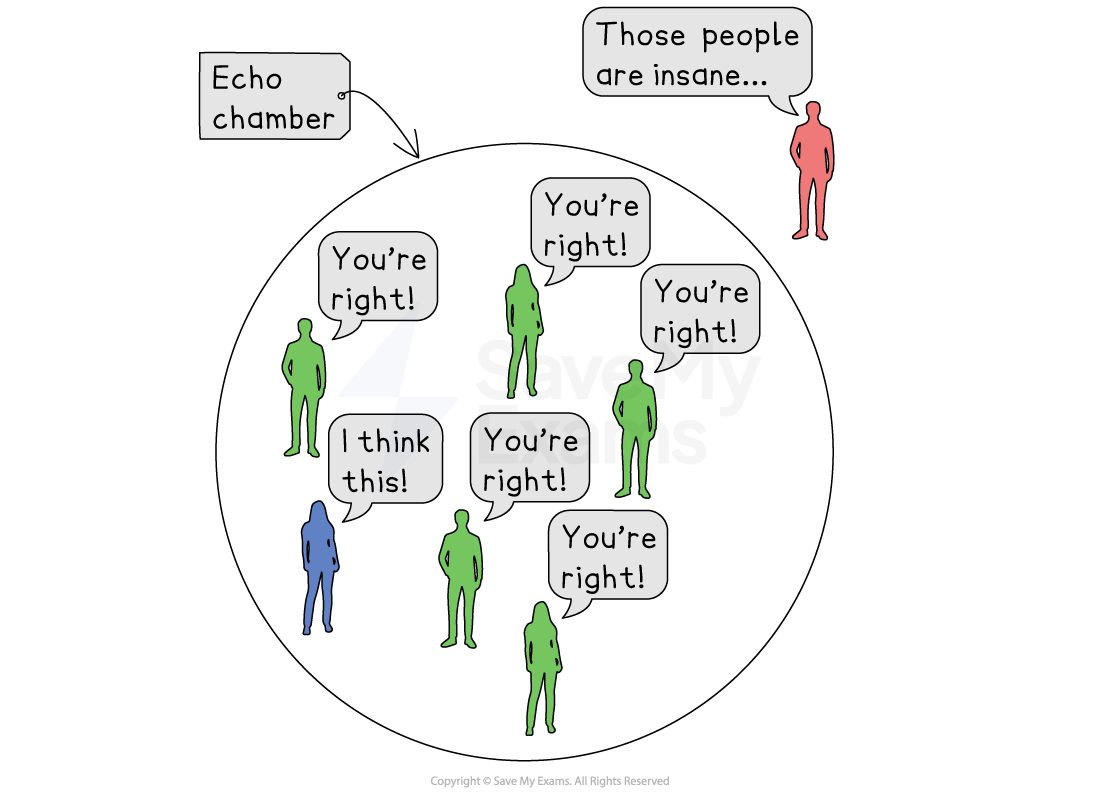
Echo chambers form when people mostly see and share views that match their existing beliefs
This occurs through self-selection and platform algorithms
Ideas may be repeated frequently within an echo chamber, increasing a knower’s confidence in their accuracy
Familiar claims feel more believable even without strong evidence
Echo chambers can narrow what is treated as relevant evidence because members are more likely to dismiss outside sources as untrustworthy
E.g. in an online anti-vaccination group, members may reject a national public health agency’s safety data by calling it “government propaganda”, and may only accept links from the group’s preferred websites or influencers
Echo chambers can result in the development of group identity, i.e. a shared sense of “who we are” as a group
Group identity is based on common beliefs, values, language and in-jokes that shape members’ belonging and distinguish the group from outsiders
Moderation and misinformation
Moderation is the process of managing posts and users in order to shape content, e.g.:
rules
removal of content
warnings to non-conforming members
banning members who don’t respond to warnings
Moderation can shape knowledge by deciding which sources are considered to be acceptable and which are seen as biased or unfair
Moderation can limit misinformation by removing false claims, labelling disputed content and prioritising reliable sources
E.g. a platform may add warnings to false health claims and provide links to verified public health guidance
Weak moderation can allow misinformation to spread, while heavy moderation can reduce open discussion
Resistance to outside critique
Online groups can show resistance to outside criticism due to distrust of outsiders, e.g. mainstream media, institutions or experts
When criticism threatens group identity, members may dismiss strong evidence to protect belonging and status within the group
Resistance can protect a community from prejudice or bad-faith criticism, but it can also block useful correction and reduce knowledge accuracy within the community

Unlock more, it's free!
Join the 100,000+ Students that ❤️ Save My Exams
the (exam) results speak for themselves:

Was this revision note helpful?