Language and Tradition (DP IB Theory of Knowledge): Revision Note

Language & tradition
Knowledge claims can be preserved through repeated stories and traditional practices
Trust in those claims can depend on who is speaking and how the claim is passed on, so identity, worldview and intergenerational teaching shape what counts as credible knowledge
Indigenous languages as knowledge carriers
Indigenous languages are the languages that originate within indigenous communities and are passed down within those communities over generations
As with any language, these languages carry shared meanings, categories and ways of explaining that shape how knowledge claims are formed and understood
Language also carries cues for interpretation, so tone, metaphor and indirect wording can be important
In oral traditions, language is the storage system, so precise wording, rhythm and familiar phrasing help people remember knowledge claims accurately
Indigenous languages can carry culturally specific concepts, so translating into a dominant language can force a rough substitute that weakens or alters the original claim
E.g. a short teaching phrase in an Indigenous language is used as a warning that only applies under a specific set of conditions, but the translated version loses the “only when…” nuance, so the claim is treated as a general rule and applied in the wrong context
Oral tradition as method
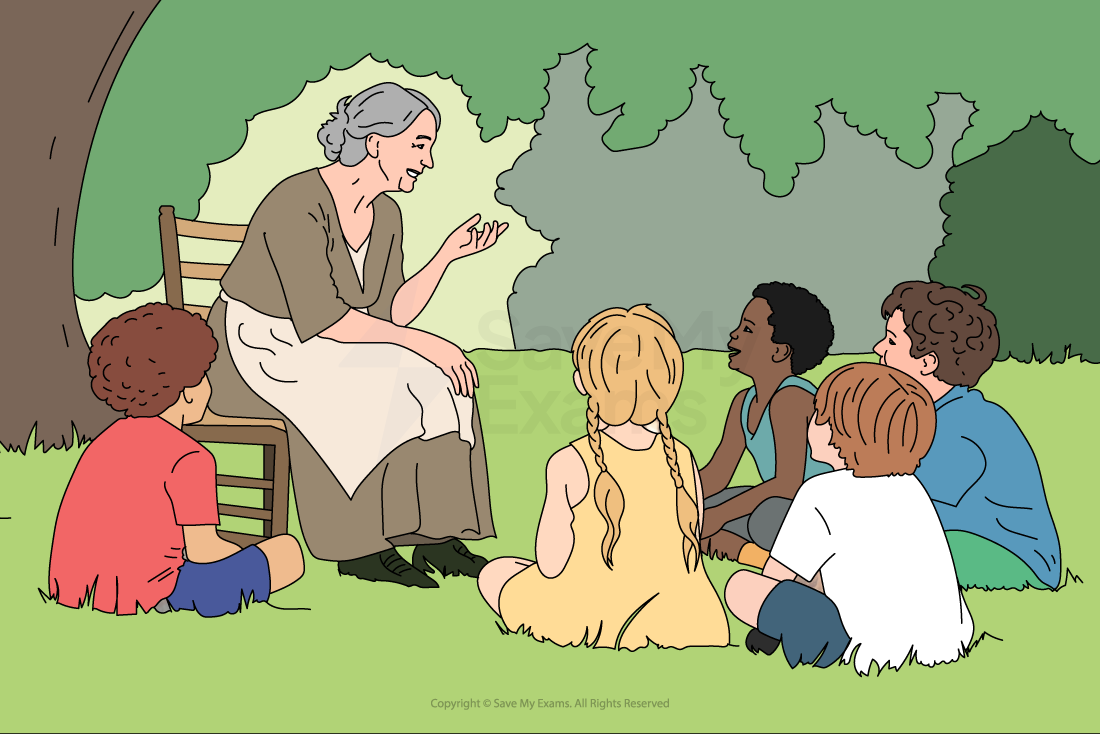
The oral tradition is a method for developing and sharing knowledge through spoken teaching, stories and repeated retelling
Knowledge claims may be expressed through narrative structure, so listeners have to interpret what counts as the guidance or the “lesson”
Reliability can come from communal checking, because retelling allows correction when details drift or are misunderstood
Authority can shape what is accepted, because some claims may only be taught or repeated by people with recognised responsibility or permission
Cultural stories and practices
Cultural stories are shared narratives used to teach and remember knowledge, and cultural practices are repeated ways of doing things that pass on skills and standards within a community
Stories can carry knowledge claims about what to do in familiar situations, so they can function like a “model answer” for decision-making rather than a list of rules
Interpretation is an important part of using stories as a method to pass on knowledge; metaphor and narrative choices signal what a story is claiming, so listeners may need to extract the meaning rather than treating every detail as literal fact
Community roles can affect credibility because some stories and practices are taught by recognised custodians: community members who are trusted and responsible for preserving and passing on knowledge
E.g. some listeners may take the story’s warning literally, so a recognised custodian explains the intended meaning and the community agrees on a consistent interpretation that guides practice
Intergenerational transmission
Intergenerational transmission is how knowledge is passed from older to younger members of a community through:
teaching
observation
shared participation
It matters in ToK because the method of passing on knowledge affects what gets remembered accurately and what gets questioned
Some methods aid accuracy because they build in repetition and correction, e.g. retelling with community checking, so mistakes are more likely to be noticed and fixed
Some methods make questioning harder or easier depending on norms, e.g. it may feel inappropriate to challenge a respected knowledge-holder during a public retelling, so questions are saved for a different setting
Reliability can be strengthened over time, because repeated teaching across generations allows claims to be checked and refined
Loss of transmission can result in loss of knowledge, e.g. losing language or practices can remove the tools needed to interpret and evaluate claims
Cultural objects
Tangible objects play an important role in oral histories, where knowledge may not be stored or shared in books/libraries/written databases
Arts and crafts function in ways that are not only aesthetic; they often embody values such as the relationship between humans and nature/the land/the environment, the line between past and present, or a connection to ancestors
Clothing, textiles, and jewellery involve patterns, colours, materials and skills that are passed down through generations and have culturally-specific connotations
Body art, tattoos, peircings and hairstyles can communicate status, community, heritage and identity

Unlock more, it's free!
Join the 100,000+ Students that ❤️ Save My Exams
the (exam) results speak for themselves:

Was this revision note helpful?