Organisation of Cells (Cambridge (CIE) IGCSE Combined Science: Biology): Revision Note
Exam code: 0653

Written by: Lára Marie McIvor
Updated on
Did this video help you?
Specialised Cells: Extended
Specialised cells in animals and plants
Specialised cells are those which have developed certain characteristics in order to perform particular functions. These differences are controlled by genes in the nucleus
Cells specialise by undergoing differentiation: this is a process by which cells develop the structure and characteristics needed to be able to carry out their functions
The table shows some examples of specialised cells in animals and plants
Cell | Function | Adaptations |
|---|---|---|
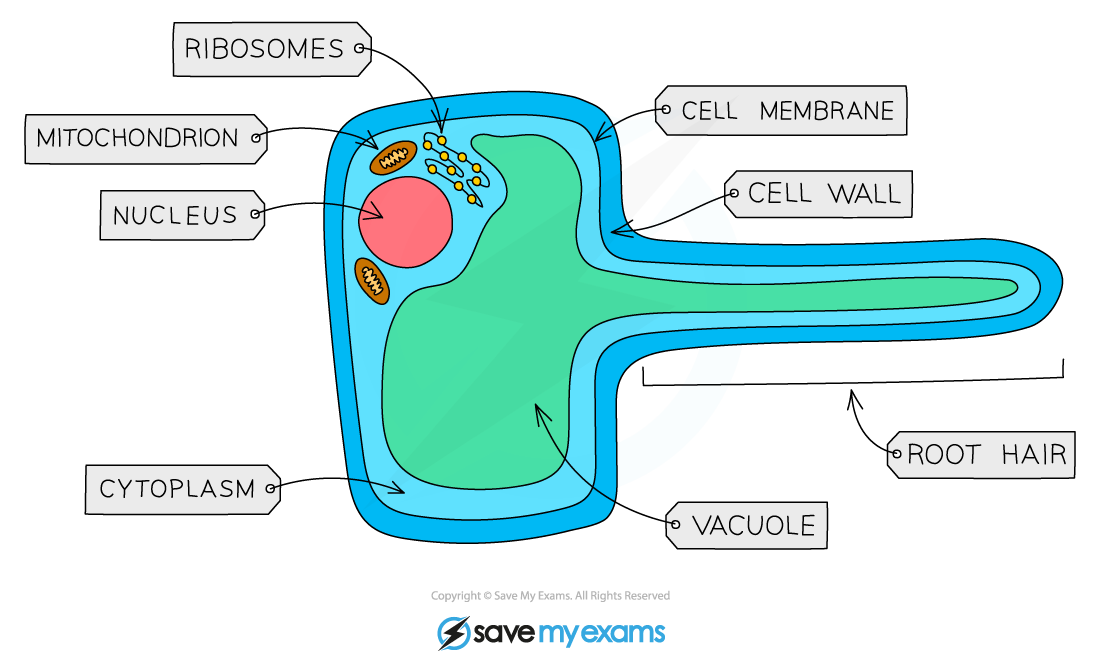
Root hair cell (plant) | Absorption of water and mineral ions from soil | • Root hair increases surface area of the cell to ensure maximum absorption of water and mineral ions |
Palisade mesophyll cell (plant) | Photosynthesis | • Column shaped to maximize absorption of sunlight and fit as many in a layer under the upper epidermis of the leaf as possible |
Red blood cell (animal) | Transport of oxygen | • Biconcave disc shape increases surface area for more efficient diffusion of oxygen |
Diagrams of specialised cells in animals and plants:


Did this video help you?
Levels of Organisation in an Organism


Levels of organisation

Your syllabus states that you should be able to identify the different levels of organisation in drawings, diagrams and images of familiar material
An example of this is shown in the exam question below:

Typical levels of organisation question
Examiner Tips and Tricks
Most incorrect answers here come from not being able to identify a tissue, so it’s worth making sure you understand and remember that tissues are always made up of only one type of cell.

Unlock more, it's free!
Join the 100,000+ Students that ❤️ Save My Exams
the (exam) results speak for themselves:

Was this revision note helpful?