1
4 marks
The TCP/IP protocol may be viewed as a stack that contains four layers: Application, Transport, Internet, Link.
Describe how the layers of the TCP/IP protocol stack interact with each other.
Was this exam question helpful?
Exam code: 9618
The TCP/IP protocol may be viewed as a stack that contains four layers: Application, Transport, Internet, Link.
Describe how the layers of the TCP/IP protocol stack interact with each other.
Was this exam question helpful?
Name and describe two protocols used by the Application Layer of the TCP/IP protocol suite.
Protocol 1
Description
Protocol 2
Description
Explain the purpose and function of the Application Layer in the TCP/IP protocol suite.
Was this exam question helpful?
The TCP/IP protocol suite has four layers:
Transport, Application, Link, Internet
Complete the diagram to show the correct order for these layers.
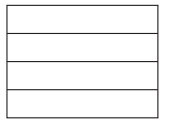
Describe the function of the Transport layer.
Outline one protocol that is associated with the Application layer.
Was this exam question helpful?
Outline why protocols are essential for communication between computers.
State the names of two different protocols associated with the sending and receiving of emails between computers
Sending.......................................................................
Receiving....................................................................
Was this exam question helpful?
Draw one line to connect each protocol to its most appropriate use.

Outline the purpose of the Link layer in the TCP/IP protocol suite.
Was this exam question helpful?
Complete the following paragraph about a protocol suite, using words from the given list.
Some words are not used.
BitTorrent circuit switching layered link list
peer‑to‑peer queue stack star TCP/IP
The protocols in a ............................................................................. determine
the interconnectivity rules for a .............................................................................
network model such as the .............................................................................
model.
Was this exam question helpful?