Computers & Components (Cambridge (CIE) A Level Computer Science): Exam Questions

Exam code: 9618

4 hours58 questions
1a
2 marks

A computer system has a dual-core Central Processing Unit (CPU).

Identify two disadvantages of using Dynamic RAM (DRAM) instead of Static RAM (SRAM) in a computer system.

1b
7 marks

The computer system is used to store data received from a temperature sensor every five seconds. The data is stored on an optical disc using an optical disc reader/writer.

(i) Describe the principal operation of an optical disc reader/writer

(4)

(ii) The computer uses a buffer when writing data to the optical disc.

Explain the use of a buffer when writing data to the optical disc.

(3)

2a
1 mark

A security system has both a floodlight (very bright light) and an audio alarm.

The data from multiple sensors is analysed and used to:

  • turn on the floodlight

  • sound the audio alarm.

Sensors can be used to detect:

  • if doors are open

  • the external daylight level

  • if people are detected within a set distance.

Complete the table to identify the most appropriate type of sensor for each scenario.

Scenario

Type of sensor

A door is open.

The external daylight level is below a set amount.

A person is detected within 2 metres.

2b
3 marks

Explain whether the security system is an example of a monitoring system or a control system.

3a
3 marks

Embedded systems are used in many electronic devices.

Describe the drawbacks of embedded systems.

3b
1 mark

An embedded system has Dynamic RAM (DRAM).

Identify one benefit of using DRAM instead of Static RAM (SRAM) in an embedded system.

3c
2 marks

Give two differences between Erasable Programmable ROM (EPROM) and Electrically Erasable Programmable ROM (EEPROM).

4a
2 marks

A road bridge has a weight limit and a height limit for vehicles. For example, a vehicle must weigh less than 10000kg and must have a height of less than 3m.

The bridge has a warning system. If a vehicle is approaching the bridge and it exceeds one or both limits, a sign displays a warning telling the driver of the vehicle to stop.

The bridge warning system uses sensors to detect if a vehicle exceeds the limits.

Complete the table by identifying two different sensors that could be used by the system and describe how each sensor is used by the system.

Sensor

Use in bridge warning system

4b
2 marks

Explain whether the bridge warning system is an example of a monitoring system or of a control system.

5a
2 marks

A memory buffer uses Dynamic RAM (DRAM).

Identify two differences between DRAM and Static RAM (SRAM).

5b
4 marks

Explain how a memory buffer is used when a computer is transferring data to its magnetic hard disk drive.

6
3 marks

A car has an automatic braking system.

A sensor is used to measure the distance to objects that are in front of the car.

The car automatically brakes if an object is too close to the front of the car or the distance between the car and the object is decreasing too quickly. The closer the object is to the front of the car, the harder the car brakes so that the car slows down more quickly.

Explain the reasons why the automatic braking system of the car is a control system.

7a
2 marks

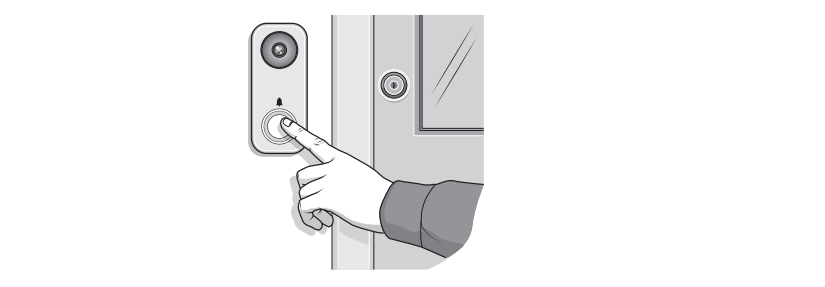
A video doorbell is attached to the front door of a house. The doorbell uses a motion sensor to detect when a visitor walks in front of the door. When the motion sensor is activated:

  • The digital camera in the doorbell starts recording a video.

  • A message is transmitted to a smartphone so that the person who lives in the house can watch the video.

The doorbell also has a button that can be pressed. When the button is pressed, a message is transmitted to a smartphone to play the doorbell sound.

The videos are stored on the doorbell’s internal secondary storage device and overwritten when the secondary storage device is full.

Person pressing a doorbell button on a smart video doorbell mounted beside a door, with a glass pane visible on the door.

The video doorbell can be considered an example of an embedded system.

Identify two characteristics of the doorbell that suggest it is an embedded system.

7b
2 marks

State whether the video doorbell is a monitoring system or a control system. Justify your choice.

7c
8 marks

The video doorbell has both primary memory and secondary storage.

(i) Identify two items of data that the video doorbell will store in primary memory.

(2)

(ii) The video doorbell has a solid state (flash) secondary storage device.

Complete the table by writing the answer or answers to each statement about the principal operation of solid state (flash) memory.

Statement

Answer

the two types of logic gate that can be used to create solid state devices

the number of transistors contained in each cell

the type of gate that can retain electrons without power

the type of gate that allows or stops current from passing through

(4)

(iii) The video doorbell uses a buffer.

Describe how the video doorbell will use the buffer.

(2)

8a
4 marks

A computer game is being designed that users will be able to play using a virtual reality (VR) headset.

Complete the description of the principal operation of a VR headset.

A headset can have one or two ................ that output the image to the user. The headset has speakers that output surround sound to give a realistic experience.

The user’s head movements are detected using a sensor.

This sensor is a ................ . The data is transmitted to a microprocessor that analyses the data to identify the ................ of movement. Some headsets use ................ that record the user’s eye movements for analysis.

8b
3 marks

The computer uses a buffer when transmitting data to the VR headset.

Explain how a buffer is used when data is transmitted between the computer and the VR headset.

8c
3 marks

The VR headset has Electrically Erasable Programmable Read Only Memory (EEPROM).

Explain the benefits of using EEPROM instead of other types of Read Only Memory (ROM) in the VR headset.

9a
2 marks

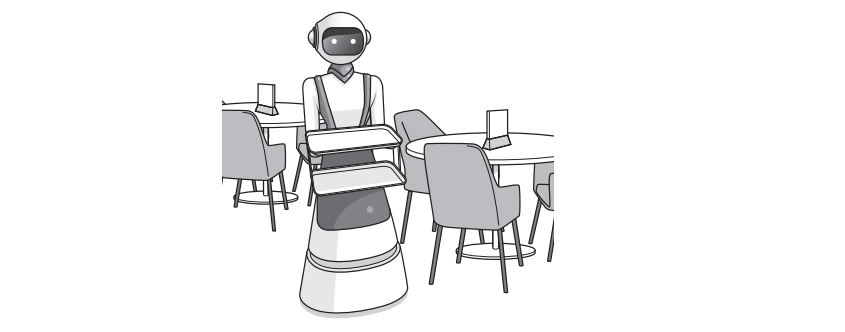
Robots are used to serve food and drink to customers at a restaurant.

A robot serving tables in a restaurant setting, featuring multiple shelves and surrounded by chairs and tables.

A robot navigates through the restaurant to the table it is serving.

Complete the table by identifying two sensors that can be included in the robot and the purpose of each sensor in the navigation system.

Sensor

Purpose of sensor in navigation system

9b
2 marks

The navigation system can be considered an example of a control system.

Describe how feedback is used in a control system.

9c
4 marks

The robot includes a touchscreen for the customer to make their payment.

Describe the principal operation of a touchscreen.

10
2 marks

Describe what is meant by the Immediate Access Store (IAS) in a computer system.

11a
3 marks

Describe the principal operations of a 3D printer.

11b
2 marks

Describe the purpose of a temperature sensor within the 3D printer.

11c
2 marks

A 3D printer contains 1GB of Dynamic RAM (DRAM) to store print data.

State two advantages of the printer having Dynamic RAM instead of Static RAM (SRAM).

12a
2 marks

Explain the importance of feedback in a control system.

12b
3 marks

Give one example of an embedded system and explain why it is an example of an embedded system.

13a
1 mark

A factory makes chocolate bars.

The factory uses a conveyor belt that moves the products from one stage of production to the next stage.

An automated system counts the number of chocolate bars made at the end of production.

The system includes a sensor positioned above the conveyor belt.

Identify one appropriate type of sensor that can be used.

13b
2 marks

A second automated system removes chocolate bars with an incorrect weight from the production line.

Describe the role of an actuator in this second system.

13c
3 marks

The factory has many different machines with embedded systems.

(i) Identify two features of embedded systems.

(2)

(ii) Identify one drawback of embedded systems.

(1)

14
3 marks

Describe the roles of the address bus, the data bus and buffers in the process of writing data to the optical disc reader/writer.

15
3 marks

The program files are stored on a new hard disk after they have been downloaded.

Describe the reasons why a hard disk formatter is needed for the new

16a
2 marks

A laptop computer has Static RAM (SRAM).

A virtual reality headset and a laser printer are connected to the laptop.

Explain why Static RAM is used in the laptop instead of Dynamic RAM.

16b
2 marks

Identify two reasons for using Electrically Erasable Programmable ROM (EEPROM) in a virtual reality headset.

16c
4 marks

Describe how the laser printer makes use of a buffer.

17
2 marks

Data is often transferred between two devices that work at different speeds.

Define the term buffer.

18
3 marks

A musician uses a microphone that is connected to a computer to record sound.

The microphone captures sound continuously, but the processor is not always free to accept the sound data.

The recording system uses a buffer.

Explain how the buffer is used when sound data is transferred from the microphone to the computer.

19
2 marks

A coffee machine is controlled by an embedded system.

State two benefits of using an embedded system in the coffee machine.

20
5 marks

A designer sends a large 3D model file from a computer to a 3D printer.

The computer can send the data much faster than the 3D printer can print the model. Printing the whole model takes several hours.

The 3D printer has a buffer.

Explain how the buffer and interrupts are used while the model is being printed.

21
3 marks

A smartphone contains a processor, primary memory, secondary storage and input and output devices. It is small enough to be held in one hand.

Explain why a smartphone is not an embedded system.

22
4 marks

A company manufactures self-service ticket machines for a railway station. Each machine has a touchscreen, a card reader and a printer.

The company must choose between two designs:

  • Design A uses an embedded system that is built into the machine.

  • Design B uses a general purpose computer that runs ticket selling software.

Explain two benefits and two drawbacks of choosing Design A.

23
2 marks

A computer system contains input devices and output devices.

Describe the role of an input device and the role of an output device in a computer system.

24
3 marks

A student says:

"A computer only needs a processor and memory. Input devices and output devices are optional extras."

Explain why the student is wrong.

25
2 marks

A laptop computer has a built-in microphone. A student uses it to record their voice during an online lesson.

Describe the principal operation of the microphone.

26
4 marks

A hotel installs a self-service check-in kiosk in its reception area. A guest uses the kiosk to check in, and the kiosk then gives the guest a printed room card.

Explain the need for input devices and output devices in this kiosk.

27
3 marks

A tablet computer has a capacitive touchscreen. The user taps an icon on the screen to open an application.

Describe the principal operation of a capacitive touchscreen.

28
2 marks

Describe the role of primary memory in a computer system.

29
4 marks

A cold storage warehouse is fitting a computer terminal that the workers will use to record the goods they move.

The workers wear thick gloves at all times because of the low temperature.

The designer must choose between a capacitive touchscreen and a resistive touchscreen for the terminal.

Explain, using the principal operation of each type of touchscreen, which type should be chosen.

30
3 marks

A photo editing program is stored on a computer's secondary storage. When the user starts the program, it is first copied into primary memory.

Explain why the program must be copied into primary memory before it can run.

31
2 marks

A smart display in a hotel lobby uses speakers to give spoken directions to guests.

Describe the principal operation of a speaker.

32
4 marks

A tablet computer has a small amount of primary memory. A user opens several large applications at the same time. The tablet becomes much slower, even though the processor and the secondary storage have not been changed.

Explain why having too little primary memory makes the system slower.

33
2 marks

A desktop computer contains both Random Access Memory (RAM) and Read Only Memory (ROM).

Complete the table by writing RAM or ROM next to each statement.

Statement

RAM or ROM

The contents are lost when the power to the computer is switched off.

This memory holds the instructions that the computer needs in order to start up.

34
3 marks

A pilot training centre uses a virtual reality (VR) headset to train pilots.

When a trainee turns their head, the view of the cockpit that they can see changes to match.

Explain how the principal operations of the VR headset produce this effect.

35
2 marks

State two reasons why a computer system needs secondary storage.

36
3 marks

A self-service ticket machine at a railway station has both Read Only Memory (ROM) and Random Access Memory (RAM).

A customer uses the machine to choose a journey and to pay for a ticket.

Explain why the ticket machine needs both types of memory.

37
3 marks

A research team works at a remote site that has no network connection. At the end of each week they copy their data onto a removable secondary storage device and carry it back to the main office.

Explain why removable secondary storage is suitable for this task.

38
5 marks

An office uses a laser printer to print documents.

Describe the principal operations of the laser printer, from the point at which the print data reaches the printer to the point at which the printed page leaves the printer.

39
4 marks

A tablet computer has 128 MB of Read Only Memory (ROM) and 8 GB of Random Access Memory (RAM).

The manufacturer is asked to remove the ROM from the tablet and to fit a larger amount of RAM in its place.

Explain why the ROM in the tablet cannot be replaced by additional RAM.

40
4 marks

A company is building a computer for editing video. The specification lists 32 GB of primary memory and 4 TB of secondary storage.

Explain why the computer needs both primary memory and secondary storage, rather than only one of them.

41
2 marks

A computer stores its files on a magnetic hard disk. The hard disk contains one or more platters.

Complete the two sentences about the principal operation of a magnetic hard disk.

The surface of each platter is divided into concentric circles called ............................ .

Each of these circles is divided into ............................ , which are wedge-shaped sections of the surface.

42
2 marks

A computer contains cache memory and main memory.

Both of these are built from a type of Random Access Memory (RAM).

State which type of RAM, Static RAM (SRAM) or Dynamic RAM (DRAM), is used for each.

43
3 marks

A magnetic hard disk is used to store a video file.

Describe how the data in the video file is written onto the surface of the hard disk.

44
3 marks

Static RAM (SRAM) and Dynamic RAM (DRAM) are two types of Random Access Memory.

Complete the table to show how SRAM and DRAM differ for each feature.

Feature

Static RAM (SRAM)

Dynamic RAM (DRAM)

How one memory cell is built

Need for refreshing

Relative access time

45
4 marks

A drone records video onto a solid state (flash) memory card.

The video is still stored on the memory card after the drone has been switched off.

Explain how solid state (flash) memory stores the data, and why the data is still there when the power is removed.

46
2 marks

Monitoring systems and control systems both collect data from sensors.

Give two differences between a monitoring system and a control system.

47
4 marks

A laptop computer has 4 MB of cache memory inside its processor and 16 GB of main memory.

The cache memory uses Static RAM (SRAM). The main memory uses Dynamic RAM (DRAM).

Explain why two different types of Random Access Memory are used in the laptop.

48
3 marks

A cold storage warehouse keeps frozen food below -18 °C.

Temperature sensors inside the warehouse take a reading every 30 seconds. Every reading is added to a log file. The most recent reading is shown on a screen in the manager's office. If a reading rises above -18 °C, a red lamp next to the screen turns on.

Explain why this is a monitoring system and not a control system.

49
2 marks

Programmable ROM (PROM) and Erasable Programmable ROM (EPROM) are two types of Read Only Memory (ROM).

State two differences between PROM and EPROM.

50
4 marks

A factory measures the noise level in its production hall using sound sensors.

A reading is taken every second and added to a log file. If a reading is above the safe limit, a lamp turns on in the supervisor's office.

(i) Explain why the system described is a monitoring system.

(2)

(ii) Describe one change to the system that would make it a control system.

(2)

51
3 marks

PROM, EPROM and EEPROM are three types of Read Only Memory (ROM).

Complete the table by describing how the contents of each type can be erased.

Type of ROM

How the contents can be erased

PROM

EPROM

EEPROM

52
2 marks

A company uses automated systems at two of its sites.

Complete the table by identifying the most appropriate type of sensor for each system.

System

Type of sensor

The system checks that the air inside a greenhouse does not become too hot.

The system detects that a heavy crate has been placed on a loading platform.

53
4 marks

A satellite television receiver contains two Read Only Memory (ROM) chips.

  • Chip A holds a hardware serial number. This is written once during manufacture and must never be changed afterwards.

  • Chip B holds the firmware. The manufacturer sends firmware updates to the receiver over the internet several times each year.

Identify the most appropriate type of ROM for each chip and justify each choice.

54
3 marks

The entrance to a shopping centre has automatic sliding doors. The doors use an infra-red sensor and an actuator.

Describe the role of the sensor and the role of the actuator in this system.

55
4 marks

A chemical company stores a liquid in a large tank. The liquid must be kept between 4 °C and 8 °C.

A temperature sensor is fitted inside the tank. A cooling unit is fitted to the outside of the tank and is switched on and off by an actuator.

Describe how the system uses the readings taken by the temperature sensor to decide whether to switch on the cooling unit.

56
2 marks

A control system keeps the water in a fish tank at 25 °C. A temperature sensor measures the water temperature and a heater is switched on and off by the system.

Describe what is meant by feedback in this control system.

57
3 marks

An air conditioning system keeps the temperature of an office at 22 °C. It uses a temperature sensor and a cooling unit.

Explain what would happen if this system did not use feedback.

58
4 marks

A pump keeps the water pressure in the pipes of a tall building between 3 bar and 4 bar.

A pressure sensor measures the water pressure every second. If the pressure falls below 3 bar, the microprocessor sends a signal to an actuator that switches the pump on.

Explain how feedback is used in this system.