Pressure (SQA National 5 Physics): Revision Note
Exam code: X857 75

Pressure
Pressure is defined as:
Force exerted per unit area
The area should always be the cross-sectional area of the object
So that the force is at a right angle to the surface it is acting upon
The average pressure exerted on a surface can be calculated using the following relationship:
format('truetype')%3Bfont-weight%3Anormal%3Bfont-style%3Anormal%3B%7D%3C%2Fstyle%3E%3C%2Fdefs%3E%3Ctext%20font-family%3D%22Times%20New%20Roman%22%20font-size%3D%2218%22%20font-style%3D%22italic%22%20text-anchor%3D%22middle%22%20x%3D%224.5%22%20y%3D%2230%22%3Ep%3C%2Ftext%3E%3Ctext%20font-family%3D%22math17f39f8317fbdb1988ef4c628eb%22%20font-size%3D%2216%22%20text-anchor%3D%22middle%22%20x%3D%2222.5%22%20y%3D%2230%22%3E%3D%3C%2Ftext%3E%3Cline%20stroke%3D%22%23000%22%20stroke-linecap%3D%22square%22%20stroke-width%3D%221%22%20x1%3D%2233.5%22%20x2%3D%2251.5%22%20y1%3D%2223.5%22%20y2%3D%2223.5%22%2F%3E%3Ctext%20font-family%3D%22Times%20New%20Roman%22%20font-size%3D%2218%22%20font-style%3D%22italic%22%20text-anchor%3D%22middle%22%20x%3D%2244.5%22%20y%3D%2216%22%3EF%3C%2Ftext%3E%3Ctext%20font-family%3D%22Times%20New%20Roman%22%20font-size%3D%2218%22%20font-style%3D%22italic%22%20text-anchor%3D%22middle%22%20x%3D%2242.5%22%20y%3D%2241%22%3EA%3C%2Ftext%3E%3C%2Fsvg%3E)
Where:
p = pressure measured in pascals (Pa)
1 pascal is equivalent to 1 newton per meter squared
1 Pa = 1 N m-2
F = force measured in newtons (N)
A = area measured in metres squared (m2)
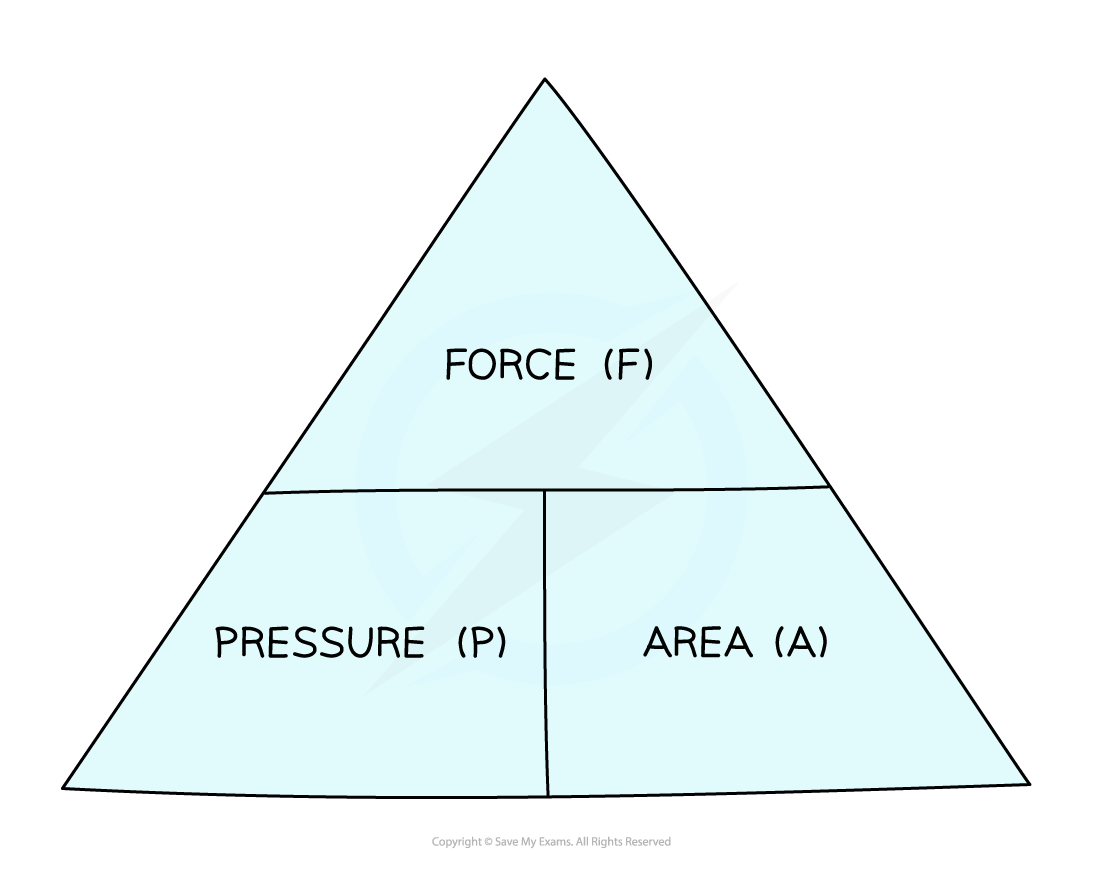
The pressure relationship can be rearranged using a triangle
See Motion Equations for instructions on how to use a relationship triangle
Effects of changing variables
For a constant force:
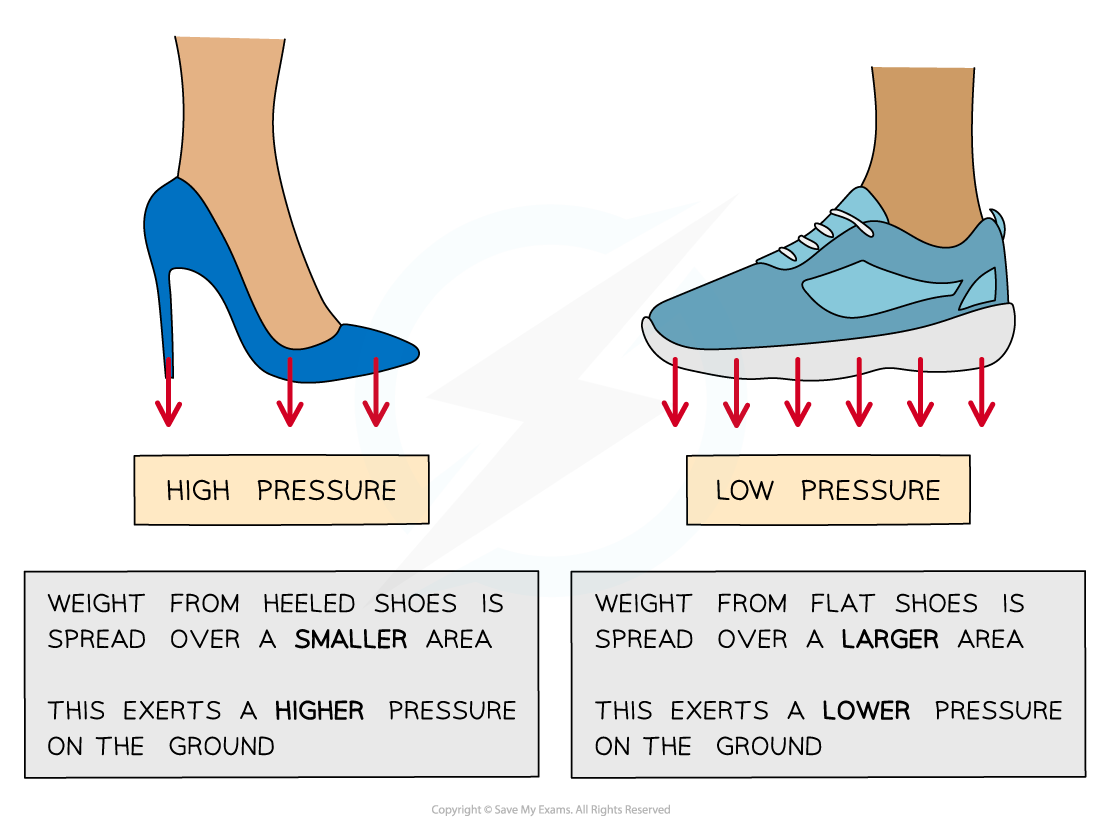
Reducing the area increases the pressure
Increasing the area reduces the pressure
Pressure is inversely proportional to area
format('truetype')%3Bfont-weight%3Anormal%3Bfont-style%3Anormal%3B%7D%3C%2Fstyle%3E%3C%2Fdefs%3E%3Ctext%20font-family%3D%22Times%20New%20Roman%22%20font-size%3D%2218%22%20font-style%3D%22italic%22%20text-anchor%3D%22middle%22%20x%3D%224.5%22%20y%3D%2230%22%3Ep%3C%2Ftext%3E%3Ctext%20font-family%3D%22math1502cc2c94be1a7c4ca7ef25b8b%22%20font-size%3D%2216%22%20text-anchor%3D%22middle%22%20x%3D%2222.5%22%20y%3D%2230%22%3E%26%23x221D%3B%3C%2Ftext%3E%3Cline%20stroke%3D%22%23000000%22%20stroke-linecap%3D%22square%22%20stroke-width%3D%221%22%20x1%3D%2232.5%22%20x2%3D%2249.5%22%20y1%3D%2223.5%22%20y2%3D%2223.5%22%2F%3E%3Ctext%20font-family%3D%22Times%20New%20Roman%22%20font-size%3D%2218%22%20text-anchor%3D%22middle%22%20x%3D%2243.5%22%20y%3D%2216%22%3E1%3C%2Ftext%3E%3Ctext%20font-family%3D%22Times%20New%20Roman%22%20font-size%3D%2218%22%20font-style%3D%22italic%22%20text-anchor%3D%22middle%22%20x%3D%2240.5%22%20y%3D%2241%22%3EA%3C%2Ftext%3E%3C%2Fsvg%3E)
For a constant area:
Increasing the force increases the pressure
Decreasing the force decreases the pressure
Pressure is directly proportional to force
format('truetype')%3Bfont-weight%3Anormal%3Bfont-style%3Anormal%3B%7D%3C%2Fstyle%3E%3C%2Fdefs%3E%3Ctext%20font-family%3D%22Times%20New%20Roman%22%20font-size%3D%2218%22%20font-style%3D%22italic%22%20text-anchor%3D%22middle%22%20x%3D%224.5%22%20y%3D%2216%22%3Ep%3C%2Ftext%3E%3Ctext%20font-family%3D%22math1502cc2c94be1a7c4ca7ef25b8b%22%20font-size%3D%2216%22%20text-anchor%3D%22middle%22%20x%3D%2222.5%22%20y%3D%2216%22%3E%26%23x221D%3B%3C%2Ftext%3E%3Ctext%20font-family%3D%22Times%20New%20Roman%22%20font-size%3D%2218%22%20font-style%3D%22italic%22%20text-anchor%3D%22middle%22%20x%3D%2239.5%22%20y%3D%2216%22%3EF%3C%2Ftext%3E%3C%2Fsvg%3E)
Examples of pressure
Pressure can be exerted by a solid on another solid
For example, the pressure exerted by a person standing on the ground

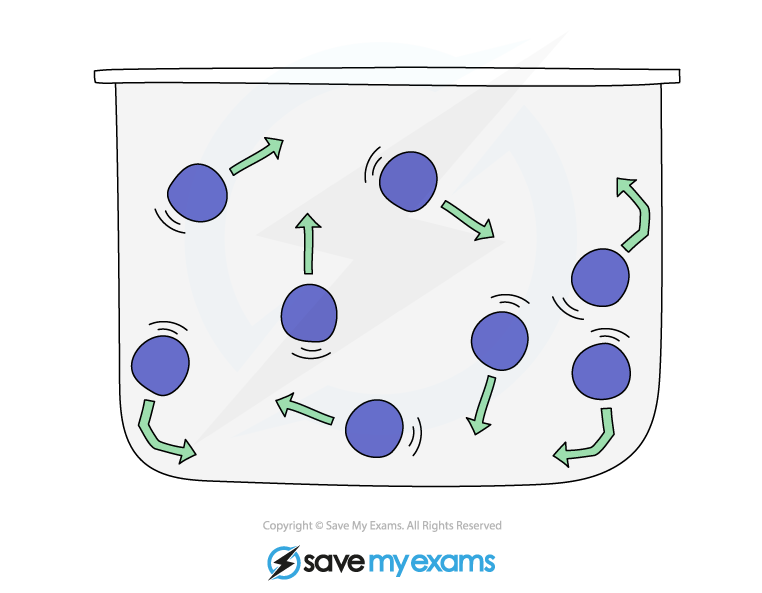
Pressure can be exerted by a gas on a surface
For example, when gas particles collide with the surfaces of a container
Air pressure
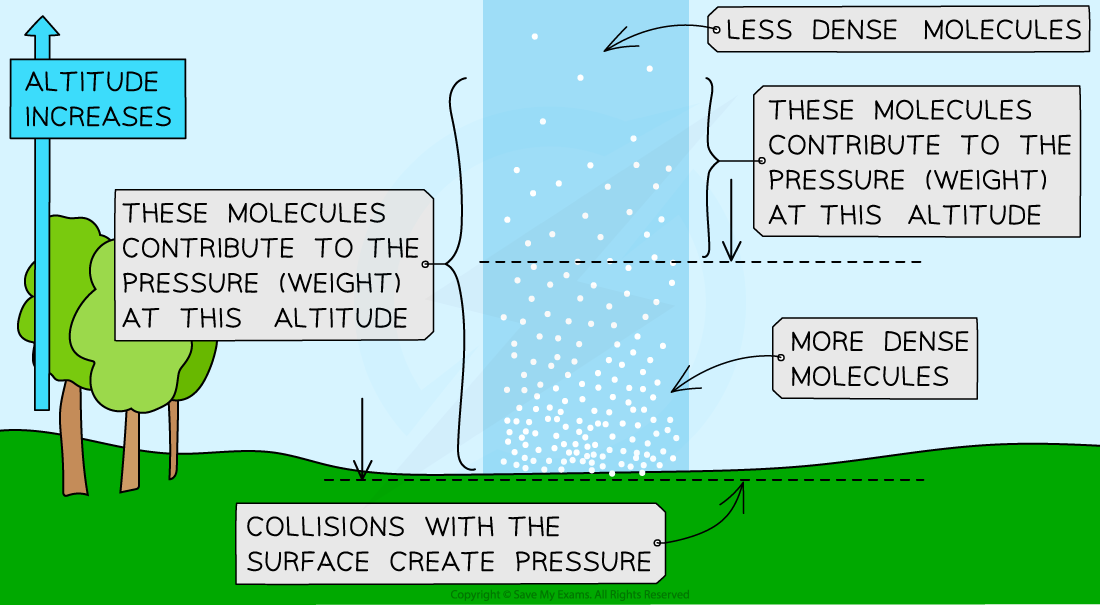
Air pressure arises due to the collisions of air particles with surfaces
The weight of the air above an object exerts a force at ground or sea level
Worked Example
The diagram below shows the parts of the lifting machine used to move the concert platform up and down.
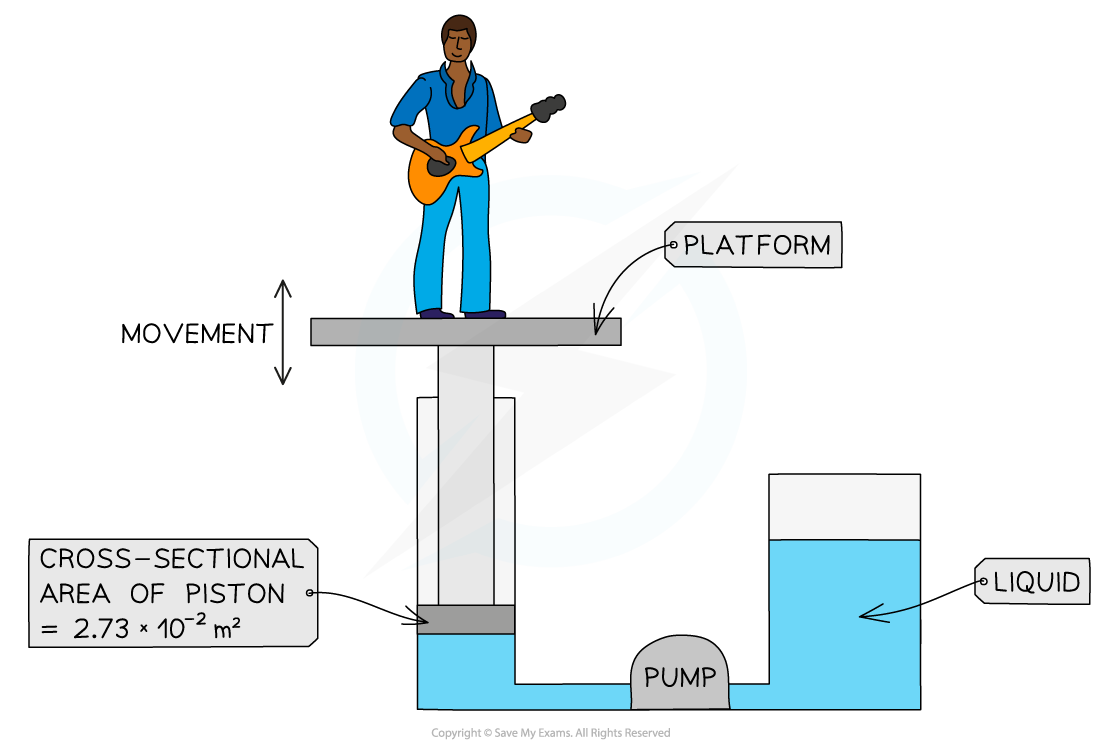
The pump creates a pressure in the liquid of 5.28 × 10⁵ Pa to move the platform upwards.
Calculate the force that the liquid applies to the piston.
Answer:
Step 1: List the known quantities
Cross-sectional area = 2.73 × 10⁻² m2
Pressure = 5.28 × 10⁵ Pa
Step 2: Write down the relevant relationship
format('truetype')%3Bfont-weight%3Anormal%3Bfont-style%3Anormal%3B%7D%3C%2Fstyle%3E%3C%2Fdefs%3E%3Ctext%20font-family%3D%22Times%20New%20Roman%22%20font-size%3D%2218%22%20font-style%3D%22italic%22%20text-anchor%3D%22middle%22%20x%3D%224.5%22%20y%3D%2230%22%3Ep%3C%2Ftext%3E%3Ctext%20font-family%3D%22math17f39f8317fbdb1988ef4c628eb%22%20font-size%3D%2216%22%20text-anchor%3D%22middle%22%20x%3D%2222.5%22%20y%3D%2230%22%3E%3D%3C%2Ftext%3E%3Cline%20stroke%3D%22%23000000%22%20stroke-linecap%3D%22square%22%20stroke-width%3D%221%22%20x1%3D%2233.5%22%20x2%3D%2251.5%22%20y1%3D%2223.5%22%20y2%3D%2223.5%22%2F%3E%3Ctext%20font-family%3D%22Times%20New%20Roman%22%20font-size%3D%2218%22%20font-style%3D%22italic%22%20text-anchor%3D%22middle%22%20x%3D%2244.5%22%20y%3D%2216%22%3EF%3C%2Ftext%3E%3Ctext%20font-family%3D%22Times%20New%20Roman%22%20font-size%3D%2218%22%20font-style%3D%22italic%22%20text-anchor%3D%22middle%22%20x%3D%2242.5%22%20y%3D%2241%22%3EA%3C%2Ftext%3E%3C%2Fsvg%3E)
Step 3: Rearrange for the force, F
format('truetype')%3Bfont-weight%3Anormal%3Bfont-style%3Anormal%3B%7D%3C%2Fstyle%3E%3C%2Fdefs%3E%3Ctext%20font-family%3D%22Times%20New%20Roman%22%20font-size%3D%2218%22%20font-style%3D%22italic%22%20text-anchor%3D%22middle%22%20x%3D%225.5%22%20y%3D%2216%22%3EF%3C%2Ftext%3E%3Ctext%20font-family%3D%22math17f39f8317fbdb1988ef4c628eb%22%20font-size%3D%2216%22%20text-anchor%3D%22middle%22%20x%3D%2223.5%22%20y%3D%2216%22%3E%3D%3C%2Ftext%3E%3Ctext%20font-family%3D%22Times%20New%20Roman%22%20font-size%3D%2218%22%20font-style%3D%22italic%22%20text-anchor%3D%22middle%22%20x%3D%2240.5%22%20y%3D%2216%22%3Ep%3C%2Ftext%3E%3Ctext%20font-family%3D%22Times%20New%20Roman%22%20font-size%3D%2218%22%20font-style%3D%22italic%22%20text-anchor%3D%22middle%22%20x%3D%2251.5%22%20y%3D%2216%22%3EA%3C%2Ftext%3E%3C%2Fsvg%3E)
Step 4: Substitute the values into the equation
F = (5.28 × 105) × (2.73 × 10-2) = 1.4414× 10⁴
Step 5: Round to the appropriate number of significant figures and quote the correct unit
The least precise input value is 3 s.f.
Therefore, the answer can only be given to the same precision
F = 1.44× 10⁴ N (3 s.f.)
Examiner Tips and Tricks
Exam questions will often use an unfamiliar context to make a question more difficult. These are called 'application questions'. It just means that you have to apply your understanding to a new situation. You already know the physics, you just have to think about how what you already know fits into the new situation.

Unlock more, it's free!
Join the 100,000+ Students that ❤️ Save My Exams
the (exam) results speak for themselves:

Was this revision note helpful?