Dangers of Radiation (SQA National 5 Physics): Revision Note
Exam code: X857 75

Dangers of radiation
Ionising nuclear radiation can damage living things such as human cells and tissues at high doses:
This can include:
Cell death
Mutations
Cancer
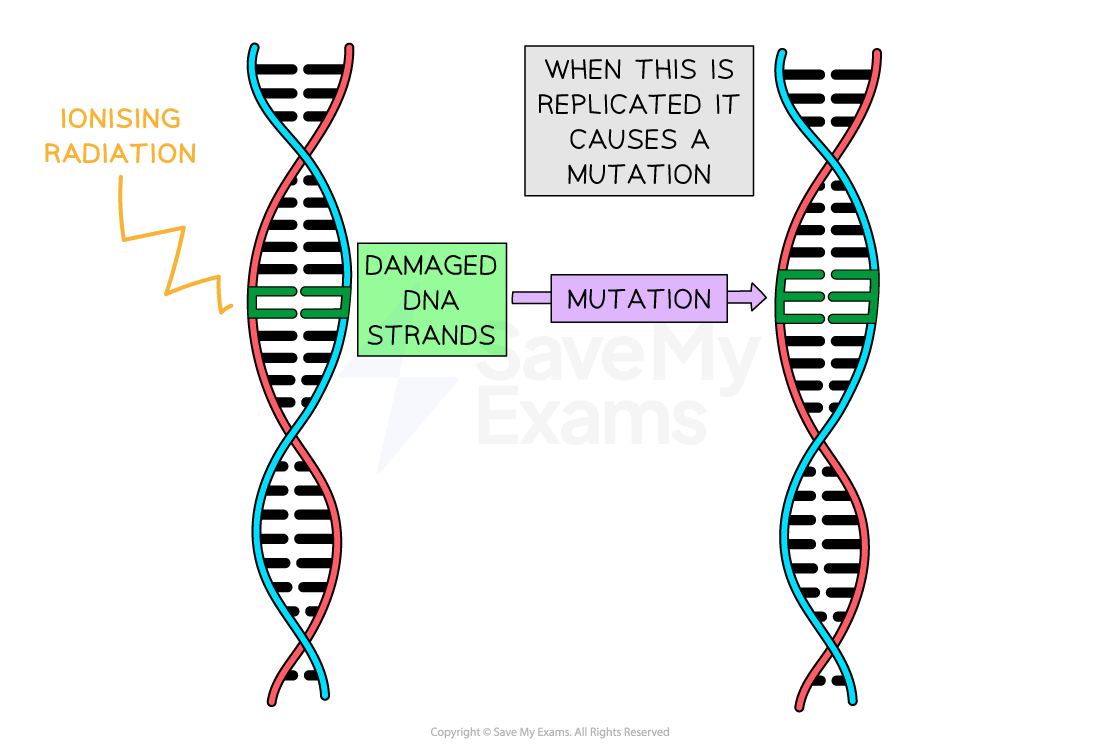
If the atoms that make up a DNA strand are ionised, then the DNA strand can be damaged
If the DNA is damaged, then the cell may die, or the DNA may be mutated when it is replicated
If a mutated cell replicates itself then a tumour may develop
This is an example of cancer, which is a significant danger of radiation exposure
Radiation ionising DNA
Acute radiation exposure can have other serious symptoms:
It can cause skin burns, similar to severe sunburn
Radiation can reduce the amount of white blood cells in the body, making a person more susceptible to infections by lowering their immune system
At very high doses, radiation exposure can kill cells completely, leading to severe illness or death
The severity of the harm caused by radiation exposure is dependent on:
the dose
the type of radiation
the type of tissue exposed
Because of this, it is very important to handle radioactive sources carefully
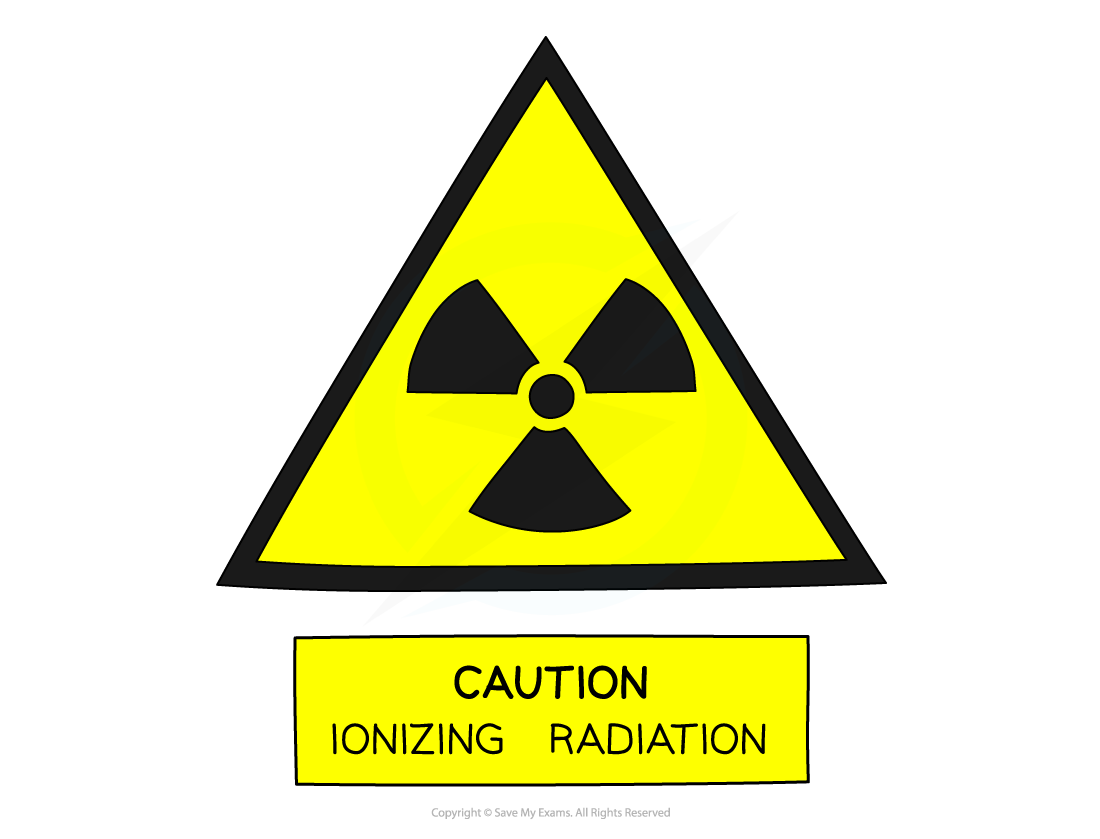
A sign indicating the dangers of radioactivity
Safety precautions
Safety precautions for all ionising radiation include:
reducing exposure time
increasing the distance between the source and living tissue
using shielding to absorb radiation
Worked Example
A student plans to use a gamma source to conduct an experiment.
Suggest two precautions the student should take in order to minimise the risk to themselves when using the source.
Answer:
Any two from:
Keep the source in a lead-lined container until the time it is needed
Use tongs to move the source, rather than handling it directly
The source should be kept at as far a distance from the student as possible during the experiment
The time that the source is being used should be minimised

Unlock more, it's free!
Join the 100,000+ Students that ❤️ Save My Exams
the (exam) results speak for themselves:

Was this revision note helpful?