Diversity of Organisms (DP IB Biology: HL): Exam Questions

1 hour17 questions
1a2 marks

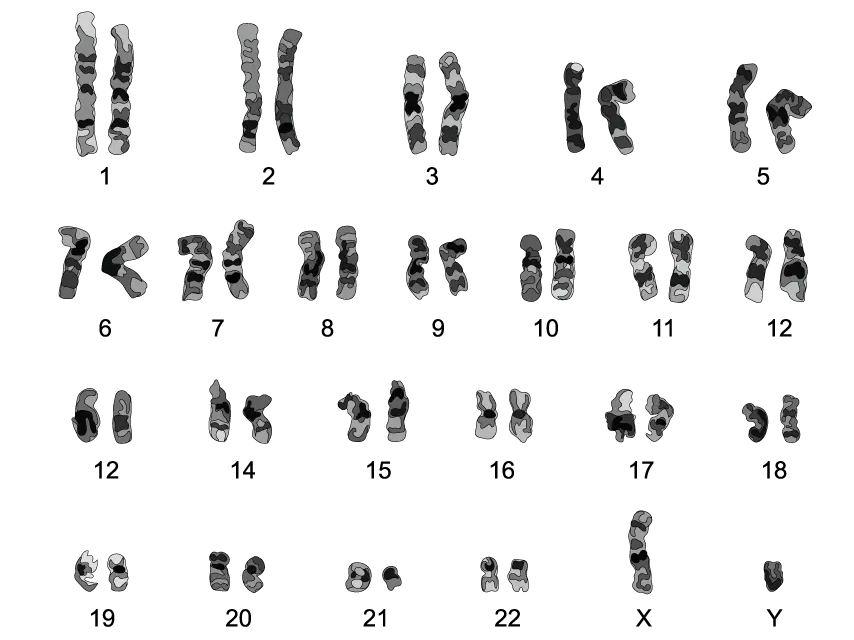
The following diagram shows the karyogram of an individual.

3-1-easy-q1a

(i) Identify the sex of this individual.

[1]

(ii) State a reason for your answer in part i).

[1]

1b1 mark

Cells in metaphase of mitosis were used to construct the karyogram from part (a).

Explain the reason for this.

1c2 marks

List two characteristics of the chromosomes that are used to arrange them in a karyogram.

1d1 mark

Apart from sex determination, state one other use of studying the karyotype of an individual.

1a
Sme Calculator
2 marks

The table below shows the genome sizes of several different plant species.

Organism

Common name

Genome size (million base pairs)

Paris japonica

Japanese canopy plant

149 890

Tmesipteris obliqua

Long fork-fern

147 290

Viscum album

Mistletoe

90 000

Galanthus nivalis

Snowdrop

61 089

Arabidopsis thaliana

Thale cress

135

Genlisea margaretae

Corkscrew plant

63

(i) Calculate how many times bigger the genome of Paris japonica is than that of Genlisea margaretae.

[1]

(ii) Mistletoe is a diploid plant with 10 pairs of homologous chromosomes. 

Calculate the average size of one of these chromosomes.

[1]

1b1 mark

State the best method that can be used to compile the information found in the table in part (a).

1c4 marks

The size of the human genome, Homo sapiens, is 3000 mbp.

Using information from the question and your own knowledge, discuss the relationship between genome size and the complexity of organisms.

1d3 marks

Many plants with very large genomes have a large proportion of non-coding DNA. 

State three roles of non-coding DNA. 

2a1 mark

Define the term DNA barcode.

2b3 marks

Researchers in France monitored the species richness of fish living in two rivers, the Marne and the Seine, over a period of several years. 

The researchers used a technique called electrofishing (EF) which involves stunning the fish with mild electric current and then recording the species of the stunned fish before releasing them back into the water.

In 2017 and 2018 the researchers trialled using eDNA samples in nine different sites to determine species richness in the area. They compared the results to the existing EF method. 

Describe the method that the researchers would have used to collect their eDNA data.

2c4 marks

The results of this experiment are shown in the graph.

species-richness-in-freshwater-fish-edna

A student reading the research results concluded that eDNA is a better method than EF for determining fish species richness.

Use the data in the graph to evaluate the student's conclusion. 

2d2 marks

Other than accuracy, suggest two reasons why the scientists might prefer to use eDNA sampling rather than electrofishing. 

3a2 marks

Prickly pear cacti are plants that are adapted to live in arid conditions. They store water in thick stems which are protected from grazing by herbivores by sharp spines.

The graph shows the number of spines present in a population of prickly pear cactus, Opuntia ficus-indica.

17-1-fig-2-1

State, with a reason, the type of variation that is represented by the graph.

3b1 mark

Suggest the possible impact of grazing on the variation observed in the graph.

3c3 marks

The prickly pear, Opuntia ficus-indica, is native to Mexico in Central America. 

(i) State the genus and the species of the prickly pear. 

[2]

(ii) The prickly pear can be grown on an agricultural scale for use in food types all over the world.

Suggest how the binomial name assists with the international trade of this cactus. 

[1]

3d2 marks

Since the 19th Century there have been cultivars of Opuntia ficus-indica that have been artificially selected to have no spines. These cultivars are kept separate from wild Opuntia ficus-indica populations. 

Scientists studying these plants want to determine whether these two groups are still the same species. 

Explain why this can present a challenge to these scientists. 

1a
Sme Calculator
2 marks

The table below shows the genome size and haploid chromosome number of different organisms.

Organism

Genome size / base pairs

Haploid chromosome number / n

Polychaos dubium (a single celled eukaryote)

6.7 x 10¹¹

> 50

Trumpet lily (plant)

9.0 x 10¹⁰

12

Mouse

3.5 x 10⁹

20

Human

3.2 x 10⁹

23

Carp (fish)

1.7 x 10⁹

49

Chicken

1.2 x 10⁹

39

Housefly

9.0 x 10⁸

6

Tomato plant

6.6 x 10⁸

12

Calculate the percentage difference in the chromosome number found in the zygotes of chickens compared to those of humans.

Show your working and give your answer to three significant figures.

1b2 marks

The diploid number in an organism is always an even number.

Using your knowledge on the behaviour of chromosomes during meiosis, explain the importance of this in an organism.

1c3 marks

Students hypothesised that a high chromosome number leads to the development of a more complex organism.

Discuss this hypothesis using the data provided in part (a).

1d1 mark

Suggest why the genome size of a species does not always seem to correlate with chromosome number.

2a3 marks

The images show two organisms from the genus Canis. Grey wolves, Canis lupus, are wild animals native to Eurasia and North America.

Domestic dogs, Canis familiaris, descended from wolves and became domesticated over many years.

B~jb5Ls4_h-1a

A wolfdog is a hybrid produced when a domesticated dog (Canis familiaris) breeds with a wolf (Canis lupus). Genetically, dogs and wolves are very similar and the resulting offspring are fertile. Wolfdog hybrids are rare as natural habitats and territorial behaviours isolate wolves from domestic dogs.

Using the information provided, discuss the validity of the claim that wolves and dogs are the same species.

2b2 marks

Some species are divided into subspecies when there are distinct, consistent differences between populations. A subspecies is written by adding a third word—the subspecies epithet—to the usual binomial name.

A taxonomist suggested that the wolf and the domestic dog should be re-categorised as subspecies with the following names:

  • Canis lupus familiaris

  • Canis lupus lupus

Identify the genus name and the species name for the wolf under this re-categorisation.

3a1 mark

Cri du chat syndrome is a rare genetic condition caused by a chromosomal mutation. Babies born with Cri du chat syndrome experience a variety of symptoms and have a characteristic cry that clinicians have described as cat-like.

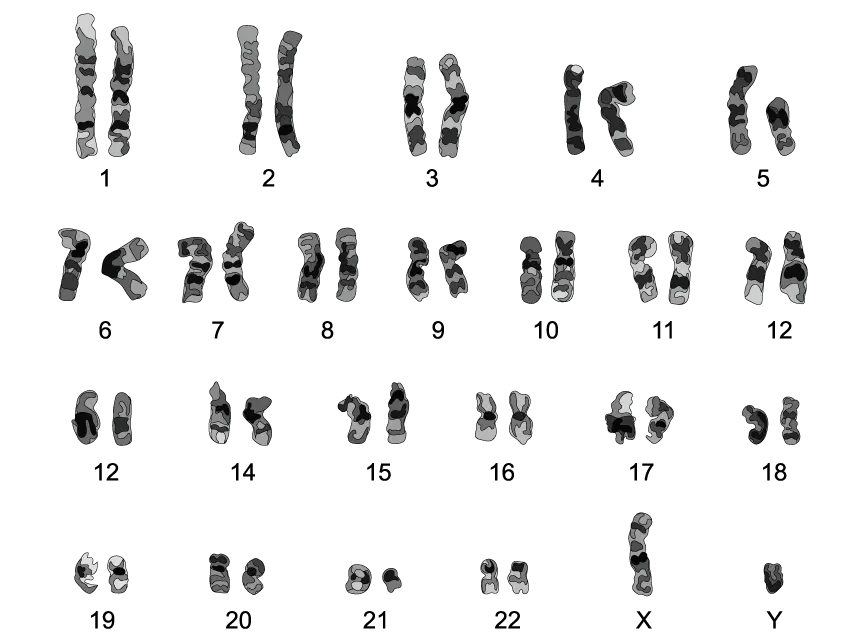
The karyograms below compare the karyotype of a child who does not have Cri du chat syndrome (A) with that of a child who has the syndrome (B).

Karyotype A

Image of a human karyotype showing 22 pairs of numbered chromosomes and a pair of sex chromosomes marked X and Y, each with unique banding patterns.

Karyotype B

Diagram showing a human karyotype with 23 pairs of chromosomes labelled 1 to 22 and X, Y, each with distinct banding patterns for genetic analysis. Pair 5 has one chromosome that is shorter than the other.

Use the karyotypes to describe the chromosome mutation that causes Cri du chat syndrome.

3b1 mark

Some individuals with Cri du chat syndrome do not experience significant symptoms.

Suggest an explanation for this observation.

3c1 mark

Most people affected by Cri du chat syndrome do not have a family history of the condition.

Suggest what this indicates about the heritability of the condition.