Answering the Paper 1 Essays (DP IB Economics): Revision Note

Steve Vorster

Written by: Steve Vorster

Reviewed by: Lisa Eades

Updated on

How to answer the IB Economics Paper 1 ten-mark question

  • Paper 1 (a) questions primarily assess AO1 (knowledge) and AO2/AO3 (application and analysis)

  • Evaluation is not required

  • Real-world examples are not required for Paper 1 (a) questions

What examiners are looking for

  • Accurate economic definitions where relevant

  • Clear chains of reasoning

  • Correct and relevant diagrams

  • Focus on the variable named in the question

Worked Example

Question

Explain how a change in the determinants of demand or the determinants of supply can lead to a new market equilibrium. [10]

Sample response
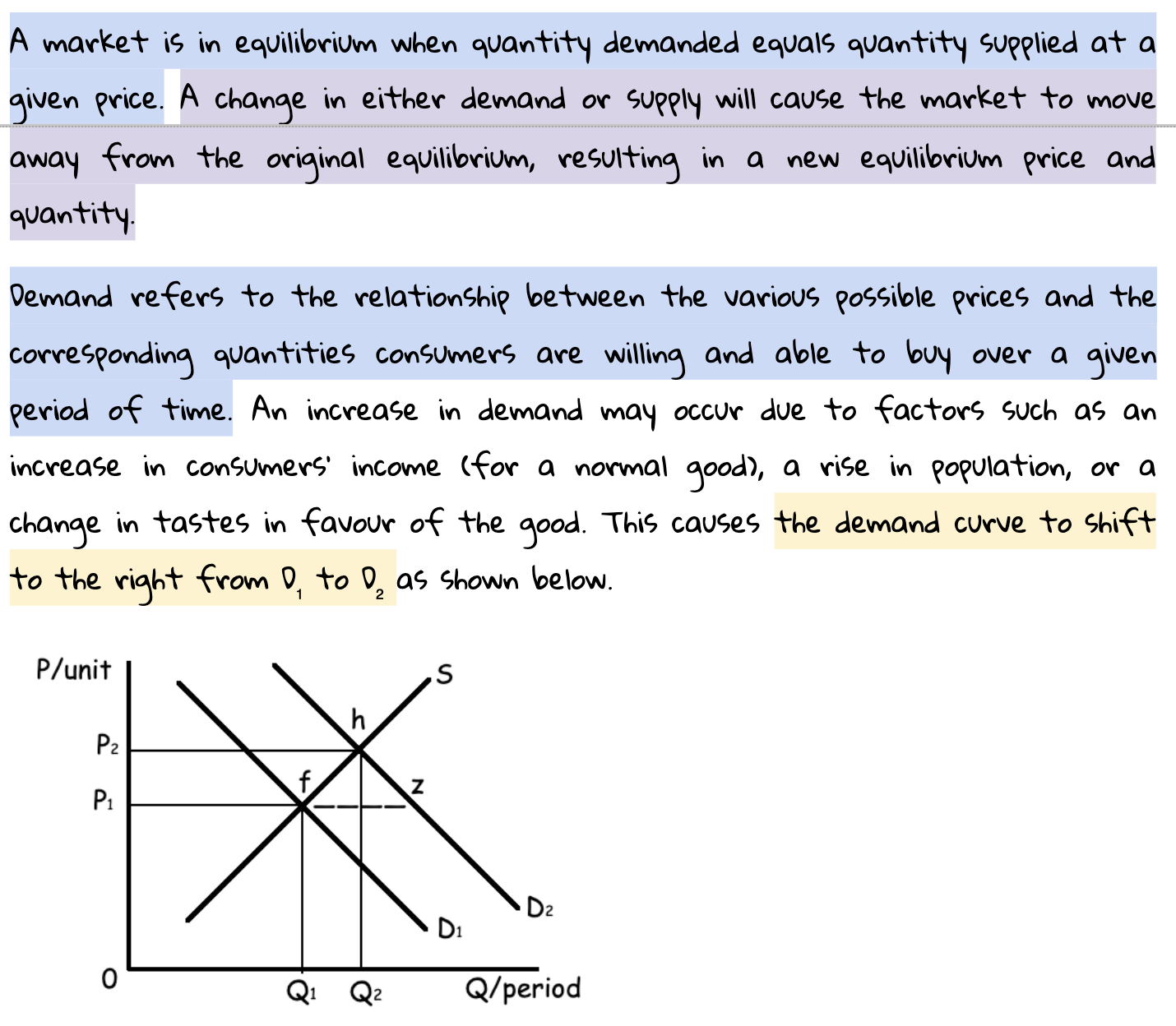
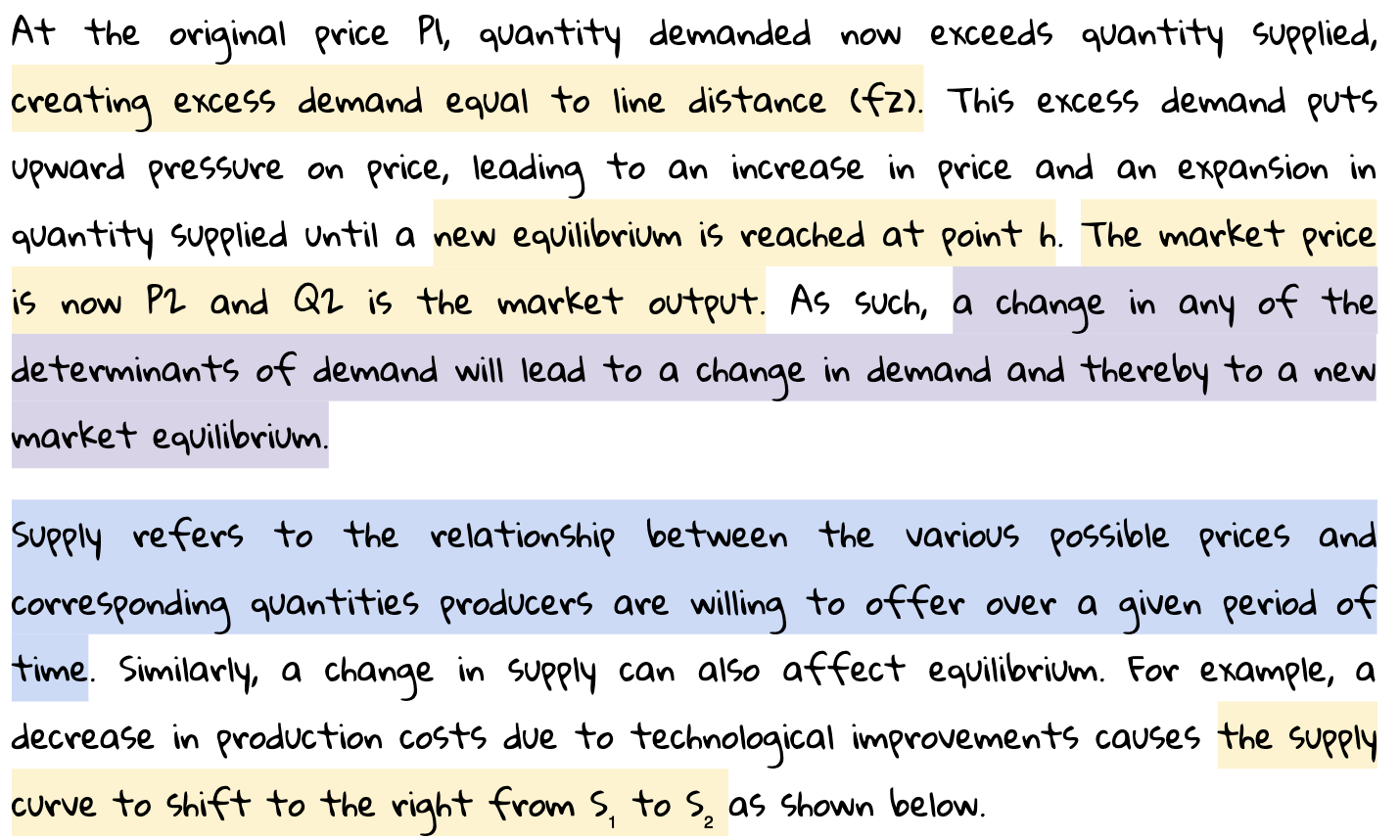
Text explains market equilibrium and factors affecting demand, with a graph illustrating rightward shift of demand curve from D1 to D2 due to increased demand.
Text discussing market equilibrium, excess demand, price changes, and the impact of supply changes due to cost reductions on supply curves.
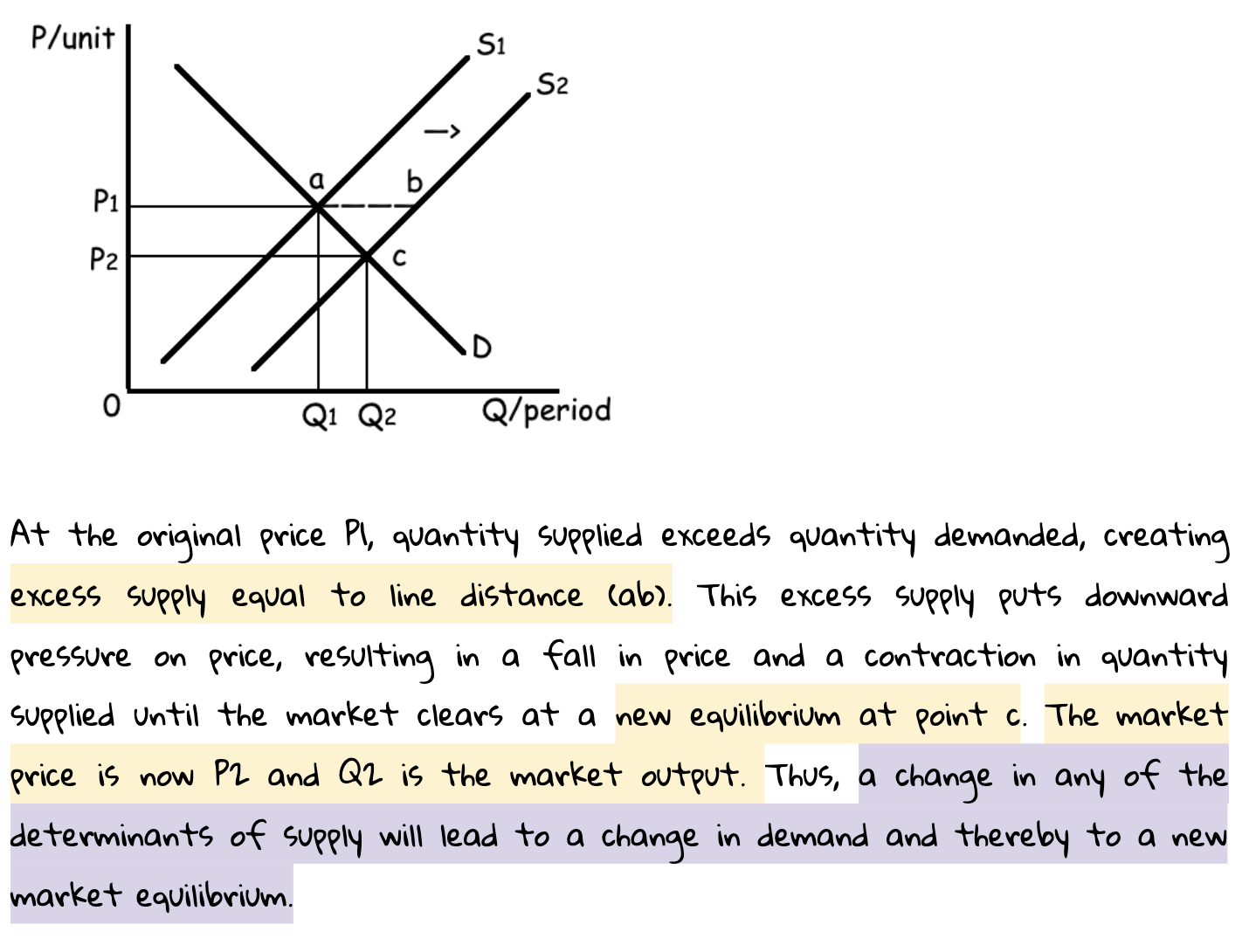
Supply and demand graph showing shifts and excess supply with annotated explanation of equilibrium changes from P1, Q1 to P2, Q2 at point c.
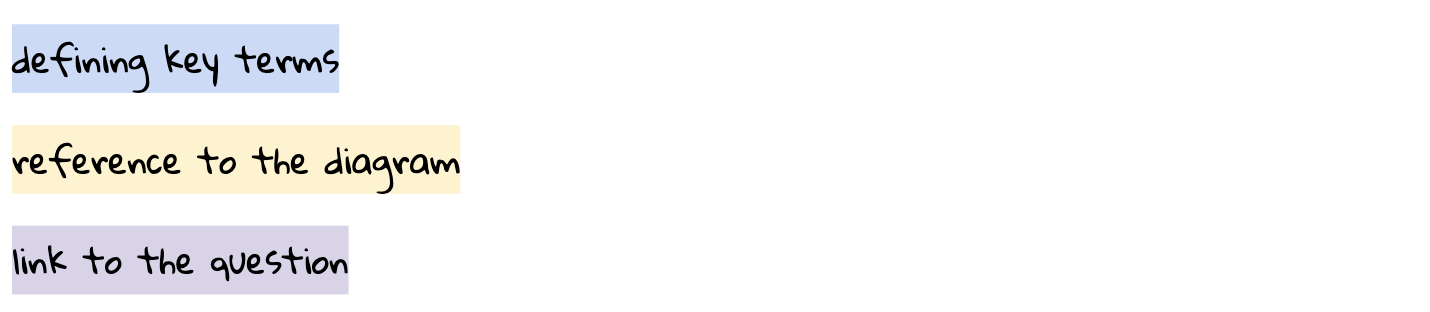
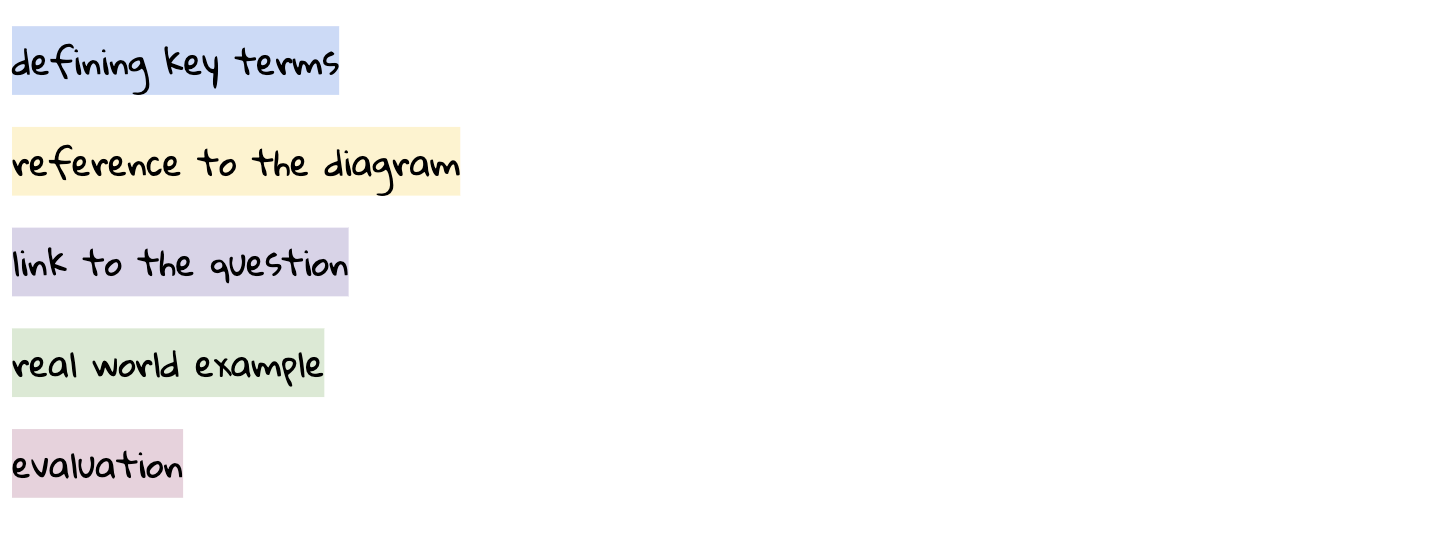
Three coloured text boxes: blue with "defining key terms", yellow with "reference to the diagram", and purple with "link to the question".

Why this scores in the top band

✅ Clear explanation of both demand-side and supply-side determinants
✅ Logical cause-and-effect reasoning
✅ Accurate and relevant use of a demand–supply diagram
✅ No unnecessary evaluation (appropriate for a 10-mark question)

How to answer the IB Economics Paper 1 fifteen-mark question

  • Paper 1 (b) questions assess AO3 (synthesis and evaluation), supported by AO1, AO2, and AO4

  • Real-world examples are required to support evaluation and demonstrate depth of understanding

  • A real-world example should:

    • be specific (policy, country, market, or organisation)

    • be accurate

    • be clearly linked to the economic theory used

    • support evaluation, not replace analysis

Worked Example

Question

Using real-world examples, evaluate the impact of imposing a price floor in an agricultural market. [15]

Sample response
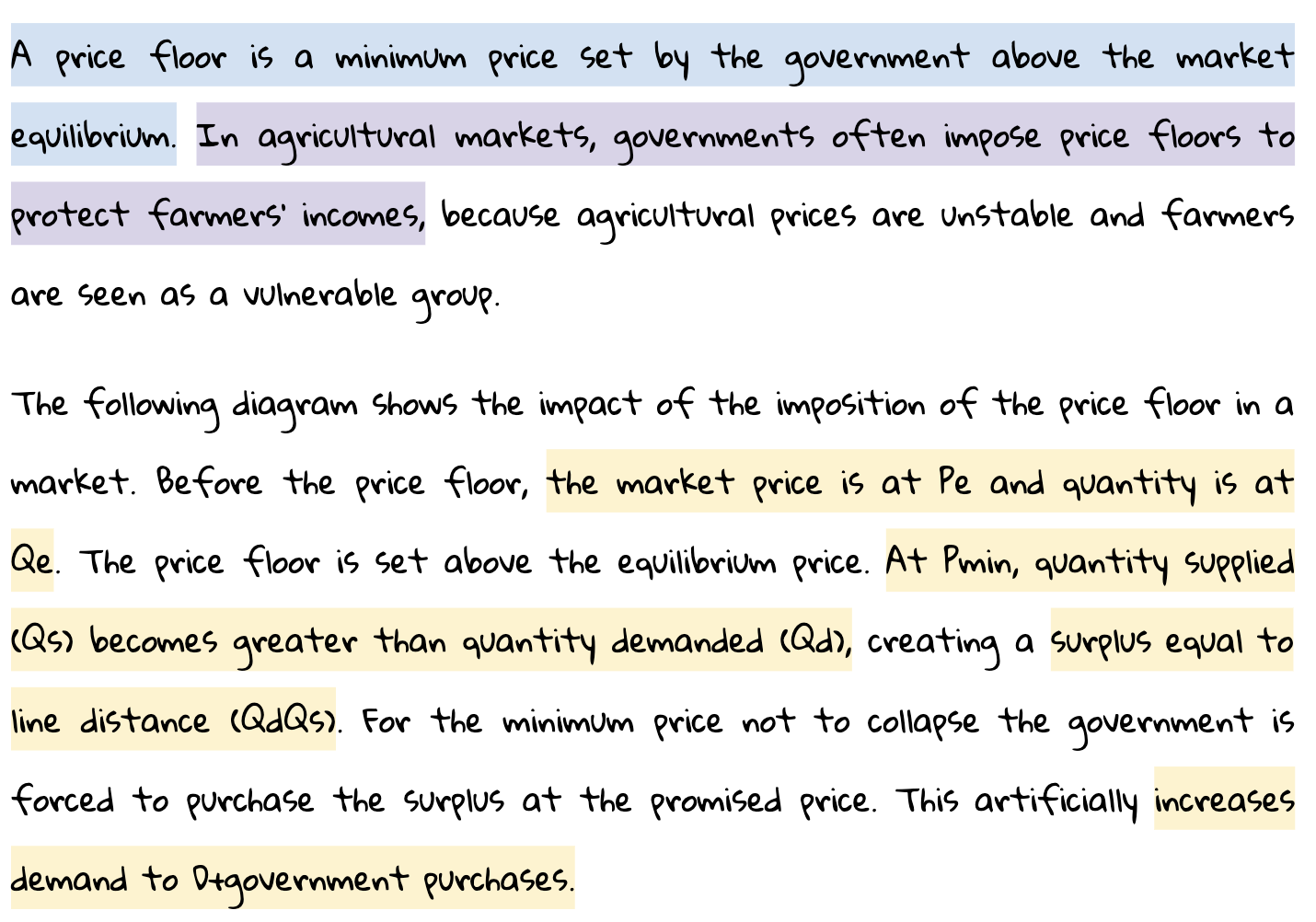
Text explaining price floors set above market equilibrium in agricultural markets to protect farmers, creating surplus as quantity supplied exceeds demand.
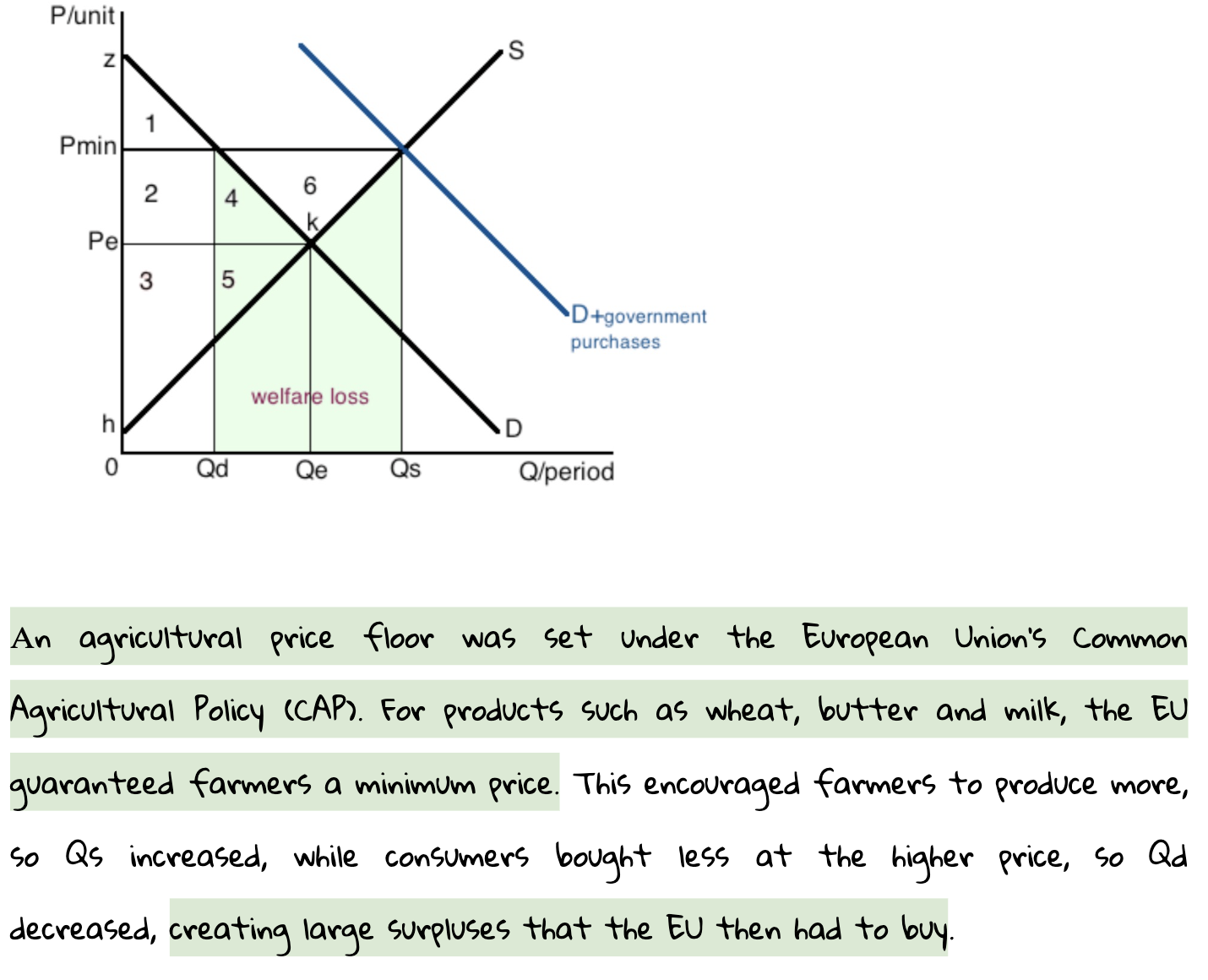
Graph depicting supply, demand, price floor, and welfare loss in the EU Common Agricultural Policy. Text explains surplus due to minimum price setting.
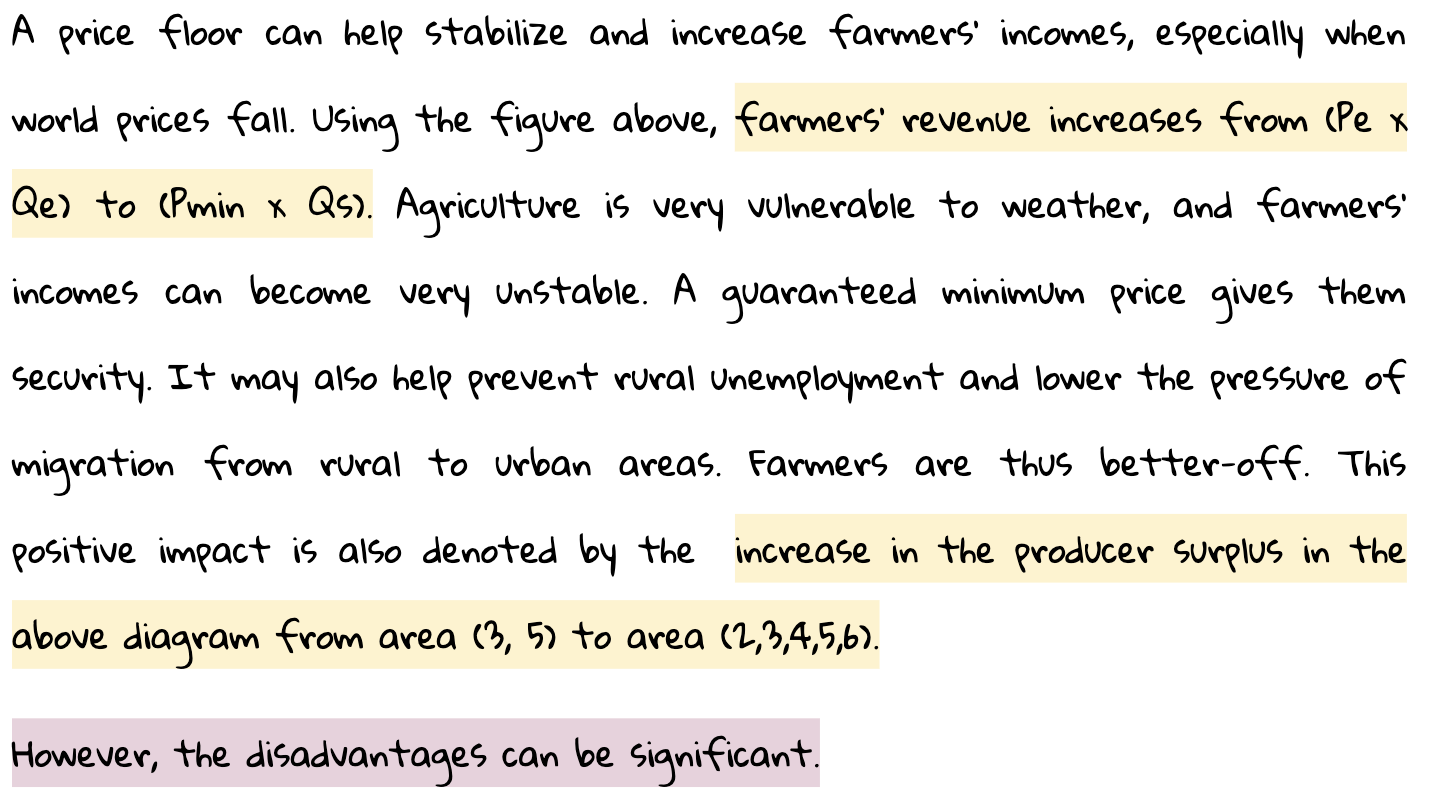
Handwritten text explaining how a price floor can stabilise farmers' income, showing highlighted sections on increased revenue and producer surplus.
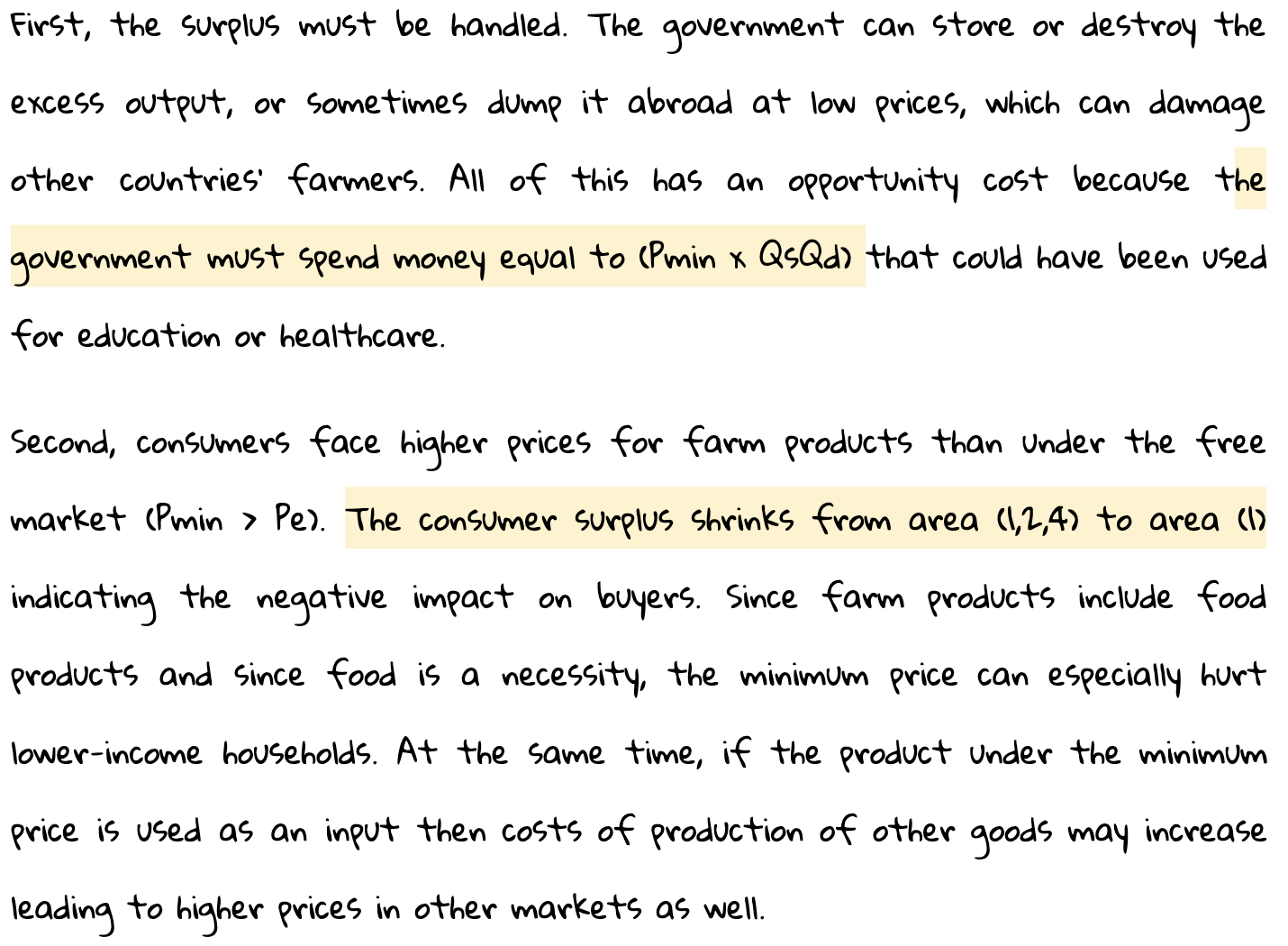
Text discusses government handling of surplus, opportunity costs, and impacts of higher farm product prices on consumers, highlighting economic challenges.
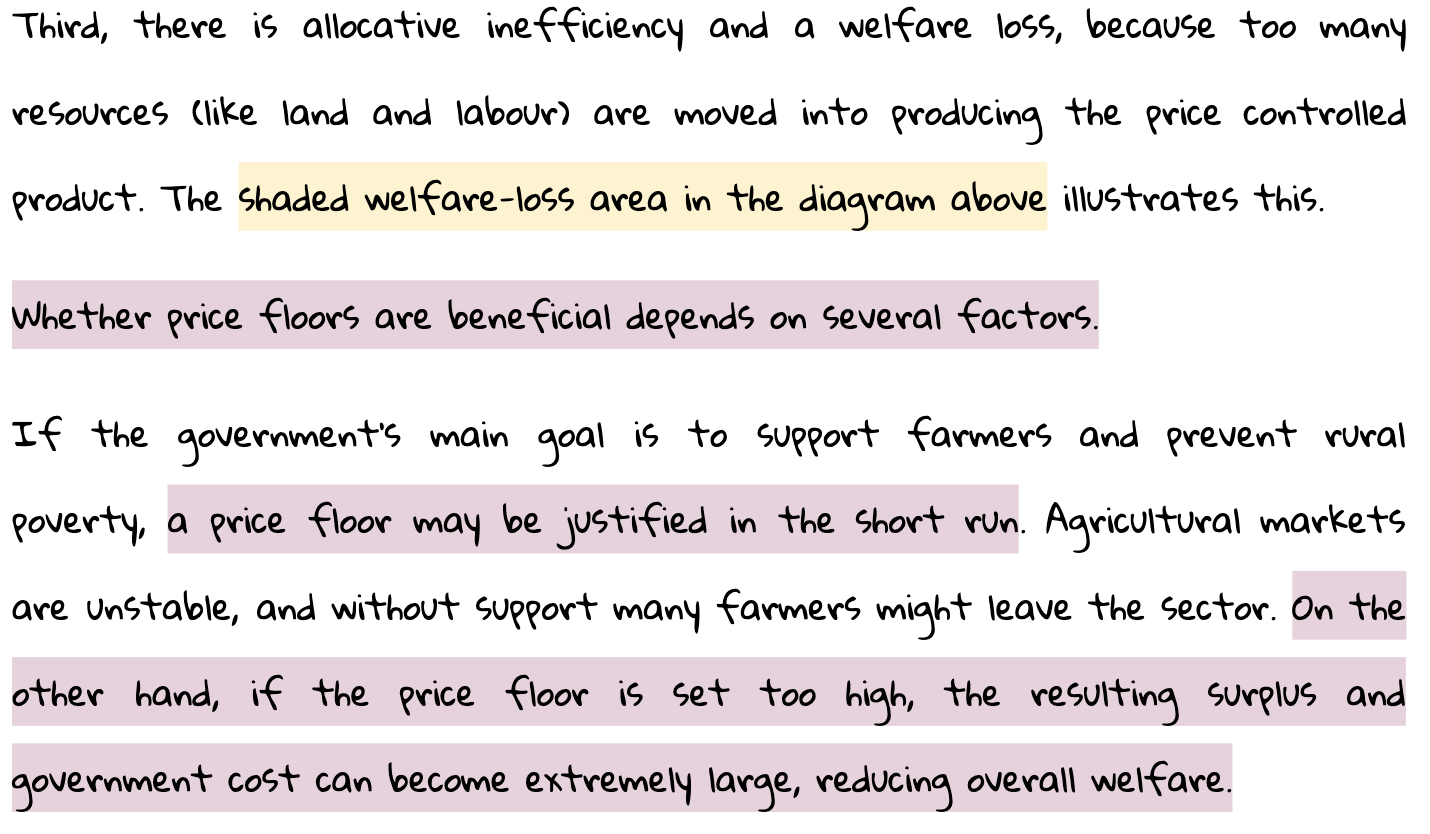
Text explaining welfare loss due to allocative inefficiency and price floors. Highlights justification for price floors in agriculture and potential drawbacks.
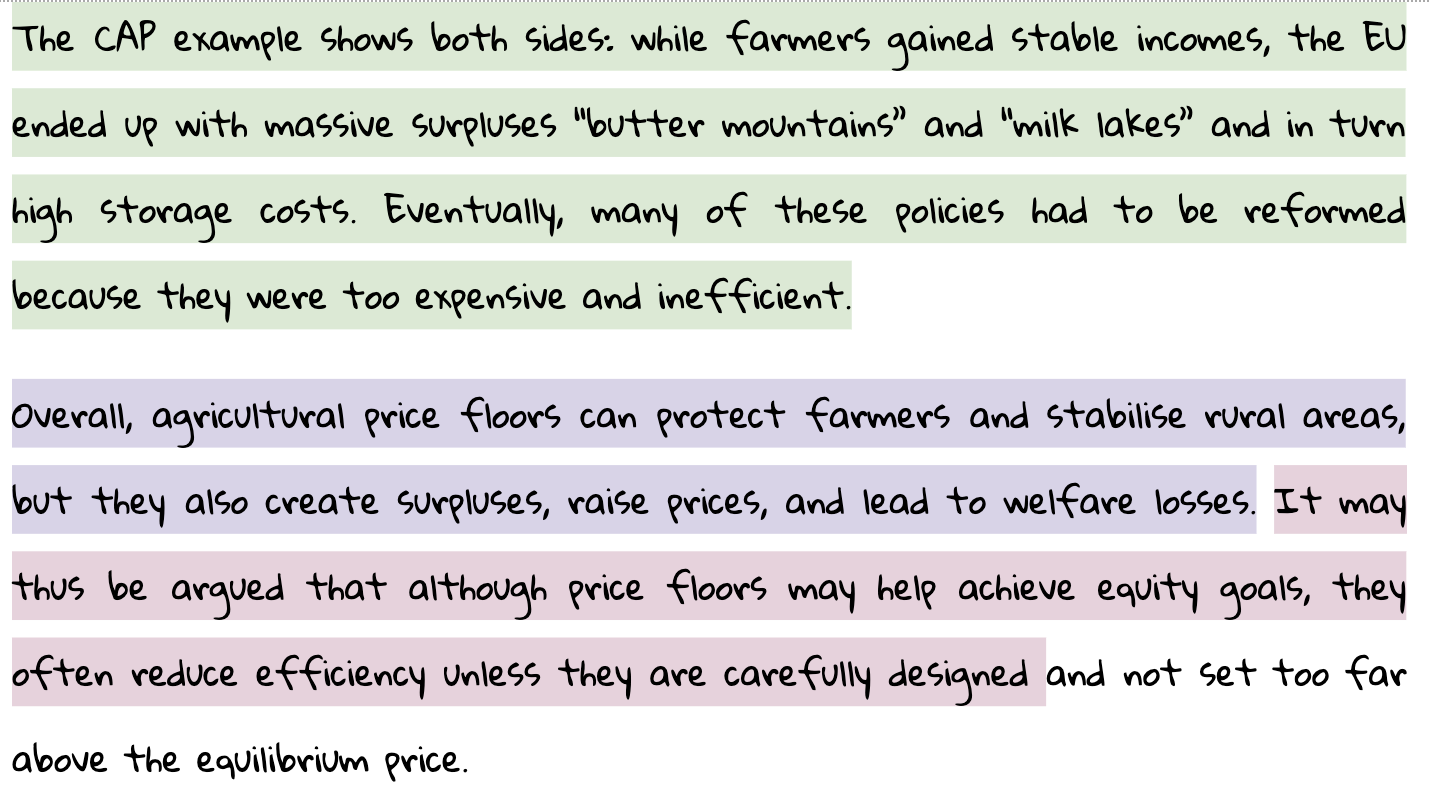
Text discussing the impact of CAP policies, noting that while they stabilise farmer incomes, they cause surpluses and inefficiencies, needing reform.
Multicoloured text boxes with handwritten phrases: defining key terms, reference to the diagram, link to the question, real world example, evaluation.

Why this scores in the top band

✅ Clear focus on the command term evaluate
✅ Accurate and well-integrated economic theory
✅ Specific and relevant real-world example (CAP) used to support evaluation
✅ Balanced consideration of advantages and disadvantages
✅ A justified, context-aware conclusion

Unlock more, it's free!

Join the 100,000+ Students that ❤️ Save My Exams

the (exam) results speak for themselves:

Steve Vorster

Author: Steve Vorster

Expertise: Economics & Business Subject Lead

Steve has taught A Level, GCSE, IGCSE Business and Economics - as well as IBDP Economics and Business Management. He is an IBDP Examiner and IGCSE textbook author. His students regularly achieve 90-100% in their final exams. Steve has been the Assistant Head of Sixth Form for a school in Devon, and Head of Economics at the world's largest International school in Singapore. He loves to create resources which speed up student learning and are easily accessible by all.

Lisa Eades

Reviewer: Lisa Eades

Expertise: Business Content Creator

Lisa has taught A Level, GCSE, BTEC and IBDP Business for over 20 years and is a senior Examiner for Edexcel. Lisa has been a successful Head of Department in Kent and has offered private Business tuition to students across the UK. Lisa loves to create imaginative and accessible resources which engage learners and build their passion for the subject.