Multiple Choice Questions (MCQs) (AQA A Level Business): Revision Note
Syllabus Edition
First teaching 2023
Last exams 2027
Exam code: 7132

How to answer multiple choice questions
Overview
Multiple choice questions (MCQs) make up Section A of Paper 1
There are 15 questions, each worth 1 mark
The 15 marks available make Section A worth 15% of the Paper 1 total
All 15 questions must be answered — there is no choice
Only one answer per question is allowed
Answers are recorded by filling in a circle on the answer sheet
Question formats
There are three types of MCQ used in AQA A Level Business
Standard multiple choice
A question or statement is followed by four options labelled A–D
Only one option is correct
The other three options are designed to be plausible — they will often include common misconceptions or partially correct answers
True/false statement pairs
Two numbered statements are given
Students must identify which combination is correct from four options
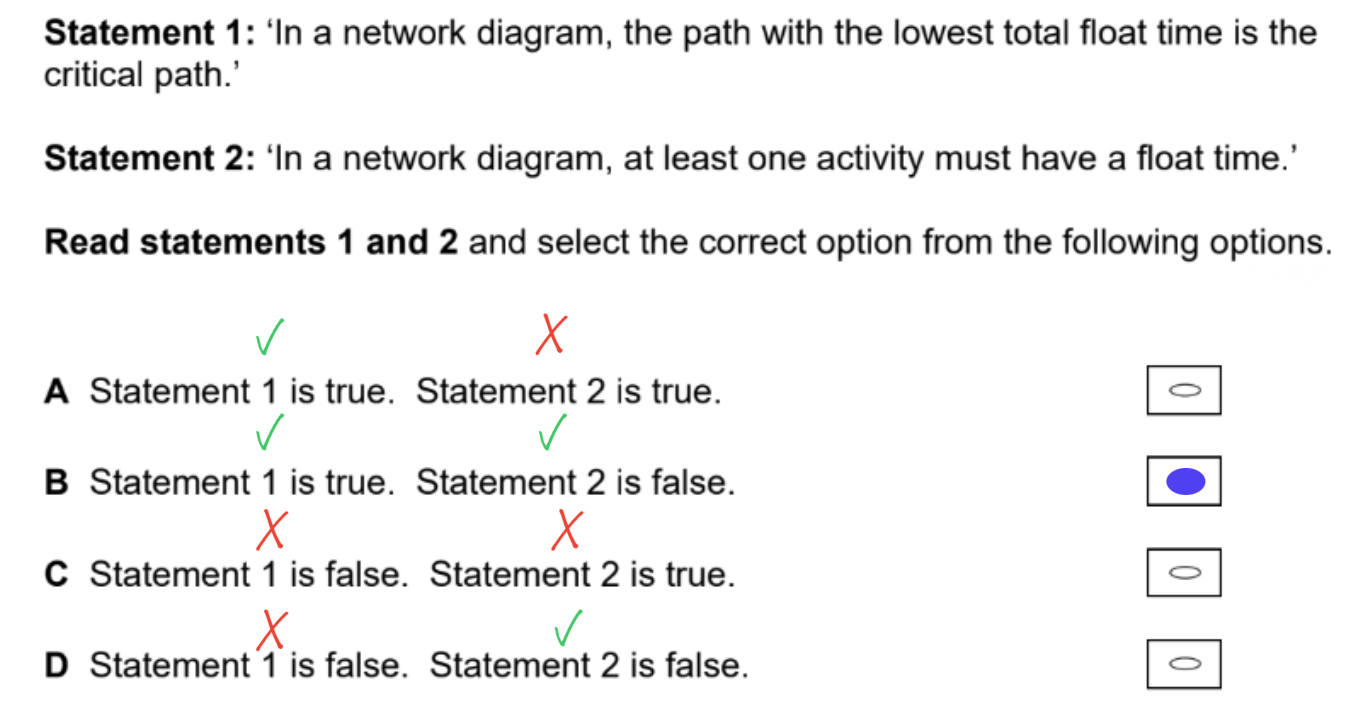
Both statements must be evaluated independently — getting one right does not guarantee the correct answer
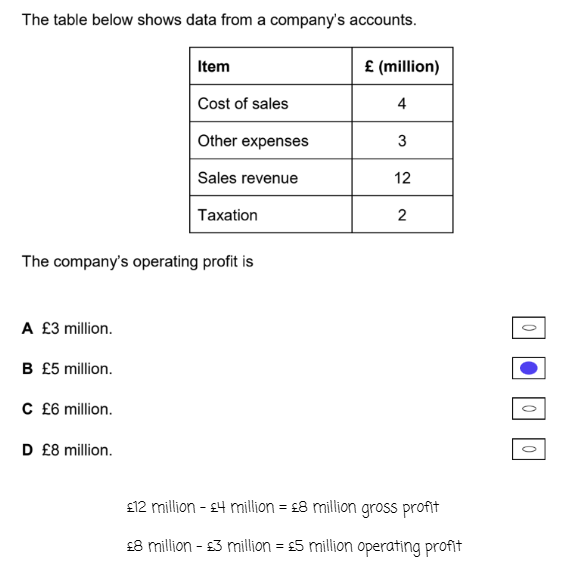
Data-based multiple choice
A short data extract, table or diagram is provided
Students interpret or calculate from the data to select the correct answer
These questions often test quantitative skills — for example, reading a break-even chart, interpreting labour productivity data, or identifying a financial ratio
Top tips for success in MCQs
Work through Section A at a steady pace
With 15 questions and roughly 15 minutes available, spend no more than one minute per question
Read the question carefully before looking at the options
Form a rough answer in your head first, then check which option matches
For true/false statement pair questions, assess each statement separately before looking at the options
Decide whether Statement 1 is true or false, then do the same for Statement 2 — this avoids being led astray by the options
Use the process of elimination
Even if you are unsure of the correct answer, ruling out one or two clearly wrong options improves your chances significantly
Watch out for qualifying words in the question, such as "most likely", "always", "never" or "best describes"
These are clues about what level of certainty the answer requires
For data-based questions, write out any working in the rough space provided
A mental calculation under exam pressure is easy to get wrong
If you are unsure, make your best guess and move on
You can return to it later if time allows
Never leave an MCQ blank
When changing an answer, cross out the original circle clearly and fill in the new one

Unlock more, it's free!
Join the 100,000+ Students that ❤️ Save My Exams
the (exam) results speak for themselves:

Was this revision note helpful?