Nitrogen Compounds (OCR A Level Chemistry A): Exam Questions

Exam code: H432

2 hours30 questions
1
1 mark

Two reactions are shown below.

Reaction 1: C6H5NO2  →  C6H5NH2

Reaction 2: CH3CH2CHClCH3  →  CH3CH2CH(NH2)CH3

Which row shows the correct set of reagents and conditions for each reaction?


Reaction 1

Reaction 2

A

NaBH4

nitric acid / 50 °C

B

NaBH4

nitric acid / <10 °C

C

Sn / conc. H2SO4

dilute ethanolic NH3

D

Sn / conc. HCl

excess ethanolic NH3

    2
    1 mark

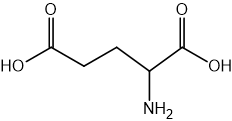
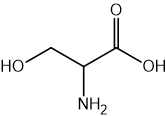
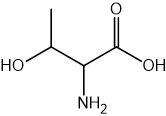
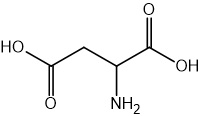
    Which compound is an amino acid with the R group –CH2OH?

    • Chemical structure of glutamic acid, showing a central carbon chain with two carboxylic acid groups and one amino group attached.
    • Chemical structure of serine, an amino acid, displaying its functional groups including hydroxyl, amino, and carboxyl groups bonded to a carbon backbone.
    • Structural diagram of threonine, an amino acid, showing a chain with hydroxyl, amino, and carboxyl functional groups connected to a central carbon.
    • Chemical structure of aspartic acid, showing a four-carbon backbone with two carboxyl groups, and one amine group.
    3
    1 mark

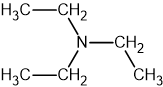
    What is the systematic name of the following amine?

    Chemical structure showing a nitrogen atom bonded to three ethyl groups, each consisting of CH2 and CH3.
    • Diethylamine

    • N-methylethylamine

    • Triethylamine

    • Trimethylamine

    4
    1 mark

    What are the correct reagents and conditions for the formation of propylamine, CH3CH2CH2NH2?

    • Excess 1-bromopropane and ammonia

    • 1-bromopropane and excess ammonia in a sealed tube

    • 2-bromopropane and excess ammonia in a sealed tube 

    • Excess 2-bromopropane and ammonia

    5
    1 mark

    Which two reactants are required for the formation of N-ethyl butanamide?

    • 1-chlorobutane and ammonia 

    • Ethanoic anhydride and butylamine

    • Ethanoyl chloride and butylamine

    • Butanoyl chloride and ethylamine 

    1
    1 mark

    Which of the following reagents would be suitable for the reduction of nitrobenzene to produce phenylamine?

    • LiAlH4 in dry ether

    • NaBH4

    • Sn and concentrated HCl

    • H2 and Mg catalyst

    2
    1 mark

    Which statement explains why propylamine is a stronger base than phenylamine?

    • Electron density is pulled away from the nitrogen atom in propylamine

    • Alkyl groups are electron withdrawing groups

    • The lone pair on the nitrogen atom in phenylamine becomes delocalised into the benzene ring

    • The positive inductive effect is greater in phenylamine than propylamine

    3
    1 mark

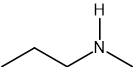
    What is the systematic name of the amine shown below?

    Chemical structure of n-methylpropylamine.
    • N-propylmethylamine

    • Butylamine

    • 2-aminobutane

    • N-methylpropylamine

    4
    1 mark

    Which statement is correct if a large excess of ammonia reacts with chloroethane? 

    • The electrophilic substitution occurs

    • The formation of the quaternary ammonium salt is favoured

    • One mole of ammonia reacts with one mole of chloroethane to produce a primary amine

    • The formation of a primary amine is favoured

    5
    1 mark

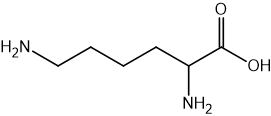
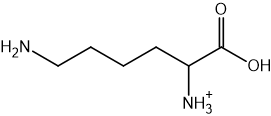
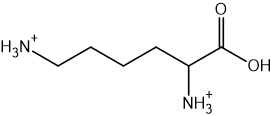
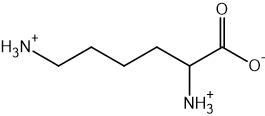
    The structure of the amino acid lysine is shown below.

    Structural formula of the amino acid lysine, showing six carbon atoms connected with NH2 groups and a carboxyl group on the right.

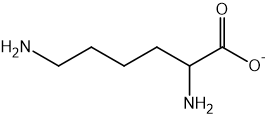
    Which species is present at a low pH?

    • Chemical structure of lysine with the carboxylic acid group deprotonated to COO-.
    • Chemical structure of lysine with the chain (non-terminal) amine group protonated to NH3+.
    • Chemical structure of lysine with both amine groups protonated to NH3+.
    • Chemical structure of lysine with both amine groups protonated to NH3+ and the carboxylic acid group deprotonated to COO-.
    1
    1 mark

    Two amines are made from methylbenzene in the reactions below.

    u2uj6KTj_ocr-a2-6-4h-mcq-q1-reaction-sequence

    Which statement(s) is/are correct?

    1. The yield of amine X is greater than the yield of amine Y.

    2. Step 2 forms a protonated intermediate called 4-methylphenylammonium chloride.

    3. Using excess, hot aqueous ammonia step 4 will produce the primary amine Y.

    • 1, 2 and 3

    • Only 1 and 2

    • Only 2 and 3

    • Only 1

    2
    1 mark

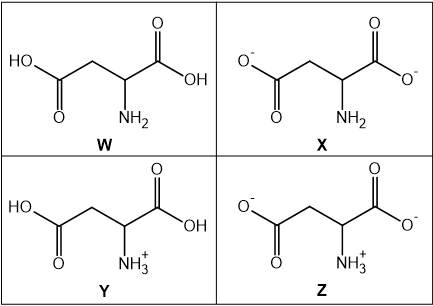
    Four different versions of aspartic acid are shown below.

    Four chemical structures labeled W, X, Y, and Z showing variations of aspartic acid.

    pKa for the amine group is 9.6 and pKa for the acid groups is less than 4.0.

    Which statement is correct?

    • Species W is formed when aspartic acid reacts with HCl. 

    • Species X is present in an aqueous solution of aspartic acid at pH 12.0. 

    • Species Y shows that aspartic acid is amphoteric.

    • Species Z will exist at pH 7.0.

    3
    1 mark

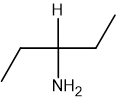
    Amine X is shown below.

    Structural formula of 3-aminopentane, showing a central carbon with an attached amine group, hydrogen, and two ethyl chains branching.

    Which statement(s) is/are correct?

    1. Reacting amine X with water would cause universal indicator to turn blue.

    2. There are six isomers of amine X which are secondary amines.

    3. Amine X would produce five peaks on a 13C NMR spectrum.

    • 1, 2 and 3

    • Only 1 and 2

    • Only 2 and 3

    • Only 1

    4
    1 mark

    CH3CH2COCl reacts with a cold concentrated solution of CH3CH2NH2.

    Which statement is correct?

    • The reaction is an electrophilic addition-elimination.

    • The intermediate is negatively charged. 

    • The organic product formed is N-ethylpropanamide. 

    • Toxic white fumes of HCl are produced.

    5
    1 mark

    Which statement(s) about amines is/are correct?

    1. Making an amine via the reduction of a nitrile has a higher atom economy than nucleophilic substitution of a haloalkane with ammonia.

    2. 2-aminobutane cannot be formed from the reduction of a nitrile.

    3. CH3NH3Cl could be added to aqueous methylamine to produce a buffer solution.

    • 1, 2 and 3

    • Only 1 and 2

    • Only 2 and 3

    • Only 1