Henry VII: Economic Development (AQA A Level History: Component 1: Breadth study): Revision Note
Exam code: 7042

Summary
England's economy in 1485 was built overwhelmingly on wool and cloth
Cloth exports grew from around 50,000 cloths per year in the early 1480s to around 80,000 cloths by 1509
The Merchant Adventurers dominated English cloth exports
Henry worked closely with them, securing their access to the Antwerp market through the Magnus Intercursus (1496)
Henry passed a series of Navigation Acts in 1485 and 1489 requiring certain goods to be carried in English ships
This was a protectionist measure designed to keep the profits of trade within England rather than enriching foreign carriers
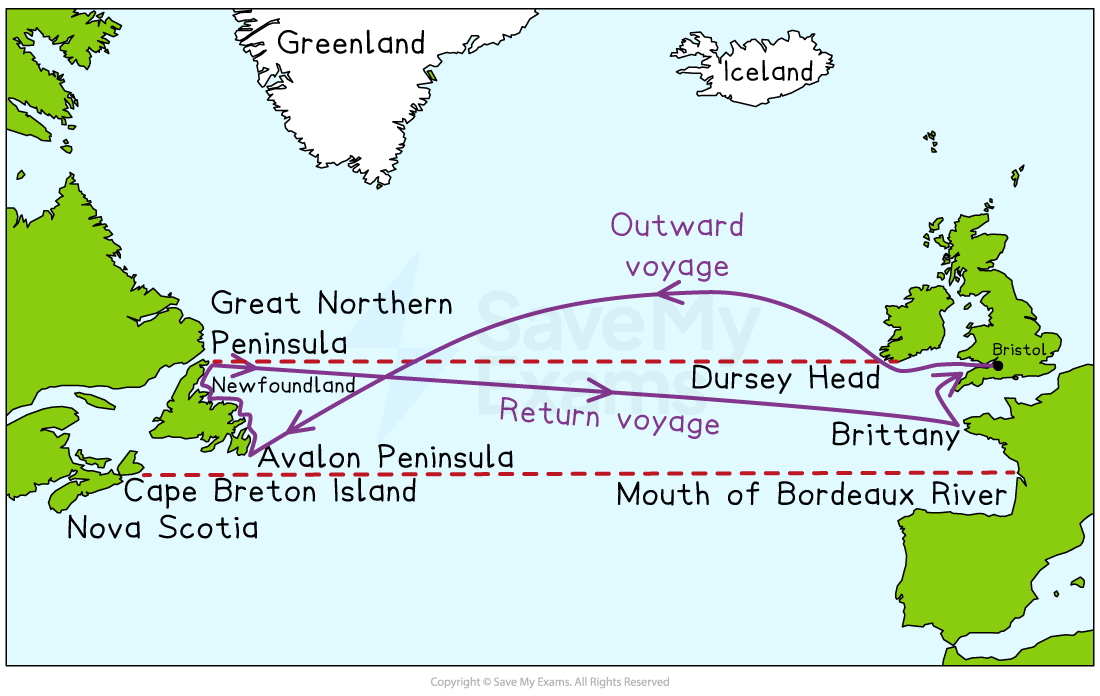
In 1497, John Cabot sailed from Bristol under royal letters patent and reached North America, establishing England's first real claim to the continent
By 1509, there were genuine signs of prosperity, but the economy remained dangerously dependent on a single commodity and a single market
Trade: Cloth, Wool & the Merchant Adventurers
England's economy in the late 15th century was built overwhelmingly on wool and cloth
These were by far the most important exports
The health of the cloth trade was the single biggest determinant of England's economic prosperity
Wool vs cloth
Raw wool exports had been England's great medieval staple but were declining by 1485
The trend was increasingly towards exporting finished cloth rather than raw wool
Finished cloth was far more profitable as it captured the value added by English weavers and dyers
The Staple at Calais controlled the raw wool trade, a monopoly company of merchants who paid heavily for the privilege
Its importance was declining as finished cloth grew in importance
Cloth exports were dominated by the Merchant Adventurers, a London-based company that controlled trade in finished cloth to the Low Countries, primarily through the port of Antwerp
The Merchant Adventurers
The most important English trading company of the period
They dominated English cloth exports to the continent and were central to England's commercial prosperity
Henry worked closely with them, granting trading privileges in exchange for financial support and political loyalty
It was a mutually beneficial relationship
Their success depended entirely on access to the Antwerp market
This is why Henry's relations with Burgundy were so commercially vital
And why the trade embargo of 1493 was so economically painful for both sides
The Magnus Intercursus (1496) was essentially a charter for Merchant Adventurer trade
It secured their access to the Netherlands market on highly favourable terms after the embargo was lifted
Period | Cloth export figures and significance |
|---|---|
Early 1480s |
|
By 1509 |
|
Examiner Tips and Tricks
Henry is not always given credit for the growth in cloth exports because the trend pre-dates him and reflects broader European conditions. A strong essay will acknowledge this. Henry created the conditions for growth through commercial diplomacy, but he did not cause the growth single-handedly. Always distinguish between what Henry actively did (Navigation Acts, Magnus Intercursus, Merchant Adventurer privileges) and what simply happened on his watch (broader European trade expansion).
Navigation Acts & the Promotion of English Shipping
Much of England's trade was carried in foreign ships, particularly Italian and Hanseatic vessels
This meant the profits from carrying English goods flowed abroad rather than enriching English merchants and shipowners
Henry's Navigation Acts were designed to address this
The Navigation Acts
Henry passed a series of Navigation Acts requiring that certain goods be carried in English ships rather than foreign ones
This was a protectionist measure designed to keep the profits of carrying trade within England
The most significant was the Act of 1485, requiring that Gascon wines and Toulouse woad be imported in English ships
This directly targeted the lucrative wine trade previously dominated by foreign carriers
Further acts followed, including in 1489, extending the principle to other goods and requiring that English ships be crewed predominantly by English sailors
The Hanseatic League
The Hanseatic League, the powerful German merchant confederation, dominated certain areas of English trade, particularly in the Baltic
It fiercely resisted Henry's attempts to restrict their privileges
Hanseatic merchants had long enjoyed preferential trading rights in England through the Steelyard in London
Henry attempted to limit these but faced significant resistance
The League's power meant that English merchants struggled to break into Baltic trade
A significant structural weakness in England's commercial position that Henry was unable to fully resolve
Limitations of the Navigation Acts
The Navigation Acts were difficult to enforce and frequently evaded
Foreign merchants found ways to circumvent them
English customs officials lacked the resources to police every port effectively
The immediate economic impact was limited, but the Acts established an important precedent for later, more effective navigation legislation
Foreign carriers continued to dominate significant portions of England's carrying trade throughout the reign
The Magnus Intercursus & Malus Intercursus
These two trade treaties with the Habsburg Netherlands were the most important commercial agreements of Henry's reign
Note: They are covered in the Foreign Policy revision note for their diplomatic significance, here the focus is on their economic impact on English trade and royal revenue
Treaty | Economic significance |
|---|---|
Magnus Intercursus, 1496 (The Great Agreement) |
|
Malus Intercursus, 1506 (The Bad Agreement) |
|
Together these treaties illustrate Henry's commercial pragmatism, he was willing to use embargoes, diplomatic pressure and even the accidental arrival of a foreign ruler on English shores to extract maximum commercial advantage for English merchants.
Examiner Tips and Tricks
The Magnus and Malus Intercursus appear in both the Foreign Policy and Economic Development topics. In Foreign Policy, the emphasis is on diplomatic leverage and dynastic security. In Economic Development, the emphasis is on trade, cloth exports and customs revenue. Make sure you shift your analytical focus depending on which question you are answering – the same events support different arguments in different contexts.
Exploration Under Henry VII: John Cabot & Voyages of Discovery
Henry VII's support for exploration was modest compared to Spain and Portugal
But it represented England's first tentative steps into the age of oceanic discovery
Henry was aware of Columbus's 1492 voyage to the Americas and recognised the potential commercial benefits
Though his investment reflected his characteristically cautious, fiscally conservative approach
John Cabot
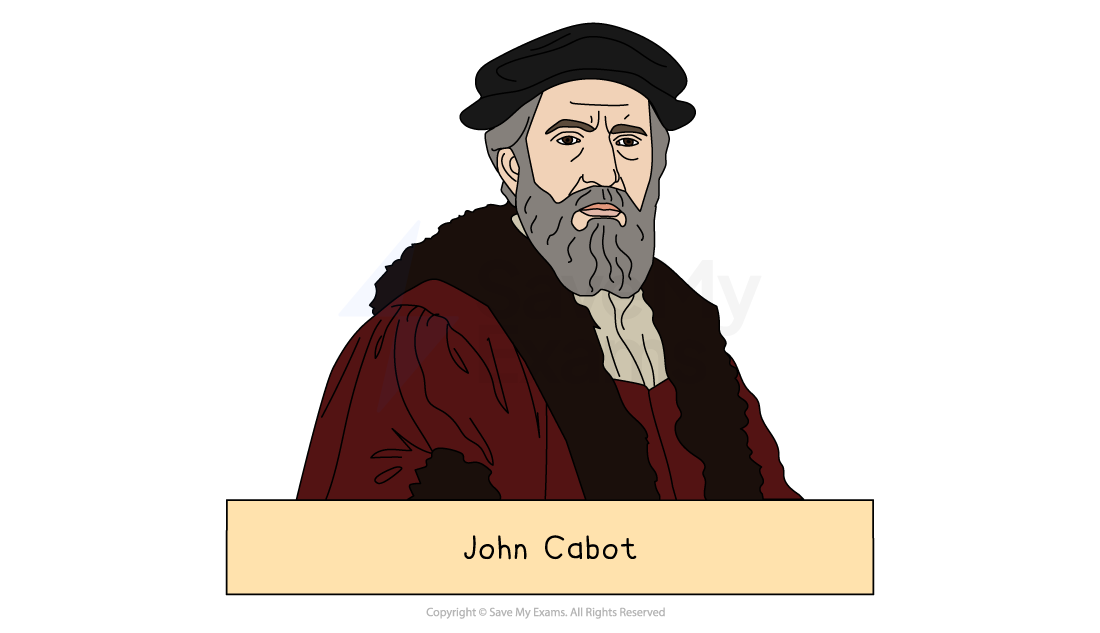
A Venetian mariner (real name Giovanni Caboto) based in Bristol
He approached Henry with a proposal to find a westward route to Asia, similar to Columbus's project
In 1496, Henry granted Cabot letters patent, royal permission to sail under the English flag, discover new lands and claim them for the English Crown
In May 1497, Cabot sailed from Bristol and most likely reached Newfoundland, though the exact landfall is uncertain
He became one of the earliest Europeans since the Vikings to reach the North American mainland, probably Newfoundland
Henry rewarded him with £10 and a pension of £20 per year
This was extraordinarily modest given the significance of the achievement
This suggests that Henry’s interest in exploration remained cautious and limited
A second voyage in 1498 was less successful. Cabot's fleet was dispersed by storms and he is believed to have died at sea
Significance
Cabot's voyages established England's claim to North America
This claim would be built upon by later Tudor and Stuart colonists, making this one of the most consequential achievements of Henry's reign, even if its importance was not recognised at the time
The voyages demonstrate Henry's awareness of the commercial potential of exploration, even if his investment was minimal
He was interested in exploration as a trading opportunity, not as an imperial project
The contrast with Spain's enormous investment in the Americas illustrates the limits of Henry's commercial vision
He was too cautious and too focused on domestic financial security to take the risks that Atlantic exploration required
Prosperity & Depression: the State of the English Economy by 1509
The overall state of the English economy by 1509 is the subject of significant historical debate
The picture is genuinely mixed, there were real signs of growth and development, but also persistent structural problems
Signs of prosperity |
|
Signs of depression and structural weakness |
|
Examiner Tips and Tricks
The key to a top-mark answer on this topic is the distinction between what Henry actively did and what happened during his reign. Cloth exports grew, but were those Henry's doing or broader European conditions? The Navigation Acts were passed, but were they effective? The Magnus Intercursus was signed, but was it an economic policy or a diplomatic tool? The strongest answers will use these distinctions to build a nuanced argument rather than simply listing achievements or failures.

Unlock more, it's free!
Join the 100,000+ Students that ❤️ Save My Exams
the (exam) results speak for themselves:

Was this revision note helpful?
