Henry VII: Government, Councils, Parliament & Justice (AQA A Level History: Component 1: Breadth study): Revision Note
Exam code: 7042

Summary
Henry VII reshaped the Royal Council, relying heavily on loyal churchmen, lawyers and gentry rather than powerful nobles, and attended meetings himself
The Council Learned in Law was Henry's most controversial element of control, using bonds and recognisances to financially discipline the nobility
Henry's key ministers, Morton, Bray, Empson and Dudley, were chosen for ability and loyalty, rather than noble birth
Henry used Parliament sparingly, just 7 sessions in 24 years deploying it as a tool for specific purposes
The Star Chamber strengthened Henry’s ability to discipline powerful nobles
It extended Justices of the Peace (JP) powers spread royal authority cheaply across the country
Historians debate whether Henry created a genuinely "new monarchy" or simply adapted and refined the Yorkist system he inherited
The Royal Council under Henry VII: Role & Significance
Throughout much of the 15th century, the Royal Council had been dominated by powerful nobles who used it to advance their own interests
Henry fundamentally changed this
How it worked
The king ruled with a council that supported him in making key decisions
Within this, the working, core group of councillors numbered between 6 and 7 members
These were his most trusted inner ring of advisers
It was a permanent body with no established procedures
Members could meet separately to discuss specific matters
Henry deliberately chose men of ability from humble backgrounds, rather than powerful nobles who might challenge him
Henry attended council meetings himself, choosing a more deliberate, hands-on approach
Role
The Council handled day-to-day administration of the kingdom: finance, justice, foreign policy and domestic order
Sub-committees of the Council handled specialist areas, most notably the Council Learned in Law
Types of councillor
There were three main types of councillor:
Nobles:
However, the core council only rarely included the great magnates
Example: Lord Daubeney
Churchmen:
Often had legal training, and were therefore excellent administrators
Examples: John Morton and Richard Fox
Laymen:
These were either gentry or lawyers, and were skilled administrators
Examples: Sir Reginald Bray and Edmund Dudley
Examiner Tips and Tricks
The composition of the Royal Council tells us a great deal about Henry's character and priorities. By filling it with able men of lower birth, he reduced noble power while ensuring efficient administration. This is a recurring theme in Henry's reign: practical control over symbolic grandeur.
The Council Learned in Law: Henry VII's Tool of Control
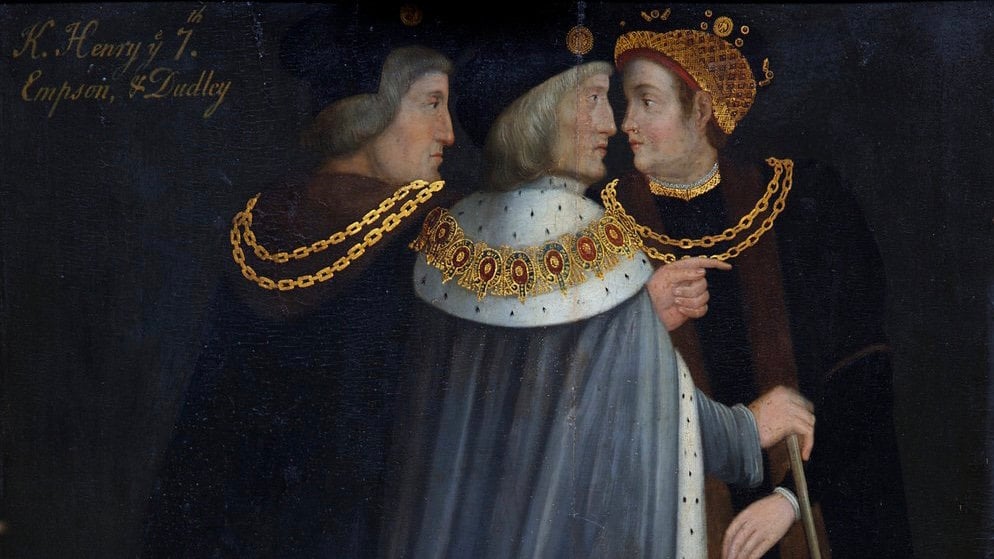
The Council Learned in Law was perhaps Henry VII's most distinctive, and most controversial, instrument of government
An offshoot of the Council, it became increasingly important in the second half of Henry's reign
It operated outside common law and without a jury, meaning it was far more effective (and feared) than ordinary courts
Function
It initially dealt with managing and pursuing the king's feudal rights
It increasingly handled financial matters linked to the king’s feudal rights, prerogatives and Crown lands
It could pursue nobles for debts owed to the Crown going back years
It could impose heavy financial penalties and use imprisonment to enforce payment
Leading members
Sir Reginald Bray (until his death in 1503)
Instrumental in setting up the Council Learned
Edmund Dudley
An ambitious lawyer and bureaucrat
Richard Empson
Joined after the death of Bray
Significance, problems and legacy
There was no right of appeal, as it was not a recognised common law court
The ruthless extraction and extortion of money by Empson and Dudley made the Council Learned deeply resented by the nobility
When Henry VIII came to the throne in 1509, he dissolved the Council Learned immediately
Henry VIII had Empson and Dudley executed in 1510, in part to distance himself from his father’s unpopular methods and win favour
“By the end of the reign it had become the most detested but the most important of all Henry’s institutions of government involved in the maintenance of law and order.”
Caroline Rogers and Roger Turvey, Access to History: Henry VII (2005)
Rogers and Turvey capture the central paradox of the Council Learned. Its very effectiveness made it hated. This tension between efficiency and legitimacy is key to understanding Henry's government as a whole.
Examiner Tips and Tricks
The Council Learned in Law is a favourite with examiners because it illustrates the tension in Henry's reign between effective government and resentment. When evaluating how effectively Henry controlled government, consider whether this tool strengthened or ultimately undermined his regime.
Ministers: Morton, Bray, Empson & Dudley
Henry VII governed through a stable group of able, loyal ministers
His choice of advisers reflects his broader approach to kingship
He preferred competent professionals to powerful magnates
Minister and Role | Significance |
|---|---|
John Morton (Archbishop of Canterbury; Lord Chancellor from 1487) |
|
Reginald Bray (Chief Financial Adviser; Chancellor of the Duchy of Lancaster) |
|
Richard Empson and Edmund Dudley (Later Heads of the Council Learned in Law) |
|
Why does this matter?
All four ministers were chosen for ability and loyalty, rather than noble birth
A deliberate policy to keep government under royal control
The contrast with earlier reigns is significant:
Henry VI had been manipulated by noble factions
Henry VII ensured his ministers depended entirely on royal favour
The execution of Empson and Dudley in 1510 by Henry VIII shows the risks of serving Henry VII too effectively
Their methods made enemies that outlasted their master
Parliament under Henry VII: How Often & Why Did he use it?
Henry VII used Parliament far less frequently than modern observers might expect
It was not central to government
Only the king could call Parliament, and Henry demonstrated his right to rule by first calling it in November 1485
In 24 years on the throne, Henry only called Parliament 7 times:
Five of these were in his first 10 years
Two of these were in the remaining 14 years
Significance: In the later portion of his reign, Henry felt more secure and had less need to call Parliament frequently
How did Henry use Parliament?
Purpose | Example/Detail |
|---|---|
Acts of Attainder |
|
Taxation |
|
Legitimacy |
|
Examiner Tips and Tricks
A common mistake is to assume that using Parliament less means Henry was less powerful. In fact, the opposite is true: Henry's ability to govern without Parliament demonstrated his financial strength and political control. Compare this to later monarchs who were forced to call Parliament to raise money.
Justice: Star Chamber, JPs & the Court System
It was essential for the king to maintain a firm grip on law and order to stop any potential threats to the Crown's authority
The Star Chamber
The Star Chamber Act of 1487 strengthened the use of Star Chamber as a conciliar court
It heard cases involving powerful nobles deemed too influential to be tried in ordinary courts
It operated without a jury
Verdicts were reached by royal councillors, making it far harder for powerful nobles to intimidate or bribe their way to acquittal
Under Henry VII, it was relatively moderate in use
It came to be used much more frequently under Wolsey in Henry VIII's reign
Its significance under Henry was largely symbolic
It demonstrated that no-one, however powerful, was above royal justice
Justices of the Peace (JPs)
Justices of the Peace (JPs) were unpaid local gentry appointed by the Crown to maintain law and order at a county level
Henry gradually but significantly extended their powers:
JPs were given responsibility for enforcing royal proclamations
They dealt with local disorder
They administered justice in their areas
They carried out tax assessments
They met four times a year at quarter sessions to deal with a range of local administrative and judicial business
JPs were cheap, efficient and, crucially, dependent on royal appointment for their status
This helped secure their loyalty to the Crown
By expanding JP powers, Henry extended royal authority throughout the country without the expense of a paid bureaucracy or the risk of relying on greater nobles
The broader court system
Henry did not radically overhaul the existing court system
He made a series of targeted interventions that tightened royal control over justice at every level
The Council of the North
This council was revived from the Yorkist period to govern a region long dominated by powerful families such as the Percys and the Nevilles
It acted as a regional arm of royal government, hearing disputes and enforcing royal proclamations far from Westminster
Its importance grew after the Yorkshire Rebellion of 1489, which exposed how fragile royal authority in the North remained
The Council of Wales and the Marches
This council helped extend royal control in the border regions, where royal authority had often been weaker and legal practice more fragmented
Henry placed Prince Arthur as its head nominally from 1493, based at Ludlow Castle
A symbolic assertion of Tudor authority in a region with deep personal significance to Henry's Welsh roots
The Court of Chancery
This was presided over by the Lord Chancellor
It operated on the basis of equity rather than strict common law
It offered an alternative to those who could not obtain justice through ordinary courts
Under Morton, and later Warham, it became notably more active
Acts against Retaining (1504)
These made it illegal for nobles to keep a large number of men as their personal staff without a royal license
Henry had passed laws against retaining in 1487 and strengthened them in 1504
Henry enforced this rigorously
Most famously he fined the Earl of Oxford a reported £10,000 for displaying too large a retinue during a royal visit
The Assize System
Serious offenses such as treason and rebellion were tried at the courts of assize
They were presided over by judges chosen by the Crown
Court of the King's Bench
This was one of the central royal courts, with an important role in criminal justice
It could overrule any decisions made at quarter sessions and assizes
How Effectively Did Henry VII Control Government?
Historians disagree about whether Henry VII's government was genuinely innovative or simply a more efficient version of what had come before
The debate centres on two issues:
The nature of Henry's methods
Whether his control was as complete as it appeared
Henry's government was highly effective
Henry transformed the Royal Council into a professional body loyal to the Crown, reducing noble factional influence
The Council Learned in Law gave Henry unprecedented financial and legal leverage over the nobility
Parliament was kept firmly subordinate and rarely needed, a sign of financial strength and political confidence
By extending JP powers, Henry spread royal authority cheaply and effectively across the country
Key historians:
Polydore Vergil, Books of English History (1534) |
|
|---|---|
David Grummitt, The Tudors, England 1485–1603 (2019) |
|
G. J. Meyer, The Tudors (2011) |
|
Limitations remained
The Council Learned in Law was deeply resented and abolished immediately by Henry VIII
This suggests it bred hostility rather than loyalty
Henry's government remained highly personal, dependent on his own energy and attention
It lacked truly institutional structures that could function without him
Regional authority in the North and Wales remained problematic
JPs could only do so much without strong noble cooperation
Key historians:
Steven J. Gunn, Henry VII, Oxford Dictionary of National Biography (2004) |
|
|---|---|
Roger Lockyer, Tudor and Stuart Britain, 1471–1714 (1985) |
|
Examiner Tips and Tricks
The AQA A Level The Tudors exam does not require you to use historians' interpretations in this section of the course.
However, to achieve top grades at A Level History, it is recommended that you do wider reading. Understanding the debate will help you form your own argument in essay questions about how effectively Henry governed.

Unlock more, it's free!
Join the 100,000+ Students that ❤️ Save My Exams
the (exam) results speak for themselves:

Was this revision note helpful?
