Henry VII’s Claim to the Throne & Consolidation of Power (AQA A Level History: Component 1: Breadth study): Revision Note
Exam code: 7042

Summary
The Wars of the Roses (1455–1485) were a series of dynastic civil wars between the Houses of Lancaster and York, ending at the Battle of Bosworth in 1485
Note: Some Historians claim that the Wars of the Roses were not over until the Battle of Stoke Field, 1487
Henry VII's claim to the throne was weak – he relied on conquest, parliamentary title and his marriage to Elizabeth of York to legitimise his rule
Henry was cautious and shrewd
His primary aims were to secure the dynasty, restore order and build royal finances
His position was threatened by pretenders – most notably Lambert Simnel and Perkin Warbeck, as well as surviving Yorkist nobility
Historians debate how secure the Tudor dynasty truly was by 1509
While Henry left a stable crown and strong finances, the dynasty rested on a single male heir and the Yorkist threat had not been fully extinguished
The Wars of the Roses: Causes & Consequences
Throughout much of the 15th century, England experienced political instability
The Wars of the Roses started in 1455 between the House of York and the House of Lancaster due to the unsuccessful reign of Henry VI
Between 1455 and 1485, England saw five changes of monarch and periods of civil war
Many nobles took advantage of this instability to gain more control over their local areas
The Wars of the Roses ended at the Battle of Bosworth in 1485, which saw Henry Tudor (Henry VII) become king
The Battle of Bosworth, 1485
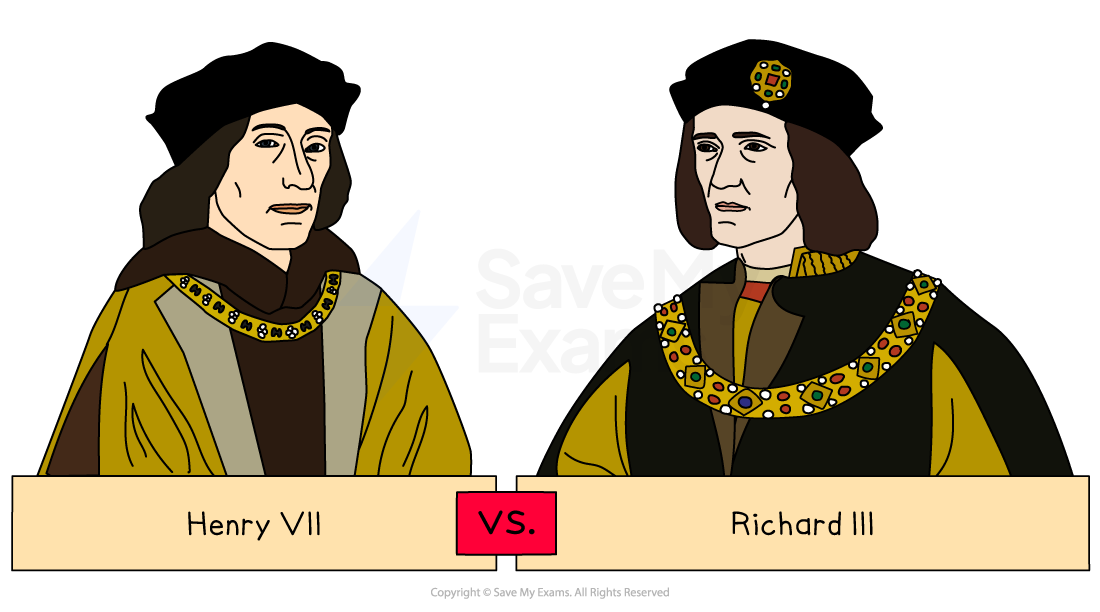
The Battle of Bosworth (22 August 1485) is seen as the last major battle of the Wars of the Roses
It was fought between the unpopular Yorkist King Richard III and the Lancastrian claimant Henry Tudor
The forces
Side | Troops |
|---|---|
Richard III (York) |
|
Henry Tudor (Lancaster) |
|
The Stanley Family (Non-committed) |
|
Positioning
Richard: Positioned his army on Ambion Hill
This was a strong defensive position
Henry Tudor: At the bottom of the hill
This was a weak position (they would have to run uphill into the archers)
Stanley Family: Stood off to the side, weighing up who to support
Decisive moments
Richard led a cavalry charge against Henry's forces
He spotted Henry exposed and charged directly at him to end the battle
The Stanleys intervened in Henry's favour at this critical moment
Richard became isolated and was killed (the last English king to die in battle)
According to legend, the crown was found by a soldier under a hawthorn bush
Thomas Stanley placed it on Henry's head, proclaiming him King Henry VII
Why is this important?
The Stanleys acted out of self-interest, not loyalty
This is exactly the kind of noble power Henry would spend his reign trying to control
Henry backdated his reign to 21st August ( the day before the battle)
This meant that Richard's supporters could be treated as traitors
Examiner Tips and Tricks
You don't need the battle details in the exam. What matters is why it's significant: Henry's position was fragile from the start, and consolidating power became his overriding priority.
Henry VII's Claim to the Throne: How Strong was it?
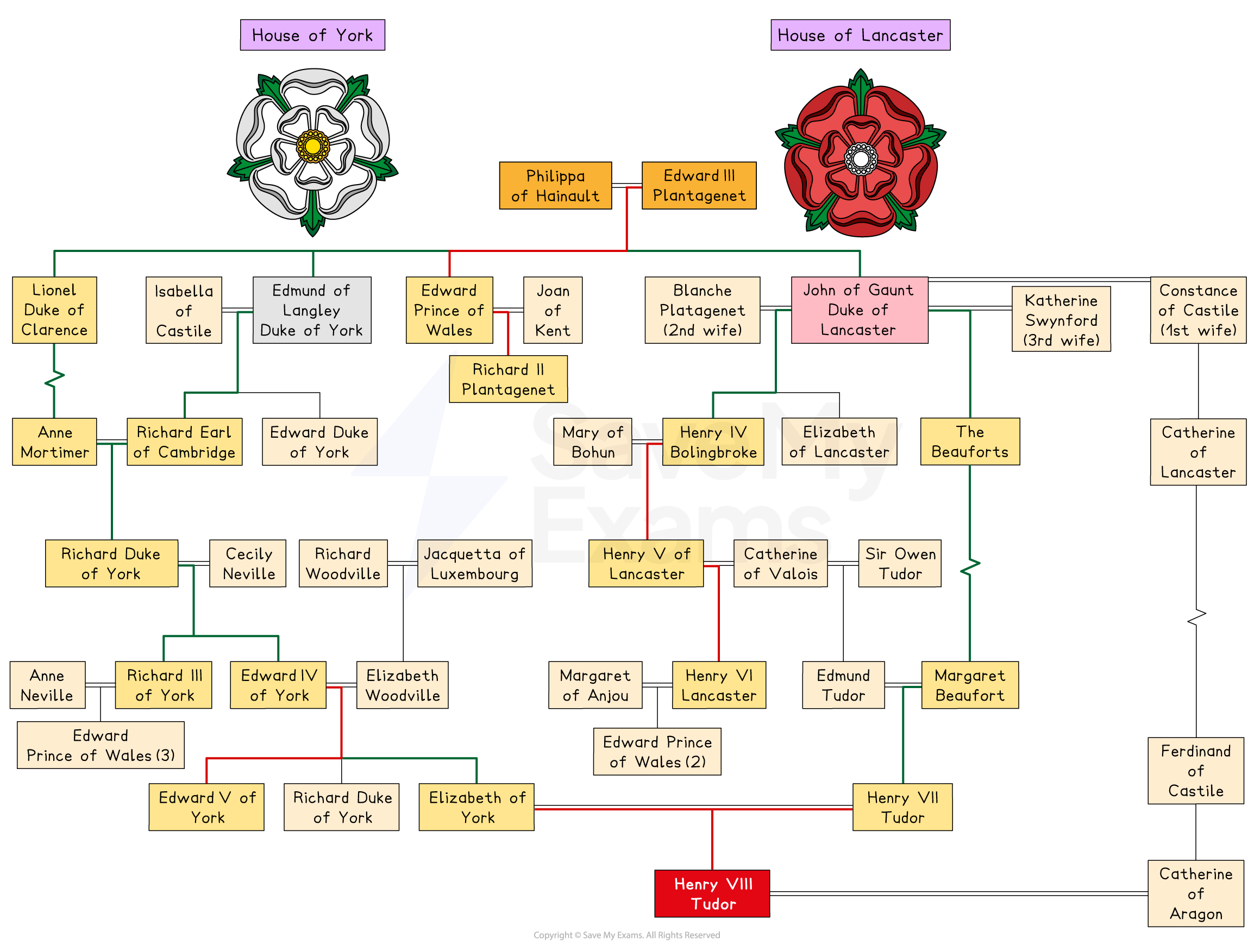
Henry Tudor's claim to the throne was weak
Henry's claim came through his mother, Margaret Beaufort
Margaret Beaufort
A direct descendant of Edward III
However, the Beaufort line came from John of Gaunt's illegitimate children
They were born before John of Gaunt married their mother
This meant Henry’s claim was legally weak and open to challenge
Edmund Tudor
Henry’s father, Edmund Tudor, had no royal blood claim
His mother, Catherine of Valois, had previously been married to Henry V
This made Edmund the half-brother of King Henry VI
Henry VII was therefore the half-nephew of Henry VI
This gave Henry royal connections and status, but not a legitimate claim to the throne
The reality of Henry's claim
He was the only viable Lancastrian claimant remaining
His victory at Bosworth was seen as a sign of divine approval
He strengthened his claim further through:
Conquest:
Defending his crown in later battles
Parliamentary title:
Parliament recognised his right to rule
Marriage to Elizabeth of York:
Uniting the two rival houses
Character & Aims of Henry VII: What Kind of a King was he?
Henry VII had lived in exile in Brittany since the age of 14
This followed the Battle of Tewkesbury, in which many of his Lancastrian relations died or were executed
Many of his character traits stem directly from these years as a fugitive
Henry's character traits
Shrewd
Henry chose the practical option in most situations
He prioritised long-term security over dramatic or forceful action
Example: when Lambert Simnel was captured after the Battle of Stoke (1487), Henry pardoned him and put him to work in the royal household. Publicly executing a child would have made him look weak and insecure
Cautious and suspicious
Years in exile left Henry deeply suspicious of other people's motives
He trusted very few people
This became more pronounced after the death of Prince Arthur (1502)
Financially astute
By the end of his reign, he had built up a substantial treasury surplus
This was remarkable given the near-bankruptcy of the Crown in 1485
Respected, but not popular
Henry relied on authority rather than personal appeal
A Florentine visitor noted he was "more feared than loved"
Problems facing Henry on taking the throne
When Henry ascended the throne, there were some particular problems he was facing:
The nobility
The nobility had gained significant power, wealth and influence during the Wars of the Roses
Due to their strength, their power often rivalled, and challenged the Crown itself
This posed a threat to royal authority
Administration
The distribution of royal power was uneven
It was strong in the south and east, but vulnerable in the borders and north
Finances
The Crown was significantly short of money
It had been drained by years of war at home and abroad
Henry's aims
Henry therefore aimed to:
Establish and consolidate his right to the throne
Control the nobility to strengthen royal government (and to remove potential rivalries)
Create a strong financial foundation to secure the future of the monarchy
"He was of a high mind and loved his own way... For he was governed by none"
Francis Bacon, History of the Reign of King Henry VII (1622)
Written a century after Henry's death by a disgraced politician seeking royal favour. It establishes an image of aloofness and control.
Establishing & Consolidating the Tudor Dynasty: Marriage, Coronation & Legitimacy
Henry had to act quickly to secure his throne and establish his dynasty
He used a series of deliberate steps to consolidate his position in the months after Bosworth
Coronation, October 1485
Henry arranged his coronation for the week before Parliament met
This meant he was king by divine right, not by parliamentary decision
It could never be said that Parliament had made him king
Acts of Attainder, October 1485
Parliament passed acts that declared nobles guilty of treason without a trial
The Crown could then seize their land and titles
Henry dated the start of his reign to 21st August 1485 – the day before Bosworth
This meant Richard III and his supporters could be declared traitors
It removed the most immediate threat to Henry's position
Marriage to Elizabeth of York, January 1486
Henry married Elizabeth of York, the daughter of Edward IV
She was the main Yorkist claimant to the throne
This united the Houses of Lancaster and York
It discouraged many Yorkists from challenging Henry
It also produced one of the most powerful pieces of Tudor propaganda
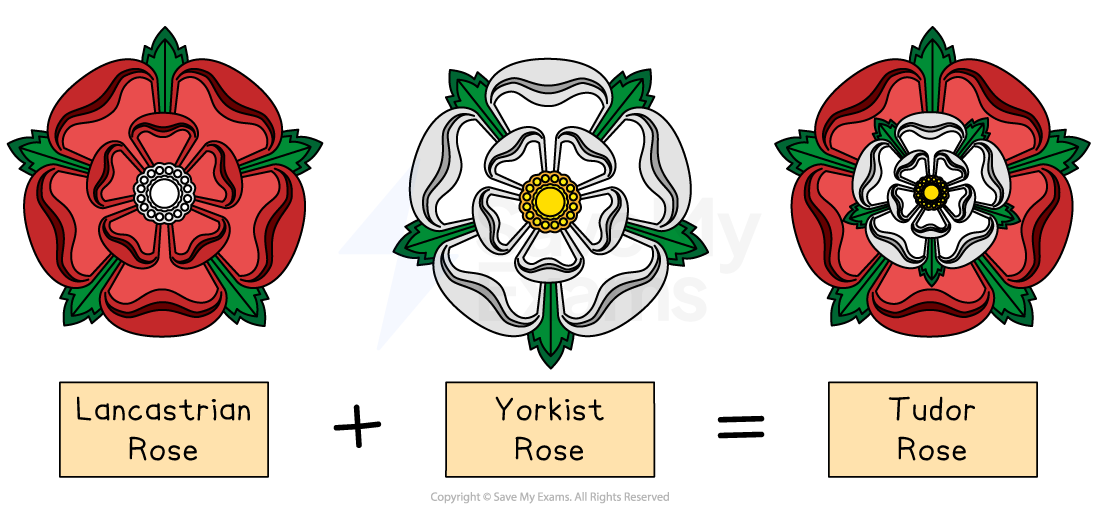
The Tudor Rose combined the red rose of Lancaster with the white rose of York
Securing an heir, September 1486
Prince Arthur was born in September 1486
This helped establish the dynasty
It further solidified the union between Lancaster and York
It also showed divine favour
Examiner Tips and Tricks
Notice the order in which Henry did things. Each step was carefully sequenced, reflecting Henry’s shrewd and cautious character.
Threats to Henry VII: Pretenders to the Throne – Simnel & Warbeck
Henry's position remained insecure after 1485
He still faced serious threats from Yorkist claimants and foreign-backed pretenders
Lambert Simnel
Who was he?
He claimed to be Edward, Earl of Warwick – a genuine Yorkist claimant
The real Edward was already locked in the Tower of London
Henry had imprisoned him precisely because of his strong claim
Who supported Simnel?
John de la Pole, Earl of Lincoln – cousin of Richard III
The Earl of Kildare – a powerful Irish noble
Maximilian I – Holy Roman Emperor
Margaret of Burgundy – sister of Richard III
What happened?
Henry publicly paraded the real Earl of Warwick to expose Simnel as a fraud
Simnel's forces were defeated at the Battle of Stoke, 1487 (sometimes seen as the firm end date of the Wars of the Roses)
The Earl of Lincoln, Simnel's main backer, was killed
Henry spared Simnel's life and put him to work in the royal household
Executing a child would have made Henry look insecure
Perkin Warbeck
Who was he?
He claimed to be Richard of Shrewsbury, one of the Princes in the Tower
His claim was recognised by several European courts
Who supported him?
Charles VIII of France
James IV of Scotland
Margaret of Burgundy – again
What happened?
Warbeck made several attempts to land in England
The most significant attempt was in 1497, landing in Cornwall to exploit the Cornish Rebellion
Henry's forces captured him
Henry initially treated Warbeck leniently and kept him in the Tower
In 1499, Warbeck attempted to escape and was subsequently executed
Examiner Tips and Tricks
In an age before mass communication, identity could not be verified. Most people had never seen the king or the leading nobles in person. A convincing pretender with the right backing, accent and coaching could plausibly claim to be almost anyone. There was no way for ordinary people to disprove the claim.
Threats to Henry VII: The Yorkists
In 1485, several key Yorkists still had a significant claim to the throne
Henry had to deal with each one carefully
Edward, Earl of Warwick
Edward was just 10 years old when Henry took the throne
He was sent to the Tower of London
He was kept in reasonable conditions
Edward remained imprisoned until 1499
He was executed after attempting to escape alongside Perkin Warbeck
John de la Pole, Earl of Lincoln
John was initially invited to join Henry's government
He became a member of the king's council
He remained loyal until spring 1487
He fled and joined the pretender Lambert Simnel
John was killed at the Battle of Stoke, June 1487
How Henry dealt with the remaining Yorkist nobles
Pardoned: Henry pardoned nobles who could prove useful and were willing to work with the new regime
This included Thomas Howard, Earl of Surrey, and Henry Percy, Earl of Northumberland
Executed: Henry executed nobles who were unwilling to cooperate, using their deaths to set a powerful example
This included Humphrey Stafford, a Yorkist noble who opposed Henry’s rule
It also included Edmund de la Pole, Earl of Suffolk, who was imprisoned by Henry VII and later executed by Henry VIII in 1513
How Secure was the Tudor Dynasty by 1509?
Historians disagree about how far Henry VII had secured the dynasty by the time of his death.
The debate centres on two issues:
The strength of the Crown by 1509
Vulnerabilities that remained
The dynasty was substantially secure by 1509
All pretender crises were contained, with no active claimant at large
Royal finances were transformed, with a strong treasury left upon his death
Key historians:
C. Towle and J. Hunt, History in Depth VII (1998) |
|
|---|---|
John Lotherington, The Tudor Years (1994) |
|
The dynasty remained vulnerable in 1509
Prince Arthur's death (1502) had destroyed the original succession plan
A single male heir, Prince Henry, was the only guarantee against a new succession crisis
Edmund de la Pole was still alive in the Tower
The Yorkist threat had not been fully extinguished
Key historians:
John Guy, Tudor England (1988) |
|
|---|---|
Steven Gunn, Henry VII's New Men and the Making of Tudor England (2016) |
|
Examiner Tips and Tricks
The AQA A Level The Tudors exam does not require you to learn historians' interpretations in this section of the course.
However, to achieve top grades at A Level History, it is recommended that you do wider reading. Read extracts from historians to understand the key areas of debate around topics covered in the course. This will help you to form your own opinions, ready to answer essay questions in the exam.

Unlock more, it's free!
Join the 100,000+ Students that ❤️ Save My Exams
the (exam) results speak for themselves:

Was this revision note helpful?
