Henry VII: Foreign Policy, Alliances & Marriage Diplomacy (AQA A Level History: Component 1: Breadth study): Revision Note
Exam code: 7042

Summary
Henry's foreign policy was driven by dynastic security, not military glory
Every treaty, marriage alliance and diplomatic agreement was designed to isolate his enemies and gain international recognition for the Tudor dynasty
France: The Treaty of Etaples (1492) secured a pension of around £5,000 per year and removed French support for Yorkist pretenders
Spain: The Treaty of Medina del Campo (1489) was Henry's most prestigious early diplomatic achievement
It aligned England with Ferdinand and Isabella, opening negotiations for the marriage of Prince Arthur to Catherine of Aragon
Scotland: The Treaty of Perpetual Peace (1502) reduced the threat from England’s most persistent enemy
It was sealed by the marriage of Margaret Tudor to James IV
Burgundy: Henry used trade as a diplomatic weapon against Burgundy
The Magnus Intercursus (1496) and Malus Intercursus (1506) demonstrated his willingness to exploit commercial leverage
Historians debate whether Henry's foreign policy became incoherent after the deaths of Arthur in 1502 and Elizabeth of York in 1503
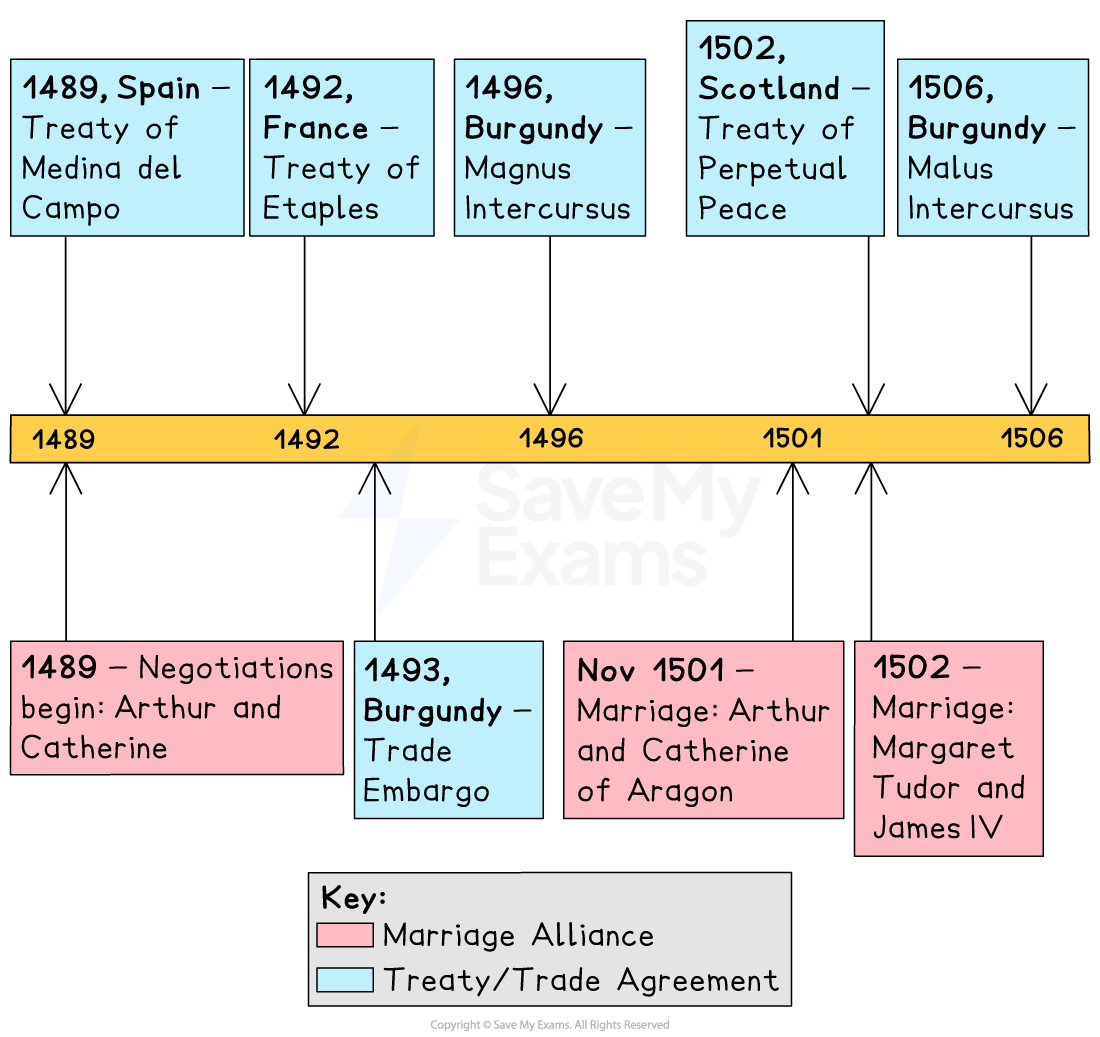
Relations with France: The Treaty of Etaples, 1492
France was England's traditional enemy and one of the most powerful states in western Europe
Henry faced an immediate problem:
Henry had received support from France prior to his invasion in 1485, but French expansion into Brittany threatened English commercial interests
Parliament and the nobility expected him to act militarily
Background
Brittany had traditionally been semi-independent and friendly to England
Its ports were vital to English trade
France began absorbing Brittany from the late 1480s, alarming Henry and English merchants
Henry faced growing pressure from Parliament and the nobility to intervene militarily
France had also been sheltering Perkin Warbeck, the Yorkist pretender
This made France both a diplomatic and dynastic threat
Henry's response and the Treaty
Henry launched a military expedition to France in 1492, but it was largely a carefully calculated bluff
He besieged Boulogne with a large and expensive-looking army, but was likely intended as a show of strength rather than a prolonged campaign
Charles VIII of France, anxious to pursue his Italian ambitions, quickly came to terms
What the Treaty of Etaples (1492) achieved | Significance |
|---|---|
|
|
|
|
|
|
Examiner Tips and Tricks
Henry was criticised at the time, and by some historians, for not pressing his military advantage at Boulogne. This risks missing the point. He got exactly what he wanted: money and the removal of French support for his enemies. Always ask what Henry was trying to achieve before judging whether his foreign policy was a success or a failure.
Relations with Spain: The Treaty of Medina del Campo, 1489
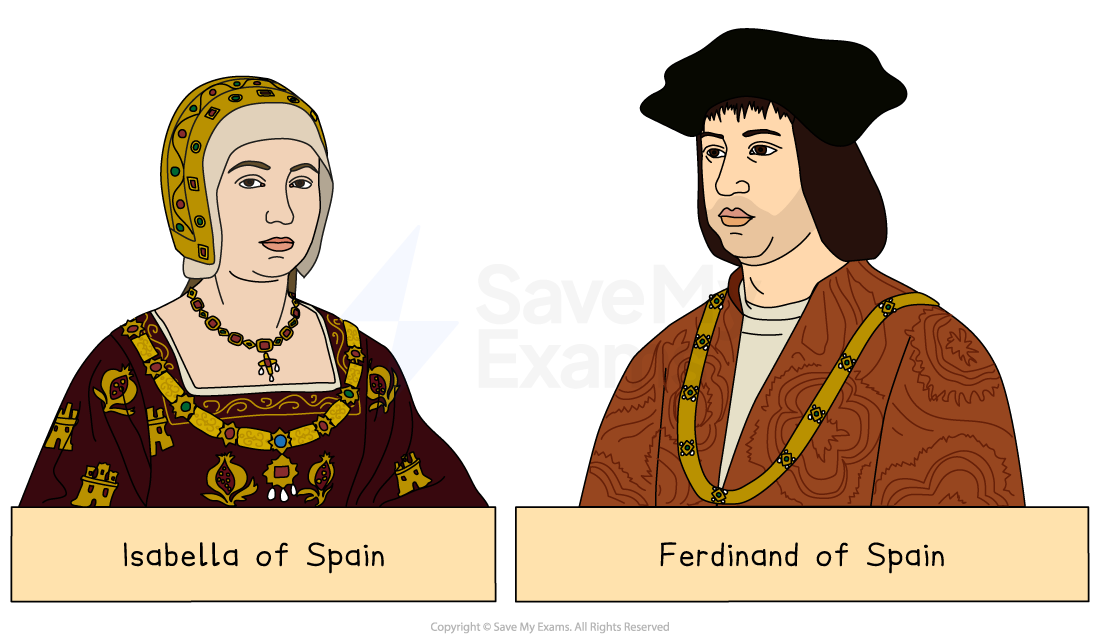
Spain was emerging as one of Europe's great powers under Ferdinand and Isabella
An alliance with Spain offered Henry enormous prestige and, crucially, implicit recognition that the Tudor dynasty was legitimate enough to be worth allying with
What the Treaty of Medina del Campo (1489) achieved | Significance |
|---|---|
|
|
|
|
|
|
|
|
The treaty was Henry's most important early diplomatic achievement
Spain's willingness to negotiate a marriage alliance was an implicit recognition of Tudor legitimacy, something no formal document could have provided
Relations with Scotland: The Treaty of Perpetual Peace, 1502
Scotland was England's most persistent security threat, a traditional French ally that could open a northern front at any moment
Throughout the 1490s, Scotland remained a dangerous vulnerability
James IV actively supported Perkin Warbeck and even invaded England on his behalf in 1496
Background
Henry faced Scottish aggression and border raids throughout the 1490s
James IV had sheltered and supported Perkin Warbeck, lending him troops and invading England in 1496
After Warbeck's capture and the collapse of his threat, diplomatic relations gradually improved
Henry recognised that a permanent settlement with Scotland would remove a major strategic vulnerability
The Treaty of Perpetual Peace, 1502
A formal peace treaty between England and Scotland, this was the first genuine peace between the two countries in living memory
It was accompanied by the marriage of Henry's eldest daughter, Margaret Tudor, to James IV of Scotland
Both countries pledged to resolve future disputes through diplomacy rather than war
Examiner Tips and Tricks
The Treaty of Perpetual Peace had consequences far beyond what Henry could have foreseen. Through the marriage of Margaret Tudor to James IV, James VI of Scotland eventually inherited the English throne in 1603 as James I, uniting the crowns of England and Scotland. This is a powerful illustration of how Henry's dynastic diplomacy had consequences that outlasted the Tudor dynasty itself.
Relations with Burgundy & the Holy Roman Empire
Burgundy (the Habsburg Netherlands) was economically vital to England as the main destination for English cloth exports
It was also politically dangerous
Margaret of Burgundy, sister of Edward IV and Richard III, was a persistent and determined enemy
The region was ruled by the Habsburg dynasty, linking it to Maximilian I, Holy Roman Emperor
Key tensions
Margaret sheltered and financially supported both Lambert Simnel and Perkin Warbeck
Maximilian I, Holy Roman Emperor, also backed Warbeck, making Burgundy doubly threatening
Henry could not simply ignore Burgundy: English cloth exports depended on access to Antwerp and the Flemish markets
Treaty/Action | What was it and why did it matter? |
|---|---|
Trade Embargo, 1493 |
|
Magnus Intercursus, 1496 |
|
Malus Intercursus, 1506 |
|
Examiner Tips and Tricks
Henry's handling of Burgundy illustrates his broader approach to foreign policy: patient, commercially minded and willing to use whatever leverage was available, whether military, diplomatic or economic.
Marriage Alliances: Arthur & Catherine, Margaret & James IV
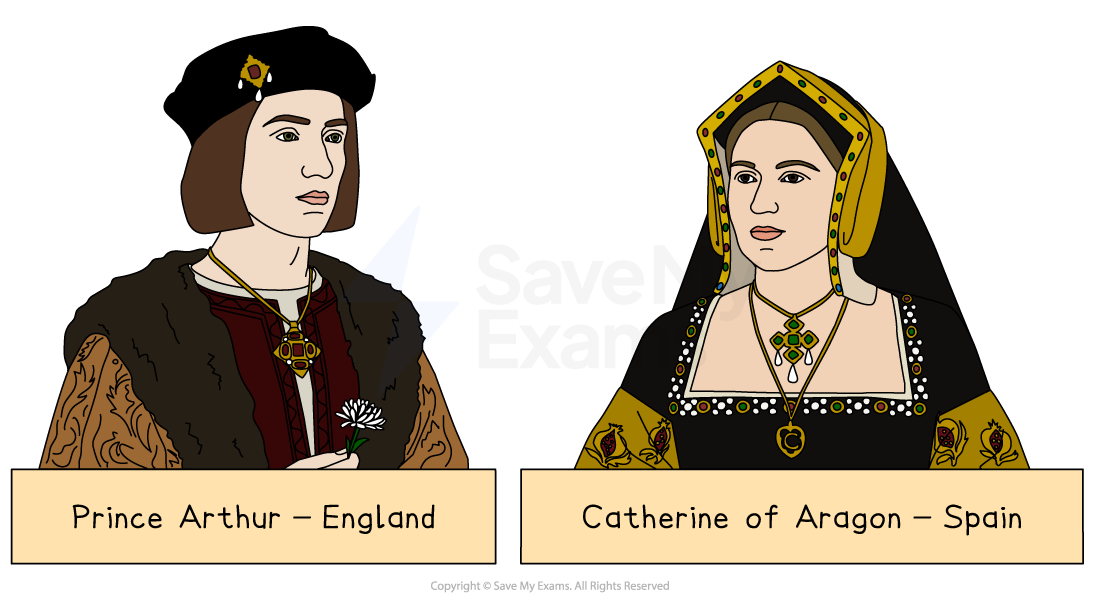
Marriage diplomacy was Henry's most powerful foreign policy tool
By placing his children at the heart of European dynastic networks, he secured alliances that no amount of military spending could have bought
It also signalled to Europe that the Tudor dynasty was here to stay
Prince Arthur and Catherine of Aragon
Negotiations began in 1489 with the Treaty of Medina del Campo
Catherine was the daughter of Ferdinand and Isabella, the most prestigious match available in Europe
The marriage finally took place in November 1501, a moment of genuine triumph for Henry, representing over a decade of patient diplomacy
Arthur died in April 1502, just five months after the wedding, a catastrophic personal and diplomatic blow to Henry
Henry's response was characteristically pragmatic
He negotiated to keep Catherine in England and retain the Spanish alliance
He secured an agreement that she would marry his second son, the future Henry VIII, instead
Margaret Tudor and James IV of Scotland
Margaret was Henry's eldest daughter
Her marriage to James IV was agreed as part of the Treaty of Perpetual Peace (1502)
Marrying his daughter into the Scottish royal family was a deliberate strategic decision
It neutralised the Scottish threat and created a permanent dynastic link between the two kingdoms
The consequences were enormous: it was through this union that James VI of Scotland inherited the English throne in 1603
Though Henry could not have foreseen this
Examiner Tips and Tricks
When answering questions about Henry's marriage diplomacy, always make the connection between marriage alliance and wider dynastic security. The marriage of Arthur to Catherine was not just a diplomatic triumph, it was Ferdinand and Isabella's implicit confirmation that the Tudors were a legitimate ruling dynasty.
How Successfully Did Henry VII use Foreign Policy to Secure the Dynasty?
Henry VII's foreign policy is one of the most debated aspects of his reign
He inherited a Crown in 1485 that was not recognised by the major European powers, he was isolated and diplomatically vulnerable
By 1509, England was at peace, solvent and connected to Spain, Scotland and France through treaties and marriage alliances
However, while the Tudor monarchy was increasingly recognised, Henry’s personal claim remained weak and depended heavily on continued diplomatic support
The death of Prince Arthur in 1502 seriously weakened his most important diplomatic achievement
However, the alliance was not entirely lost, as Catherine later married Henry VIII
Henry's foreign policy was broadly successful
Henry avoided expensive, ruinous wars, unlike Henry V or Henry VIII
He did not drain the treasury on military adventures that ultimately achieved little
Almost every major treaty served a clear defensive purpose:
Etaples removed French support for pretenders
Medina del Campo provided Spanish legitimacy
Perpetual Peace neutralised Scotland
The Spanish marriage alliance was genuinely impressive
Spain was one of the most powerful monarchy in Europe, and Ferdinand and Isabella's willingness to ally with Henry was a powerful statement of Tudor legitimacy
By 1509, England was respected, solvent and at peace, a remarkable transformation from the isolated, near-bankrupt kingdom of 1485
Henry used trade as a diplomatic weapon with great skill
The Magnus Intercursus (1496) and Malus Intercursus (1506) both demonstrated that he could exploit leverage ruthlessly
Key Historians:
C. Rogers and R. Turvey, Henry VII (2005) |
|
|---|---|
Susan Doran, England and Europe, 1485–1603 (1986) |
|
Significant limitations remain
Henry's foreign policy was essentially defensive rather than assertive
He gained no territory and achieved no lasting military prestige
The death of Arthur in 1502 unravelled his most important diplomatic achievement overnight
Henry was never able to fully rebuild the Spanish alliance on the same terms
Relations with Burgundy remained a recurring source of tension
The Malus Intercursus was never properly ratified
Margaret of Burgundy remained a thorn in his side until the end
After 1502, Henry’s foreign policy became more cautious and at times more isolated
He failed to secure a new marriage for himself despite lengthy negotiations with several European princesses
Ferdinand of Spain proved an unreliable ally
He used negotiations over Catherine's future to delay and manipulate Henry in the final years of his reign
Key Historians:
Christine Carpenter, The Wars of the Roses: Politics and the Constitution c1437–1509 (1997) |
|
|---|---|
B. Thompson, The Reign of Henry VII (1995) |
|
Examiner Tips and Tricks
For AQA A Level, the key debate on this topic is whether Henry's foreign policy was a genuine diplomatic achievement or simply a cautious, defensive holding operation. The strongest answers will acknowledge both sides and use the turning point of 1502, the death of Arthur and Elizabeth of York, to structure their argument. After 1502–03, following the deaths of Arthur (1502) and Elizabeth of York (1503), Henry’s foreign policy became increasingly defensive and isolated.

Unlock more, it's free!
Join the 100,000+ Students that ❤️ Save My Exams
the (exam) results speak for themselves:

Was this revision note helpful?
