Henry VII: Society & Nobility (AQA A Level History: Component 1: Breadth study): Revision Note
Exam code: 7042

Summary
Tudor England was a rigidly hierarchical society
Each group (churchmen, nobles and commoners) had a defined role
Henry's power depended on managing each group carefully
England was deeply divided by region
The North was the most politically unstable region, governed by great noble families, far from London and burdened by the Scottish border
Henry used the Council of the North and the Council of Wales and the Marches to extend royal authority into the periphery
Henry's relationship with the nobility was characterised by suspicion and control rather than partnership
He used bonds, recognisances and attainders to bind nobles to the Crown
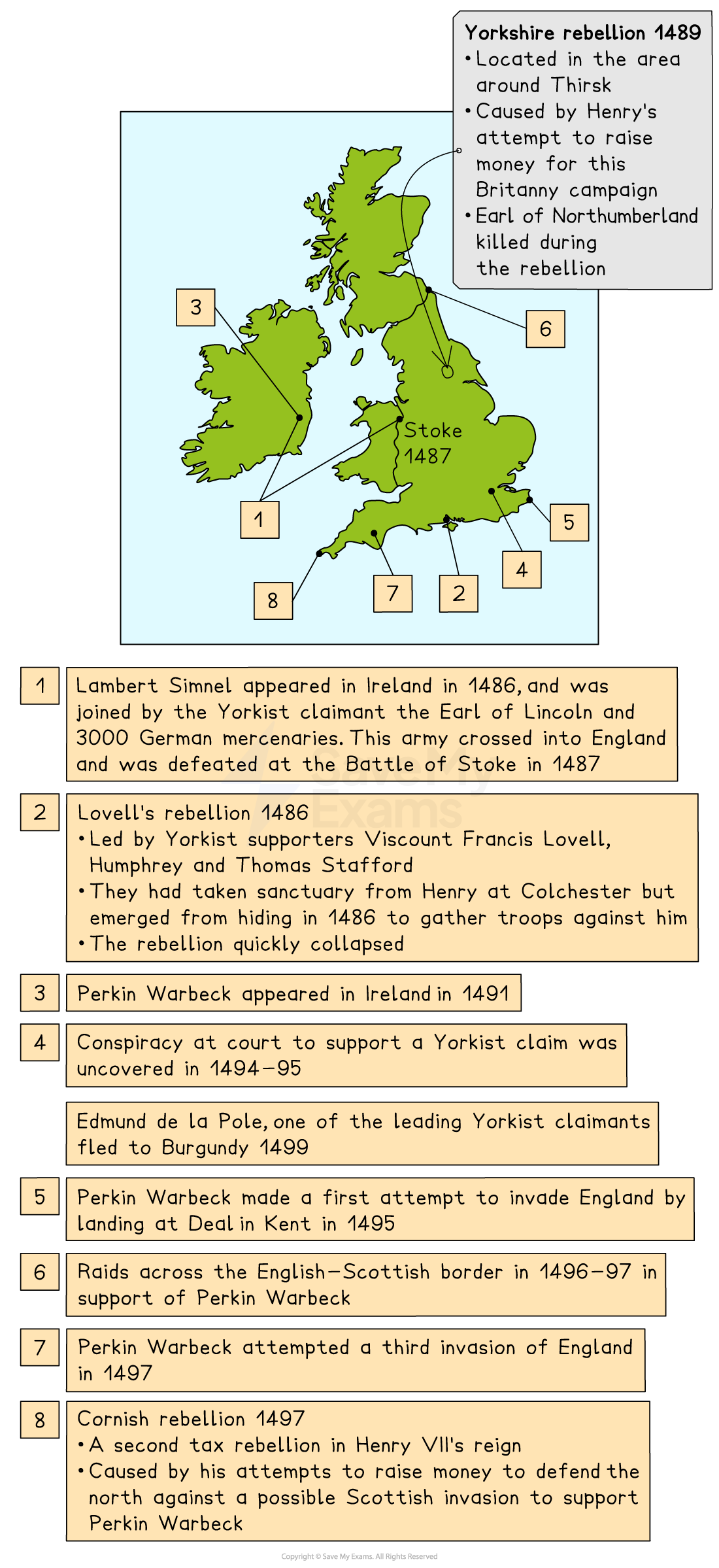
The Yorkshire Rebellion (1489) was triggered by resentment over taxation raised to support intervention in Brittany
The 4th Earl of Northumberland was killed by a mob while attempting to collect the tax
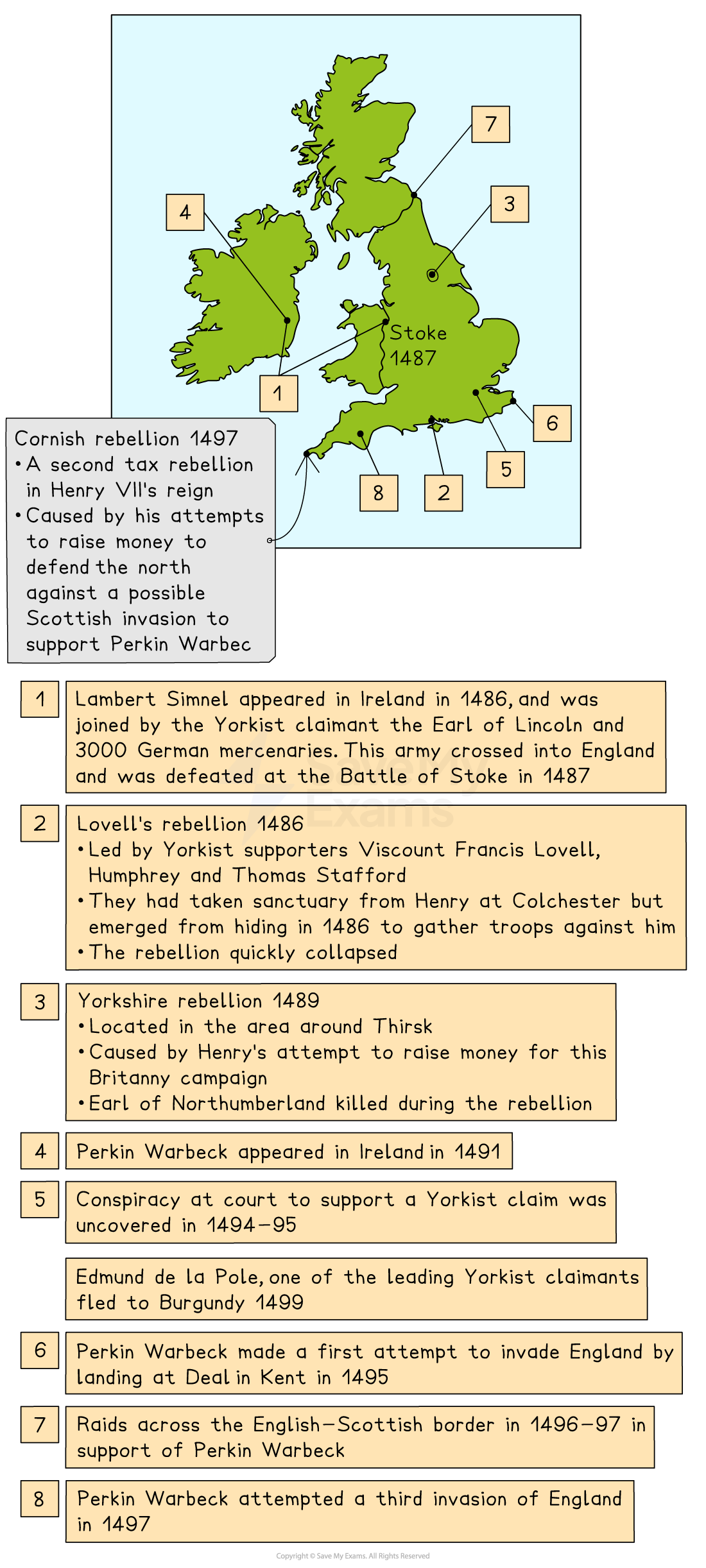
The Cornish Rebellion (1497) was the most serious popular rebellion of the reign
A rebel army of around 15,000 men marched to the outskirts of London before being defeated at the Battle of Deptford Bridge
Historians debate how serious these threats were, focusing on Henry's political skill and the structural weaknesses that made rebellion possible
England's Social Hierarchy: Churchmen, Nobles & Commoners
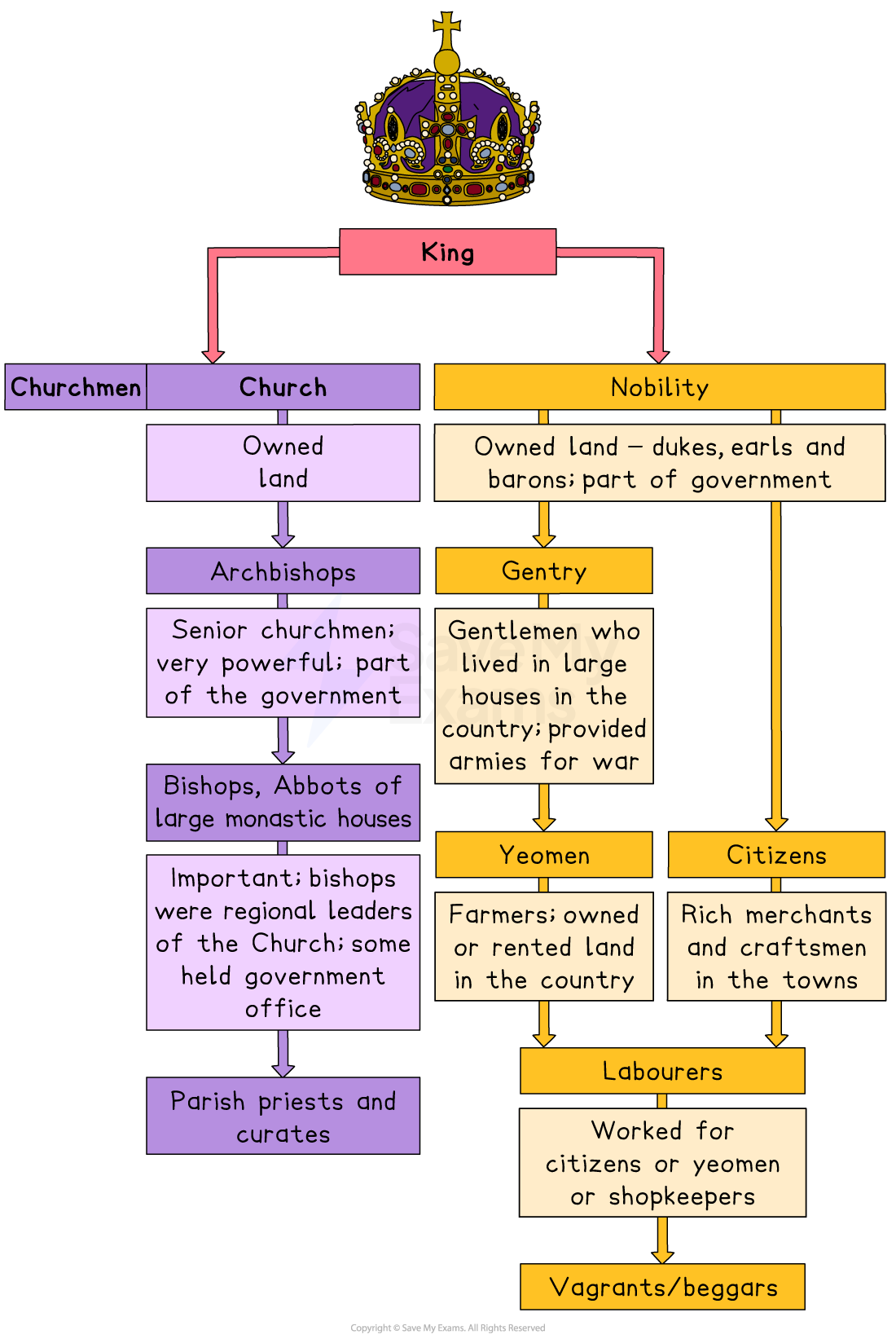
Tudor England was a rigidly hierarchical society in which position was determined primarily by birth, land and (for the Church) appointment
Henry could not rule without the cooperation of each group, but each group also posed potential risks to his authority
The Church
The Church was not just a spiritual institution
It was a major landowner, a source of educated administrators and a significant political force
Senior churchmen (archbishops, bishops and abbots) sat in the House of Lords and served on the Royal Council
This made them central to royal government
Henry used churchmen extensively as ministers
John Morton served as both Archbishop of Canterbury and Lord Chancellor, combining ecclesiastical and royal authority in a single figure
The Church provided the only real system of education and welfare in the country
Its influence penetrated every level of society, from the royal court to the village parish
The nobility
The nobility sat at the top of lay society
Dukes, earls, viscounts and barons held land, exercised local justice and commanded loyalty from those beneath them
They were crucial to royal government
The Crown depended on great nobles to maintain order in the regions
But overmighty nobles had caused the Wars of the Roses, making them Henry's most dangerous potential enemies
Henry distinguished carefully between the old nobility (families with Yorkist or Lancastrian connections, viewed with deep suspicion) and new men he elevated himself (such as Bray, Empson and Dudley)
Below the great nobles were the gentry: knights and esquires who were increasingly important as JPs, local administrators and MPs
Henry relied heavily on the gentry to govern at local level
Commoners
The vast majority of the population had little political voice
This included merchants, craftsmen, yeomen farmers, tenant farmers and labourers
They were capable of collective action when placed under sufficient pressure, as 1489 and 1497 demonstrated
The merchant class was growing in importance, particularly in London and the major ports
Henry cultivated their support through trade treaties and commercial diplomacy
Most ordinary people were tied to the land and vulnerable to the economic fluctuations of harvest failure, inflation and trade disruption
These conditions could rapidly turn grievance into rebellion
"The sixteenth century saw the rise of the gentry class. This was a large, ill-defined group below the titled nobility, but above tenant farmers and small landowners. They were defined more for their personal wealth than by titles. They could be prosperous farmers, wealthy merchants or men from long-standing families of knights, esquires or gentlemen, but all were to live comfortably from their income without having to resort to working for a living. The expansion of this group helped to cause an obsession with the symbols of rank as those with traditional status tried to protect their elite position."
A. Anderson and T. Imperato, An Introduction to Tudor England, 1485–1603 (2001)
Anderson and Imperato highlight how the growth of the gentry blurred the boundaries of the social hierarchy. As a new group rose in wealth and influence, those above felt threatened and those below aspired upwards. This social fluidity made the hierarchy both more dynamic and more anxious than it appeared on the surface.
Examiner Tips and Tricks
When writing about Tudor society, avoid treating the social hierarchy as a static backdrop. Henry actively managed each group: rewarding the Church with influence, controlling the nobility through fear and financial bonds, and managing commoner discontent through strategic clemency after the rebellions. The social hierarchy was not just a description of society, it was a tool of royal government.
Regional Divisions: North, South & the Borders
England in 1485 was not a unified, centrally governed state in the modern sense
Regional identities were strong, central government's reach was limited
Great noble families of the regions wielded enormous local power that often rivalled the Crown
Region | Key characteristics and challenges for Henry VII |
|---|---|
The North |
|
The South and London |
|
Wales and the Marches |
|
The Scottish Borders |
|
Henry VII's Relationship with the Nobility
Henry VII's relationship with the nobility was the central challenge of his domestic rule
He needed the great nobles to govern the regions
He could not administer England without them
But he also feared them as potential rivals
His solution was to control them systematically rather than to destroy or simply trust them
The problem Henry inherited
The Wars of the Roses had dramatically reduced the old nobility
Many great families had been killed, attainted or weakened, leaving a power vacuum
The surviving nobility were either Yorkist (potentially disloyal) or newly elevated by Henry himself (potentially insecure and ambitious)
Henry needed noble cooperation to govern the regions, particularly the North
But he feared that giving any family too much power would recreate the conditions that had caused the Wars of the Roses
Henry's strategy
His strategy was characterised by suspicion and control rather than partnership
He used bonds, recognisances and attainders to bind nobles to the Crown financially
Roughly two-thirds of the English nobility were subject to bonds or recognisances at some point during the reign
He deliberately elevated new men from the gentry
Bray, Empson and Dudley were all from relatively modest backgrounds
This made them entirely dependent on royal favour and therefore more reliably loyal
He used wardship to control the heirs of noble families
When a great lord died leaving a minor heir, the heir came under royal wardship, allowing Henry to control their lands and upbringing
He kept great nobles from regional dominance
No single family was allowed to build the kind of unchecked local power that the Percies or Nevilles had wielded in the 15th century
He rewarded loyalty with office but never with unchecked regional authority
Those who proved themselves gained influence gradually, under constant royal scrutiny
He rarely granted land as a reward, preferring offices and financial incentives to avoid creating overmighty subjects
The result
By 1509, the English nobility had been significantly tamed but not destroyed
They were controlled through financial bonds and royal oversight rather than eliminated
The resentment generated by Empson and Dudley's methods was so intense that Henry VIII had both men executed in 1510
This is a powerful indication of how deeply unpopular the system had become
No major noble-led rebellion occurred during Henry's reign
This was a remarkable achievement given the turbulence of the previous 50 years
Social Discontent: Yorkshire Rebellion (1489) & Cornish Rebellion (1497)
The two rebellions of Henry's reign were not dynastic challenges
Neither rebellion was led by a Yorkist pretender, though both occurred alongside Perkin Warbeck’s activities
They were popular revolts driven by financial grievances, particularly taxation but also wider economic pressures
Both revealed the limits of what Henry could demand from his subjects
The Yorkshire Rebellion, 1489
Causes | Detail |
|---|---|
Taxation for Brittany |
|
Northern exemption claims |
|
Events and outcome
A rebel force assembled under a leader known as John a' Chambre
The 4th Earl of Northumberland was killed by a mob while attempting to collect the tax
The rebellion was put down relatively quickly by the Earl of Surrey (Thomas Howard), without major military engagement
The ringleaders were executed but Henry pardoned the bulk of the rebels
This was a deliberate act of pragmatic clemency
Significance
The death of Northumberland left a power vacuum in the North
Henry used this to reduce Percy dominance and extend royal control more directly into the region
The rebellion demonstrated the limits of Henry's fiscal demands – pushing taxation too hard in the North was politically dangerous
Henry's clemency was politically astute
Mass executions in Yorkshire would have created martyrs and stored up greater resentment for the future
The Cornish Rebellion, 1497
Causes | Detail |
|---|---|
Taxation for Scotland |
|
Cornish identity and isolation |
|
Weakness of central control |
|
Events and outcome
A rebel army of perhaps 15,000 men marched from Cornwall to London under Michael Joseph (a blacksmith) and Thomas Flamank (a lawyer)
The rebels were later joined by Lord Audley, a nobleman whose involvement gave the rebellion aristocratic leadership and made it considerably more dangerous
The rebels reached Deptford Strand (on the outskirts of London) before being defeated at the Battle of Deptford Bridge in June 1497
The rebel leaders were executed
Michael Joseph reportedly declared at his execution that he would have "a name perpetual and a fame permanent and immortal", a striking act of defiance
The rank and file were largely pardoned, again reflecting Henry's pragmatic approach to popular rebellion
Significance
This was the most serious domestic threat Henry faced
15,000 rebels reaching the outskirts of London was genuinely alarming and should not be underestimated
It demonstrated that regional identity and local grievances could override loyalty to the Crown even without a Yorkist pretender
Perkin Warbeck attempted a second invasion of Cornwall in September 1497, exploiting residual discontent
But this was quickly suppressed
It showed that Henry's financial demands had real limits
Pushing ordinary subjects too far risked popular resistance that noble-controlled local order was not equipped to prevent
How Serious were Threats to Henry VII's Rule?
Henry VII faced two major popular rebellions in Yorkshire (1489) and Cornwall (1497)
Neither was a dynastic challenge, but both revealed real limits to his power
The question historians debate is whether these threats were genuinely dangerous or simply demonstrated Henry's ability to manage and contain discontent
Threats were serious
The Cornish Rebellion brought 15,000 rebels to the outskirts of London
This was not a minor disturbance
Both rebellions demonstrated that Henry's financial demands had real limits
Push too hard and the population would resist, regardless of loyalty to the dynasty
The Yorkshire Rebellion killed a royal official (the Earl of Northumberland), a serious breach of order and a direct challenge to royal authority
Both rebellions coincided with Perkin Warbeck's activities, creating the danger of simultaneous dynastic and popular threats
Regional divisions were deep and persistent
The North remained difficult to govern throughout the reign
Cornwall demonstrated that even peripheral regions could mobilise significant military forces
Threats were manageable
Neither rebellion achieved its political aims
Both were suppressed relatively quickly
Neither came close to toppling the dynasty
Henry's clemency after both rebellions was politically astute
Pardoning the rank and file prevented martyrdom and reduced resentment
Neither rebellion had significant noble support
Lord Audley's involvement in 1497 was the exception, not the rule
Without noble backing, popular revolts lacked military credibility
Henry's use of bonds, recognisances and attainders had effectively neutralised the nobility as a source of rebellion
The truly dangerous threat, an overmighty noble with a rival dynastic claim, never materialised
By 1509, England was more stable than it had been since before the Wars of the Roses
Key Historians:
Steven J. Gunn, Henry VII (2004) |
|
|---|---|
G. J. Meyer, The Tudors (2011) |
|
David Grummitt, The Tudors, 1485–1603 (2019) |
|
Examiner Tips and Tricks
The key to a top-mark answer on this topic is distinguishing between short-term danger and long-term threat. The Cornish Rebellion was genuinely dangerous in the short term – 15,000 rebels at the gates of London is not trivial. But, in the long term, neither rebellion seriously threatened the dynasty because Henry combined effective military suppression with strategic clemency. Always use 1497 as your key example – it was the most dangerous moment of the reign, and how Henry handled it reveals both his strengths and the real limits of his power.
While historian interpretations can strengthen an answer, they are not essential for high marks. Strong factual evidence (e.g. 15,000 rebels at Deptford Bridge, the death of Northumberland, and the link to Warbeck) can support equally effective analysis.

Unlock more, it's free!
Join the 100,000+ Students that ❤️ Save My Exams
the (exam) results speak for themselves:

Was this revision note helpful?
