Henry VII: Religion, Humanism, Arts & Learning (AQA A Level History: Component 1: Breadth study): Revision Note
Exam code: 7042

Summary
The English Church in 1485 was wealthy and powerful but increasingly criticised for pluralism, absenteeism and moral corruption
Henry was conventionally pious and made no serious attempt to reform the Church
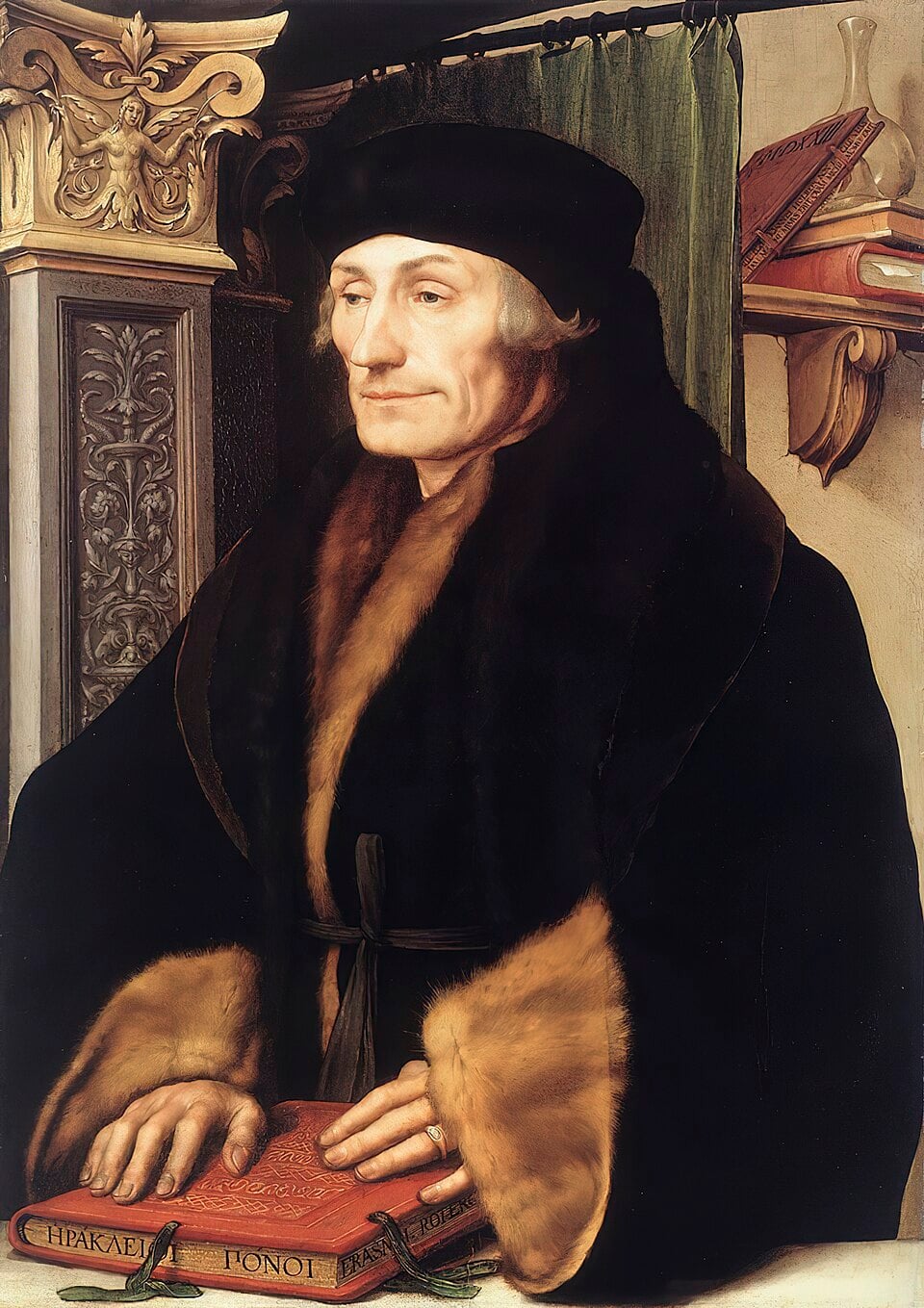
Humanism reached England during Henry's reign, embodied in the circle of Erasmus, John Colet and Thomas More
Colet's lectures at Oxford and the foundation of St Paul's School (1509) were the most tangible expressions of humanist educational reform in England
Henry's most significant act of cultural patronage was the Henry VII Chapel at Westminster Abbey, housing the first significant Renaissance sculpture in England
This was created by Florentine Pietro Torrigiano
Lady Margaret Beaufort (Henry's mother) was more of an active patron of learning than Henry himself, funding Christ's College (1505) and St John's College (1511) at Cambridge
Historians debate how important these developments were
The cultural circle of Henry's reign was small and elite-based, but it laid the intellectual foundations for both the English Reformation and the Renaissance flowering that followed
The State of the Church in England under Henry VII
The English Church in 1485 was a wealthy, powerful institution that was simultaneously central to national life and increasingly subject to criticism
The criticisms circulating during Henry's reign helped create the intellectual climate in which later reform could take root
The structure of the Church
The Church was a hierarchical institution with the Pope at its head and a clear chain of authority running from Rome down to the humblest parish priest in England
Level of hierarchy | Role and significance |
|---|---|
The Pope |
|
Cardinals |
|
Archbishops |
|
Bishops |
|
Parish priests |
|
Secular and regular clergy
Secular clergy (bishops, archdeacons and parish priests) operated in the world (the Latin word saeculum means "age" or "world")
They had no special rule to follow beyond Church law and were answerable to their bishop
Regular clergy (monks, friars and nuns) lived under a rule (the Latin word regula means 'rule') in monasteries, friaries and convents, withdrawn from the world
They owed obedience to their abbot or abbess rather than to the local bishop
The monasteries were major landowners, centres of learning and providers of welfare
They ran schools, provided hospitality and cared for the poor
Their dissolution under Henry VIII would have enormous social consequences
Friars (Franciscans, Dominicans and Augustinians) were different from monks in that they lived and preached among the people rather than withdrawing from the world
They were often better educated than parish priests and more effective preachers
The Church had a near-monopoly on education
It did not just govern souls; it controlled access to knowledge itself
The Church's wealth and political power
The Church was woven into every aspect of daily life
The rhythms of the year were religious rhythms; baptism, marriage and burial were all Church sacraments
For ordinary people, the Church was not a distant institution but a constant, lived presence from birth to death
The Church owned perhaps a third of all land in England, making it the single largest landowner in the country (giving it enormous economic power)
Senior clergy sat in the House of Lords as Lords Spiritual. Bishops and abbots formed a significant bloc in Parliament and could not easily be ignored by the Crown
The Church had its own legal system
Church courts heard cases involving marriage, wills, morality and the conduct of clergy
This created a parallel system of justice that operated alongside royal courts and was a source of tension with the Crown
The benefit of the clergy meant the clergy could only be tried in Church courts, not royal courts
This was widely resented by laypeople who felt it allowed clerical offenders to escape justice
The Church's weaknesses and criticisms
Problem | What was going wrong? |
|---|---|
Pluralism |
|
Absenteeism |
|
Simony |
|
Clerical ignorance |
|
Moral corruption |
|
Benefit of the clergy |
|
Henry's relationship with the Church
Henry was conventionally pious
He attended Mass regularly, observed the religious calendar scrupulously and made significant donations to religious foundations
His most significant act of religious patronage was the Lady Chapel at Westminster Abbey (begun 1503, later known as the Henry VII Chapel)
It is a magnificent example of Perpendicular Gothic architecture built as a chantry chapel where prayers would be said for his soul
He used the Church as a source of loyal administrators rather than attempting to reform it
Morton's dual role as Archbishop and Lord Chancellor is the clearest example
Henry made no attempt to reform the Church's well-documented problems
Meaningful institutional reform would only come under Henry VIII
"Late-medieval Catholicism exerted an enormously strong, diverse and vigorous hold over the imagination and the loyalty of the people. Traditional religion had about it no particular marks of exhaustion and decay, and indeed in a whole host of ways, from the multiplication of religious books to adaptations of the saints, showed that it was well able to meet new needs and new conditions. The teachings of late-medieval Christianity were graphically represented, endlessly reiterated in sermons [and] saints' lives, enacted in Corpus Christi and Miracle plays and carved and painted on the walls, screens, bench-ends and windows of the parish churches."
Adapted from Eamon Duffy, The Stripping of the Altars: Traditional Religion in England, c1400–1580 (1992)
One of the most influential and controversial works of Tudor religious history – Duffy's revisionist argument that late medieval Catholicism was vigorous and healthy directly challenges the older view that the Church was so corrupt and exhausted that reform was inevitable. Essential reading for any discussion of the state of the Church, though his positive assessment remains contested by other historians.
Examiner Tips and Tricks
The state of the Church under Henry VII is important not just in its own right but as context for everything that follows. When you study the Break with Rome and the Reformation under Henry VIII, you will need to explain why some people were willing to accept religious change, while others resisted it. The answer lies partly here – in the criticisms of pluralism, absenteeism and moral corruption that were already widespread under Henry VII. Humanism provided the intellectual tools; the Church's own failings provided the justification.
Humanism in England: Erasmus, Colet & Thomas More
Humanism was the most important intellectual movement of the late 15th and early 16th centuries
It originated in Italy and spread northward through Europe, reaching England during Henry VII's reign
The spread of the printing press transformed the circulation of ideas
What was humanism?
Humanism was a scholarly movement that emphasised the study of classical Greek and Latin texts as the foundation of education and civilised life
Humanists believed that returning to the original sources of both classical antiquity and early Christianity would reform both individuals and society
It was not anti-religious
Most humanists were devout Christians who believed that studying the Greek New Testament would purify the Church of its accumulated corruptions
The printing press was crucial to humanism's spread
Printers such as Wynkyn de Worde and Richard Pynson continued Caxton's work in London, printing classical texts and new humanist scholarship that reached educated readers across the country
Key figures
There were three significant humanist figures in England during this period:
Erasmus
John Colet
Thomas More
Erasmus |
|
|---|---|
John Colet |
|
Thomas More |
|
Examiner Tips and Tricks
When writing about humanism, always make the connection between humanist scholarship and later religious change explicit. Colet's return to the original Greek text of scripture, Erasmus's exposure of errors in the Latin Vulgate, More's critical thinking about society – none of these men intended to cause a Reformation. But, by encouraging people to question received authority and return to original sources, they made it intellectually respectable to challenge the Church. That connection is essential for top marks on any question about cultural developments under Henry VII.
Arts and Learning: Arts, Architecture & Renaissance Patronage under Henry VII
Henry VII was not a great personal patron of the arts in the way that Italian Renaissance princes were
But his reign saw significant developments in English architecture and the first signs of Renaissance influence filtering into England
Perpendicular Gothic architecture
The dominant architectural style of Henry's reign was Perpendicular Gothic
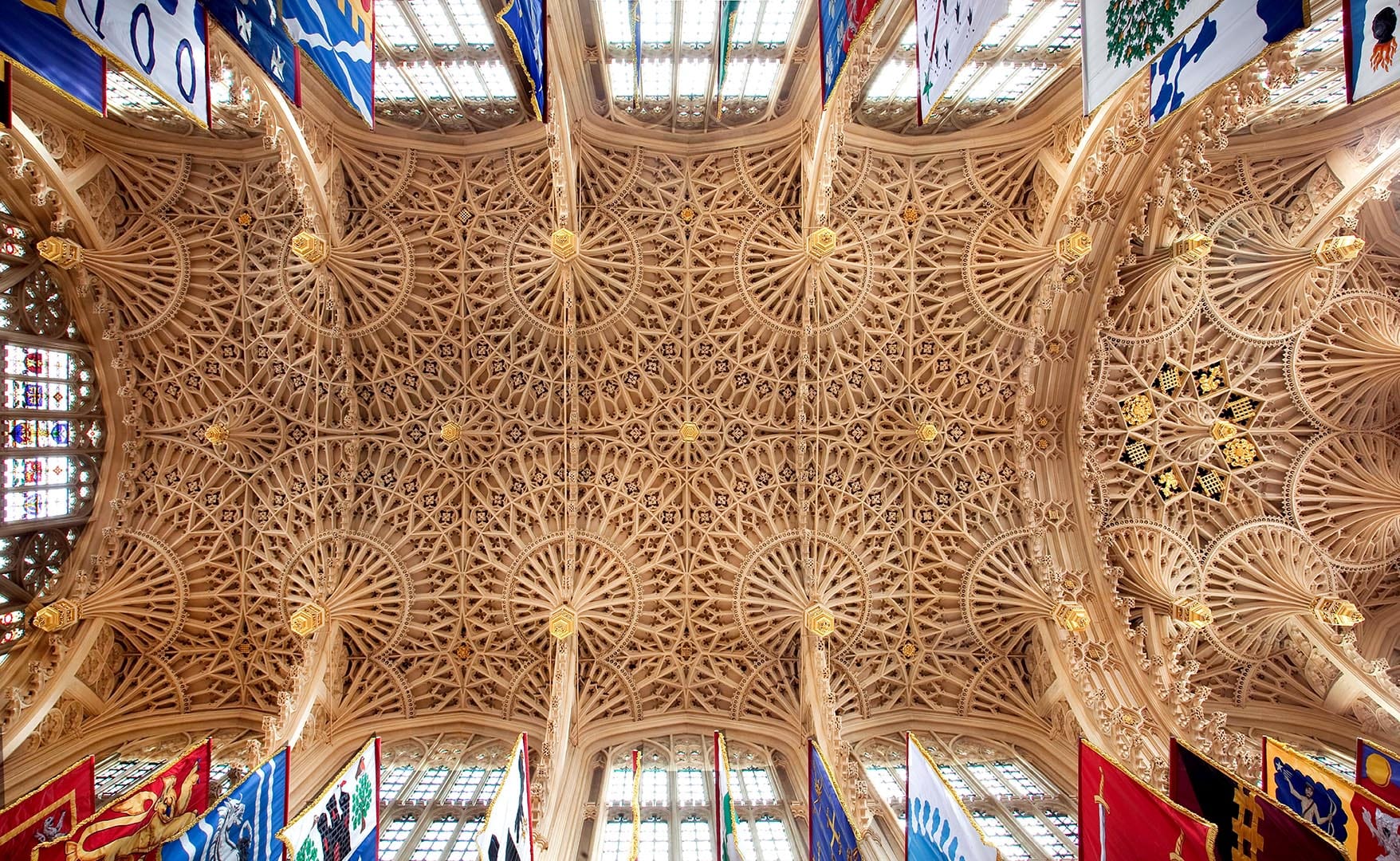
The distinctively English late medieval style is characterised by vertical lines, fan vaulting and large windows flooding interiors with light
Examples:
The supreme example is the Henry VII Chapel at Westminster Abbey (begun 1503)
An extraordinary building with the most elaborate fan vaulting in England
Representing the absolute pinnacle of the Perpendicular Gothic style
Also significant: King's College Chapel, Cambridge was largely completed under Henry VII
Another masterpiece of the style, it demonstrates the continued vitality of English Gothic architecture
The arrival of the Renaissance: Pietro Torrigiano
Italian Renaissance ideas began to filter into England during Henry's reign, primarily through the arrival of Italian craftsmen
Examples:
The most visible example is the tomb of Henry VII and Elizabeth of York in the Henry VII Chapel, executed by the Florentine sculptor Pietro Torrigiano
This was the first significant Renaissance sculpture in England
Torrigiano also executed the tomb of Lady Margaret Beaufort – another significant Renaissance work in bronze, combining Italian sculptural techniques with English funerary tradition
These Italian elements sat alongside the Gothic architecture of the chapel itself, creating a hybrid style that is characteristic of early Tudor art
Neither fully medieval nor fully Renaissance, it shows a transitional moment of genuine cultural significance
Lady Margaret Beaufort and educational patronage
Henry's mother, Lady Margaret Beaufort, was a more active patron of learning than Henry himself
She funded the foundation of Christ's College (1505) and St John's College (1511) at Cambridge
Both became important centres of humanist scholarship and, later, Protestant learning
She established the Lady Margaret Professorships of Divinity at both Oxford and Cambridge
These were the first royal professorships in England
This was a direct expression of the humanist belief that scholarship should be publicly supported and widely available
Her colleges later played a direct role in the English Reformation, a consequence of her investment that she could not have foreseen
Acts of patronage
Act of patronage | Significance |
|---|---|
Henry VII Chapel, Westminster Abbey (begun 1503) |
|
King's College Chapel, Cambridge (largely completed under Henry VII) |
|
Christ's College, Cambridge (1505) and St John's College (1511) |
|
St Paul's School, London (1509) |
|
Torrigiano's tombs (from c.1512) |
|
How Important were Cultural Developments under Henry VII?
Cultural developments under Henry VII are easy to underestimate
Henry was not a Renaissance prince in the Italian mould
The great flowering of English culture came later, under Henry VIII and Elizabeth I
But Henry's reign was a genuinely significant transitional moment – the period in which humanist ideas arrived in England, the seeds of the Reformation were sown
Cultural developments were highly important
The humanist circle of Erasmus, Colet and More created the intellectual foundations for the English Reformation
Without the critical scrutiny of the Church that humanism encouraged, the later break with Rome becomes much harder to explain
Colet's lectures and the foundation of St Paul's School represented a genuine educational revolution
They helped to introduce Greek and humanist methods more firmly into English education
The Henry VII Chapel is an architectural masterpiece. Torrigiano's Renaissance tomb within it marks the moment Italian cultural ideas first took root in England
Lady Margaret Beaufort's foundation of Christ's College and St John's had lasting consequences
These Cambridge colleges became nurseries of Protestant scholarship in the 1520s and 1530s, directly shaping the English Reformation
The use of the printing press transformed the circulation of ideas
Humanist scholarship became accessible to a far wider educated audience than had ever been possible before
Key Historian:
David Grummitt, The Tudors, 1485–1603 (2019) |
|
|---|
Cultural developments were limited
Henry himself was not a great Renaissance patron. He was more interested in financial security than cultural investment
The Henry VII Chapel was exceptional; most of his reign saw little royal cultural patronage
The English Renaissance was largely imported
Key figures were foreigners (Erasmus was Dutch, Torrigiano was Florentine)
Native English cultural production remained limited compared to Italy or France
Humanism was confined to a small, educated elite and had little impact on the lives of ordinary people
The real cultural flowering of Tudor England came later, under Henry VIII and Elizabeth I
Henry VII's reign was preparatory, not transformative
Even the humanists' connection to the Reformation was unintentional
Erasmus, Colet and More were all horrified by the Protestant Reformation when it actually arrived. They wanted to reform the Church, not destroy it
Key Historian:
John Guy, Tudor England (1988) |
|
|---|
Examiner Tips and Tricks
For AQA A Level, the key to answering this question well is to think forwards as well as backwards. Cultural developments under Henry VII look modest if you compare them to Renaissance Italy, but they look highly significant if you think about what came next. The humanist circle created the intellectual tools for the Reformation. Lady Margaret's Cambridge colleges became Protestant seminaries. Torrigiano's tomb introduced Renaissance art to England. None of these were Henry's greatest priorities, but their long-term consequences were enormous. That forward-looking perspective is what earns the highest marks.

Unlock more, it's free!
Join the 100,000+ Students that ❤️ Save My Exams
the (exam) results speak for themselves:

Was this revision note helpful?
