Threats to Fragile Environments (Edexcel IGCSE Geography): Exam Questions

Exam code: 4GE1

1 hour22 questions
1a
Sme Calculator
1 mark

Study Figure 11a which shows annual deforestation in five states of Brazil between 2004 and 2013.

q11a-june-2017-edexcel-igcse-geography

In which one of the following states was there most deforestation between 2004 and 2013?

  • Rondônia

  • Pará

  • Mato Grosso

  • Amazonas

1b
Sme Calculator
2 marks

Describe the trend in the rate of deforestation in Brazil between 2004 and 2013.

1c
2 marks

Suggest one issue resulting from deforestation.

2a
1 mark

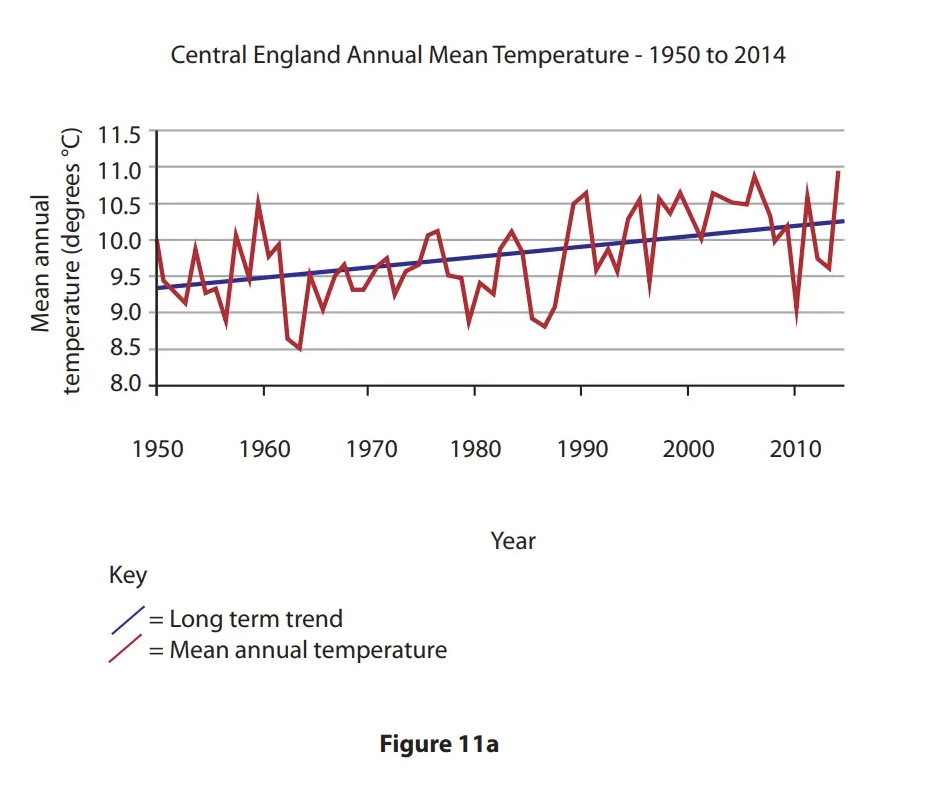
Study Figure 11a which shows the temperature record for Central England from 1950 to 2014.

q11a-june-2018-edexcel-igcse-geography

What was the mean annual temperature in 1950?

  • 9.0 °C

  • 9.4 °C

  • 9.7 °C

  • 10.0 °C

2b
1 mark

Identify a year when the mean temperature varied significantly from the long-term trend shown in Figure 11a

3a
1 mark

State one example of a greenhouse gas.

3b
1 mark

Identify the meaning of the term enhanced greenhouse effect.

  • cooling of the Earth's atmosphere resulting from human activities

  • warming of the Earth’s atmosphere resulting from human activities 

  • additional heat trapped in the Earth's atmosphere as a result of natural effects

  • greenhouse gases naturally present in the Earth's atmosphere causing warming

4a
Sme Calculator
1 mark

Identify  one natural cause of climate change.

  • industry

  • transport

  • volcanoes

  • intensive farming

4b
Sme Calculator
1 mark

Identify the meaning of the term enhanced greenhouse effect.

  • cooling of the Earth’s atmosphere from human activities

  • less heat trapped in the Earth’s atmosphere

  • additional heat trapped as a result of natural effects

  • additional heat trapped as a result of human activities

5a
1 mark

Identify the meaning of the term Milankovitch cycle.

  • cyclical movement of the Earth's orbit around the Sun

  • differences in the amount of energy emitted from the Sun 

  • additional heat trapped in the Earth’s atmosphere

  • seasonal movement of the Sun in different orbits

5b
Sme Calculator
2 marks

Study Figure 7b below.

fig-7b-4ge1-02-june-2019-edexcel-igcse-geography

Calculate the range in CO subscript 2  emissions in India between 1960 and 2015.
You must show all your workings in the space below

5c
2 marks

Identify the trends in CO subscript 2  emissions in China, 1960-2015.

6a
2 marks

Define the term deforestation.

6b
Sme Calculator
2 marks

Study Figure 7b below.

fig-7b-4ge1-02r-june-2019-edexcel-igcse-geography

Calculate the range in total deforestation loass between 2004 and 2012.

You must show all your workings.

6c
2 marks

Describe the extent to which deforestation rates have changed from  2004-2012 in Figure 7b.

7
2 marks

Define the term desertification.

8
1 mark

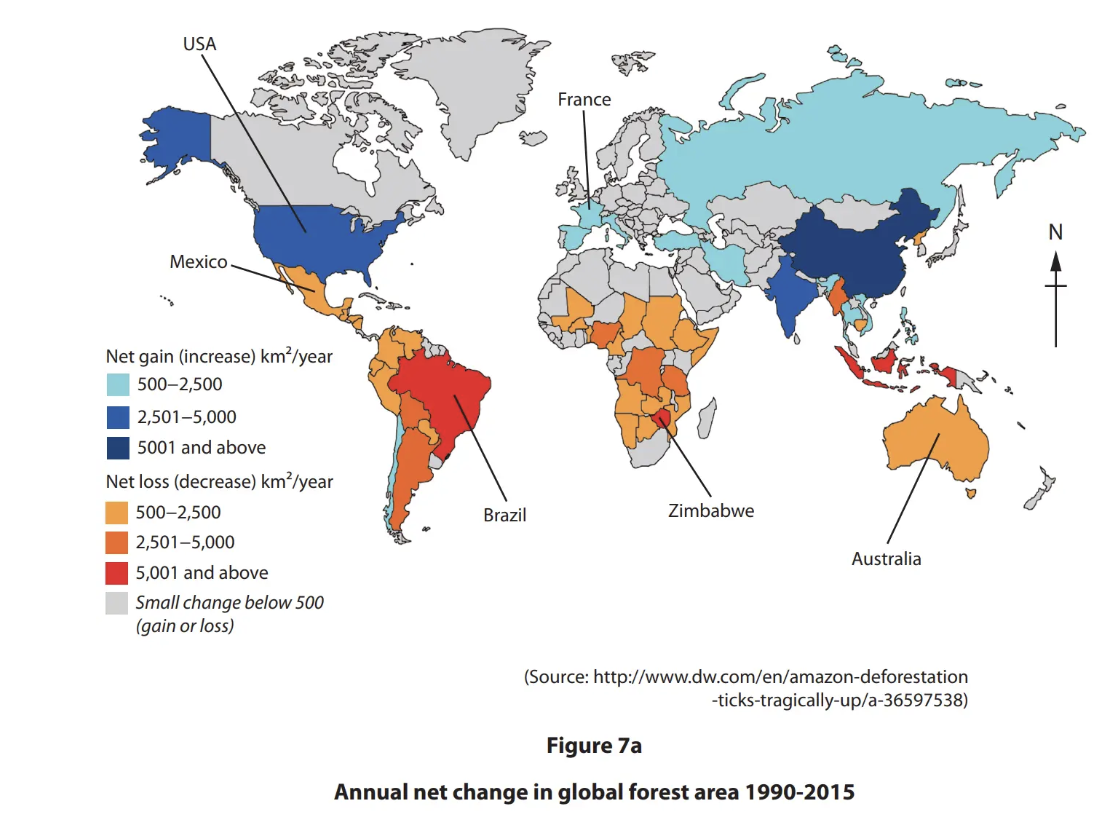
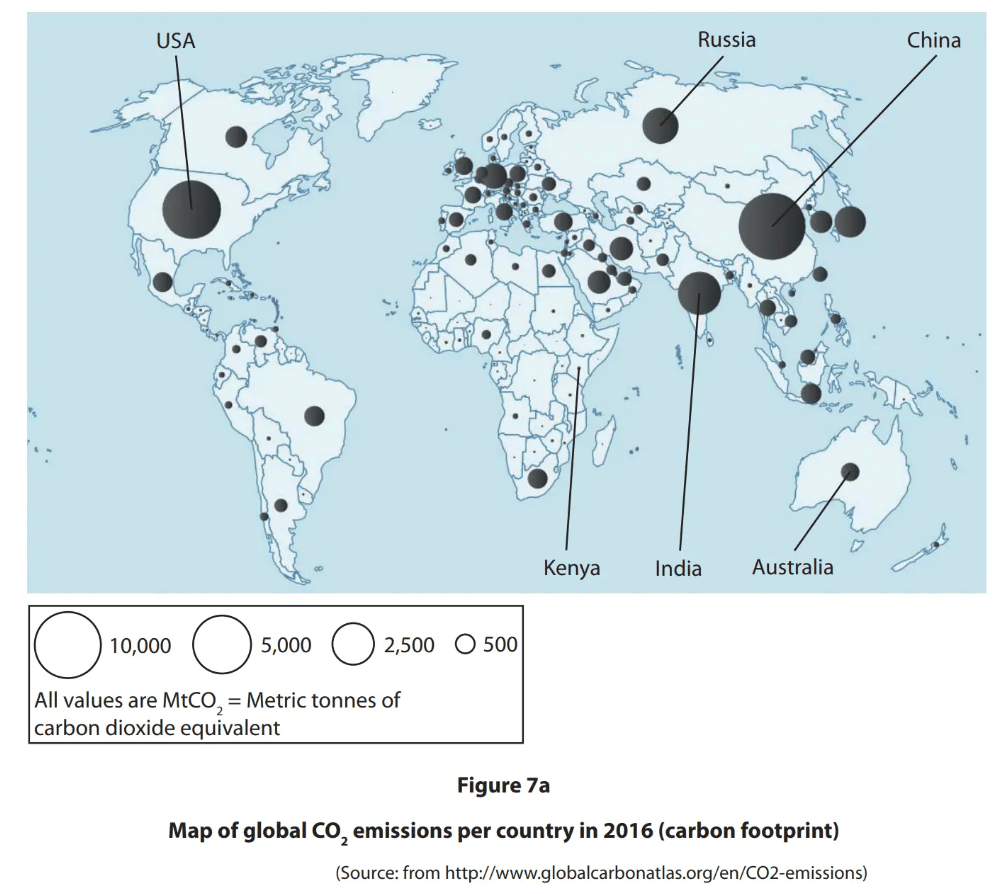
Study Figure 7a

Identify the two countries labelled in Figure 7a with the most and least CO subscript 2 emissions.

World map showing CO2 emissions by country in 2016 with bubble sizes indicating emission levels; notable emissions from USA, China, India, Russia, Australia.
9
2 marks

Study Figure 7a.

Identify two countries labelled in Figure 7a with a net loss in forest cover of greater than 5,000 km squared /year.

World map showing net changes in forest area from 1990-2015. Different colours indicate net gain or loss in km²/year. Major changes marked in select countries.
10
1 mark

Identify the correct word to complete the sentence below.

Climate change is the long-term changes in ........ conditions

  • atmospheric

  • aerobic

  • evaporation

  • forest

11
1 mark

State one cause of the enhanced greenhouse effect.

12
2 marks

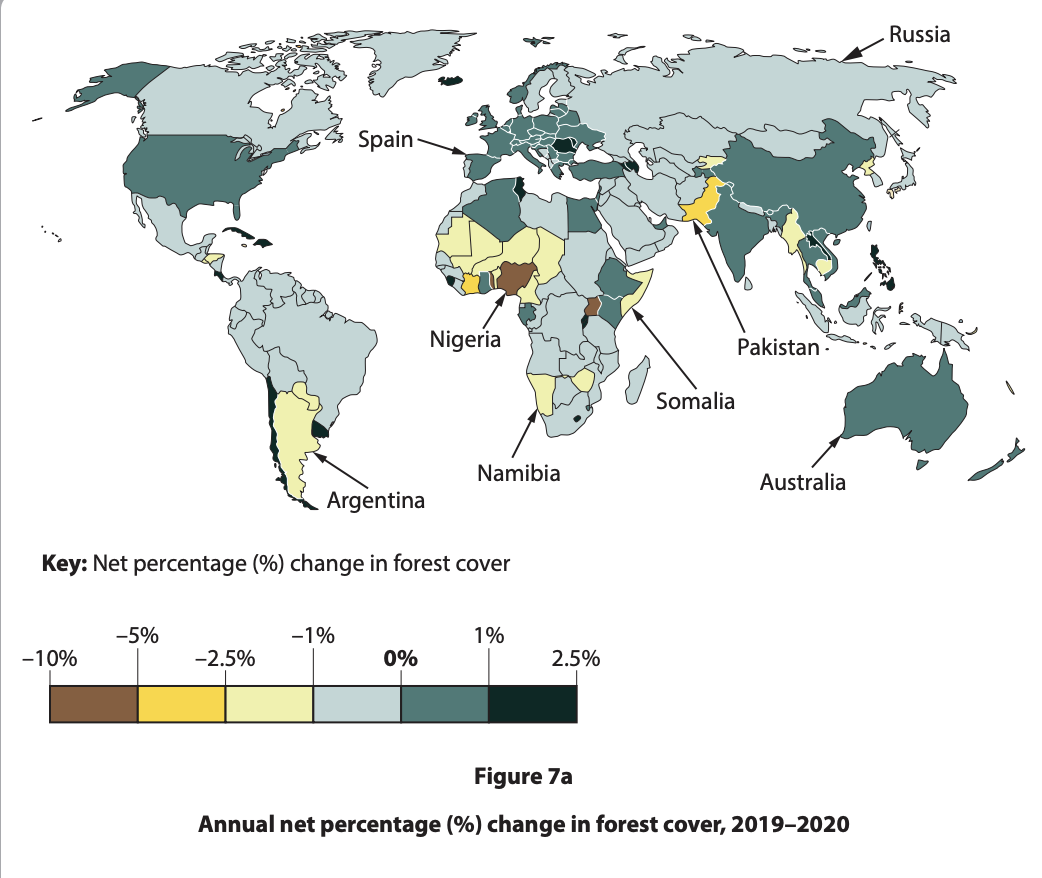
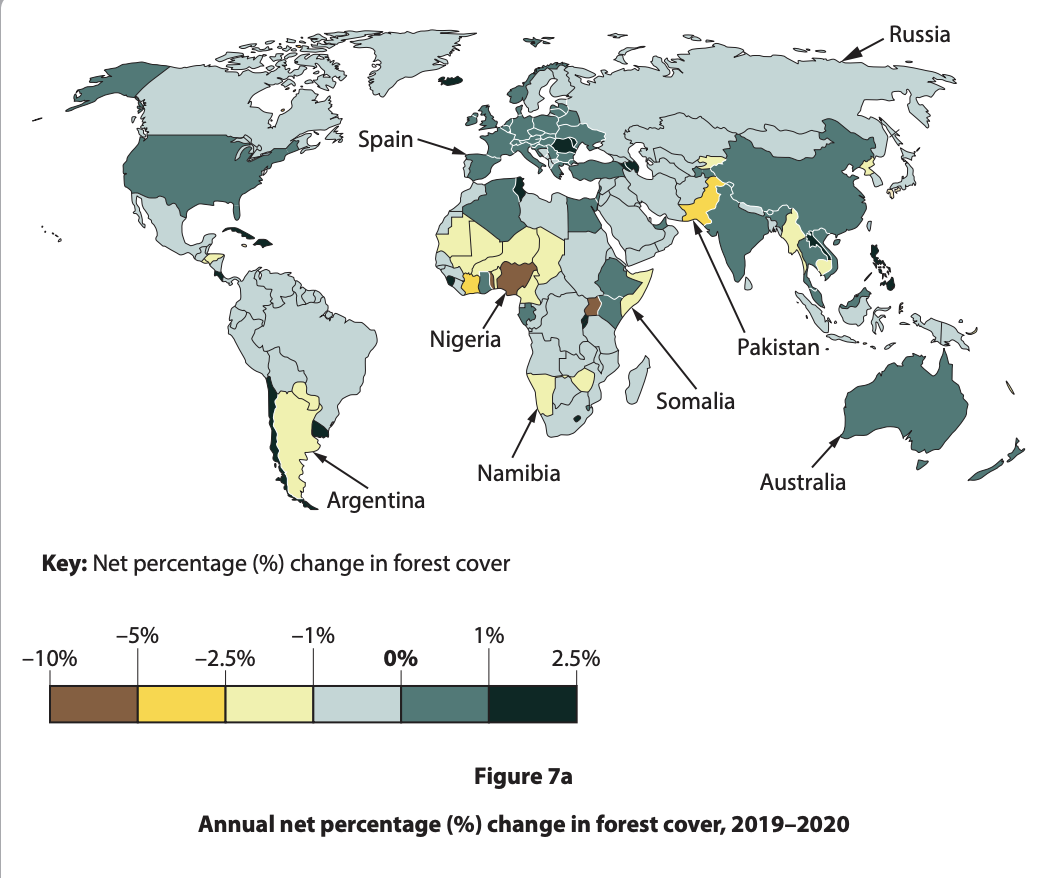
Study Figure 7a.

Identify the countries labelled in Figure 7a with the highest net percentage decrease and lowest net percentage decrease in forest cover.

World map showing annual net percentage change in forest cover (2019-2020), with a key indicating changes from -10% to +2.5%. Highlighted countries include Spain, Nigeria, and Australia.
13
1 mark

Identify the correct word to complete the sentence below.

Greenhouse gases allow … radiation through the atmosphere to warm the Earth’s surface.

  • nuclear

  • light

  • temperature

  • solar

14
1 mark

State one human cause of climate change

15
2 marks

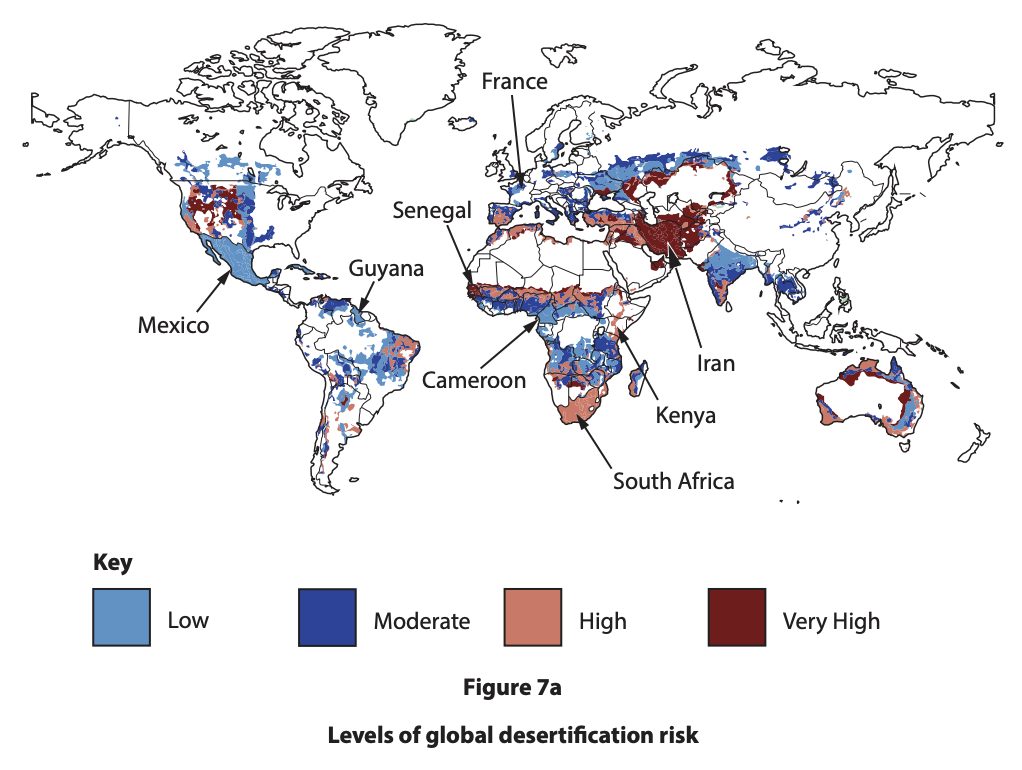
Study Figure 7.

Name two countries labelled in Figure 7a at ‘Very High’ risk of desertification.

World map showing desertification risk levels: low (light blue), moderate (blue), high (orange), very high (red). Notable areas include Mexico, Africa, and Asia.
1
Sme Calculator
4 marks

Explain two causes of desertification.

2
4 marks

Study Figure 7a below.

fig-7a-4ge1-02-june-2019-edexcel-igcse-geography

Suggest two reasons for the pattern shown on Figure 7a.

3
4 marks

Study Figure 7a below.

World map showing annual net change in forest area from 1990-2015. Colours indicate net gain or loss. Notable changes in Brazil, USA, China, and Australia.

Suggest two possible reasons for the pattern shown on Figure 7a.

4
6 marks

Study Figure 7c below.

fig-7c-4ge1-02-june-2019-edexcel-igcse-geography

Assess the different human factors that cause climate change.

5
Sme Calculator
6 marks

Study Figure 7c in the Resource Booklet.

Table showing causes of deforestation: conversion of forests, forest fires, illegal logging, and mining, with corresponding descriptions.

Assess the different factors that have caused deforestation.

6
3 marks

Study Figure 11a.

Suggest why the data in this graph supports the idea of global warming.

Graph of Central England's annual mean temperature from 1950 to 2014. Red line shows temperature; blue line shows a rising long-term trend, labelled Figure 11a.
7
4 marks

Study Figure 7a in the Resource Booklet.

Suggest two reasons for this pattern of change.

World map showing annual net percentage change in forest cover from 2019 to 2020, with colour-coded changes from -10% to +2.5%, highlighting seven countries.