12 marks
Define the term sustainability?
Was this exam question helpful?
Exam code: 4GE1
Define the term sustainability?
Was this exam question helpful?
Identify a strategy to try and reduce the impacts of climate change.
use of low yield seed varieties
use more timber from forests
use more fossil fuels
use more renewable energy
Was this exam question helpful?
Identify which statement best describes a way of adapting to climate change.
increase in cattle farming
increase in flood protection
increase in the number of airports
increase in the use of coal
Was this exam question helpful?
Identify one potential strategy to reduce desertification.
increased grazing
increased use of trees for fuelwood
over-cultivation
water purification systems
Was this exam question helpful?
Explain two sustainable rainforest management strategies.
Was this exam question helpful?
Study Figure 7b.
Calculate the mean amount of money spent on responding to climate change. You must show all your workings in the space below.
Give your answer to one decimal place.
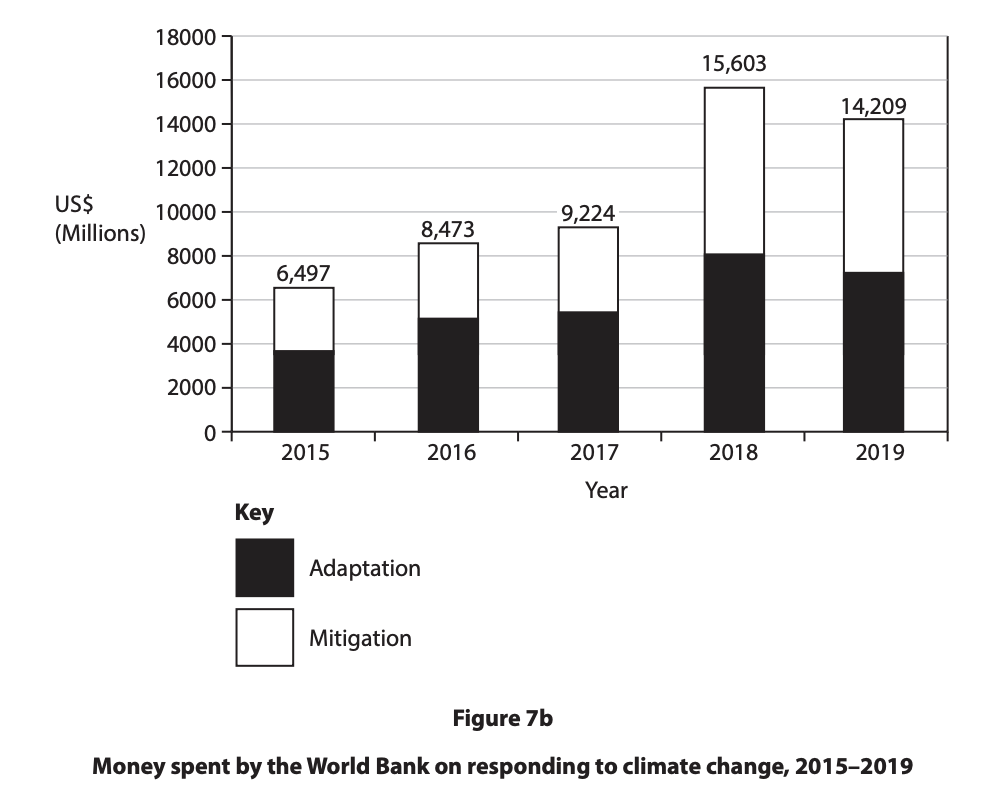
Describe the trends shown in Figure 7b.
Was this exam question helpful?
Explain one strategy used to manage deforestation.
Was this exam question helpful?
Explain two strategies used to manage desertification.
Was this exam question helpful?
Outline two strategies used to ensure a sustainable future for fragile environments.
Was this exam question helpful?
Explain two strategies to manage water shortages in fragile environments
Was this exam question helpful?
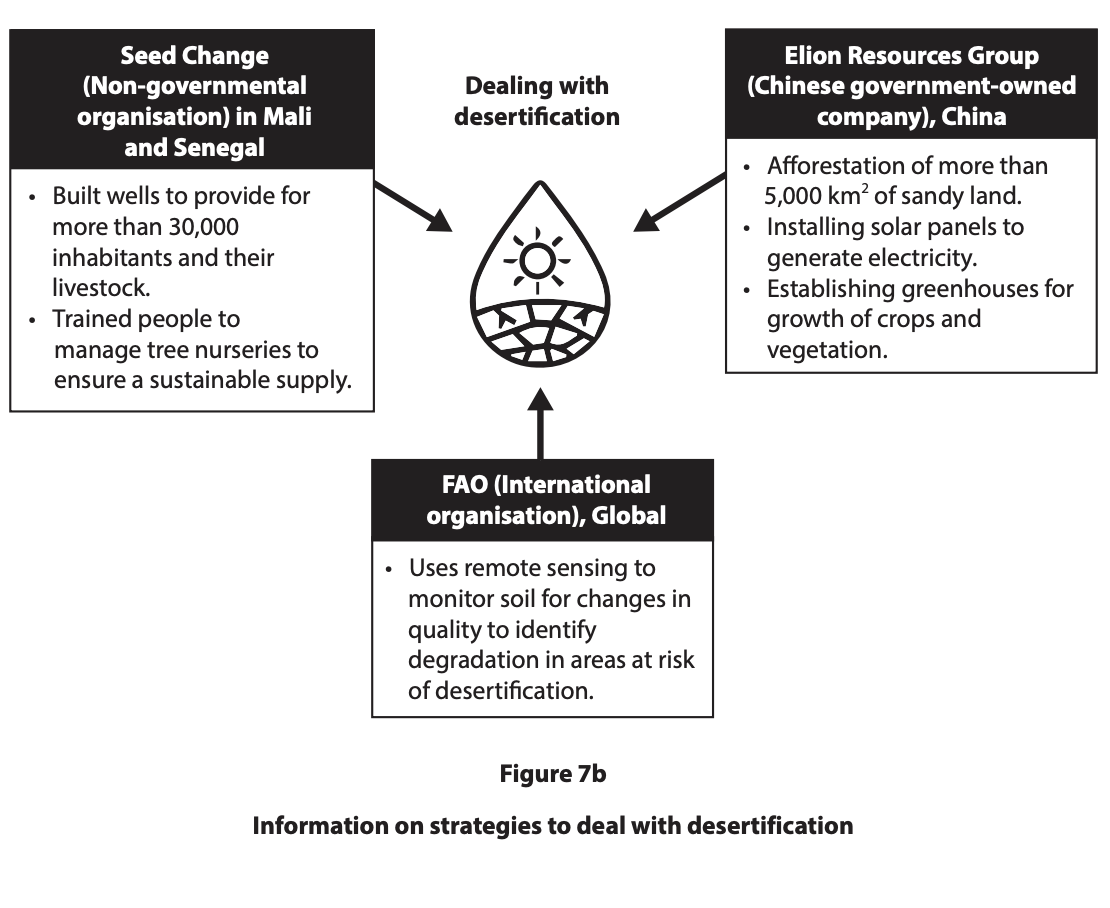
Study Figure 7b. Assess strategies used to reduce threats from desertification. Refer to the resource in your answer.
Was this exam question helpful?
Explain two strategies for sustainable rainforest management.
Was this exam question helpful?
Discuss the view:
“It is possible to manage the global rates of deforestation in a more sustainable way”. |
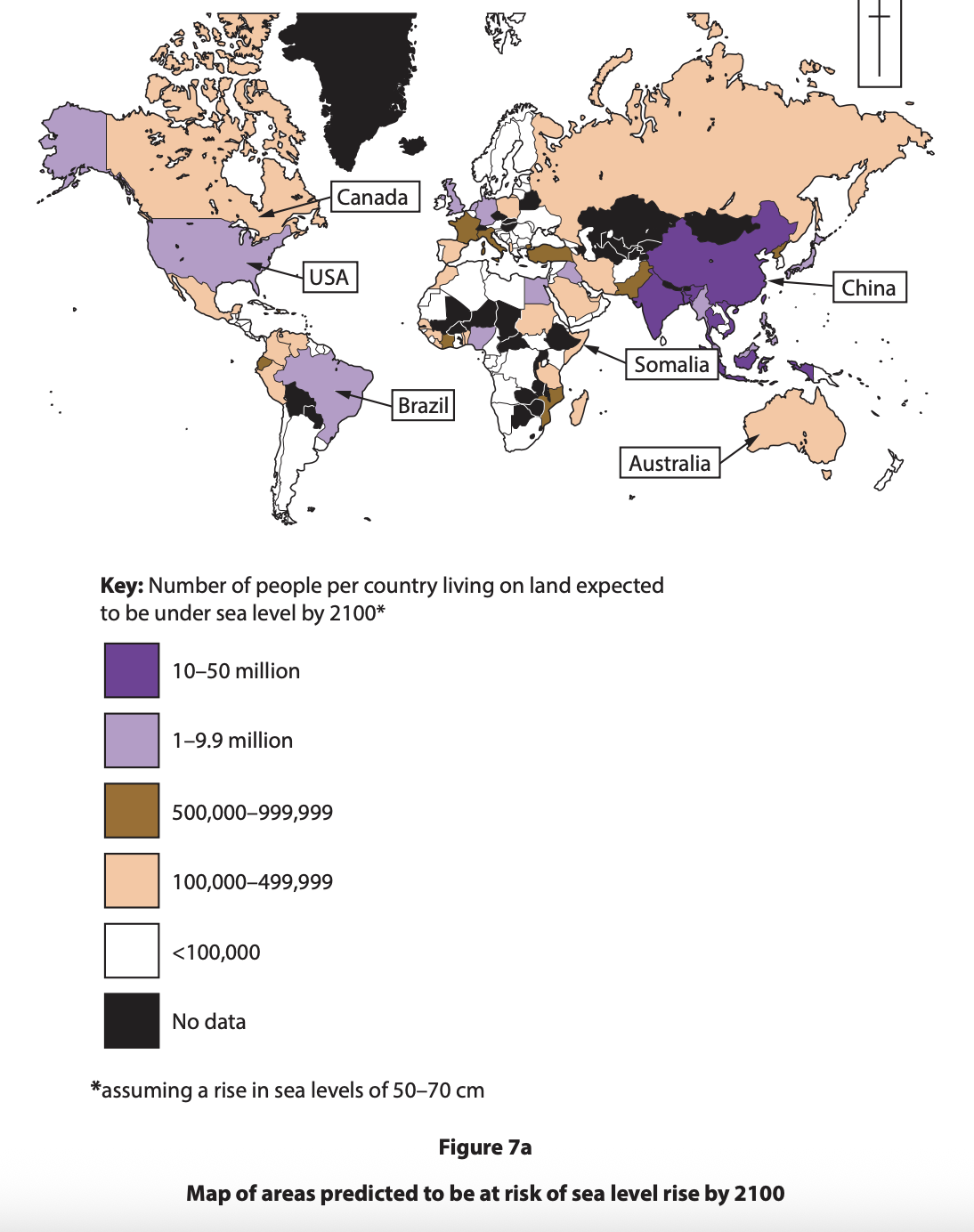
Use Figures 7a, 7b and 7c below and your own knowledge and understanding to support your answer.


Was this exam question helpful?
Discuss the view:
“Strategies to reduce threats to fragile environments should be led by governments.”
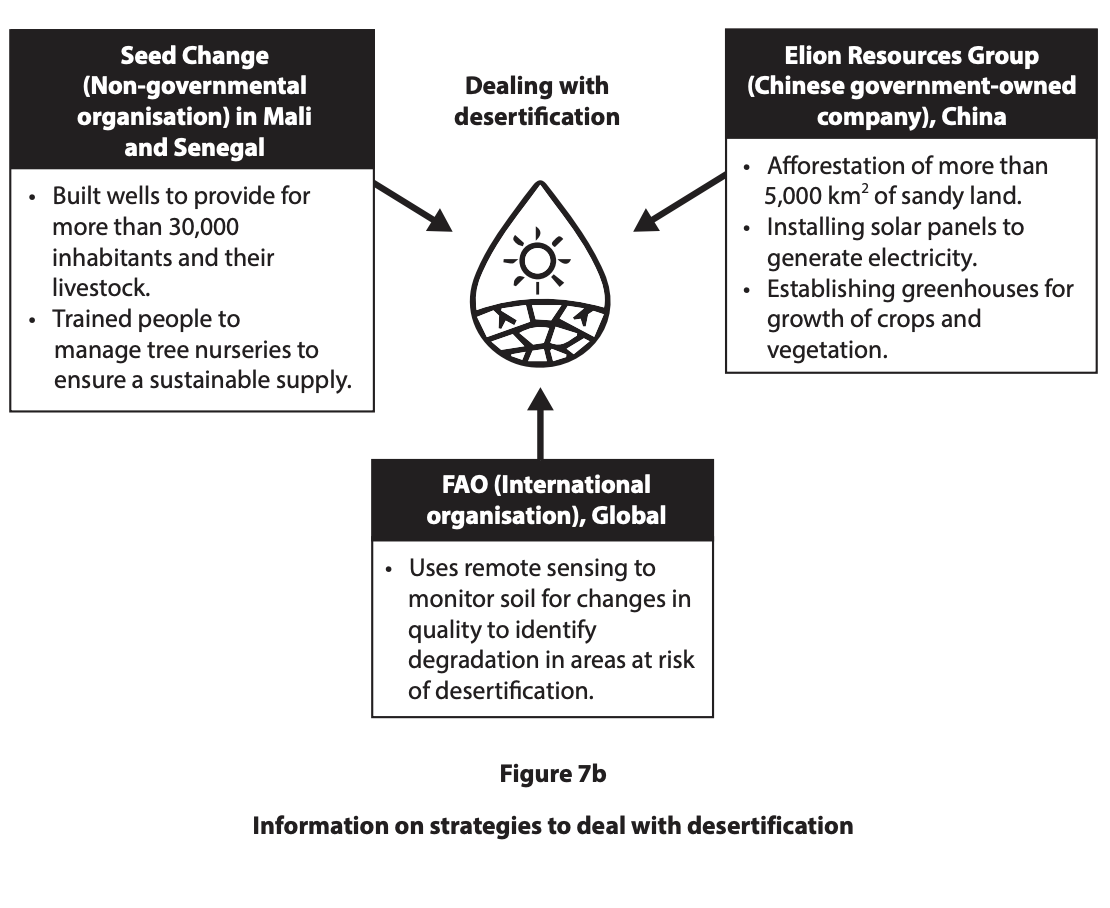
Use Figures 7a and 7b, with your own knowledge and understanding, to support your answer. Refer to the resources in your answer.
Was this exam question helpful?
Study Figure 9a.
Figure 9a: Government responses to climate change
Response | United Kingdom | Developing/emerging country |
|---|---|---|
Renewable energy targets | Net zero carbon emissions by 2050; 50% of electricity from renewables by 2030 | Targets set but limited by lack of funding and technology |
International agreements | Signatory to Paris Agreement; hosted COP26 in Glasgow 2021 | Signatory to Paris Agreement but limited capacity to enforce commitments |
Domestic policy | Carbon tax on industry; phase-out of new petrol and diesel cars by 2035 | Some carbon reduction policies but enforcement inconsistent |
Financial investment | £12 billion committed to green industries through the Green Industrial Revolution plan | Dependent on international climate finance and aid to fund low-carbon development |
Public awareness | High levels of public awareness; government campaigns and school curriculum requirements | Growing awareness but literacy and access to media limit reach in rural areas |
Using Figure 9a, assess how effective government responses to climate change have been.
Was this exam question helpful?