Co-ordinating Response (Edexcel IGCSE Biology): Revision Note
Exam code: 4BI1

Written by: Lára Marie McIvor
Updated on
Co-ordinating a Response
Homeostasis (maintaining controlled conditions within the body) is under involuntary (automatic) control
This means that the brain stem (or non-conscious part of the brain) and the spinal cord are involved in maintaining homeostasis – you don’t consciously maintain your body temperature
These automatic control systems may involve nervous responses or chemical responses (e.g. via hormones)
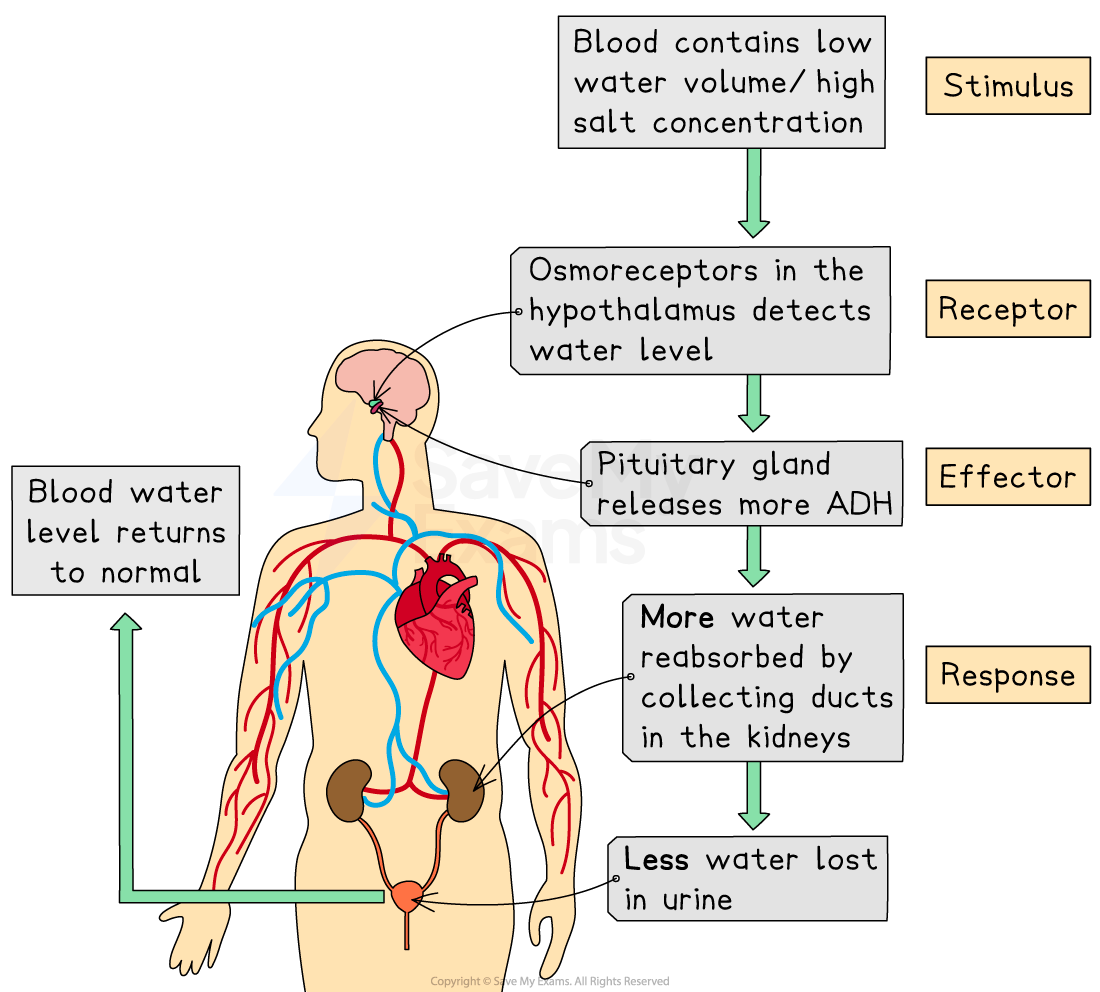
All control systems that carry out co-ordinated responses require the following:
A stimulus (a change in the environment e.g. a change in glucose levels in the blood, a change in body temperature etc.)
A receptor (receptor cells that detect stimuli)
A coordination centre (such as the brain, spinal cord and pancreas), which receives and processes information from receptors
An effector (a muscle or gland), which brings about responses to restore optimum levels

Unlock more, it's free!
Join the 100,000+ Students that ❤️ Save My Exams
the (exam) results speak for themselves:

Was this revision note helpful?