Distance-Time Graphs (AQA GCSE Combined Science: Trilogy: Physics): Revision Note
Exam code: 8464

Written by: Ashika
Updated on
Interpreting Distance-Time Graphs
A distance-time graph shows how the distance of an object moving in a straight line (from a starting position) varies over time:
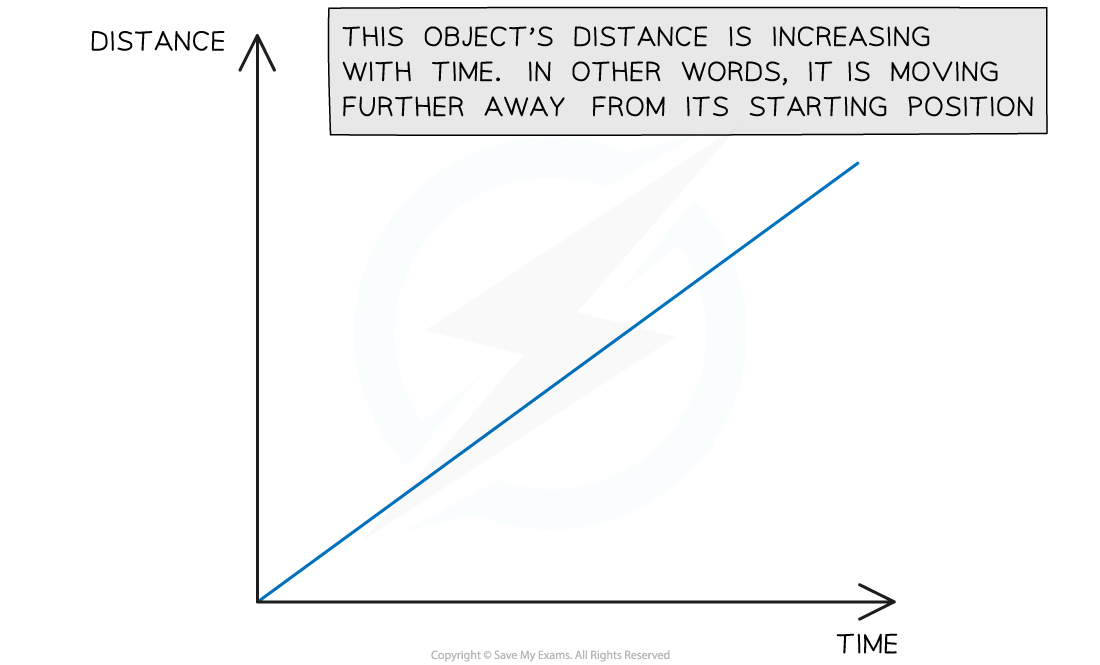
Constant Speed on a Distance-Time Graph
Distance-time graphs also show the following information:
If the object is moving at constant speed
How large or small the speed is
A straight line represents constant speed
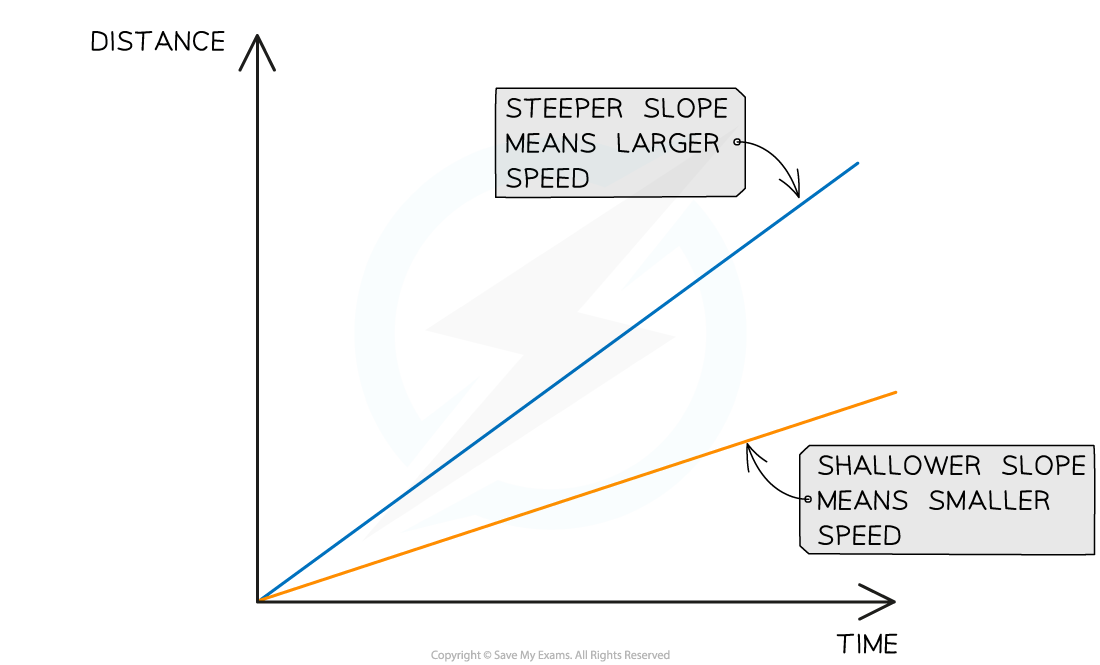
The slope of the straight line represents the magnitude of the speed:
A very steep slope means the object is moving at a large speed
A shallow slope means the object is moving at a small speed
A flat, horizontal line means the object is stationary (not moving)
Changing Speed on a Distance-Time Graph
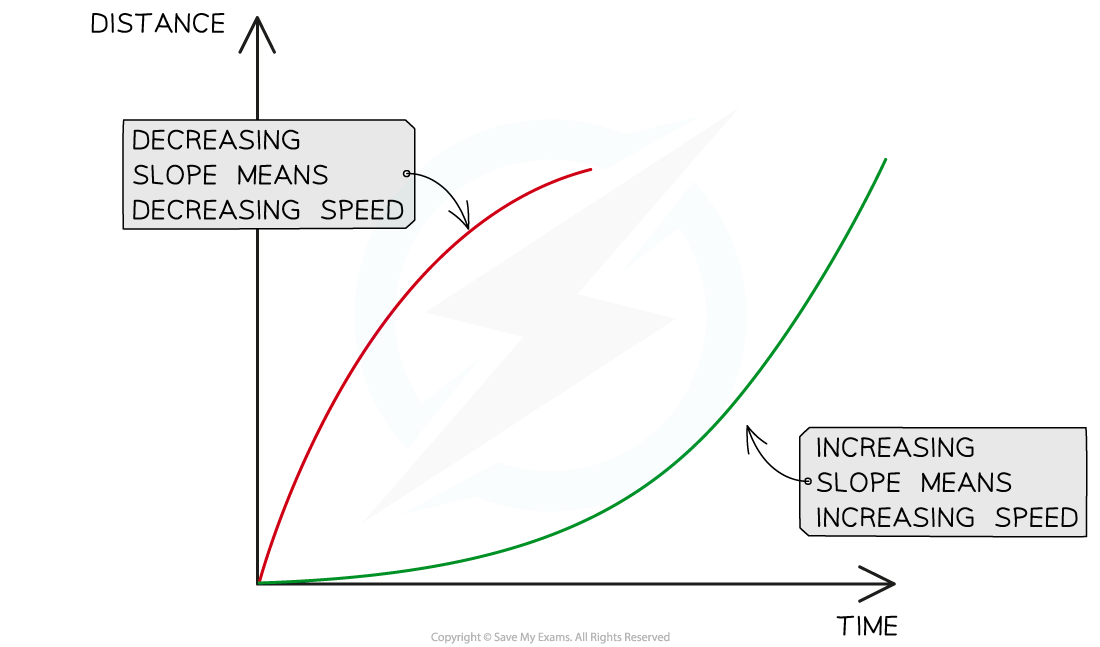
Objects might be moving at a changing speed
This is represented by a curve
In this case, the slope of the line will be changing
If the slope is increasing, the speed is increasing (accelerating)
If the slope is decreasing, the speed is decreasing (decelerating)
The image below shows two different objects moving with changing speeds
Worked Example
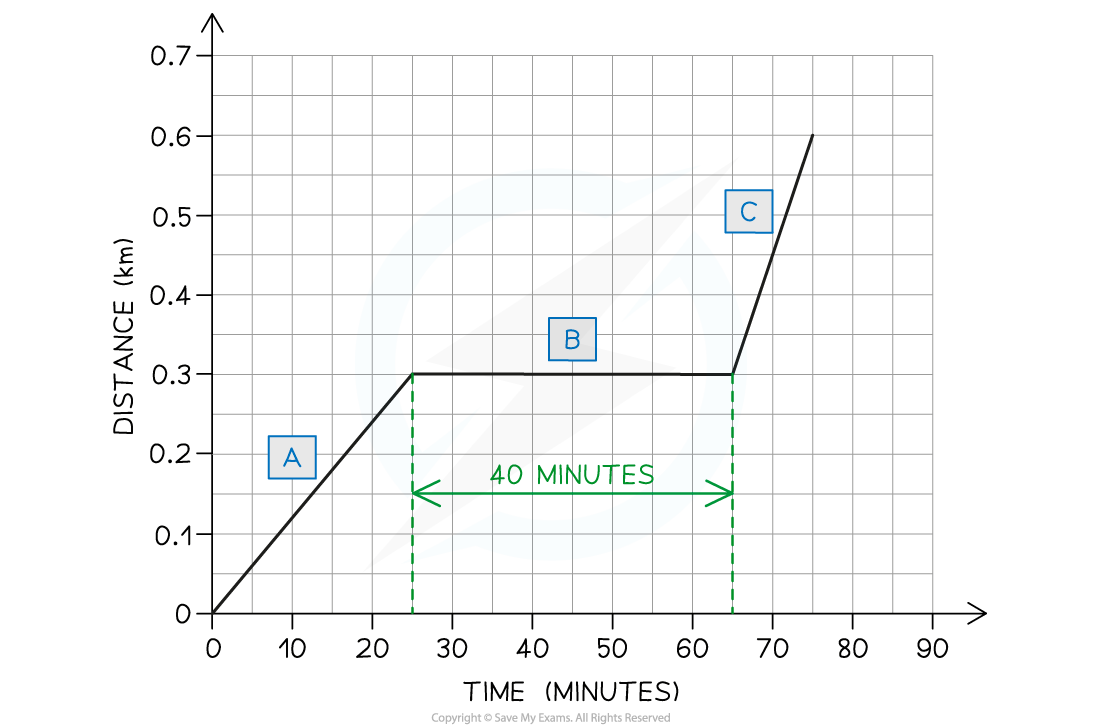
Ose decides to take a stroll to the park. He finds a bench in a quiet spot and takes a seat, picking up where he left off reading his book on Black Holes. After some time reading, Ose realises he lost track of time and runs home. A distance-time graph for his trip is drawn below:
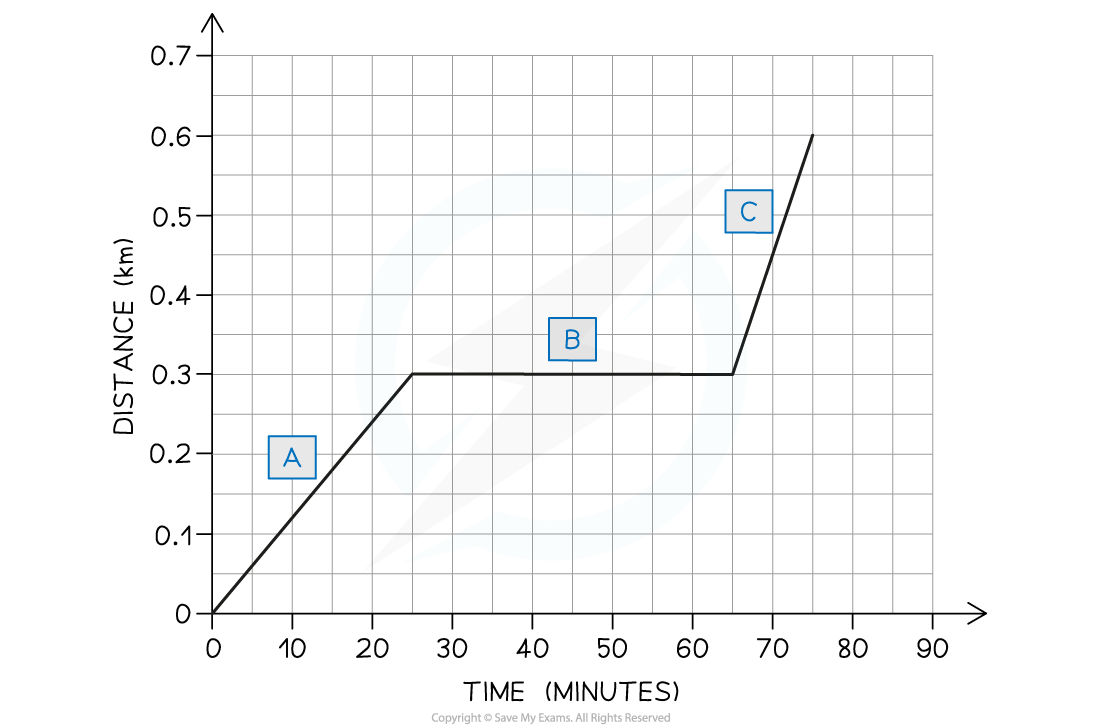
a) How long does Ose spend reading his book?
b) Which of the labelled sections (A, B or C) represents Ose running home?
c) What is the total distance travelled by Ose?
Answer:
Part (a)
Ose spends 40 minutes reading his book
The flat section of the line (section B) represents an object which is stationary - so section B represents Ose sitting on the bench reading
This section lasts for 40 minutes - as shown in the graph below
Part (b)
Section C represents Ose running home
The slope of the line in section C is steeper than the slope in section A
This means Ose was moving with a larger speed (running) in section C
Part (c)
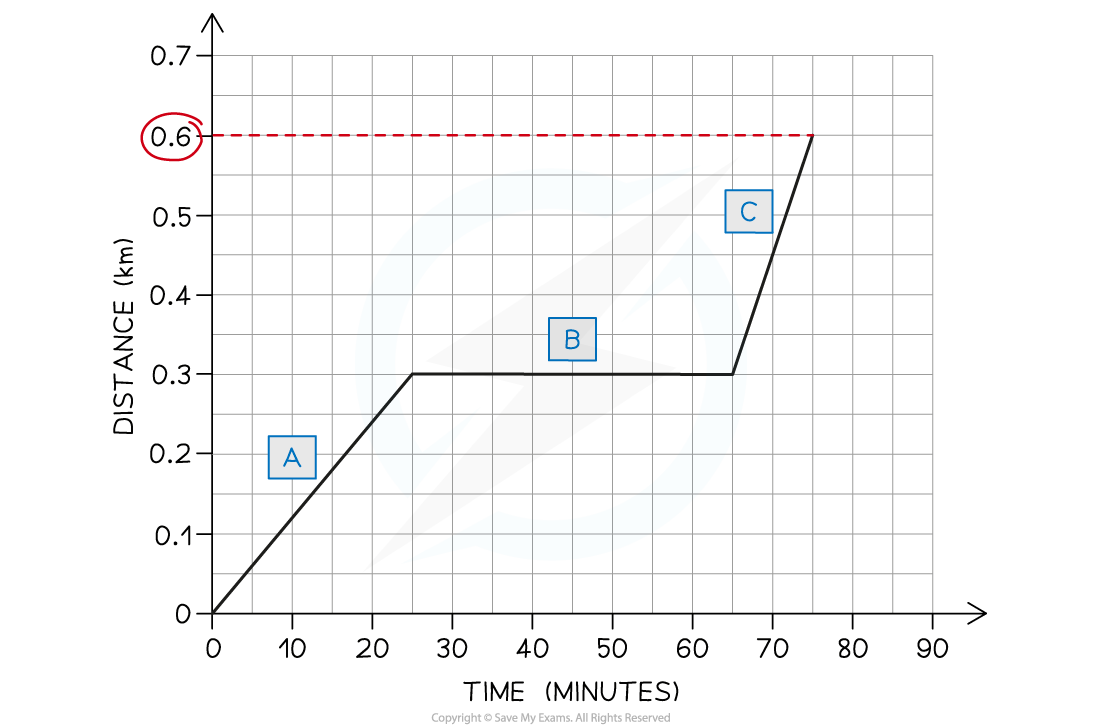
The total distance travelled by Ose is 0.6 km
The total distance travelled by an object is given by the final point on the line - in this case, the line ends at 0.6 km on the distance axis. This is shown in the image below:
Examiner Tips and Tricks
Remember to check the units of variables measured on each axes. These may not always be in standard units - in our example, the unit of distance was km and the unit of time was minutes. Double check which units to use in your answer.
Did this video help you?
Gradient of a Distance-Time Graph
The speed of a moving object can be calculated from the gradient of the line on a distance-time graph:
format('truetype')%3Bfont-weight%3Anormal%3Bfont-style%3Anormal%3B%7D%3C%2Fstyle%3E%3C%2Fdefs%3E%3Ctext%20font-family%3D%22Times%20New%20Roman%22%20font-size%3D%2218%22%20text-anchor%3D%22middle%22%20x%3D%2220.5%22%20y%3D%2230%22%3Espeed%3C%2Ftext%3E%3Ctext%20font-family%3D%22math113a33c7bd5f92570a76e57c90b%22%20font-size%3D%2216%22%20text-anchor%3D%22middle%22%20x%3D%2253.5%22%20y%3D%2230%22%3E%3D%3C%2Ftext%3E%3Ctext%20font-family%3D%22Times%20New%20Roman%22%20font-size%3D%2218%22%20text-anchor%3D%22middle%22%20x%3D%2295.5%22%20y%3D%2230%22%3Egradient%3C%2Ftext%3E%3Ctext%20font-family%3D%22math113a33c7bd5f92570a76e57c90b%22%20font-size%3D%2216%22%20text-anchor%3D%22middle%22%20x%3D%22137.5%22%20y%3D%2230%22%3E%3D%3C%2Ftext%3E%3Cline%20stroke%3D%22%23000%22%20stroke-linecap%3D%22square%22%20stroke-width%3D%221%22%20x1%3D%22152.5%22%20x2%3D%22180.5%22%20y1%3D%2223.5%22%20y2%3D%2223.5%22%2F%3E%3Ctext%20font-family%3D%22math113a33c7bd5f92570a76e57c90b%22%20font-size%3D%2216%22%20text-anchor%3D%22middle%22%20x%3D%22161.5%22%20y%3D%2216%22%3E%26%23x2206%3B%3C%2Ftext%3E%3Ctext%20font-family%3D%22Times%20New%20Roman%22%20font-size%3D%2218%22%20font-style%3D%22italic%22%20text-anchor%3D%22middle%22%20x%3D%22173.5%22%20y%3D%2216%22%3Ey%3C%2Ftext%3E%3Ctext%20font-family%3D%22math113a33c7bd5f92570a76e57c90b%22%20font-size%3D%2216%22%20text-anchor%3D%22middle%22%20x%3D%22161.5%22%20y%3D%2241%22%3E%26%23x2206%3B%3C%2Ftext%3E%3Ctext%20font-family%3D%22Times%20New%20Roman%22%20font-size%3D%2218%22%20font-style%3D%22italic%22%20text-anchor%3D%22middle%22%20x%3D%22173.5%22%20y%3D%2241%22%3Ex%3C%2Ftext%3E%3C%2Fsvg%3E)
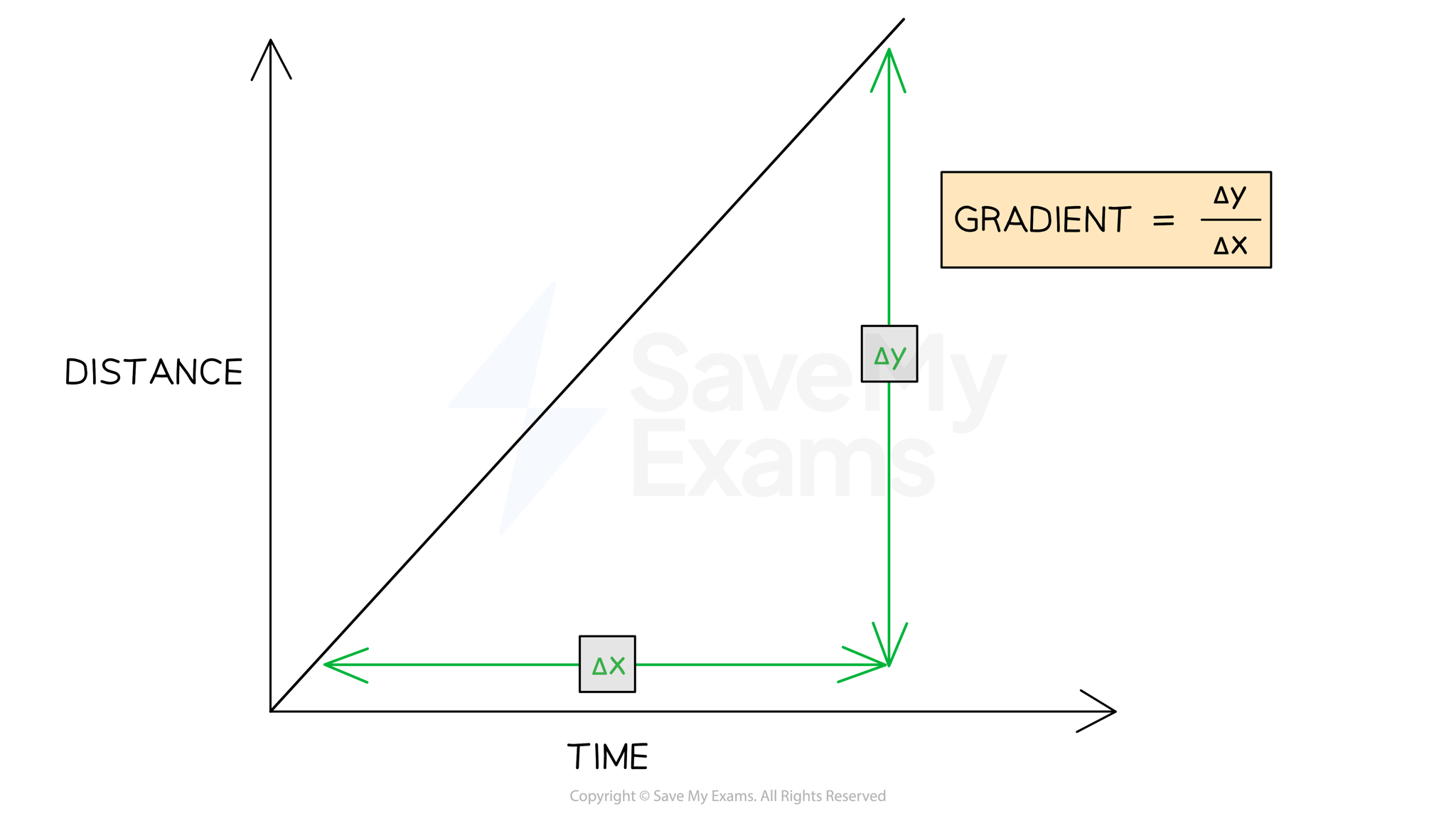
format('truetype')%3Bfont-weight%3Anormal%3Bfont-style%3Anormal%3B%7D%3C%2Fstyle%3E%3C%2Fdefs%3E%3Ctext%20font-family%3D%22math1ed582716bfb4738ccd92405301%22%20font-size%3D%2216%22%20text-anchor%3D%22middle%22%20x%3D%227.5%22%20y%3D%2216%22%3E%26%23x2206%3B%3C%2Ftext%3E%3Ctext%20font-family%3D%22Times%20New%20Roman%22%20font-size%3D%2218%22%20font-style%3D%22italic%22%20text-anchor%3D%22middle%22%20x%3D%2219.5%22%20y%3D%2216%22%3Ey%3C%2Ftext%3E%3C%2Fsvg%3E) is the change in y (distance) values
is the change in y (distance) valuesformat('truetype')%3Bfont-weight%3Anormal%3Bfont-style%3Anormal%3B%7D%3C%2Fstyle%3E%3C%2Fdefs%3E%3Ctext%20font-family%3D%22math1ed582716bfb4738ccd92405301%22%20font-size%3D%2216%22%20text-anchor%3D%22middle%22%20x%3D%227.5%22%20y%3D%2216%22%3E%26%23x2206%3B%3C%2Ftext%3E%3Ctext%20font-family%3D%22Times%20New%20Roman%22%20font-size%3D%2218%22%20font-style%3D%22italic%22%20text-anchor%3D%22middle%22%20x%3D%2219.5%22%20y%3D%2216%22%3Ex%3C%2Ftext%3E%3C%2Fsvg%3E) is the change in x (time) values
is the change in x (time) values
Worked Example
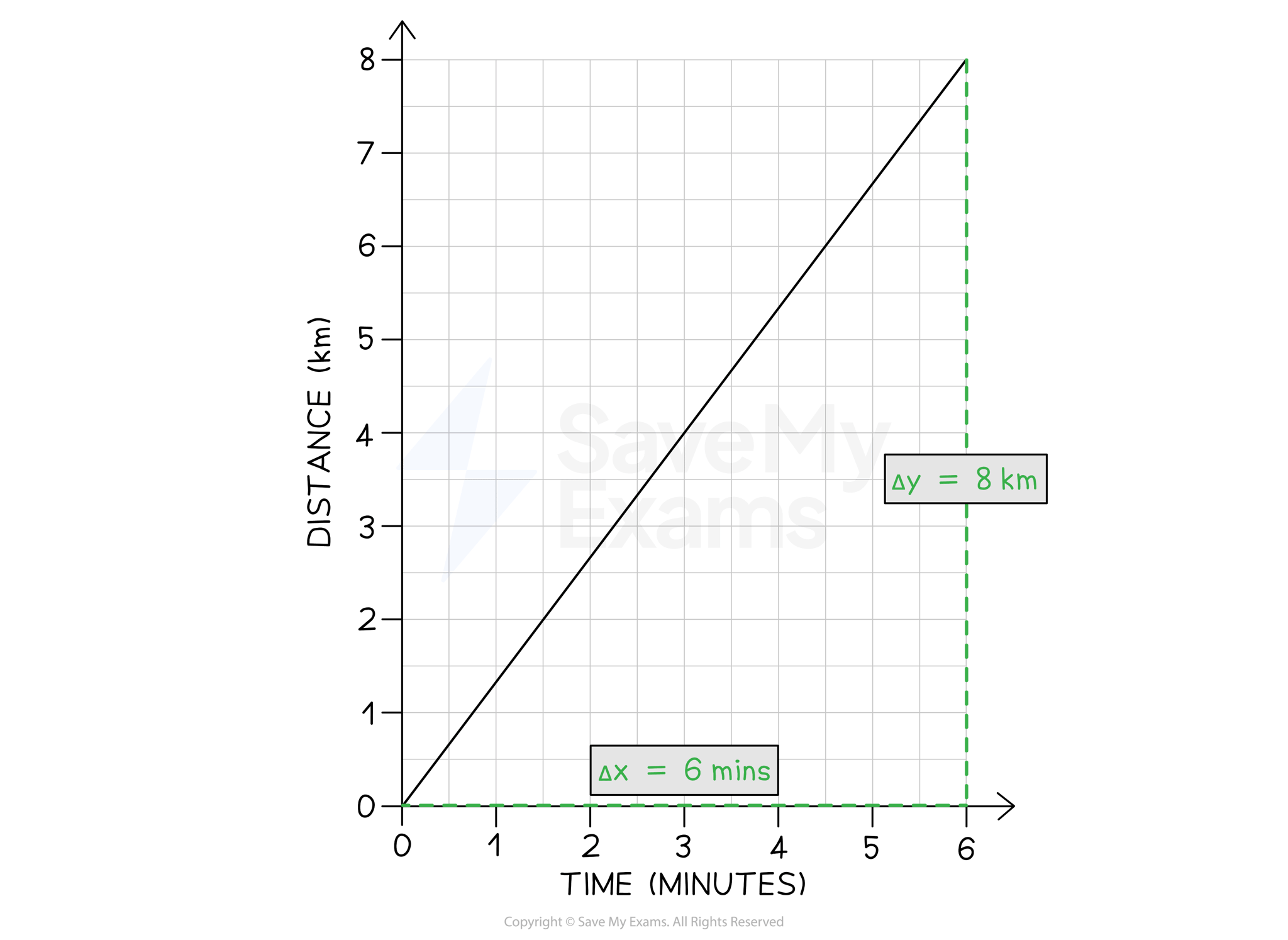
A distance-time graph is drawn below for part of a train journey. The train is travelling at a constant speed.
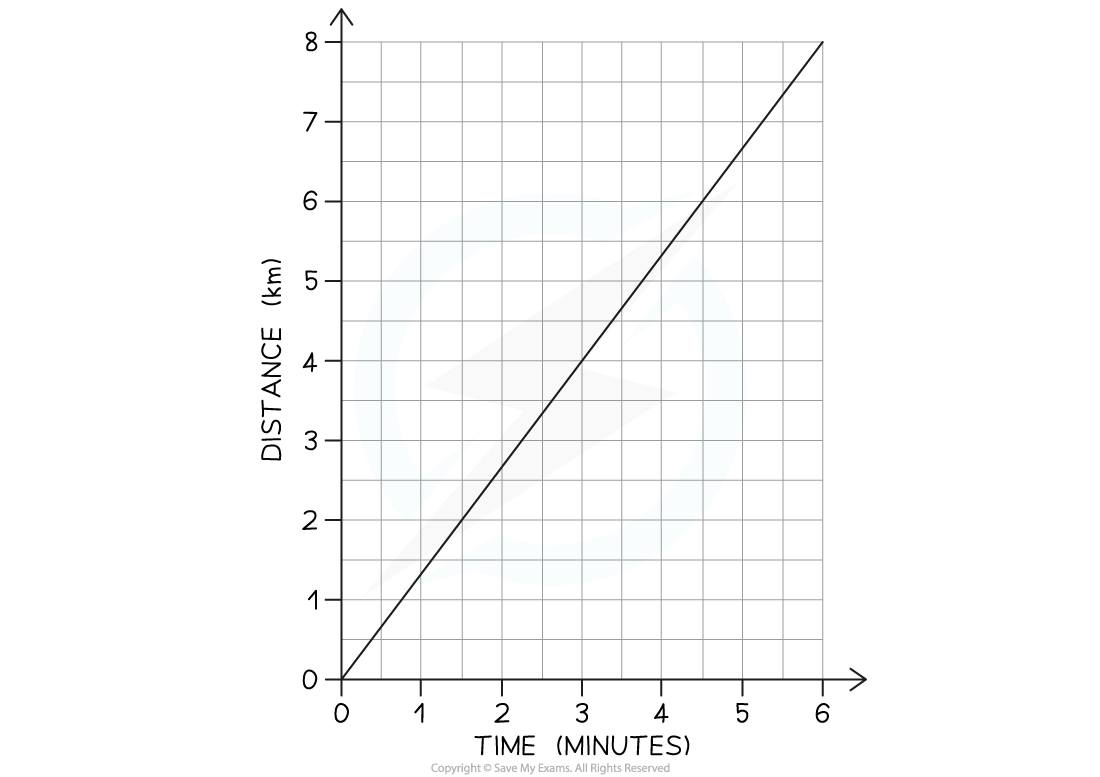
Calculate the speed of the train.
Answer:
Step 1: Draw a large gradient triangle on the graph
The image below shows a large gradient triangle drawn with dashed lines
- and are labelled, using the units as stated on each axis
Step 2: Convert units for distance and time into standard units
The distance travelled = 8 km = 8000 m
The time taken = 6 mins = 360 s
Step 3: State that speed is equal to the gradient of a distance-time graph
The gradient of a distance-time graph is equal to the speed of a moving object:
Step 4: Substitute values in to calculate the speed
format('truetype')%3Bfont-weight%3Anormal%3Bfont-style%3Anormal%3B%7D%3C%2Fstyle%3E%3C%2Fdefs%3E%3Ctext%20font-family%3D%22Times%20New%20Roman%22%20font-size%3D%2218%22%20text-anchor%3D%22middle%22%20x%3D%2220.5%22%20y%3D%2230%22%3Espeed%3C%2Ftext%3E%3Ctext%20font-family%3D%22math17f39f8317fbdb1988ef4c628eb%22%20font-size%3D%2216%22%20text-anchor%3D%22middle%22%20x%3D%2253.5%22%20y%3D%2230%22%3E%3D%3C%2Ftext%3E%3Cline%20stroke%3D%22%23000%22%20stroke-linecap%3D%22square%22%20stroke-width%3D%221%22%20x1%3D%2264.5%22%20x2%3D%22107.5%22%20y1%3D%2223.5%22%20y2%3D%2223.5%22%2F%3E%3Ctext%20font-family%3D%22Times%20New%20Roman%22%20font-size%3D%2218%22%20text-anchor%3D%22middle%22%20x%3D%2288.5%22%20y%3D%2216%22%3E8000%3C%2Ftext%3E%3Ctext%20font-family%3D%22Times%20New%20Roman%22%20font-size%3D%2218%22%20text-anchor%3D%22middle%22%20x%3D%2286.5%22%20y%3D%2241%22%3E360%3C%2Ftext%3E%3C%2Fsvg%3E)
format('truetype')%3Bfont-weight%3Anormal%3Bfont-style%3Anormal%3B%7D%3C%2Fstyle%3E%3C%2Fdefs%3E%3Ctext%20font-family%3D%22Times%20New%20Roman%22%20font-size%3D%2218%22%20text-anchor%3D%22middle%22%20x%3D%2220.5%22%20y%3D%2216%22%3Espeed%3C%2Ftext%3E%3Ctext%20font-family%3D%22math16fd3ea7c25275ea567b7419b28%22%20font-size%3D%2216%22%20text-anchor%3D%22middle%22%20x%3D%2253.5%22%20y%3D%2216%22%3E%3D%3C%2Ftext%3E%3Ctext%20font-family%3D%22Times%20New%20Roman%22%20font-size%3D%2218%22%20text-anchor%3D%22middle%22%20x%3D%2275.5%22%20y%3D%2216%22%3E22%3C%2Ftext%3E%3Ctext%20font-family%3D%22math16fd3ea7c25275ea567b7419b28%22%20font-size%3D%2216%22%20text-anchor%3D%22middle%22%20x%3D%2286.5%22%20y%3D%2216%22%3E.%3C%2Ftext%3E%3Ctext%20font-family%3D%22Times%20New%20Roman%22%20font-size%3D%2218%22%20text-anchor%3D%22middle%22%20x%3D%2293.5%22%20y%3D%2216%22%3E2%3C%2Ftext%3E%3Ctext%20font-family%3D%22Times%20New%20Roman%22%20font-size%3D%2218%22%20text-anchor%3D%22middle%22%20x%3D%22109.5%22%20y%3D%2216%22%3Em%3C%2Ftext%3E%3Ctext%20font-family%3D%22math16fd3ea7c25275ea567b7419b28%22%20font-size%3D%2216%22%20text-anchor%3D%22middle%22%20x%3D%22121.5%22%20y%3D%2216%22%3E%2F%3C%2Ftext%3E%3Ctext%20font-family%3D%22Times%20New%20Roman%22%20font-size%3D%2218%22%20text-anchor%3D%22middle%22%20x%3D%22130.5%22%20y%3D%2216%22%3Es%3C%2Ftext%3E%3C%2Fsvg%3E)
Examiner Tips and Tricks
Use the entire line, where possible, to calculate the gradient. Examiners tend to award credit if they see a large gradient triangle used - so remember to draw these directly on the graph itself!

Unlock more, it's free!
Join the 100,000+ Students that ❤️ Save My Exams
the (exam) results speak for themselves:

Was this revision note helpful?