Atp - GCSE Biology Definition
Reviewed by: Dr Natalie Lawrence
Last updated
Key Takeaways
ATP stands for adenosine triphosphate, a small molecule that carries chemical energy inside cells
Every living cell uses ATP to power biological processes, from muscle contraction to building new proteins
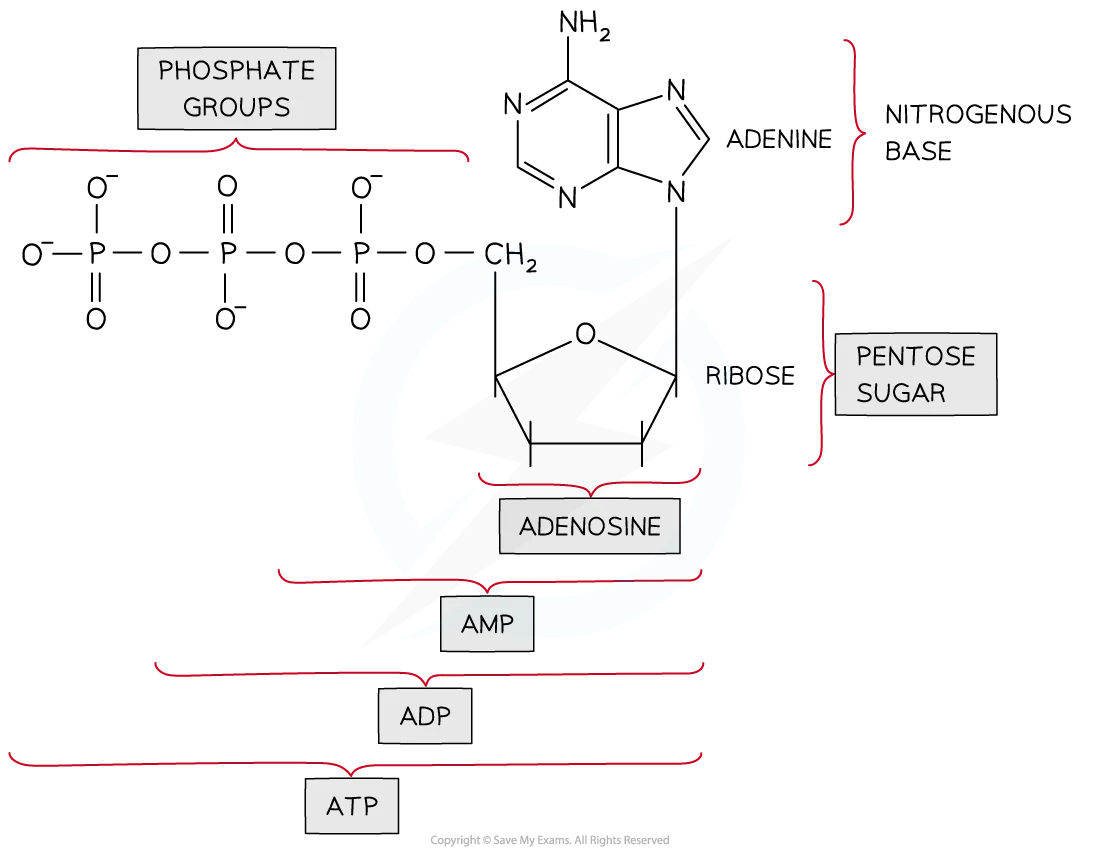
ATP is made of an adenine base, a ribose sugar, and three phosphate groups
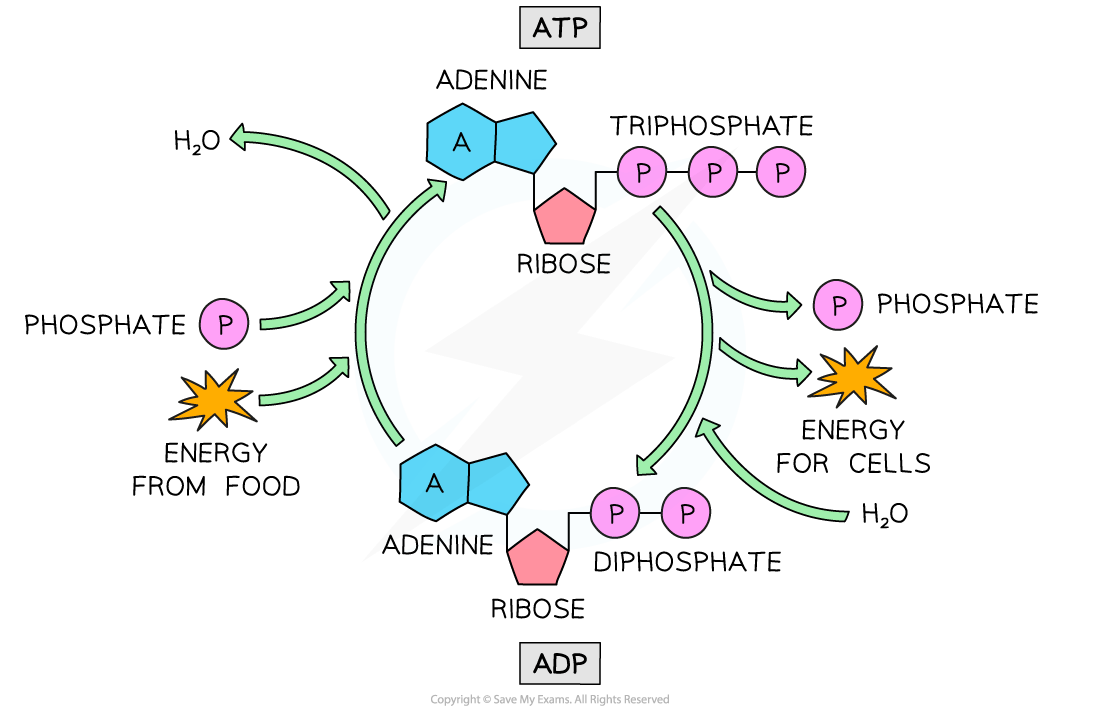
When cells need energy, ATP loses one phosphate group to become ADP (adenosine diphosphate), releasing energy in the process
Your body recycles roughly its own weight in ATP every single day
What Is ATP in Biology?
ATP is the molecule that cells use to transfer energy. Think of it as the currency your cells spend whenever they need to get something done. Just as you'd use money to pay for goods, cells "spend" ATP to fuel the chemical reactions that keep you alive.
Every living organism relies on ATP. Bacteria, plants, fungi, animals all produce and consume it constantly. It's sometimes called the "energy currency of the cell" because it works the same way across virtually all life on Earth.
A common misconception is that ATP is energy. It isn't. ATP carries energy from one place to another inside a cell, a bit like a delivery driver carrying parcels rather than being the parcel itself. The energy is stored in the chemical bonds between its phosphate groups, and released by the hydrolysis of ATP.
The Structure of ATP
So what is ATP made of? The molecule has three parts:
Component | What it is | Role |
|---|---|---|
Adenine | A nitrogen-containing base (also found in DNA) | Forms the "identity" of the molecule |
Ribose | A five-carbon sugar | Connects the base to the phosphate chain |
Three phosphate groups | Three linked phosphate (PO₄) groups | Store energy in the bonds between them |
The adenine and ribose together form a nucleotide-like unit called adenosine. When three phosphate groups are attached to the ribose, and you've got adenosine triphosphate. The bond between the second and third phosphate group is the one broken to release energy.
How ATP Releases Energy
When a cell needs energy, an enzyme breaks the bond between the last two phosphate groups. This is a hydrolysis reaction: water is added, the terminal phosphate snaps off, and energy is released. What's left is ADP (adenosine diphosphate) plus a free inorganic phosphate (Pᵢ).
A useful analogy: ATP works like a rechargeable battery. When it's "charged" (ATP - three phosphates), it's ready to power work. Once it's "spent" (ADP - two phosphates), it gets recharged by having a phosphate group re-attached.
“Imagine ATP production as akin to how power stations use many different fuels to produce electricity. This can then be transported everywhere and easily used for everything in exactly the amounts needed. Without this, the breakdown of large molecules like glucose or lipids would have to be coupled to processes, such as vesicle transport, that need small packets of energy. Totally unworkable!”
– Natalie Lawrence, Biology Tutor.
What Is ATP Used For?
Cells use ATP for almost everything. Here are some examples of biological processes that depend on it:
Active transport moves substances across cell membranes up their concentration gradients. Root hair cells in plants, for example, use ATP to absorb mineral ions from the soil. In animals, ATP powers the absorption of glucose from the gut into the bloodstream.
Nerve impulse transmission relies on ATP to reset the electrical charge across nerve cell membranes after each signal passes through.
Building new molecules like proteins and DNA requires energy. Cells spend ATP to join amino acids together during protein synthesis and to replicate DNA before cell division.
Muscle contraction occurs when protein filaments inside muscle fibres slide over each other. Each tiny movement requires ATP. That's one reason why your muscles fatigue during intense exercise: they're burning through ATP faster than they can remake it.
How Cells Make ATP
Cells produce ATP through three main pathways:
Aerobic respiration generates the most ATP. It takes place mainly in the mitochondria and requires oxygen. Glucose is broken down completely into carbon dioxide and water, releasing enough energy to produce a large number of ATP molecules per glucose molecule.
Anaerobic respiration happens when oxygen runs short, such as during a sprint. In animals, glucose breaks down into lactic acid. In plants and yeast, the products are ethanol and carbon dioxide. Some microorganisms only ever use anaerobic respiration. Anaerobic respiration produces far less ATP than aerobic respiration because glucose isn't fully broken down.
Photophosphorylation happens in plant cells during photosynthesis. Light energy drives the production of ATP inside chloroplasts, which is then used to build glucose from carbon dioxide and water.
The Role of ATP Synthase
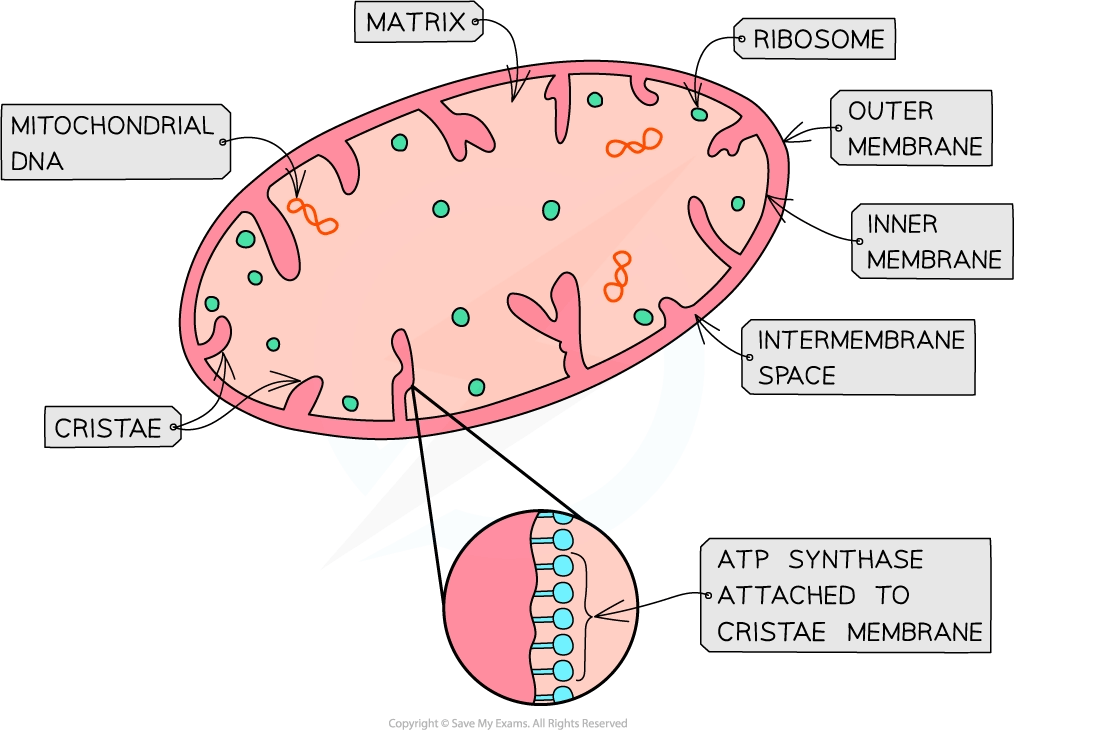
ATP synthase is the enzyme responsible for actually assembling ATP from ADP and Pᵢ in aerobic respiration and photosynthesis. Picture it as a tiny molecular turbine embedded in the inner membrane of a mitochondrion. As hydrogen ions flow through it (driven by the energy from breaking down glucose), the enzyme physically rotates and catalyses the attachment of a phosphate group back onto ADP.
It's one of the most remarkable molecular machines in biology. Without it, cells couldn't regenerate ATP at the speed life demands.
The ATP–ADP Cycle
ATP and ADP exist in a continuous loop. Cells break ATP down to ADP when they need energy, then rebuild ADP back into ATP using energy from respiration (or photosynthesis in plants). This cycle never stops. Even while you're sleeping, your cells are churning through ATP to maintain body temperature, repair tissues, and keep your heart beating.
Here's a striking number: the average human body contains only about 250 grams of ATP at any given moment. Yet over the course of a day, you'll recycle roughly 40 to 70 kilograms of the stuff, close to your own body weight [1]. ATP isn't stockpiled; it's made, used, and remade at extraordinary speed.
If this cycle stalled even briefly, cells would run out of energy within seconds. That's why poisons that block ATP synthase (like cyanide) are so dangerous: they don't destroy ATP directly, but they stop ATP production by blocking aerobic respiration so the cell can no longer regenerate ATP, and shuts down rapidly.
If you're revising aerobic and anaerobic respiration and want to understand exactly how cells produce ATP, Save My Exams has detailed revision notes on Aerobic & Anaerobic Respiration written by experienced teachers and examiners for AQA GCSE, as well as for other courses. The notes break down the equations, energy yields, and key differences between the two pathways, all aligned to your specification.
Want to test your understanding? The AQA GCSE Respiration Exam Questions let you practise with exam-style questions and check your answers against step-by-step mark schemes, and you can find the questions tailored to your course.
Frequently Asked Questions
What does ATP stand for?
ATP stands for adenosine triphosphate: adenosine (adenine + ribose sugar) joined to three (tri-) phosphate groups.
Is ATP a protein or a nucleotide?
ATP isn't a protein. It's a modified nucleotide, closely related to the adenine nucleotides found in DNA and RNA. The difference is that ATP carries three phosphate groups instead of one, and it uses ribose sugar rather than deoxyribose.
Why is ATP called the energy currency of the cell?
Because it works like money in a cell's economy. Energy from food (glucose) is "deposited" into ATP during respiration. Cells then "spend" ATP wherever energy is needed. Like currency, ATP is universal: every cell in every organism uses it.
What happens when ATP runs out?
If ATP production stops, cells can't perform basic functions. Muscles seize up, nerve signals fail, and active transport halts. In practice, complete ATP depletion is fatal within minutes. This is why cyanide poisoning is so rapid: it blocks ATP synthase and halts the regeneration cycle.
How is ATP different from ADP?
ATP has three phosphate groups; ADP has two. When ATP loses its terminal phosphate (through hydrolysis), it becomes ADP and releases energy. ADP is then recycled back to ATP by having a phosphate group re-attached during respiration. The only structural difference is one phosphate group, but that single bond holds the energy cells need to function.
References
[1] Nath, S. (2016) The thermodynamic efficiency of ATP synthesis in oxidative phosphorylation. Biophysical Chemistry, 219, pp. 69–74. (opens in a new tab)
Examiner-written GCSE Biology revision resources that improve your grades 2x
- Written by expert teachers and examiners
- Aligned to exam specifications
- Everything you need to know, and nothing you don’t
Was this glossary entry helpful?

Share this article

 written revision resources that improve your