Key Takeaways
Phagocytosis is the process by which white blood cells called phagocytes engulf and digest pathogens such as bacteria
It's a non-specific immune response, meaning phagocytes will attack any foreign object they encounter, rather than targeting one particular type
Neutrophils are the most abundant phagocytes and act as the body's first responders to infection
After digesting a pathogen, some phagocytes present fragments of it (antigens) on their cell surface, triggering the adaptive or specific immune response
Opsonisation (tagging pathogens with antibodies or complement proteins) makes phagocytosis faster and more efficient
What Is Phagocytosis?
Phagocytosis literally means "cell eating". In biology, it refers to the process where specialised white blood cells engulf and destroy microorganisms that have entered the body.
It's one of the body's first lines of defence against infection. When bacteria slip through a cut in your skin or viruses sneak past the mucus in your nose, phagocytes are patrolling the bloodstream and tissues, ready to act. They don't need to recognise a specific pathogen. They simply detect chemical signals released by damaged cells or invading microorganisms and move towards them.
This makes phagocytosis a non-specific (innate) immune response. Whether the invader is Salmonella from undercooked chicken or Streptococcus from a sore throat, the phagocyte responds the same way: surround it, engulf it, break it down.
Steps of Phagocytosis
The stages of phagocytosis follow a clear sequence. Here's what happens during phagocytosis, step by step:
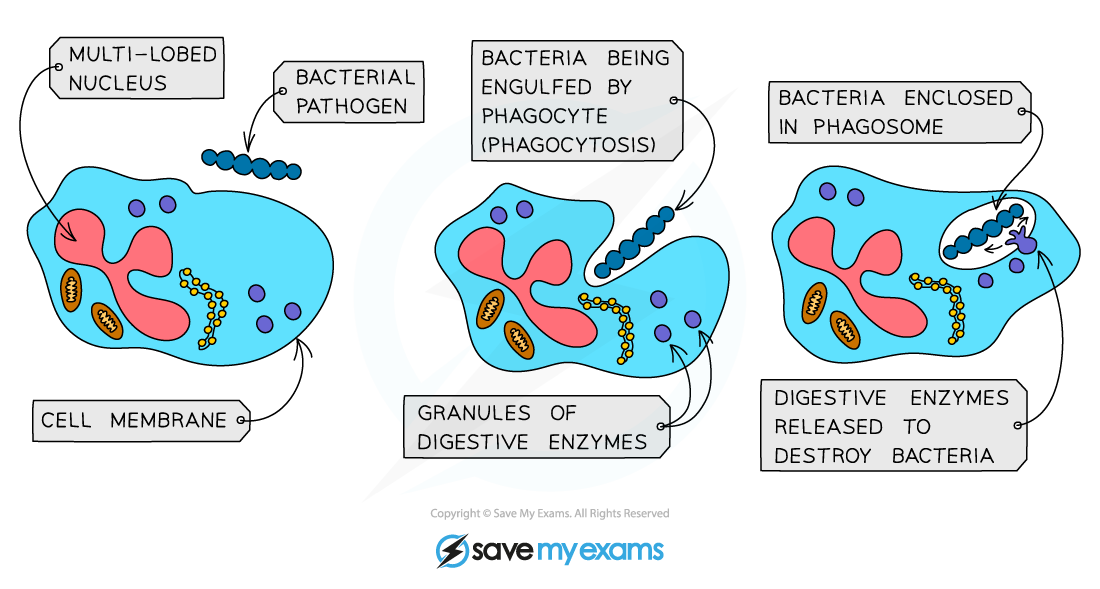
Detection – damaged body cells and pathogens release chemicals. Phagocytes detect these signals and move towards the site of infection via chemotaxis.
Attachment – the phagocyte's cell surface membrane binds to the pathogen. This can happen directly or can be enhanced by opsonisation (see below).
Engulfment – the phagocyte wraps its membrane around the pathogen, pulling it inside the cell. This creates a pocket called a phagosome.
Digestion – the phagosome fuses with a lysosome containing hydrolytic enzymes. These enzymes break down the pathogen into harmless fragments.
Elimination – the waste products are expelled from the cell. In some cases, fragments of the pathogen (antigens) are displayed on the phagocyte's surface. This signals to lymphocytes that a threat has been found, initiating the specific immune response.
The Role of Opsonisation
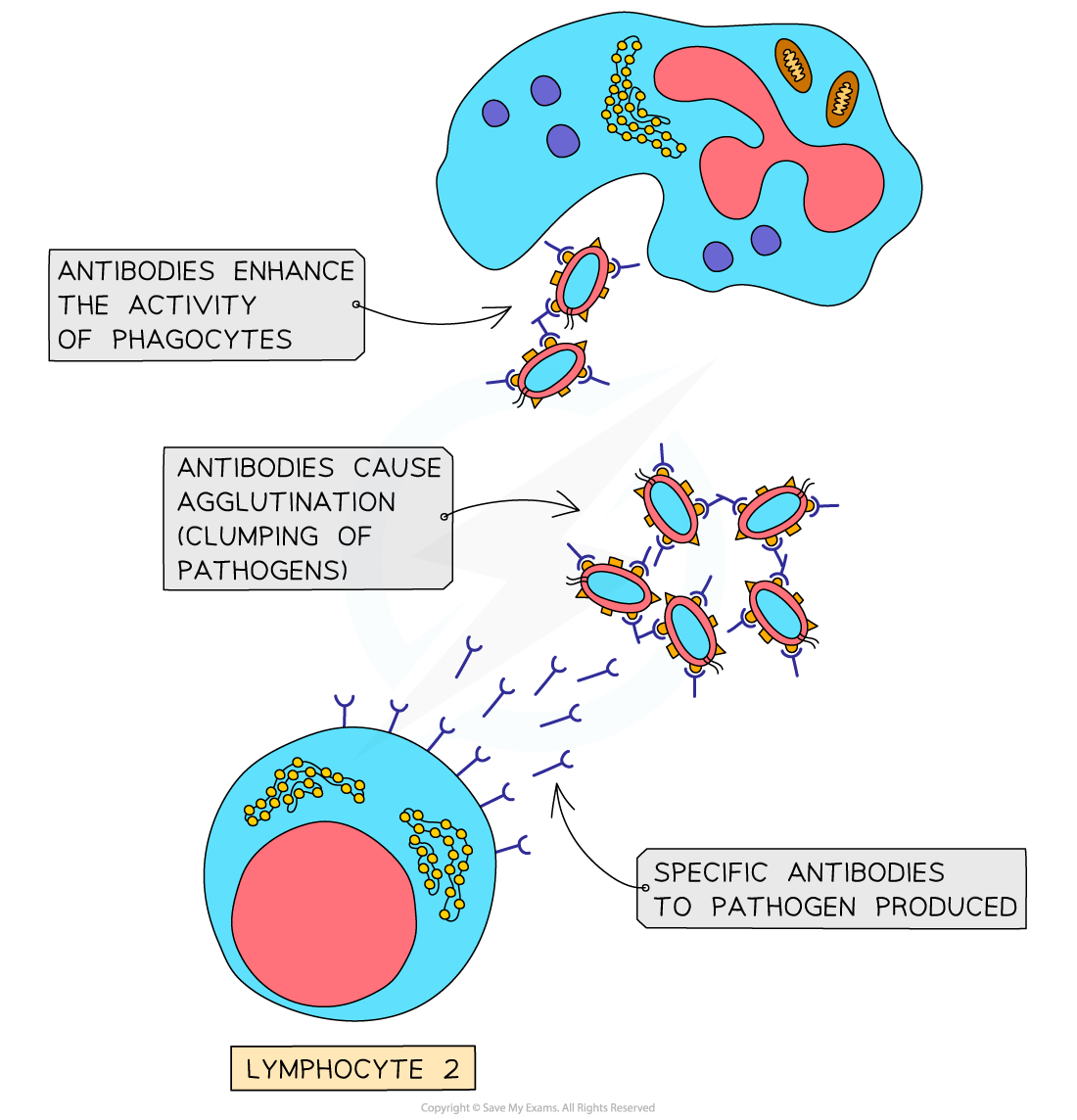
Phagocytes can engulf pathogens on their own, but they work much faster when the target is "tagged" first. This tagging process is called opsonisation.
Antibodies (produced by B-lymphocytes) from the blood bind to the surface of a pathogen. These act as markers that phagocytes recognise quickly. Think of it like putting a flashing collar on your dog when taking it out at night.
Antibodies also cause pathogens to clump together or agglutinate. Clumped pathogens can't move or reproduce easily, making them easy for phagocytes to engulf. This is where innate and adaptive immunity work together: lymphocytes tag, phagocytes destroy.
“If you remember the structure of antibodies: they have a variable region, which is antigen-specific, as well as a constant region, which is the same across all the antibodies. This is the part that the non-specific immune system, particularly the phagocytes, can recognise.”
– Natalie Lawrence, Biology Tutor.
Types of Phagocytic Cells
Not all phagocytes are identical. Three main types play different roles in the immune response:
Cell type | Where it's found | Response speed | Main role |
|---|---|---|---|
Neutrophils | Bloodstream; migrate to infection sites | Very fast (first responders) | Most common phagocyte. Arrives within minutes. Short-lived but large numbers. |
Macrophages | Tissues (liver, lungs, spleen) | Moderate | Longer-lived "big eaters". Clean up debris and dead cells. Act as antigen presenting cells. |
Dendritic cells | Skin, nose, lungs, gut lining | Moderate | Specialised in antigen presentation. Bridge between innate and adaptive immunity. |
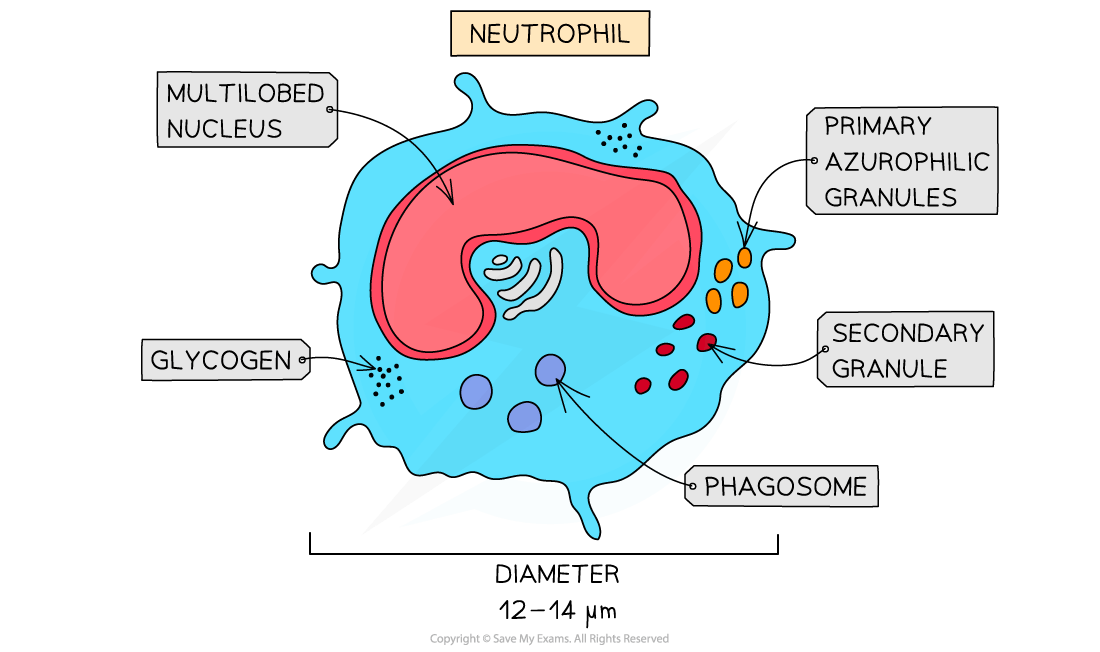
Neutrophil phagocytosis accounts for much of pathogen killing during the early stages of an infection. Under a microscope, neutrophils are easy to spot: they have a multi-lobed nucleus and granular cytoplasm.
Macrophages tend to arrive later but stick around longer and help to activate the specific immune system.
Phagocytosis vs Pinocytosis and Endocytosis
Phagocytosis is one type of endocytosis, the general term for any process where a cell takes material in by enveloping it in its membrane.
Two other types are commonly compared:
Feature | Phagocytosis | Pinocytosis | Receptor-mediated endocytosis |
|---|---|---|---|
What it takes in | Large solid particles (bacteria, dead cells) | Small droplets of fluid and dissolved molecules | Specific molecules (e.g. cholesterol, iron) |
Vesicle size | Large (phagosomes) | Small | Small to medium |
Specificity | Non-specific (engulfs a wide range of particles) | Non-specific | Highly specific (receptors bind target molecules) |
Cells that do it | Mainly phagocytes (neutrophils, macrophages) | Most body cells | Most body cells |
The key difference: phagocytosis targets large, solid particles and is mainly carried out by immune cells. Pinocytosis and receptor-mediated endocytosis happen in nearly all cells and deal with fluids or specific molecules.
Save My Exams has revision notes covering the immune system in detail. These notes are written by experienced teachers and examiners and aligned to your specification. Explore the full topic with our Edexcel GCSE Immune system notes or find the notes specific to your course.
Once you've revised the theory, test yourself with exam-style questions on communicable diseases and the immune response. Each question comes with a step-by-step mark scheme so you can check exactly where the marks are. Try the Communicable Diseases exam questions for AQA GCSE or select the questions for your particular course.
Frequently Asked Questions
What happens to the pathogen after phagocytosis?
The pathogen is broken down by hydrolytic enzymes inside the phagocyte. Once digested, the waste products are expelled from the cell. Some pathogen fragments (antigens) may be displayed on the phagocyte's surface so that lymphocytes can recognise the threat and mount a targeted immune response.
Is phagocytosis part of the innate or adaptive immune response?
Phagocytosis is part of the innate (non-specific) immune response. Phagocytes don't distinguish between different types of pathogen; they attack anything foreign. But phagocytosis connects to the adaptive response too, because macrophages and dendritic cells present antigens to lymphocytes after digestion.
Which type of white blood cell is the main phagocyte?
Neutrophils are the most common phagocytes in the human body. They're the first to arrive at an infection site and attack in large numbers. Macrophages and dendritic cells also carry out phagocytosis but have additional roles in antigen presentation and tissue repair.
How does phagocytosis lead to antigen presentation?
After a macrophage or dendritic cell digests a pathogen, it doesn't just discard all the fragments. It places some of the pathogen's antigens on its own surface using special molecules. These displayed antigens act as a signal to T-lymphocytes, which then activate B-lymphocytes to produce specific antibodies. This is how a non-specific process triggers a specific, targeted defence.
Can phagocytosis fail or be blocked by pathogens?
Some pathogens have evolved ways to avoid phagocytosis. Mycobacterium tuberculosis (the bacterium that causes TB) can survive inside phagocytes by preventing the phagosome from fusing with the lysosome. Other bacteria produce thick capsules that make attachment difficult. These evasion strategies are one reason certain infections are harder to fight off without medical treatment.
Examiner-written GCSE Biology revision resources that improve your grades 2x
- Written by expert teachers and examiners
- Aligned to exam specifications
- Everything you need to know, and nothing you don’t
Was this glossary entry helpful?


Share this article

 written revision resources that improve your