Combustion (Edexcel IGCSE Science (Double Award): Chemistry): Revision Note
Exam code: 4SD0

Combustion of fuels
The combustion of fossil fuels
A fuel is a substance that, when burned, releases heat energy (exothermic reaction)
The combustion of fossil fuels is the major source of atmospheric pollution
Fossil fuels include: coal, oil, natural gas, oil shales and tar sands
Non-renewable fossil fuels are obtained from crude oil by fractional distillation
Petrol is used as a fuel in cars, kerosene is used to fuel aircraft and diesel oil is used as a fuel in some cars, trucks and heavy vehicles such as tanks and trains
Coal is used in power stations and also steel production
Natural gas consists mainly of methane, CH4
There are finite amounts of fossil fuels and they all contribute to pollution and global warming
All these fuels contain carbon, hydrogen and small quantities of sulfur
Combustion products
The burning of fossil fuels releases the gases carbon dioxide, carbon monoxide, oxides of nitrogen and oxides of sulfur
In addition incomplete combustion of the fuels gives rise to unburned hydrocarbons and carbon particulates
When the fuel is a hydrocarbon then water and carbon dioxide are the products formed
Hydrocarbon compounds undergo complete and incomplete combustion
Complete combustion
Complete combustion occurs when there is excess oxygen
For example, the combustion equation for propane is:
C3H8 + 5O2 → 3CO2 + 4H2O
Incomplete combustion
Incomplete combustion occurs when there is insufficient oxygen to burn
It occurs in some appliances such as boilers and stoves as well as in internal combustion engines
The products of these reactions are unburnt fuel (soot), carbon monoxide and water
Methane for example undergoes incomplete combustion in an oxygen-poor environment:
2CH4 + 3O2→ 2CO + 4H2O
CH4 + O2→ C + 2H2O
Examiner Tips and Tricks
You don't need to learn these equations, but you do need to be able to predict the products of combustion given the composition of the fuel and the conditions.
Carbon monoxide
Why is carbon monoxide dangerous?
Carbon monoxide (CO) is a highly poisonous gas produced during the incomplete combustion of carbon-containing fuels
It is particularly dangerous because it is:
Odourless
Colorless
Tasteless
This means it can be inhaled without a person realising it is present
How carbon monoxide affects the body
The basic explanation
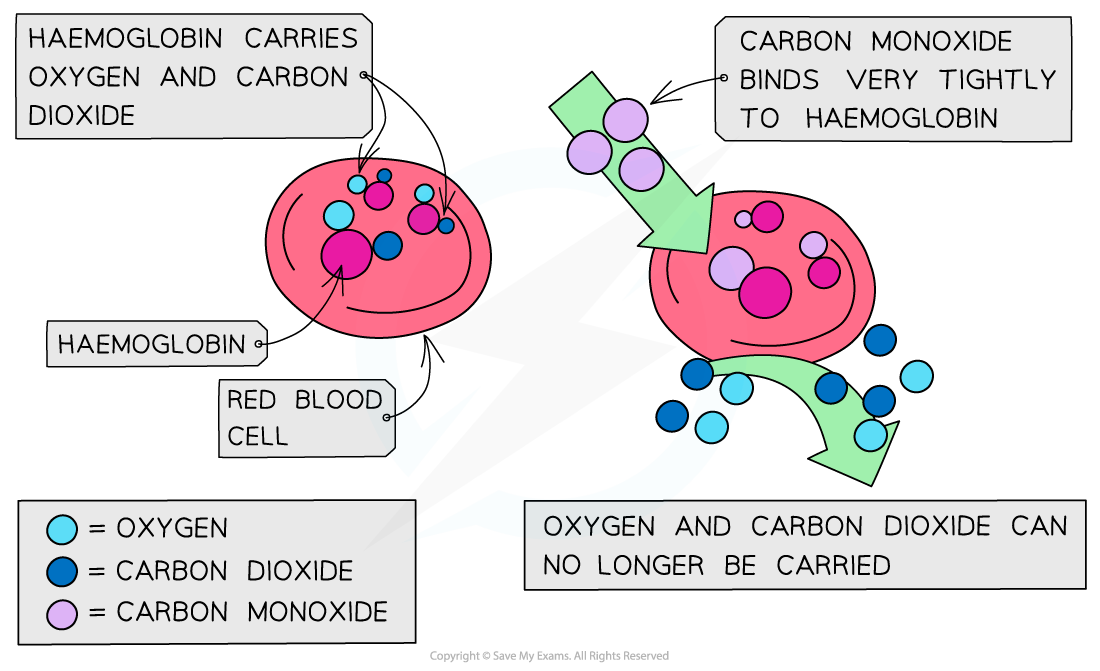
When inhaled, carbon monoxide is absorbed from the lungs into the red blood cells
It binds tightly to the molecules that normally transport oxygen
This means the blood's capacity to carry oxygen around the body is significantly reduced
This lack of oxygen supply to tissues and organs leads to symptoms such as:
Headaches and dizziness
Nausea and vomiting
Shortness of breath
Loss of consciousness and, in high concentrations, death
The detailed explanation
Inside red blood cells, haemoglobin is responsible for binding to oxygen in the lungs and transporting it to the body's tissues
Carbon monoxide can also bind to haemoglobin
However, haemoglobin has a much higher affinity for carbon monoxide than for oxygen
It binds around 200-250 times more strongly
This means CO binds preferentially and irreversibly to haemoglobin
This forms a stable compound called carboxyhaemoglobin
This process prevents haemoglobin molecules from binding to oxygen and transporting it around the body
Examiner Tips and Tricks
The exam-board specification clearly talks about how carbon monoxide reduces the capacity of blood to transport oxygen
This is the key marking point that examiners look for
The specfication also states that "references to haemoglobin are not required"
However, recent mark schemes show that it is acceptable to refer to haemoglobin
But, you must be sure to state:
Carbon monoxide binds irreversibly to haemoglobin in red blood cells
This reduces the amount of oxygen being carried around the body

Unlock more, it's free!
Join the 100,000+ Students that ❤️ Save My Exams
the (exam) results speak for themselves:

Was this revision note helpful?
Build on this topic