Oxygen Debt - GCSE Biology Definition
Reviewed by: Dr Natalie Lawrence
Last updated
Key Takeaways
Oxygen debt is the extra oxygen your body needs after intense exercise to break down lactic acid and restore normal conditions
It happens when your muscles switch to anaerobic respiration because oxygen supply can't keep up with demand
Lactic acid builds up in muscles during this process, causing fatigue and soreness
Your body repays the debt through heavy breathing after exercise, while the liver converts lactic acid back into useful substances
Scientists now prefer the term EPOC (Excess Post-exercise Oxygen Consumption), which covers the full recovery process beyond just lactic acid removal
Oxygen Debt Definition
Oxygen debt is the amount of extra oxygen your body must take in after exercise to recover from a period of anaerobic respiration. During intense physical activity, your muscles demand energy faster than your heart and lungs can deliver oxygen. Your body bridges that gap by respiring without oxygen, which produces lactic acid as a byproduct.
Once you stop exercising, you don't immediately return to a resting state. Your breathing stays heavy and your heart rate remains elevated. That's your body working to "repay" the oxygen it borrowed. The “oxygen debt” refers specifically to this recovery period and the additional oxygen consumed during it.
What Does Oxygen Debt Mean in Biology?
In biology, the concept of an oxygen debt sits within the topic of cellular respiration. Your cells normally break down glucose using oxygen (aerobic respiration) to release energy. This happens in the mitochondria of your cells and produces carbon dioxide and water as waste products.
When oxygen runs short, cells switch to anaerobic respiration. This pathway still breaks down glucose for energy, but it's incomplete. Instead of carbon dioxide and water, the process produces lactic acid. The "debt" is the oxygen your body still requires to deal with that lactic acid and restore everything to normal.
What Causes Oxygen Debt?
Imagine sprinting for a bus. Within seconds, your leg muscles need far more energy than a gentle walk requires. Here's the sequence of events:
Your muscles demand a rapid increase in energy (ATP)
Your heart and lungs can't deliver oxygen fast enough to meet that demand
Muscle cells switch from aerobic to anaerobic respiration
Glucose is broken down without oxygen, releasing energy but producing lactic acid
Lactic acid accumulates in the muscles, lowering pH and causing that burning feeling
The longer and harder the exercise, the larger the oxygen debt becomes
The tipping point varies between people. A trained athlete's cardiovascular system delivers oxygen more efficiently, so they can exercise harder before switching to anaerobic respiration. Someone less fit hits that threshold sooner.
The Oxygen Debt Equation
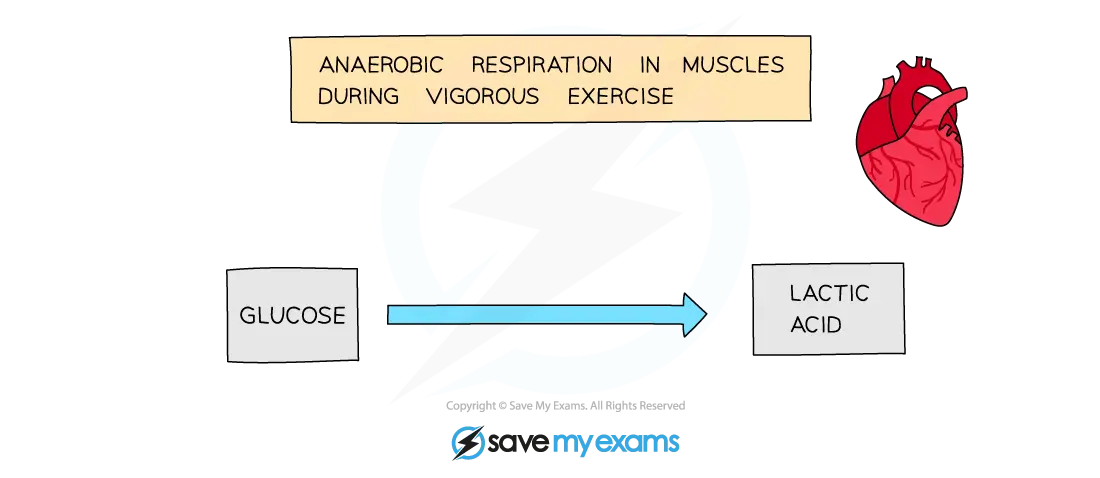
The word equation for anaerobic respiration in humans makes the "missing oxygen" concept clear:
Respiration Type | Equation |
|---|---|
Aerobic | glucose + oxygen → carbon dioxide + water (+ energy) |
Anaerobic | glucose → lactic acid (+ energy) |
Notice that oxygen is absent from the anaerobic equation. Less energy is released per glucose molecule too, which is why anaerobic respiration is less efficient. The lactic acid left behind is essentially "unfinished business" that oxygen must later resolve.
How Does Your Body Clear the Oxygen Debt?
After exercise, your body launches a recovery process. You'll notice the signs straight away: panting, a pounding heart, and flushed skin. All of these help deliver extra oxygen to where it's needed.
The lactic acid produced during exercise doesn't just disappear. Blood transports it from the muscles to the liver. There, oxygen is used to convert lactic acid back into glucose through a process called the Cori cycle. Some of that glucose gets stored as glycogen for future use, while some is fully oxidised into carbon dioxide and water.
Your breathing rate stays elevated until the debt is fully repaid. For a short sprint, this might take a few minutes. After prolonged high-intensity exercise, full recovery can take longer.
If you're studying respiration and oxygen debt for your exam specification, Save My Exams offers detailed revision notes on this topic, written by qualified teachers. Our AQA GCSE Oxygen Debt & Anaerobic Exercise notes, for example, walk through the process step by step with exam-focused explanations.
Oxygen Debt in Different Types of Exercise
Not all exercise creates the same oxygen debt. The type, intensity, and duration all matter.
Exercise Type | Oxygen Debt | Why |
|---|---|---|
Sprinting (100m) | Large | Near-maximum effort; almost entirely anaerobic |
Interval training (HIIT) | Moderate to large | Repeated bursts of anaerobic work with short recovery windows |
Steady-state jogging | Small | Mostly aerobic; oxygen supply keeps pace with demand |
Marathon running | Small overall | Sustained aerobic effort, though sprinting at the finish adds a brief anaerobic burst |
A 100m sprinter might accumulate a significant oxygen debt in under 12 seconds. A marathon runner, by contrast, stays mostly aerobic for hours. The sprinter's recovery breathing will be far more dramatic, even though the marathon runner exercised for longer.
Interval training sits in an interesting middle ground. Each high-intensity burst creates a small oxygen debt, but the rest periods aren't always long enough to fully repay it before the next burst. This is partly why HIIT training is so effective at improving cardiovascular fitness: it repeatedly challenges the body's oxygen delivery system.
EPOC: The Modern Understanding of Oxygen Debt
The term "oxygen debt" was coined by physiologist A.V. Hill in the 1920s [1]. His original model was straightforward: anaerobic exercise creates lactic acid, and extra oxygen after exercise removes it. Simple.
Scientists have since discovered that post-exercise recovery involves much more than lactic acid removal. The modern term is EPOC (Excess Post-exercise Oxygen Consumption), and it accounts for several processes:
Replenishing ATP and creatine phosphate stores in muscles
Reloading myoglobin with oxygen (myoglobin stores oxygen within muscle fibres)
Elevated heart rate and breathing gradually returning to resting levels
Increased body temperature requiring energy to cool down
Lactic acid conversion in the liver (the original "oxygen debt" component)
EPOC has two phases. The fast component (lasting a few minutes) restores ATP and creatine phosphate. The slow component (which can last up to 48 hours after very intense exercise, but usually under 24 hours) handles lactic acid conversion, protein repair, and the gradual return of body temperature and hormone levels to baseline [2].
You'll still see "oxygen debt" used widely in textbooks and classrooms. It's not wrong, but it tells only part of the story. EPOC gives a fuller picture of what your body actually does to recover.
For a deeper look at aerobic and anaerobic respiration and how they connect to oxygen debt, the Save My Exams revision notes break down the key concepts with clear diagrams and examiner tips. They are tailored closely to the exam specification, like our AQA GCSE Respiration notes, for example.
“It’s very easy to confuse the oxygen debt with EPOC. I tell my students to remember that an oxygen debt is the oxygen you didn’t use during the exercise, but have to catch up on, while the EPOC includes that as well as the increased respiratory requirements resulting from the effects of the training.”
– Natalie Lawrence, Biology Tutor
Frequently Asked Questions
How long does it take to repay an oxygen debt?
It depends on the intensity and duration of the exercise. A short sprint might require 2 to 3 minutes of heavy breathing to recover. After prolonged high-intensity exercise, the full EPOC process can take up to 48 hours, though the most noticeable effects (panting, elevated heart rate) subside within 10 to 15 minutes.
What is the difference between oxygen debt and oxygen deficit?
Oxygen deficit occurs during exercise. It's the gap between the oxygen your muscles need and the oxygen your lungs can actually supply in that moment. Oxygen debt (or EPOC) occurs after exercise. It's the extra oxygen your body consumes to recover and clear the byproducts of anaerobic respiration.
Can you reduce oxygen debt by training?
Yes. Regular cardiovascular training improves your heart's stroke volume, increases capillary density in muscles, and raises your anaerobic threshold. This means your body can deliver oxygen more efficiently, so you rely less on anaerobic respiration during the same intensity of exercise. You'll still accumulate oxygen debt at maximum effort, but the threshold shifts higher.
Why do you breathe heavily after exercise?
Heavy breathing delivers the extra oxygen needed to repay the oxygen debt. Your body uses this oxygen to convert lactic acid in the liver, replenish ATP and creatine phosphate stores, and reload myoglobin in muscle fibres. Your breathing rate stays elevated until these recovery processes are complete.
What happens if oxygen debt is not repaid?
Your body will always repay the debt eventually, as long as you rest. You can't skip the process. If you try to continue exercising at high intensity without adequate recovery, lactic acid continues to accumulate, muscle fatigue worsens, and performance drops sharply. In extreme cases, severe lactic acidosis can cause nausea, cramping, and muscle damage.
References
[1] Hale, Tudor. History of developments in sport and exercise physiology: A. V. Hill, maximal oxygen uptake, and oxygen debt. (opens in a new tab)J Sports Sci (opens in a new tab). 2008 15;26(4):365-400 (opens in a new tab).
[2] Bahr R, Sejersted OM. Effect of intensity of exercise on excess postexercise O2 consumption. Metabolism. 1991 Aug;40(8):836-41 (opens in a new tab)
Examiner-written GCSE Biology revision resources that improve your grades 2x
- Written by expert teachers and examiners
- Aligned to exam specifications
- Everything you need to know, and nothing you don’t
Was this glossary entry helpful?


Share this article
 written revision resources that improve your