Key Takeaways
Palisade mesophyll is a layer of tightly packed, column-shaped cells sitting just below the upper epidermis of a leaf
The main function of palisade mesophyll is to carry out the majority of photosynthesis in a leaf
Each palisade mesophyll cell contains a high density of chloroplasts to absorb as much light energy as possible
Palisade mesophyll adaptations include an elongated shape, thin cell walls, and positioning near the upper leaf surface
What Is Palisade Mesophyll?
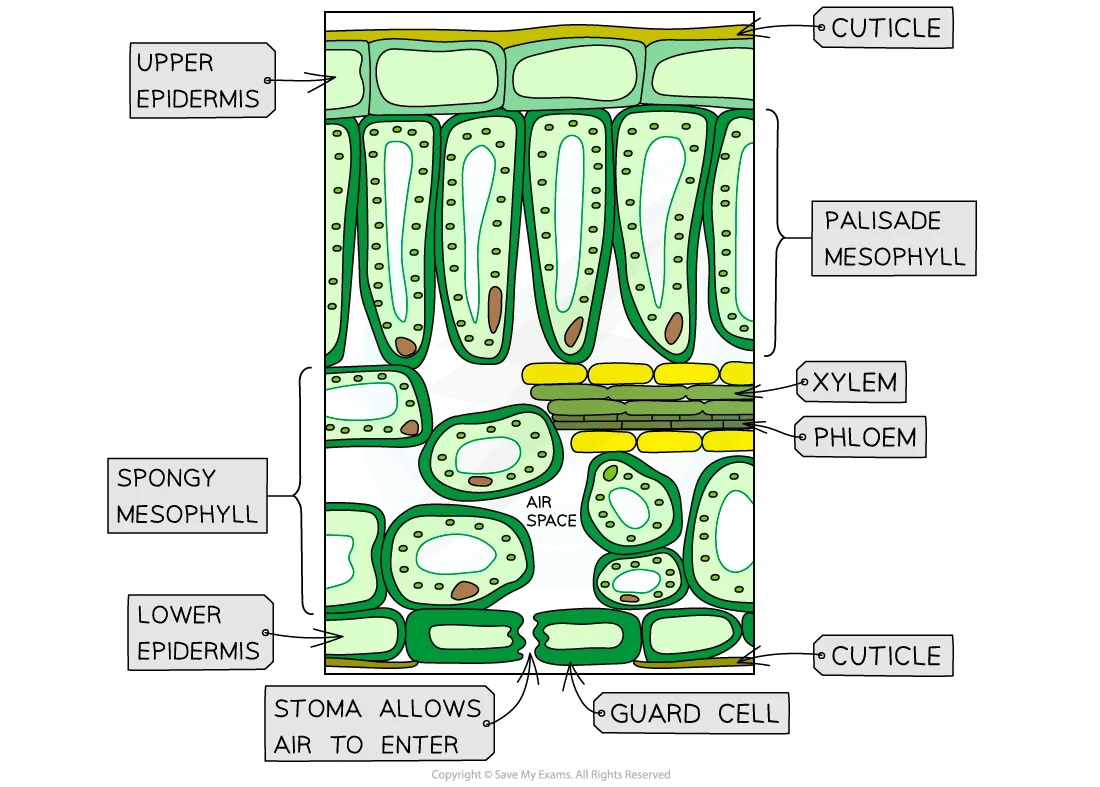
Palisade mesophyll is a layer of specialised plant cells found in leaves, sitting directly beneath the upper epidermis. The cells are elongated and arranged in tightly packed columns. If you've looked at a leaf cross-section under a microscope, you can clearly see this row of tall, rectangular cells.
These cells are packed with chloroplasts, the organelles that convert light energy into chemical energy, producing glucose and oxygen. Sitting close to the leaf’s upper surface means the palisade mesophyll receives the most sunlight and is the main site of photosynthesis.
Palisade Mesophyll Structure
Each palisade mesophyll cell has a distinctive elongated, column-like shape. This shape lets cells pack tightly together, which maximises the number of cells exposed to sunlight.
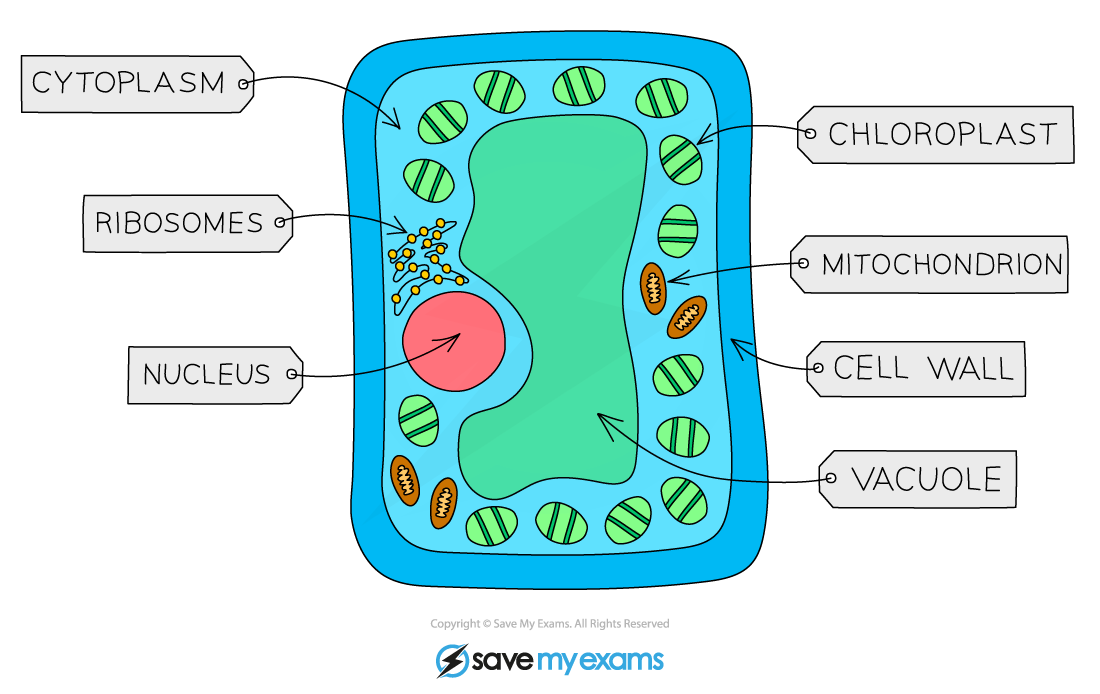
A typical palisade cell contains several key structures:
Structure | Role in the palisade cell |
|---|---|
Many chloroplasts | Contain chlorophyll that absorbs light energy for photosynthesis |
Large central vacuole | Pushes chloroplasts to the edges of the cell, closer to incoming light |
Thin cell membrane and cell wall | Allow gases and water to move through quickly, and allow more light to penetrate. |
Cytoplasm | Contains enzymes needed for metabolic reactions |
“Remembering the purpose of specific cell structures makes them easier to remember. For example, by taking up most of the cell's interior, the large central vacuole forces chloroplasts into a thin layer around the cell's edges. This means more chloroplasts sit in the path of incoming light, which boosts the rate of photosynthesis.”
– Natalie Lawrence, Biology Tutor.
Palisade Mesophyll Adaptations
Palisade mesophyll cells have several adaptations that make them highly efficient at photosynthesis:
High chloroplast density – each cell contains many chloroplasts, providing a large quantity of chlorophyll for absorbing light energy
Elongated, columnar shape – allows cells to fit tightly together in rows, maximising the number of cells exposed to incoming light
Thin cell walls – keep diffusion distances short, so carbon dioxide can reach the chloroplasts quickly
Position near the upper epidermis – the upper epidermis is thin and transparent, allowing light to pass straight through to the palisade layer below
Large central vacuole – pushes chloroplasts to the cell periphery, reducing the distance light must travel to reach them
These adaptations work together. The cells' position catches light early, their shape packs them efficiently, and their internal structure ensures chloroplasts are always where the light is strongest.
If you want to explore how these adaptations fit into the broader leaf structure, Save My Exams has detailed AQA GCSE revision notes covering Plant Tissues, written by experienced teachers and examiners, as well as notes for other course specifications. They break down each tissue layer with diagrams and specification-aligned explanations.
Palisade Mesophyll vs Spongy Mesophyll
The palisade and spongy mesophyll layers work as a team, but they're built for different jobs.
Feature | Palisade mesophyll | Spongy mesophyll |
|---|---|---|
Cell shape | Elongated, column-like | Irregular, loosely rounded |
Packing | Tightly packed with few air spaces | Loosely arranged with large air spaces |
Chloroplast density | Very high | Lower |
Primary function | Photosynthesis | Gas exchange and some photosynthesis |
Position in leaf | Upper layer, below epidermis | Lower layer, above stomata |
The spongy mesophyll's air spaces serve a clear purpose. They create a large surface area for gases like carbon dioxide and oxygen to move between the cells and the stomata on the leaf's underside. Carbon dioxide enters through the stomata, diffuses through the air spaces, and reaches the palisade cells above for photosynthesis.
For a closer look at how the palisade and spongy layers are part of a complete leaf, check out Save My Exams' WJEC GCSE revision notes on Structure of a Leaf. You can also find the notes written specifically for your course. These notes include labelled diagrams covering every leaf layer from cuticle to lower epidermis.
Frequently Asked Questions
Why do palisade mesophyll cells have so many chloroplasts?
Chloroplasts are the organelles where photosynthesis happens. The more chloroplasts a cell has, the more light energy it can capture and convert into glucose. Palisade cells sit at the top of the leaf where light is strongest, so having a high density of chloroplasts lets them make the most of that position.
What happens to light that passes through the palisade mesophyll layer?
Not all light gets absorbed by the palisade cells. Some passes through to the spongy mesophyll below, which also contains chloroplasts – just fewer of them. The spongy layer can still carry out photosynthesis, but at a lower rate. Any remaining light may be reflected or absorbed by other tissues.
How does the shape of palisade cells help photosynthesis?
The tall, columnar shape serves two purposes. It allows cells to pack closely together, maximising the number of cells per unit area of leaf. It also channels light downwards through the cell, increasing the chance that chloroplasts will absorb it. A flatter cell shape would mean fewer cells in the same space.
Examiner-written GCSE Biology revision resources that improve your grades 2x
- Written by expert teachers and examiners
- Aligned to exam specifications
- Everything you need to know, and nothing you don’t

Was this glossary entry helpful?


Share this article
 written revision resources that improve your