Changing Magnitude & Direction of Force (AQA GCSE Design & Technology): Revision Note
Exam code: 8552

Using levers
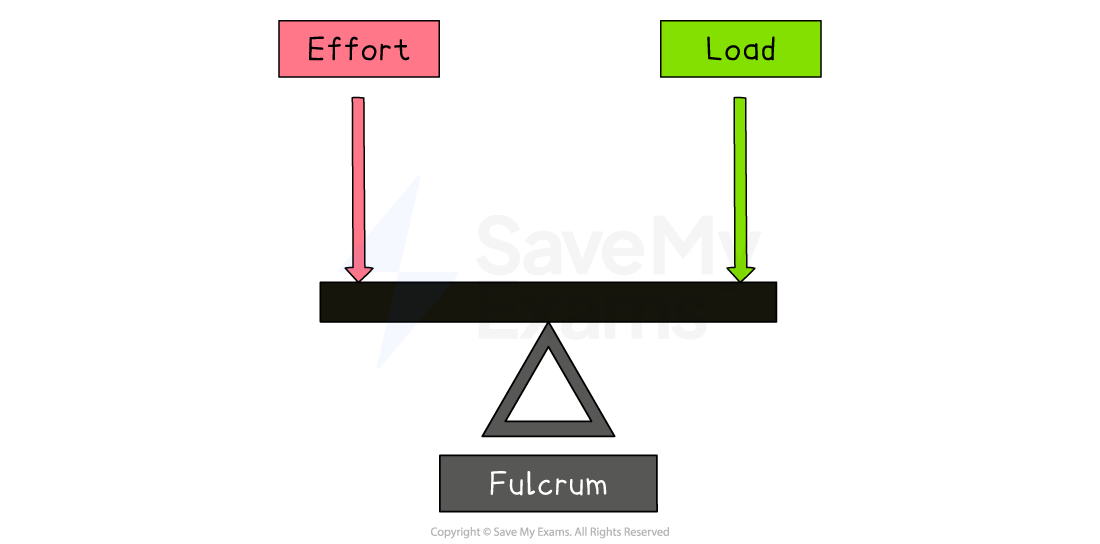
First-order lever
Fulcrum is positioned between the load and effort
Examples: seesaw, scissors/pliers, crowbar
A longer effort distance makes lifting the load easier
A shorter effort distance makes lifting the load harder
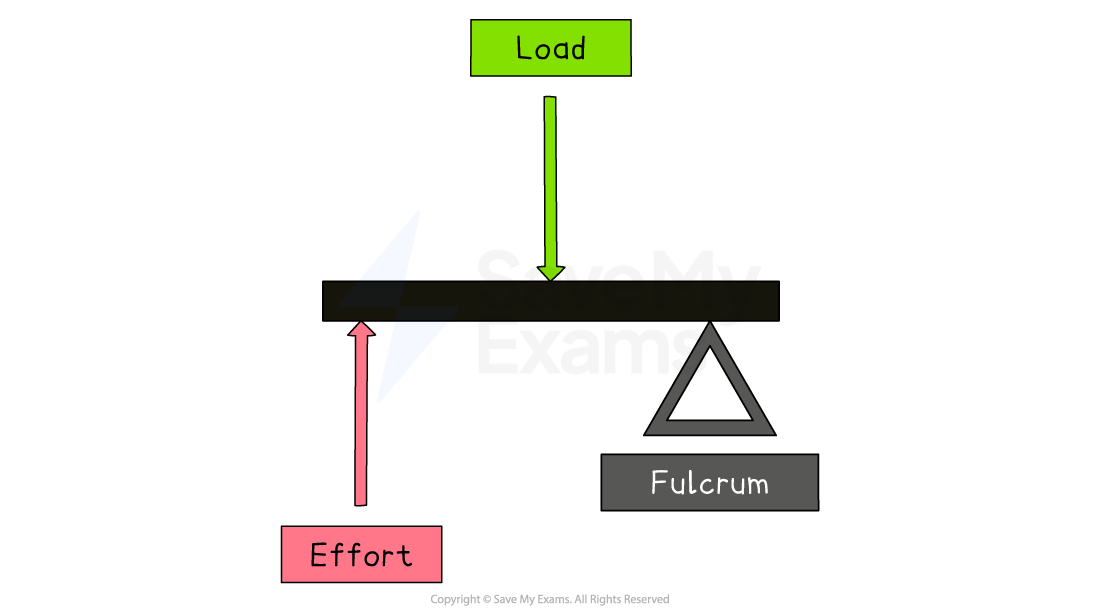
Second-order lever
The load is positioned between the fulcrum and effort
Examples: wheelbarrow, nutcracker, bottle opener
Increased effort-to-load distance provides greater force on the load
Decreased effort-to-load distance provides a lesser force on the load
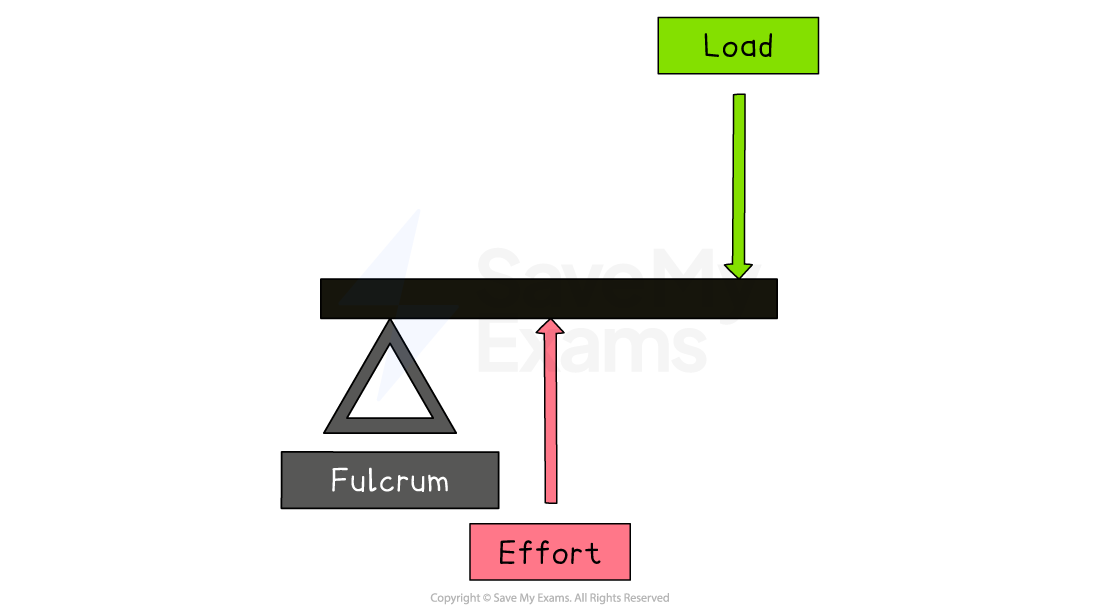
Third-order lever
Effort is positioned between the fulcrum and load
Examples: tweezers, fishing rod, shovel
Increased effort-to-fulcrum distance provides greater force on the load
Decreased effort-to-fulcrum distance provides lesser force on the load
Using linkages
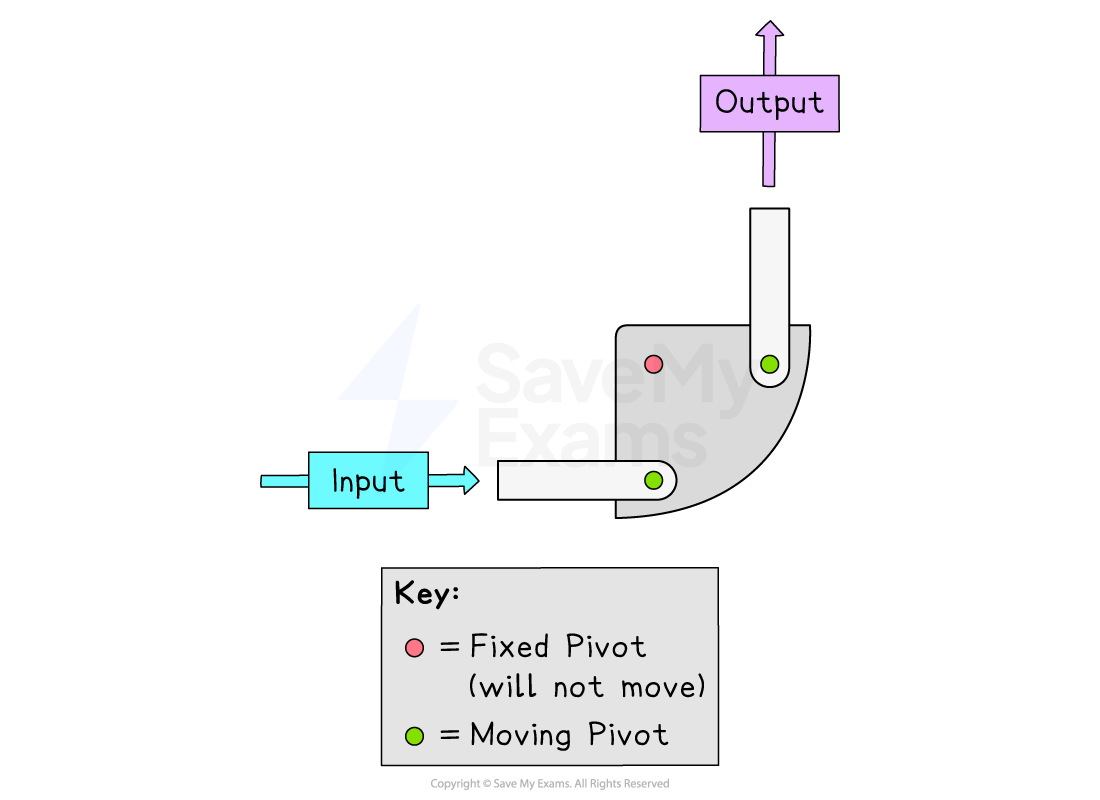
Bell cranks
A two-arm linkage joined by a pivot at an angle
Designed to change the direction of force or movement
Arm length and angle can be adjusted for varied results
Uses: vehicle steering, bicycle brakes, window mechanisms
Push/pull linkages
Linkages which transfer straight-line force
Push involves compression; pull involves tension
Direction and force magnitude can be adjusted via layout and length
Uses: bicycle and car brakes, mechanical toys, door handles, garden machinery
Using rotary systems
Cams and followers
A cam is a rotating cylinder or disc which moves a follower
A follower is a straight component which is moved by the cam
Cams convert rotary motion into linear or reciprocating motion
Circular cam: produces steady, even motion
Pear cam: produces rapid rise and fall with a steady base
Snail-shell cam: produces sudden drops with slight rises (requires a roller)
Uses: car engines, sewing machines
Simple gear trains
A set of two or more gears which rotate in line
Gears have teeth that "mesh" together, turning in opposite directions, which transfers motion
Gear ratio is calculated from the tooth count relationship
Example: 12 teeth ÷ 6 teeth = 2:1 ratio

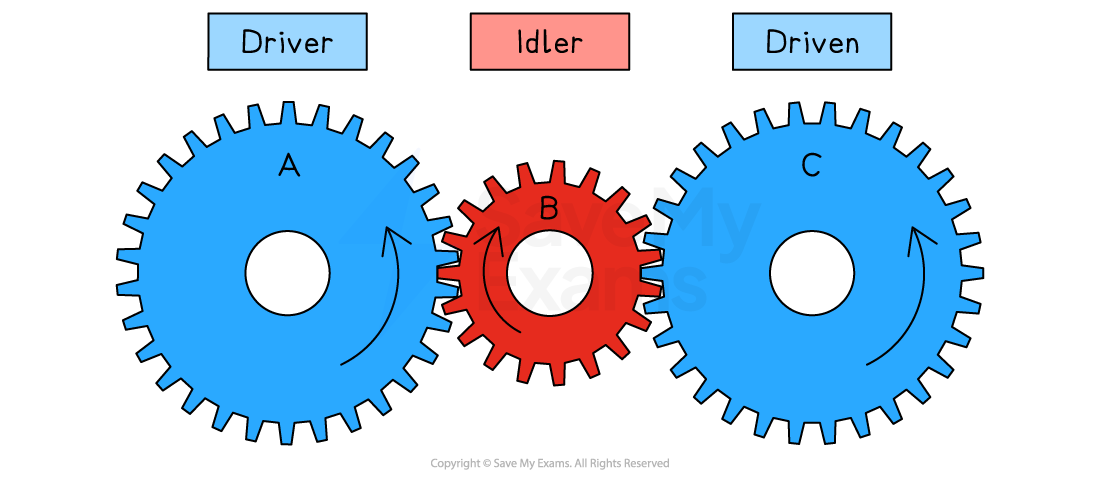
Driver gear: initiates movement (typically connected to a motor)
Idler gear: adding this between the driver gear and another gear reverses the direction again
It rotates in the opposite direction to the driver so the final gear turns in the same direction as the driver gear
Driven gear: rotates in the same direction as the driver
Smaller gears rotate faster than larger gears
Pulleys and belts
A pulley is a wheel with a groove for a belt, connected to an axle
A belt is a flexible material which transfers motion between pulleys
Grooved belt and pulley: basic system
Geared pulley and belt: a teeth-based system for greater accuracy
Worked Example
A sewing machine uses a cam and follower mechanism. Explain how the cam converts rotary motion into reciprocating motion to move the needle.
[3 marks]
Answer:
The cam is attached to a motor and rotates continuously [1 mark]. As the cam rotates, its shaped profile pushes the follower up and down in a straight line [1 mark]. This converts the rotary motion of the cam into the reciprocating (up and down) motion needed to drive the needle [1 mark].
Examiner Tips and Tricks
Gear ratio questions are common in the exam. Remember: gear ratio = number of teeth on driven gear ÷ number of teeth on driver gear.
If the driver has fewer teeth than the driven gear, the output speed decreases but the force (torque) increases — and vice versa.

Unlock more, it's free!
Join the 100,000+ Students that ❤️ Save My Exams
the (exam) results speak for themselves:

Was this revision note helpful?