Key Takeaways
Binary fission is the process by which a single prokaryotic cell divides into two genetically identical daughter cells
Bacteria reproduce through binary fission, and some species can divide every 20 minutes under ideal conditions
The process involves DNA replication, cell elongation, and separation, but no mitotic nuclear division
Binary fission plays a role in food hygiene, since rapid bacterial growth is what causes food to spoil
Daughter cells are usually identical, but mutations during DNA replication can introduce genetic variation
What Is Binary Fission?
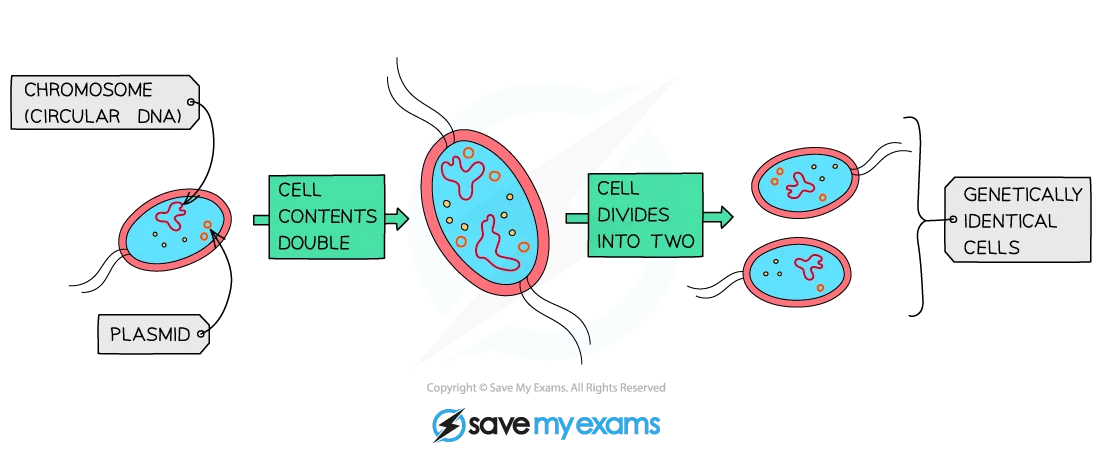
Binary fission is a type of asexual reproduction used by prokaryotic organisms, such as bacteria. A single cell copies its DNA, grows larger, and then splits into two daughter cells. Each daughter cell receives one copy of the circular chromosome and is, in most cases, genetically identical to the parent.
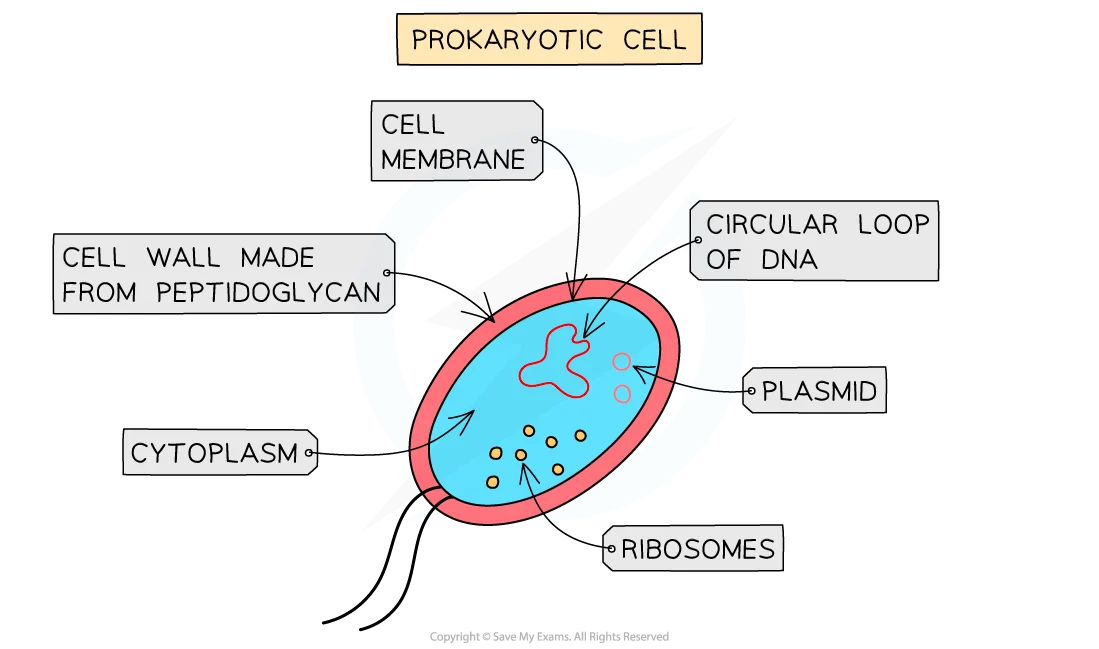
The word "binary" means two, and "fission" means splitting apart. So binary fission literally translates to "splitting in two." Unlike mitosis in eukaryotic cells, there's no nucleus to divide and no spindle fibres involved. That makes the process faster and simpler.
Binary Fission vs Asexual Reproduction
Other forms of asexual reproduction include budding (used by yeast and hydra), fragmentation (used by starfish and some worms), and spore formation (used by fungi and some bacteria).
What sets binary fission apart is that the parent cell divides roughly equally into two new cells. In budding, by contrast, a smaller offspring grows off the parent before detaching.
The Binary Fission Process
The binary fission process follows a clear sequence of steps. Here's what happens inside a bacterial cell:
DNA replication — The circular chromosome attaches to the cell membrane and makes a complete copy of itself.
Cell elongation — The cell grows longer. As it does, the two DNA copies move apart towards opposite ends (poles) of the cell.
Septum formation — A new cell wall, called a septum, forms across the middle of the cell.
Separation — The cell divides into two independent daughter cells, each with its own copy of the DNA, ribosomes, and cytoplasm.
The entire process can take as little as 20 minutes in species like E. coli under optimal lab conditions.
Does Binary Fission Produce Identical Cells?
In theory, yes. Both daughter cells receive an exact copy of the parent's DNA. But DNA replication isn't perfect every single time. Occasional errors or mutations can creep in during copying. Most mutations have no noticeable effect. Some, though, can change the bacterium.
This is one reason antibiotic resistance spreads so quickly. If a random mutation makes one bacterium resistant to an antibiotic, that bacterium divides by binary fission, and both daughter cells carry the resistance. After a few hours of exponential growth, a large population of resistant bacteria can develop from a single mutant cell.
Binary Fission in Bacteria
Bacterial reproduction rate depends on several environmental factors:
Factor | Effect on binary fission rate |
|---|---|
Temperature | Warmer conditions (up to an optimum) speed up enzyme activity and cell division. Too hot and proteins denature. |
Nutrients | A rich supply of glucose, amino acids, and minerals fuels faster growth. |
pH | Most bacteria prefer a neutral pH (around 7). Extreme acidity or alkalinity can slow or stop division. |
Oxygen | Aerobic bacteria need oxygen; anaerobic bacteria don't. |
“I use this concept to explain to my students why bacterial contamination can be a problem: under ideal conditions, bacterial populations grow exponentially. One cell becomes two, two become four, four become eight. After just 6 hours, a single E. coli bacterium could theoretically produce over 250,000 descendants.”
– Natalie Lawrence, Biology Tutor.
Binary Fission vs Mitosis
Students often confuse these two processes, since both produce two cells from one. But they're fundamentally different.
Feature | Binary fission | Mitosis |
|---|---|---|
Cell type | Prokaryotic (no nucleus) | Eukaryotic (has a nucleus) |
DNA structure | Single circular chromosome | Multiple linear chromosomes |
Spindle fibres | Not involved | Form the mitotic spindle to separate chromosomes |
Speed | Very fast (can be 20 minutes) | Slower (typically 1–2 hours, sometimes longer) |
Outcome | Two identical prokaryotic cells | Two identical eukaryotic cells |
The key difference is complexity. Eukaryotic cells, such as animal cells, contain a nucleus, mitochondria, and other membrane-bound organelles. Dividing all of that requires the tightly controlled stages of mitosis. Prokaryotic cells are structurally simpler, so binary fission gets the job done without all that machinery.
If you're studying cell division for your exams, Save My Exams has detailed revision notes that walk through both processes step by step. The AQA GCSE Culturing Microorganisms revision notes cover binary fission in the context of bacterial growth, with examiner tips and diagrams written by experienced biology teachers. You can find tailored notes for your specification too.
Binary Fission in Food
Binary fission is linked to food safety. When bacteria land on food, they reproduce by binary fission. If the food sits at the right temperature with enough moisture and nutrients, bacterial numbers can double every 20–30 minutes.
The "danger zone" for food temperature is between 5°C and 63°C. Within this range, bacteria divide fastest. Refrigeration (below 5°C) slows bacterial growth and cooking (above 63°C for long enough) kills most bacteria entirely. Proper food storage, reheating, and hygiene practices all work by limiting the conditions bacteria need for rapid binary fission.
Food poisoning from bacteria like Salmonella and E. coli is a numbers problem. A small number of bacteria on raw chicken won't cause illness on their own, but leave that chicken at room temperature for a few hours and binary fission turns a harmless count into a dangerous one.
Frequently Asked Questions
How long does binary fission take?
It depends on the species and conditions. E. coli can complete binary fission in about 20 minutes under ideal conditions. Other species are slower: Mycobacterium tuberculosis divides roughly once every 15–20 hours. Temperature, nutrients, and pH all affect the speed.
What organisms reproduce by binary fission?
Most bacteria reproduce by binary fission. Some single-celled eukaryotes (protists) also use it, including amoeba, paramecium, and euglena. Archaea, another group of prokaryotes found in extreme environments, reproduce by binary fission too.
Why is binary fission faster than mitosis?
Prokaryotic cells are smaller and structurally simpler than eukaryotic cells. They have no nucleus, no membrane-bound organelles, and just one circular chromosome. There's no need for spindle fibres or the distinct stages of mitosis (prophase, metaphase, anaphase, telophase), so the whole division process takes far less time.
Can binary fission lead to antibiotic resistance?
Yes. If a mutation during DNA replication gives a bacterium resistance to an antibiotic, binary fission passes that resistance to both daughter cells. Over many rounds of division, the resistant strain can outcompete non-resistant bacteria, especially if an antibiotic is present.
What is the difference between binary fission and budding?
In binary fission, the parent cell splits roughly equally into two daughter cells of similar size. In budding, a smaller outgrowth (bud) develops on the parent cell and eventually detaches as a new organism. Yeast is the most well-known example of budding. Both are forms of asexual reproduction, but the mechanics differ.
Examiner-written GCSE Biology revision resources that improve your grades 2x
- Written by expert teachers and examiners
- Aligned to exam specifications
- Everything you need to know, and nothing you don’t

Was this glossary entry helpful?



Share this article
 written revision resources that improve your